Table of Contents (click to expand)
Wolverine is a fictional mutant whose powers, fast healing, resistance to disease and toxins, slowed aging, and retractable adamantium claws, all trace back to one trait: a "healing factor" that repairs cells almost instantly. No human can do this, but real animals like axolotls and planarian flatworms regrow body parts using stem cells, hinting at the biology behind the fantasy.
Every time a new X-Men movie rolls around, we all get to see Wolverine in action once again.
Wolverine (played by Hugh Jackman in the X-Men series) is a mutant and one of the X-Men who has, in addition to showing off an incredibly ripped body, a number of formidable powers. These are powers that almost every human being would love to have. I can’t speak for everyone, but anyone who has seen the X-Men series or read the comic books is undeniably in awe of Wolverine. He is a savage beast, and many consider him one of the toughest X-Men. He also has no sense of manners when it comes to negotiating. He has always been a magnet for trouble too, which makes for great movies, and is all the more reason for his fame amongst fans.
Wolverine’s Powers
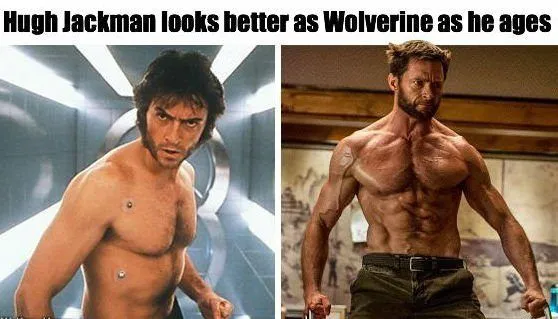
The one power that Wolverine possesses (and one that many people would kill for) is that he doesn’t seem to age! If you’ve seen this character before, then you would know that Wolverine doesn’t ever seem to get old. In fact, he looks cooler with every year that passes.
The other main power that Wolverine enjoys is his accelerated ‘healing power‘, which enables the wounds on his body to repair themselves far more quickly than normal humans. This ability makes him extraordinarily resistant to diseases, drugs, and toxins.
Finally, he has retractable claws that come out of the gaps between his knuckles. After doing their deadly job, they cleanly slip back inside his hands. The claws are also composed of a fictional metal, adamantium, which is said to be indestructible.
Wolverine: A Scientific Perspective
Since so many people seem to love his superpowers, we decided to figure out how his powers actually work. As you would expect, there is some science involved in all the powers he boasts about (minus the ‘lack of manners’ thing).
Healing Power: Let’s examine what happens when a normal person is injured or wounded.
When a person gets injured, blood flows to the site of the injury, carrying with it the protective defenses of our body, white blood cells. The first responders are neutrophils, which arrive within an hour to clean up bacteria and debris, followed a day or two later by macrophages that finish the cleanup and kick-start new tissue. Meanwhile, clots form over the injury to seal it, and as the wound closes, scabs and scar tissue are usually left behind.
In Wolverine’s case, the cells that repair the tissues at the injury site have to work at ultra-high speeds. New cells are produced by a process called mitosis, in which one cell divides into two identical copies. Comic writers like to imagine Wolverine running this at warp speed, a made-up "hyper-mitosis" that knits a wound shut in seconds. No real cell divides that fast, but the basic idea, swapping damaged tissue for fresh copies, is exactly what mitosis does in all of us.
Here’s a short video showing how quickly (and coolly) Wolverine is able to heal:
That was just referring to his physical injuries, but he’s also immune to various kinds of internal damages, such as poisonous effects or toxins. This is because the cells of Wolverine’s body react to foreign invaders (poison) at very high speeds and immediately dispatch immune cells, which take care of these dangerous invaders in short order!
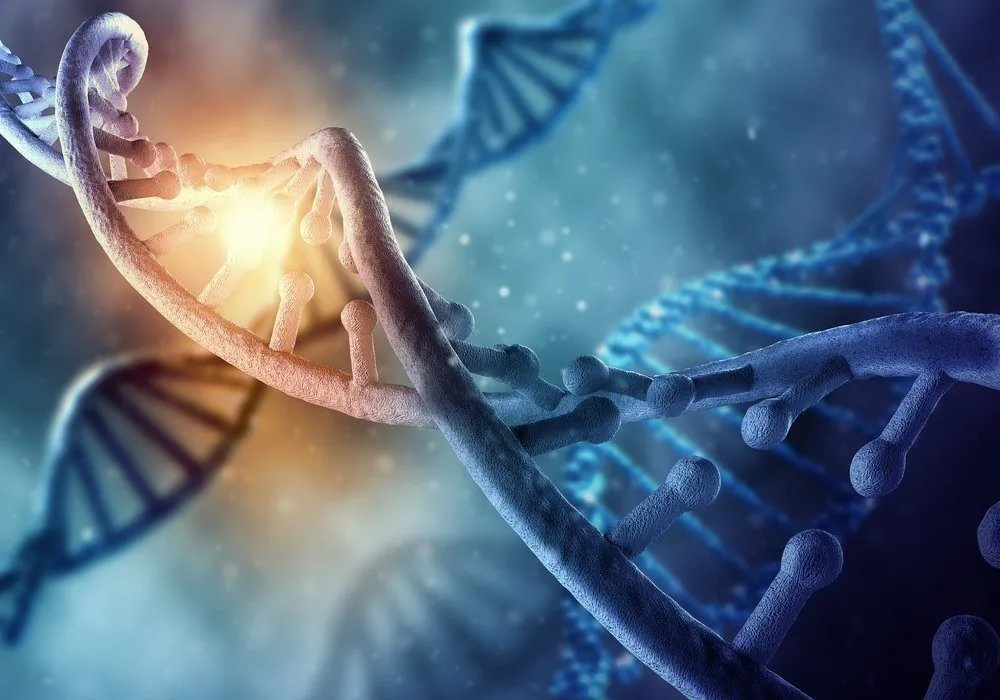
Anti-Aging: Aging in normal people typically occurs due to errors in DNA replication, causing wrinkles, liver spots, diseases, and a lack of pigment. The ends of our chromosomes are capped by telomeres, repetitive stretches of DNA (the sequence TTAGGG, over and over) that work like the plastic tips on shoelaces. Each time a cell divides, a little of that cap is lost, and once the telomeres run too short, the cell stops dividing and ages. An enzyme called telomerase can rebuild them, but most of our cells make very little of it.
Wolverine doesn’t age like his fellow mutants, let alone like humans. If he was to age in line with the ultra-fast healing process of his body, he would age extremely fast. He would look like a 60-year old before his 20th birthday.
However, that’s where his supernatural persona steps in and takes care of things. His internal mechanisms are mutated in such a way that the cells work at extremely high speeds only when his body detects an injury or a foreign agent in the bloodstream, and only at the precise location of the injury. This unnatural mechanism ensures that his telomeres are constantly rebuilt instead of wearing down. This is why age-revealing factors like wrinkles and grey hair are not visible on his body.
 Claws: Wolverine has adamantium claws that come out as and when he wishes them to. Could that be any more awesome?
The claws are composed of a fictional metal adamantium, which covers Wolverine’s entire skeleton, and when coupled with his ultra-fast healing, this basically makes him invincible to any physical attack.
Wolverine, in the second movie, is confronted by a female mutant with the same type of claws, only she’s not one of the “good guys”. He kills her by injecting the liquid form of adamantium throughout her entire body using a syringe. He had to do something… there can only be one Wolverine!

Is any of this real? No animal heals quite like Wolverine, but nature does come surprisingly close. The axolotl, a Mexican salamander, can regrow an entire lost limb, nerves, bone, muscle and all, by forming a clump of progenitor cells called a blastema at the wound, which rebuilds the missing part from scratch. Planarian flatworms go even further: slice one into pieces and each piece can grow into a whole new worm, thanks to a reserve of pluripotent stem cells called neoblasts that make up roughly a fifth of the animal. We humans carry stem cells too, but ours are far more limited, which is why a deep cut leaves a scar instead of a flawless new patch of skin. So while Wolverine’s healing factor stays firmly in the realm of fiction, the dream of regrowing damaged tissue is something biologists genuinely study.
Ultra-fast healing, anti-aging properties, metal claws, and a killer body. It almost doesn’t seem fair. Seems like whoever is looking down on mutants and handling their powers didn’t exactly hand them out evenly, huh?