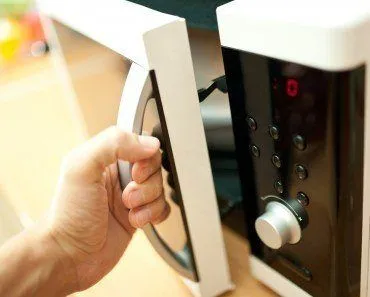
The funniest invention origin story is the one about the microwave. A man named Percy Spencer was working on building magnetrons for radar sets, and he noticed that the candy bar in his pocket had melted. He then developed a huge box that could shoot electromagnetic radiation at food objects to heat them.
Humans have a tendency to improvise when faced with problems and some of us prove to be quite resourceful. Most of the things we use nowadays were born out of necessity, but some were created by people with a bit of luck and a dash of genius.
Stethoscope
The stethoscope, that emblem hanging around every doctor’s neck, started with a moment of awkwardness. In 1816, the French physician René Laennec was examining a young woman with suspected heart disease in Paris. The customary practice was “immediate auscultation”, pressing your ear directly to the patient’s chest, which Laennec, considering both her age and her sex, was uncomfortable doing. Then he remembered a childhood game in which a scratch at one end of a wooden beam could be heard clearly at the other. So he rolled up some sheets of paper into a tight cylinder, pressed one end to her chest and the other to his ear, and was startled to find the heartbeat came through louder and clearer than he had ever heard it. He spent the next three years refining the design into a wooden tube and named it the stéthoscope, from the Greek for “chest” and “to look at.”
The Band Aid
These were created due to necessity more than an accident. In 1920, a lowly cotton buyer for Johnson & Johnson named Earle Dickson was married to a rather clumsy woman named Josephine. Josephine was very accident prone, which made life difficult for poor Earl, since medical attention wasn’t cheap. When he realized that his wife’s accidents wouldn’t stop, he had an idea. He cut a small piece of gauze and placed it on another strip of gauze with adhesive on each end. Josephine’s wounds were saved from getting infected, but no one knows if she stopped walking into walls or not. By 1939, Band-Aids were also sterilized, just in time for WWII.
Nitrous Oxide Anesthesia
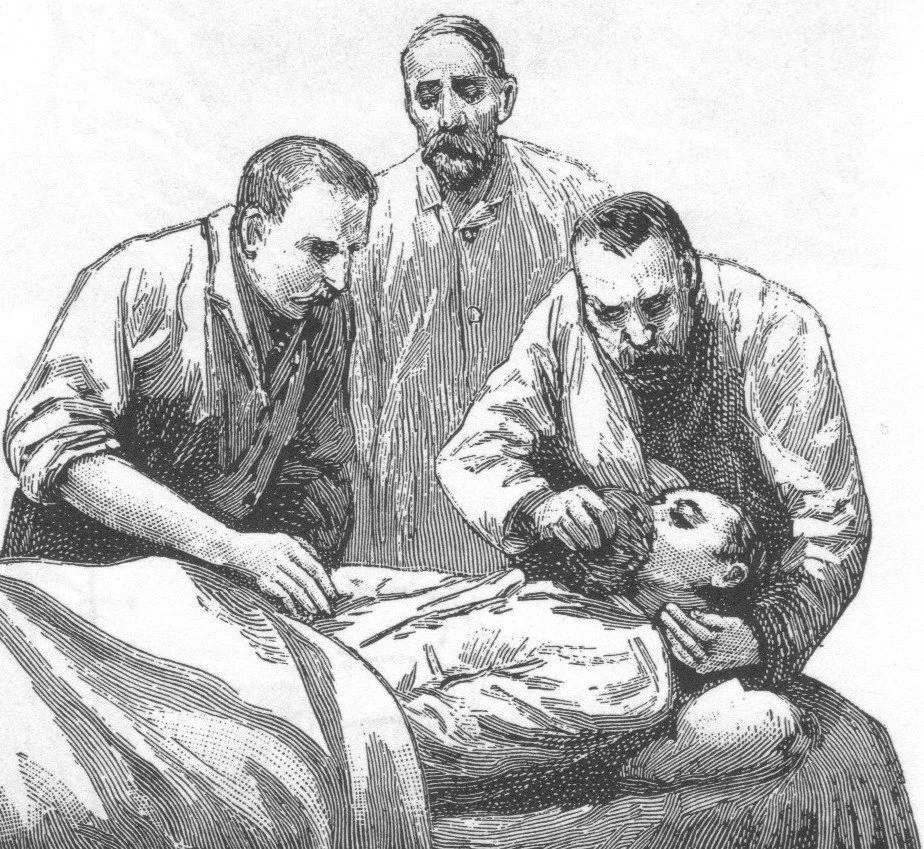
Before anesthesia, a doctor was judged on how fast he could complete a procedure, rather than his technical skill. Techniques to relieve a patient’s pain included distraction, alcohol administration and even hitting the patient so hard that he blacked out. That changed when Horace Wells, a dentist in Hartford, USA, had a moment of vision. In 1844, Nitrous Oxide gas used by dentists was considered a party drug, since it made people ‘happy’ and relaxed. His friend took too much of the laughing gas during a stage show, hoping to entertain the crowd. During the act, he accidentally cut his leg, but to his surprise, he didn’t feel a thing! Excited by this discovery, Horace patented the use of Nitrous Oxide as the most primitive anesthetic. Although Horace Wells is credited with creation of anesthesia, he died a tragic death after a life of addiction to his own product.
The Microwave
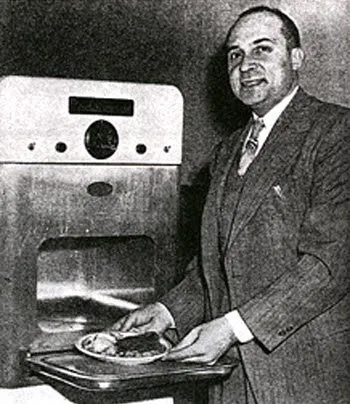
In 1932, a man named Percy Spencer managed to become one of three people hired to install electricity in a paper mill plant, despite having never received any formal training in electrical engineering, nor even finishing grammar school. Largely due to his talent and hard work, he taught himself trigonometry, calculus, chemistry, physics, and metallurgy, among other subjects. He then won a government contract to produce combat radar equipment for WWII. One day, while Spencer was working on building magnetrons for radar sets, he was standing in front of an active radar set when he noticed that the candy bar in his pocket had melted. After much investigation, he developed a huge box that could shoot electromagnetic radiation at food objects to heat them. Now, we have similar, albeit smaller, boxes to make us popcorn and re-heat the leftovers!
Silly Putty

During World War II, engineer James Wright was working for the U.S. War Production Board, trying to create an inexpensive substitute for synthetic rubber at a General Electric lab in Connecticut. The General Electric engineer combined silicone oil and boric acid in an attempt to find a cheap alternative to rubber for tank treads, boots, etc. When he dropped boric acid into silicone oil, he got a substance that was stretchable and bouncier than rubber. The military was disappointed and the research was halted. A few years later, businessman Peter Hodgson noticed what a hit the stuff was at a party. He renamed it “Silly Putty” and marketed it as a toy, which has now become an extremely popular plaything in certain parts of the world. It later evolved into a useful tool for grown-ups, since it could easily pick up dirt and was handy small repairs. Astronauts on the Apollo 8 moon mission even used this goo to keep their tools secure in zero gravity!
T-shirts
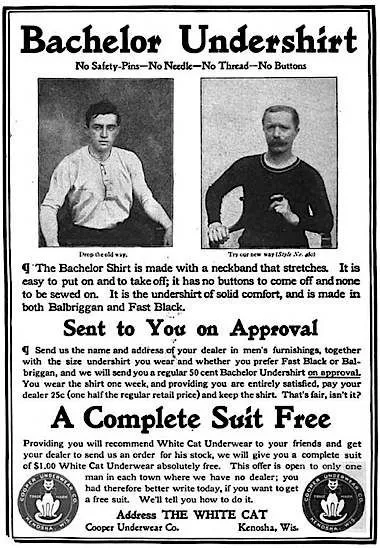
Some things just don’t feel like inventions, since they’ve been around for so long and have been so useful. It’s hard to imagine a world without them. Owing its origins to all single guys out there in 1904 is the T-shirt. Try to keep in mind that men wore buttoned Shirts at that time, which often lost their most important part… the buttons. Since sewing was considered a task for the fairer sex, men had to rely on their wives, mothers and sisters to fix their clothes. Obviously, this proved to be a problem for bachelors. Fortunately, The Copper Underwear Company ran a magazine ad in 1904 to advertise their newest product that was a ‘shirt’ stretchy enough to be pulled over one’s head. The ad read, “No Safety Pin – No Buttons – No Needle – No Thread” and targeted men who had no wives and couldn’t sew. Within a year, the US Navy saw the ad and started issuing shirts to every sailor. The rest, as they say, is history.

Which Inventions Started Out As A Joke?
So far, every story here has been a happy accident or a clever fix for a real problem. But there is a stranger category still: products that were dreamed up as the joke, deliberately silly things their creators never expected anyone to take seriously, that went on to make fortunes anyway. If you have ever typed something like “this invention was originally published as a comical concept” into a search box, these are the gadgets you are picturing. Three of them are worth meeting.
The Pet Rock

In 1975, advertising man Gary Dahl was sitting in a California bar listening to his friends grumble about their pets (the feeding, the walking, the vet bills). Half-joking, he announced that his pet was perfect: it never had to be fed, walked, or bathed, it never got sick, and it never died. His pet was a rock. The bit got laughs, and Dahl decided to actually sell it. He bought smooth grey stones for about a penny each, nestled each one in straw inside a cardboard carrying case with breathing holes punched in the lid, and packed it with a tongue-in-cheek owner’s manual that explained the tricks it could perform, with “play dead” being the easiest to teach. He launched the Pet Rock at a gift show in August 1975, priced at just under $4. What should have been a one-line gag turned into one of the fastest fads in retail history. Dahl sold roughly 1.5 million Pet Rocks in a matter of months, mostly over the 1975 Christmas season, and the man who sold a rock for the price of a steak became a millionaire before the craze burned out in early 1976.
The Flowbee

Some inventions sound like a joke even when the inventor is dead serious. The Flowbee is a haircutting attachment that clips onto your household vacuum cleaner: the suction stands your hair up straight while a spinning blade trims it to a preset length and the clippings vanish into the vacuum bag. San Diego carpenter Rick Hunts dreamed it up and filed for a patent in 1986, with US Patent 4,679,322 granted in 1987. To most people it was a punchline, and pop culture agreed. The 1992 film Wayne’s World spoofed it as a horrifying device called the “Suck Kut.” Yet the Flowbee genuinely worked, and the late-night infomercials kept selling. By 2000, about two million units had moved. The strangest twist came decades later. When salons shut during the 2020 pandemic, a stuck-at-home public rediscovered it, and after actor George Clooney admitted on a talk show that he had been cutting his own hair with a Flowbee for more than 20 years, the orders flooded back in for a gadget people had spent 30 years laughing at.
The Snuggie

The Snuggie is, on paper, the silliest item on this list: a fleece blanket with sleeves or, depending on your mood, a bathrobe worn backwards. When the company Allstar launched it in 2008 with an earnest infomercial showing whole families on the sofa in matching backwards robes, the internet could not stop laughing. There were spoof commercials, parody pub crawls where people wore them in public, and a steady stream of late-night television jokes. Here is the part the jokers missed: all that mockery was free advertising. The more people shared the ridiculous ads, the more curious shoppers bought one to try, and the Snuggie quietly became one of the most successful direct-response products ever made, pulling in more than half a billion dollars in revenue. It is the rare invention that succeeded precisely because it looked absurd, a reminder that, much like the odd inspiration behind Velcro, the line between a punchline and a product can be surprisingly thin.
References (click to expand)
- Science Diction: The Origin Of 'Stethoscope' - NPR.
- TED-Ed (2016). How the Band-Aid was invented | Moments of Vision 3 - Jessica Oreck. Youtube
- A Brief History of the Microwave Oven - IEEE Spectrum - spectrum.ieee.org:80
- Weird Science: The Accidental Invention of Silly Putty. Kids Discover
- Open Wide, This Won't Hurt a Bit: The Discovery of Anesthesia. Connecticut Public Radio.
- T-shirt - Wikipedia. Wikipedia
- Pet Rock. Wikipedia.
- Hard Sell: A History of the Pet Rock. Mental Floss.
- Flowbee. Wikipedia.
- A Hair-Raising History of the Flowbee. Mental Floss.
- The Snuggie Success Story. Refinery29.
- The Story of the Snuggie, a Blanket with Sleeves. Cornell University.