Table of Contents (click to expand)
North Korea has had three leaders from one family since 1948: founder Kim Il-sung, his son Kim Jong-il, and grandson Kim Jong-un, who still rules today. Each is the center of a state-enforced cult of personality. Kim Il-sung remains the "Eternal President" decades after his death, making North Korea the world's only necrocracy.
Dear North Korea,
Ah, you Truman Show version of an Orwellian dystopia. You manage to include the worst of the worst regimes in history, complete with a Stalin-esque level of state control mixed with Nazi-like efficiency in mass executions.
Yet, you try so desperately to mask these horrible truths. Unfortunately, that is about as effective as covering up the stench of garbage with a tiny bottle of eau de cologne. Sure, you can stop people from taking pictures of your gulags and prison camps, but the truth frequently defects from your heavily guarded borders.
That being said, your people have gobbled up the lies rather quickly. Props to your commitment to brainwashing.
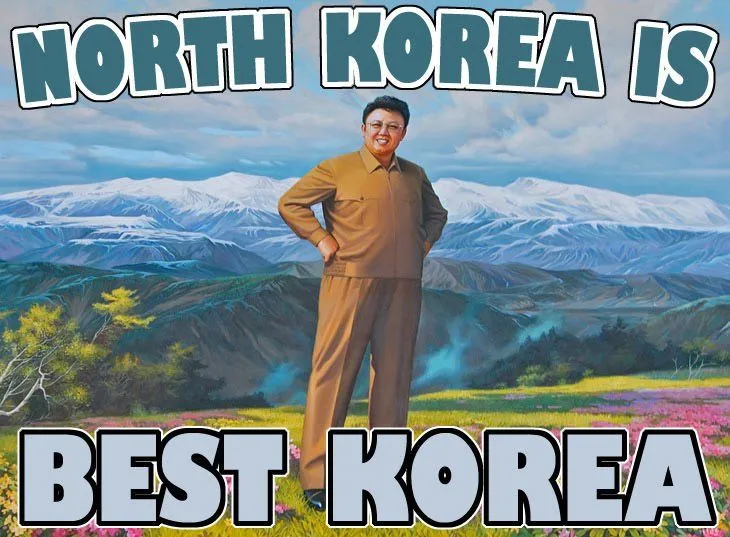
With your brazen breaches of international nuclear policies and numerous human rights violations, I think it is due time that people knew the truth. It’s simply too bad that none of your citizens will ever read this.
First of all, to know a country, we need to look at its leaders.
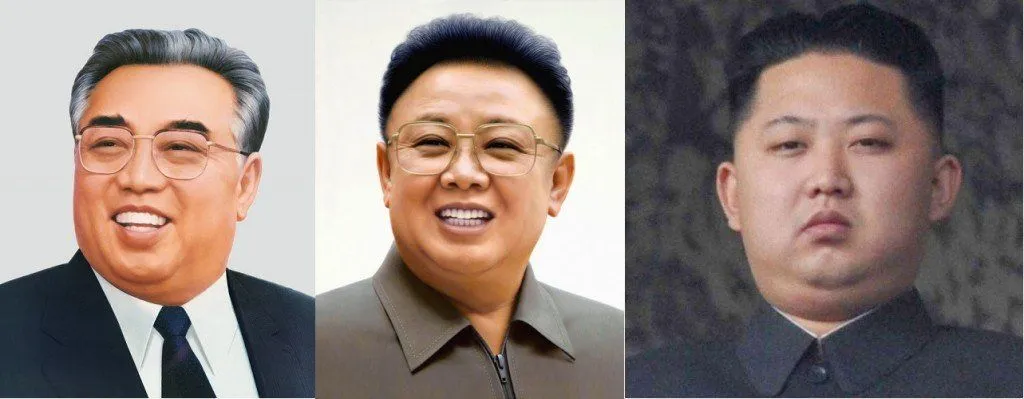
North Korea has had a number of… interesting leaders, to put it mildly. There have only been three since the Korean Peninsula was divided in 1945 and the Democratic People’s Republic of Korea was formally founded in 1948, and to be honest, three is more than enough.
Kim Il-sung
North Korea is the only necrocracy in the world – which means that it is the only country that is still under the rule of a dead leader.
Yes, you read that right. North Korea recognizes only one Eternal President – the Supreme Leader Kim Il-sung.
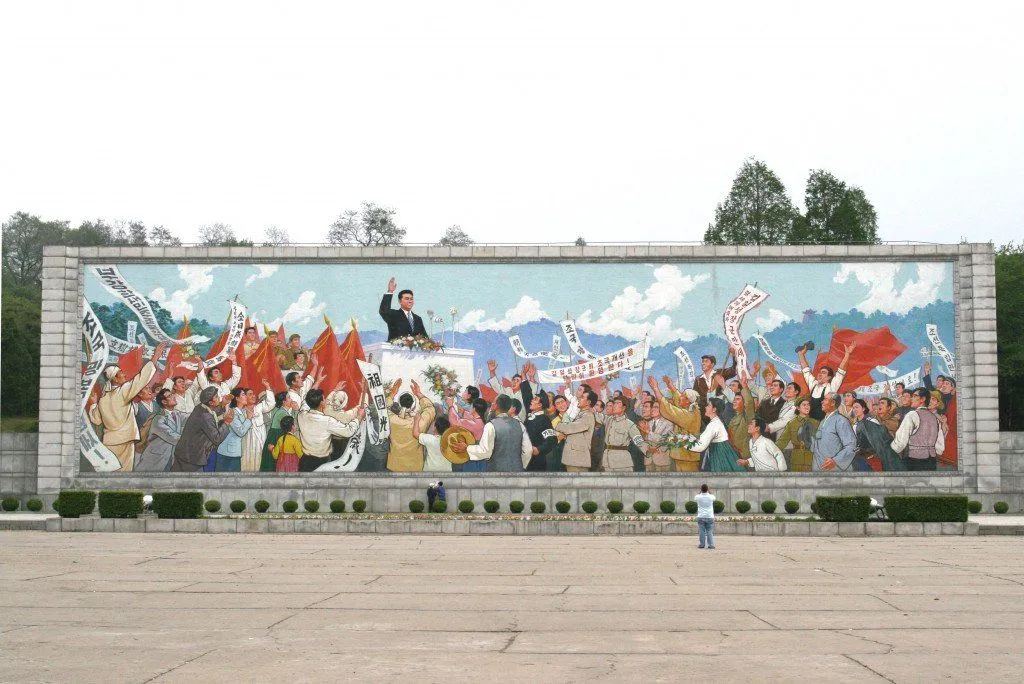
Kim Il-Sung was the one who instigated the Korean War in 1950, and the country has still not gotten over the “glorious” 46 years of his ruthless totalitarian regime.
To say that North Koreans worship him would be an understatement. Their entire lives revolve around proving their loyalty towards this dead leader. He is their God, their messiah, their cherished celebrity and their legendary hero all rolled into one! To give you an example, they bow every time they see his image. They must wear a lapel pin bearing his face on it at all times. For decades, even their calendar began with the birth year of their Supreme Leader, so the year we call 2016 was officially Juche year 105 in North Korea, counting from Kim Il-sung’s birth in 1912. In late 2024, however, North Korea quietly dropped the Juche calendar and reverted to the standard Gregorian year, a move widely read as Kim Jong-un nudging the spotlight off his grandfather and onto himself. Until then, life there literally ran on a dead man’s clock. Totally normal, right?
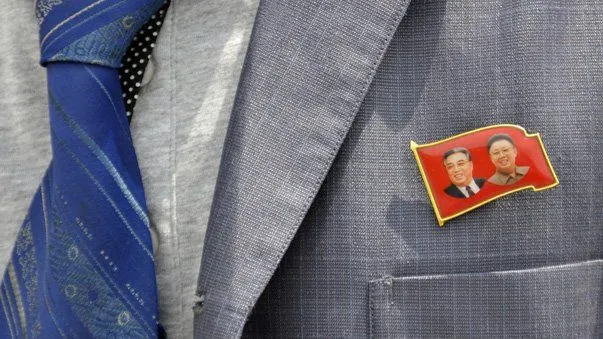
What is Juche, you ask? Juche is the political ideology advocated by Kim Il-sung. It means ‘complete self-reliance’, especially in terms of economics, military and foreign policy. This ideology is the reason why the country is so austere on the international scene. Even in today’s globalized world, North Korea remains cut off from the rest of the world, honoring Kim Il-sung’s traditions.
Kim Jong-il
Kim Jong-il, the son of Kim Il-sung, took the reins after his father’s death in 1994, although he waited out a three-year national mourning period before formally claiming his top titles in 1997. He is also widely revered, but not nearly as much as his father. His photo often appears next to Kim Il-sung’s in public places. A self-proclaimed Internet expert (a boast he genuinely made to South Korea’s president during a 2007 summit, despite running one of the most disconnected countries on Earth), Kim Jong-il was no better than his father when it came to subjecting his people to atrocities. Or, for that matter, people from other countries.
You see, Kim Jong-il was a film enthusiast who had a personal library of more than 20,000 movies. Nothing wrong with that, right? Except, to feed his obsession with cinema, in 1978 he had the South Korean actress Choi Eun-hee abducted from Hong Kong, followed months later by her ex-husband, the well-known director Shin Sang-ok, and pressed them into making films for him.
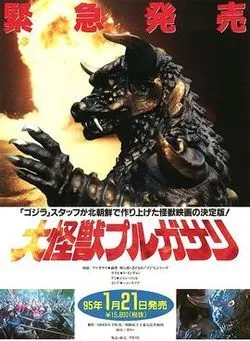
In fact, the couple spent roughly 8 years in captivity, during which Shin directed several films for the regime. In 1986, while in Vienna on a trip to scout backers for a new movie, the pair gave their minders the slip and dashed to the US Embassy, finally winning their freedom. North Korea, naturally, insisted they had been there voluntarily and had made off with a large amount of North Korean money.
However, Kim Jong-il had even larger crimes on his hands. When famine struck the country in the mid-to-late 1990s, a catastrophe the regime cynically branded the “Arduous March,” hundreds of thousands of North Koreans starved to death. Estimates of the toll vary wildly, from a few hundred thousand to as many as two or three million, in a country of roughly 22 million. Clinging to the Juche ideology, Kim Jong-il was slow to accept outside aid, and there were grim reports of people driven to cannibalism. Eventually the UN World Food Programme and foreign donors stepped in with food. The aid, however, sat against a separate bargain: under the 1994 Agreed Framework, Pyongyang had promised to freeze its plutonium nuclear program in return for energy assistance, a deal North Korea would later abandon as it pushed ahead toward the bomb.

Nevertheless, the hero-worship surrounding Kim Jong-il did not die down. In 2011, graffiti appeared in Pyongyang that condemned Kim Jong-Il. They locked down the entire city for 3 days to find the perpetrator!
Kim Jong-un
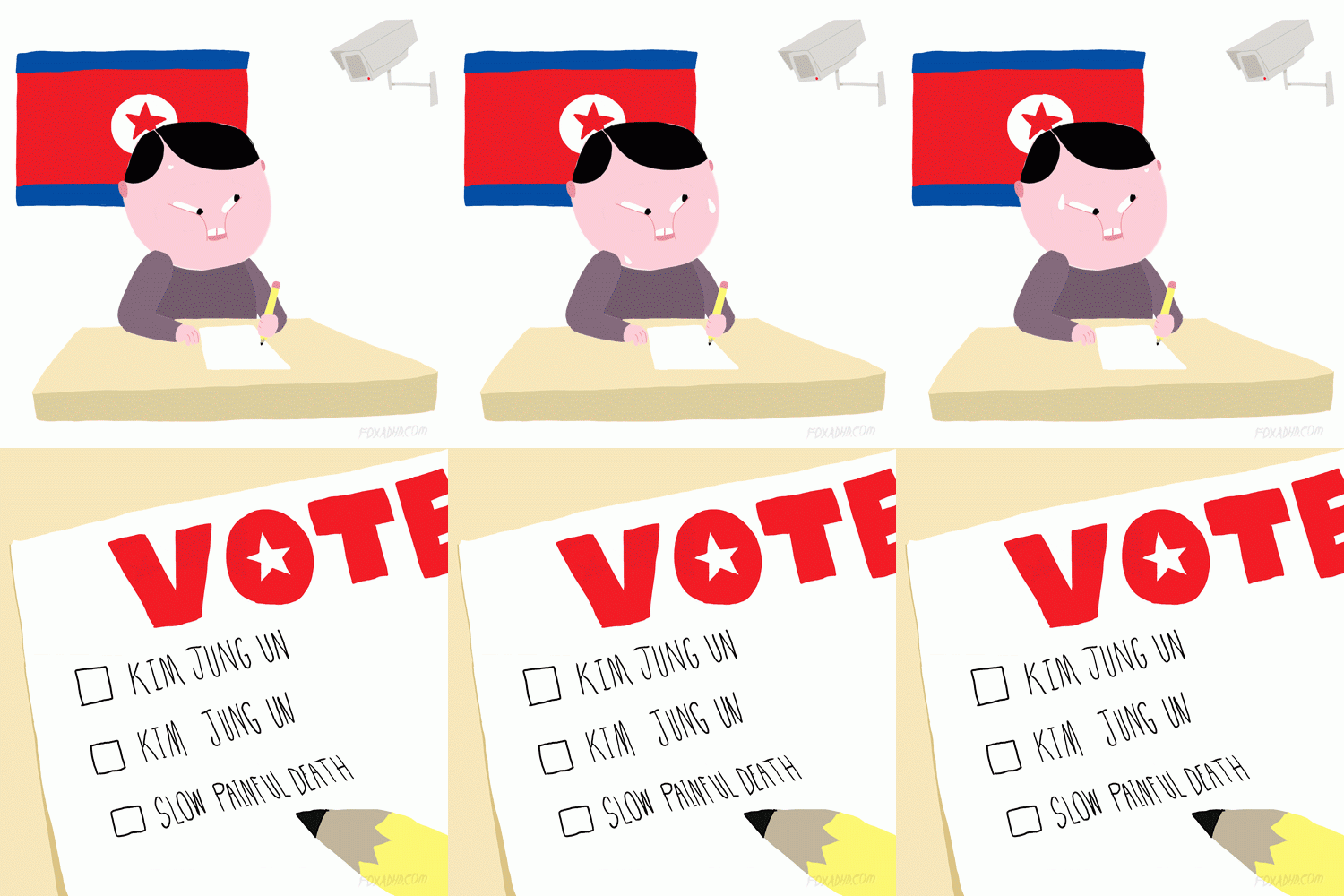
This is the one figure we know that the Internet loves to hate (especially since his supporters are, well, never going to be online). If sources are to be believed, Kim Jong-un is not admired in quite the same way as his father or his grandfather. The main reason is that no one really knew him before he abruptly inherited power on his father’s death in December 2011, having been groomed as heir for barely a year. North Korea does hold “elections,” of course, but they are pure theater: turnout is always a suspiciously tidy 99.9 percent, and the ballot for each seat lists exactly one pre-approved name to ‘choose’ from.
So rest assured, Kim Jong-un kept the crazy going.
Another telling example of how thin-skinned the regime can be is the great Choco Pie standoff with South Korea. Yes, I really wish I were kidding.
Let me elaborate further.
Kaesong Industrial Complex is a special place in North Korea where South Korea can set up economic enterprises. At face value, that sounds great, but South Korea made one fateful mistake. They gave Choco Pies as bonuses to North Korean workers in the Orion factories. The North Koreans, instead of enjoying the rare chocolate delights for themselves, sold them on the black market. Kim Jong-un, outraged and possibly jealous, banned them from the country under the pretext that ‘South Korea was invading our stomachs’.

Of course, South Korean activists retaliated in the most South Korean way possible, by floating balloons loaded with Choco Pies (and anti-regime leaflets) across the border. North Korea replied in the most North Korean way possible, threatening to open fire on the sites where the balloons were being launched. The Kaesong complex itself was shut down for good in 2016 amid the standoff over the North’s nuclear program.
The reason why I chose to share this story is not merely to point out the craziness of the North Korean dictator, as there are countless other examples. However, this one calls out his pretense. While ordinary North Koreans go hungry, the regime pours money into luxury imports for its elite. According to a UN panel and South Korean trade analyses, North Korea’s luxury-goods bill ran to hundreds of millions of dollars a year under Kim Jong-un, with one widely cited estimate putting it above $640 million in 2012 alone (source). Imported vodka, whiskey, wine and champagne, Chinese scallops and fine cheese reportedly each ran into the tens or hundreds of thousands of dollars.
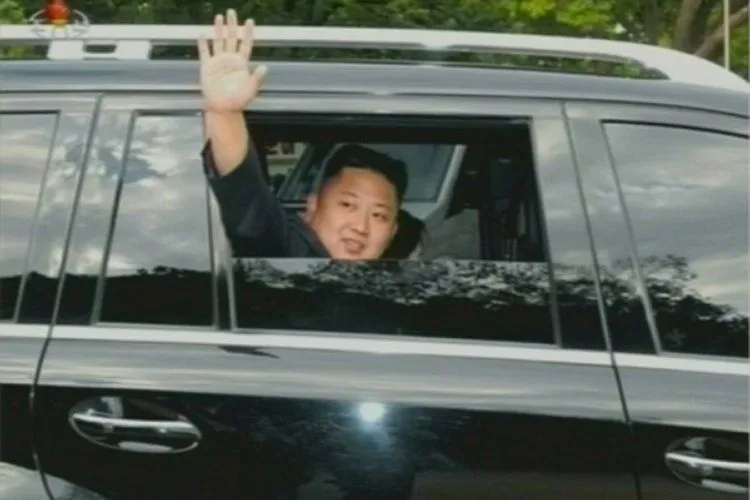
In terms of human rights violations, North Korea is so infamous that no country (not even China) wants to be associated with it. The leaders, as ludicrous as they seem, are ruthless in meting out punishments, under the guise of providing ‘re-education’. Thousands, or possibly millions, die every year in these re-education camps of North Korea. Adding to this, public executions are well documented in North Korea. In 2013, the South Korean newspaper JoongAng Ilbo reported that around 80 people had been executed in public across seven cities, including a stadium in the eastern port of Wonsan, for offenses as minor as watching smuggled South Korean videos or possessing a Bible (source). Such accounts come from defectors and anonymous sources and are difficult to verify independently, but they fit a long pattern of brutal punishment for anything the state deems disloyal.
Despite this, the cult of personality around the Kim family is so strong that they have continued to rule the nation without any organized opposition. Kim Jong-un remains firmly in power in 2026, and the dynasty shows every sign of pressing on: South Korean intelligence reported in early 2026 that his young daughter, Kim Ju-ae, has emerged as the likely successor-in-waiting, which would extend the family’s grip to a fourth generation. As outsiders, we can only hope that the people of North Korea soon realize that they deserve much better.
References (click to expand)
- Education for Democracy - ERIC. files.eric.ed.gov
- Albert, R., Contiades, X., & Fotiadou, A. (2018, November 1). The Law and Legitimacy of Imposed Constitutions. (R. Albert, X. Contiades, & A. Fotiadou, Eds.), []. Routledge.
- Kim Il-Sung. Encyclopaedia Britannica.
- North Korea drops Juche calendar in apparent bid to elevate Kim Jong Un’s legacy. NK News.
- Kim Jong-il Was So Obsessed With Film He Kidnapped an Actress. HISTORY.
- Kim Jong Un’s daughter close to being designated future leader, says spy agency. NPR.