The Mona Lisa became the world's most famous painting after its 1911 theft from the Louvre - the empty wall drew bigger crowds than the painting itself, and the press coverage made it a global celebrity. Da Vinci's sfumato technique, the elusive smile, and the painting's mythology cemented that fame. Its hypothetical insurance value today exceeds $1 billion.
The Mona Lisa has a fascinating history. It has been subject to theft, heists, and vandalism and has gained global admiration and fame. Its rich history as a painting is only surpassed by its history as a source of genuine inspiration and curiosity.
Considered to be Leonardo da Vinci’s most significant work, it is believed that the sitter for the painting is Lisa Gherardini, the wife of a Florentine merchant.
However, some people think that the Mona Lisa is a self-portrait of Da Vinci, with feminine and masculine features. Interestingly, Mona, alternatively Madonna, is a way of addressing a woman, so the world’s most famous painting is very literally called Mrs. Lisa.
The Art Style Of The Mona Lisa
The painting has set trends during the Renaissance and contemporary times. The switch from the side portrait to that of the Mona Lisa, the slightly tilted three-quarter view, and the elaborate landscape in the background defined the nature of portraits in the centuries to follow.
It was also an aberration, being painted as oil on wood instead of on canvas, which was the more popular choice back then.
The mysterious woman in the painting, whose identity remains unconfirmed, immediately draws the attention of her audience. Though she is modestly dressed amidst the rich hues of Renaissance art, her realistic expression and the proportions of her face inexplicably draw people in. Da Vinci used a technique called sfumato to create a veil between the Mona Lisa and the view by using the subtle play of light and shadow without leaving behind any tangible strokes.
The Mona Lisa Effect
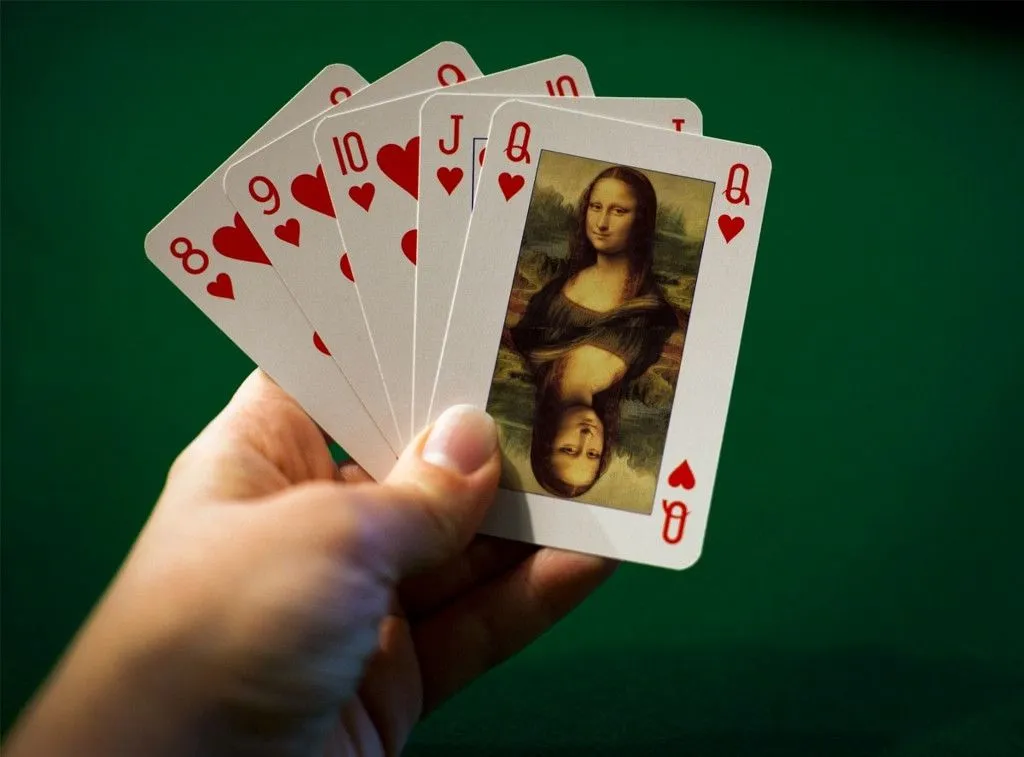
The Mona Lisa effect is a phenomenon where observers feel as though the eyes of the Madonna are following them as they move. Da Vinci employed this optical illusion in his painting.
Although the right-leaning gaze of the Mona Lisa somewhat minimizes the phenomenon, it has often been identified with the painting. The eyes are the center of the observers’ attention, but the haunting mouth stays in the periphery, creating the impression of an unfathomable expression.
This adds to the overall disorientation caused by the range of emotions elicited by Mona Lisa’s knowing smile. Her smile invokes happiness, sadness, mystery, tragedy, curiosity, and comfort. At times, it seems to be there but disappears in the next moment.
The Making Of A Legend
Although the artistic genius of the Mona Lisa is not denied, she gained fame only later in life. Until the French Revolution, she was cordoned off in the royal collection of the French monarchs. The painting had found its way there by chance, as Da Vinci had spent some time at the end of his life in the court of Francis I.
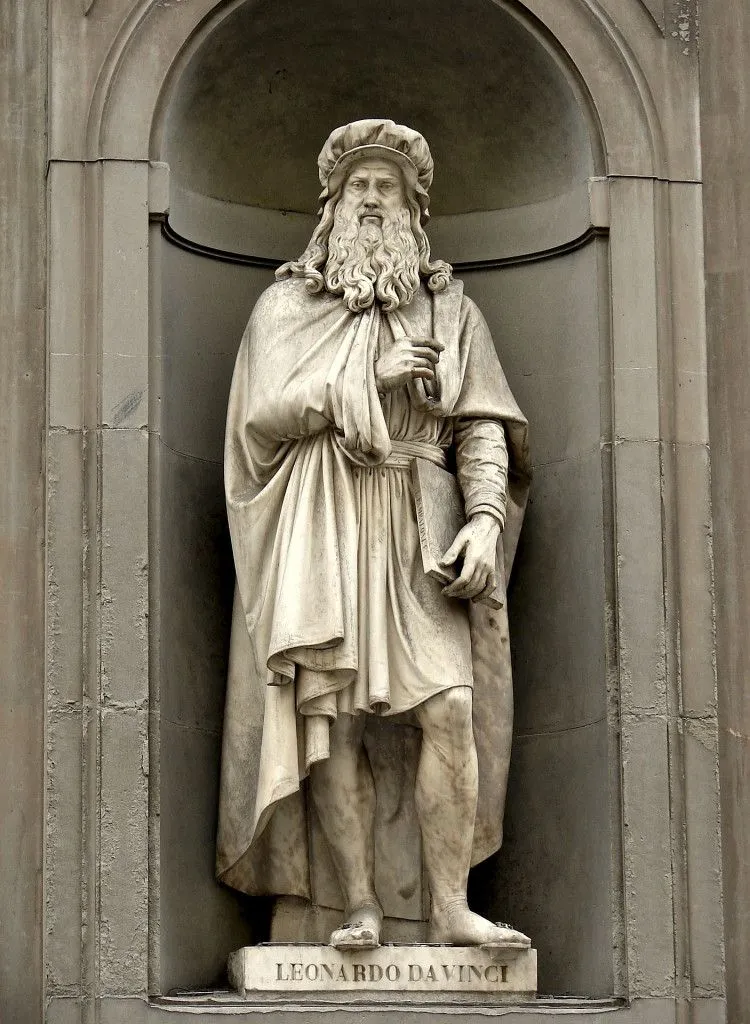
In the 19th century, the Mona Lisa was installed in the Louvre and began to gain fame, partly due to Leonardo Da Vinci’s growing reputation in scientific and artistic circles. Despite Da Vinci having completed only around 20 known paintings, the Mona Lisa is considered the epitome of his work.
In 1911, the painting was stolen by an Italian carpenter, Vincenzo Peruggia, whom the Louvre employed at the time. This event resulted in the resignation of the Louvre’s Director of Paintings, and public figures such as Pablo Picasso were even arrested under suspicion of involvement in the theft.
Tourists came to the Louvre to see the empty space where the Mona Lisa had been displayed, but when it was returned two years later, people flocked to see the painting that had caused such an uproar.
Why Is The Mona Lisa Kept Behind Bulletproof Glass?
Walk into the Louvre's Salle des États today and you will not get anywhere near the painting. The Mona Lisa sits sealed inside a protective case, watched over by a permanent crowd and a wall of security. That fortress was not built for the 1911 theft alone; it was a response to a string of physical attacks that very nearly ruined her. The year that changed everything was 1956. While the panel was on display in Montauban, in southern France, a vandal threw acid at it and badly damaged the lower section. Months later, on 30 December 1956, a young Bolivian man named Ugo Ungaza Villegas hurled a rock at the painting, knocking loose a fleck of pigment near her left elbow. Restorers repaired the spot, but the lesson was clear, and the Louvre moved the Mona Lisa behind protective glass.

The shield earned its keep again and again. In 1974, while the painting was on loan to a museum in Tokyo, a visitor named Tomoko Yonezu sprayed it with red paint in protest at the venue's poor access for disabled people. In 2009, a woman who had been refused French citizenship smashed a ceramic mug against the case. More recently the attacks have turned into climate-protest theatre: in May 2022 a man disguised as an elderly woman in a wheelchair smeared cake across the glass, and in January 2024 two activists from the group Riposte Alimentaire threw soup over it. In every one of these modern incidents the painting itself escaped untouched, precisely because it was sealed away. Since 2019 the Mona Lisa has sat behind a newer, more transparent bulletproof case, which is why the world's most famous portrait now greets her admirers from behind a faint, unavoidable reflection.
How Much Is The Mona Lisa Worth?
In 1962, the Mona Lisa was insured for $100 million when it travelled to the United States, which won it the Guinness World Record for the most expensive art insurance ever recorded. Adjusted for inflation, that 1962 figure works out to roughly $1.1 billion in 2026 dollars, and most contemporary estimates from auction houses and insurers put its hypothetical market value somewhere between $850 million and $1 billion. In practice, the Louvre no longer insures it: as a publicly owned, legally inalienable cultural treasure, the painting can never be sold, so any monetary value is more thought experiment than market price.
Conclusion
The Mona Lisa’s simplicity amidst the extravagance of other Classical and Renaissance art may be the reason for its enduring relevance. The painting is kept behind a bulletproof glass shield, and its hypothetical valuation of more than $1 billion justifies the level of security around it. In January 2025, French President Emmanuel Macron announced the “Nouvelle Renaissance” project, a major Louvre renovation that will give the Mona Lisa her own subterranean, timed-entry gallery beneath the Cour Carrée by 2031, an explicit acknowledgement that the painting now draws crowds the rest of the museum cannot absorb.
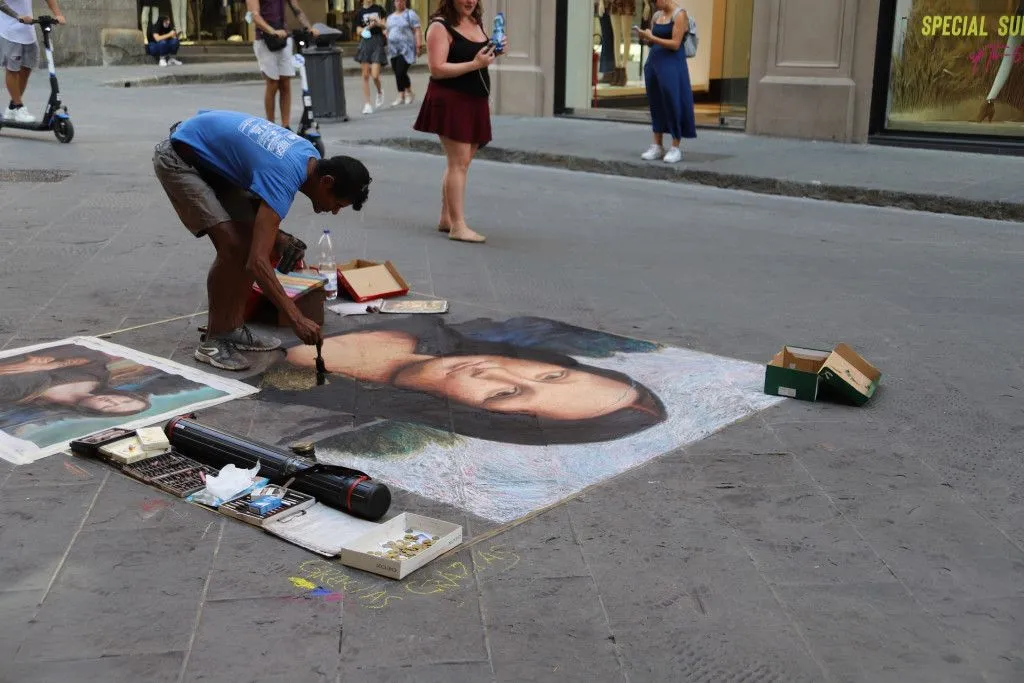
The Mona Lisa has inspired many art forms, including parodies and imitations in paper and film. Interestingly, there is another version of the painting painted by Leonardo himself and another three attributed to his students, which can be found in the Prado Museum.
Despite the countless academic and artistic analyses and the throngs of tourists who flock to see it, a certain mystique sets the Mona Lisa apart from the audience, increasing her allure and cementing her place in our memories and collective consciousness.
Last Updated By: Ashish Tiwari
References (click to expand)
- Treasures of the World | Mona Lisa.
- From the 'Mona Lisa' to 'The Wedding Feast at Cana'. Louvre
- Adour, K. K. (1989, March). Mona Lisa Syndrome: Solving the Enigma of the Gioconda Smile. Annals of Otology, Rhinology & Laryngology. SAGE Publications.
- A timeline of attacks on the Mona Lisa. The Week.
- Mona Lisa smeared with cake in apparent climate protest at the Louvre. CBS News.
- Climate activists throw soup at glass protecting Mona Lisa in Paris. NPR.