Table of Contents (click to expand)
Hannibal Barca was a Carthaginian general widely rated among the greatest military commanders in history. In 218 BC he marched an army, complete with war elephants, over the snowbound Alps to invade Italy, then crushed far larger Roman forces at battles like Cannae. His tactics are still studied today, which is what makes him so great.
Hannibal Barca was arguably one of the greatest generals in history (although he seems to be overshadowed by another hungrier Hannibal). If you’re into serial killers though, fear not… we’ve got you covered.
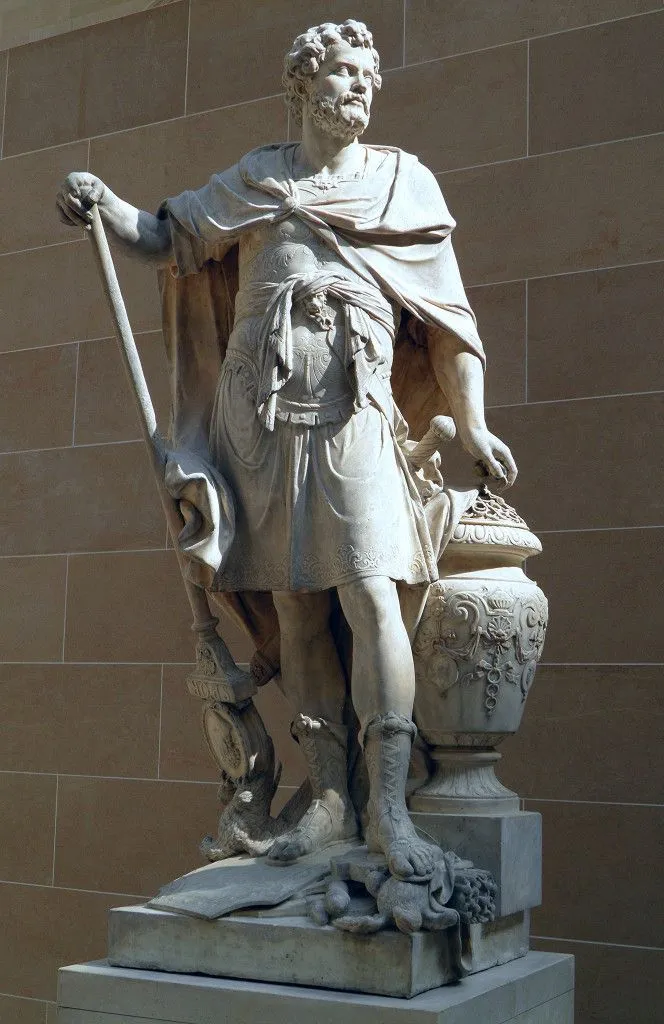
He defeated the Roman Republic at its full might on its home turf. His exploits were so unexpectedly bold and fearsome that, at one point, he was the boogeyman that stalked the streets of Rome.
Who Was Hannibal Barca?
Hannibal Barca was a Carthaginian general and statesman (Carthage lies mostly in modern-day Tunisia) who lived in troubled times. Carthage was a Phoenician settlement and a major commercial player that exerted considerable influence in the ancient world. Carthage happened to share the Mediterranean with another rising power, the Roman Republic (Rome would not become an empire for another two centuries), and as is often the case, those with growing power seek more of it.
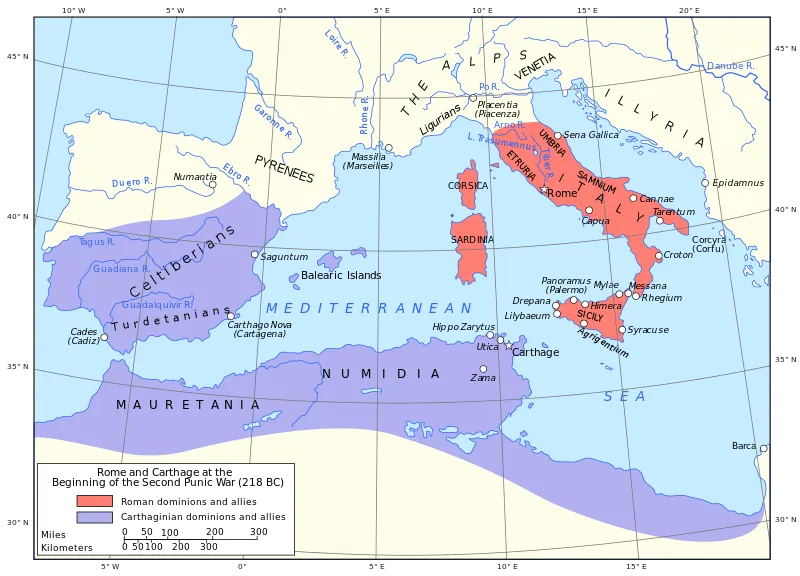
Before Hannibal, these two powers had warred in what would be called the First Punic War, where Rome defeated Carthage. During Hannibal’s times, the Second Punic War would (spoiler alert!) again result in a Carthaginian defeat.
After his time, the Third Punic War would ensure that Carthage would never again challenge Roman economic authority in and around the Mediterranean.
What’s So Great About Hannibal?
He crossed the Alps. That’s basically it. For those of you who have taken a European vacation, you’ve probably included the Alps in your itinerary. Hannibal was the pioneer who made sure that could happen.
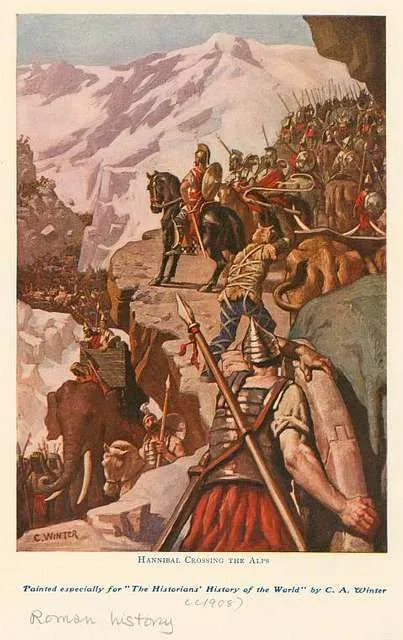
In 218 BC, during the Second Punic War, Hannibal, along with the Carthaginian army and all varieties of animals (ranging from your average human to decently massive elephants) crossed the Alps in the snow. His feat was extraordinary given the logistical constraints of his time and the sheer amount of effort needed to do that with thousands of men with provisions and weaponry. He even pushed his army on a grueling four-day march through the flooded marshes of the Arno before Lake Trasimene, an ordeal so brutal that Hannibal himself lost the sight in one eye to an infection.
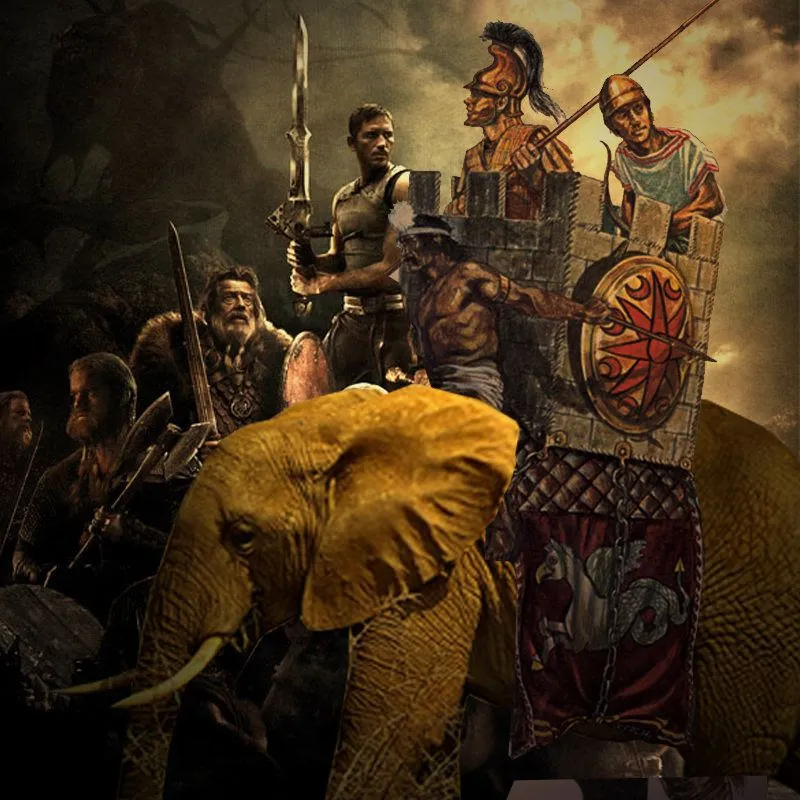
He then managed to rout much larger Roman armies, most famously at the Battle of Cannae in 216 BC, where his roughly 50,000 men encircled and destroyed a Roman force of around 80,000. He stayed in Italy for almost 15 years, during which he exercised not just military but also diplomatic genius, such that he commanded men from Carthage, Gaul and Spain against Rome. He led men of different socio-cultural values with different considerations and managed to keep his armies from falling apart in enemy territory, even after he was refused help from Carthage.
In fact, the reason he was ultimately defeated at the Battle of Zama in 202 BC was not incompetence. By then the Numidian cavalry that had won him his greatest victories had switched sides to Rome, so the Roman general Scipio Africanus held the cavalry advantage and used Hannibal's own encircling tactics against him.
In his time, he defined military art by incorporating strategy, topographical and demographic study, and effective manpower distribution in his warfare tactics. Many of the war tactics so commonly employed today can trace their origins to Hannibal Barca’s fight against Rome.
What Hannibal Signifies
While we all love a good tragic hero, who fights against all odds, Hannibal certainly does not fit the bill. He furthered a war that resulted in defeat for Carthage, cost its people heavily, and resulted in a peace treaty on the terms of the victor, the Romans, which robbed Carthage of its territories overseas and its treasury for war reparations. The Second Punic War also fueled another war. There are modern parallels that highlight how carnage has reaped little for posterity.
Within this context, Hannibal Barca was an African general, who temporarily brought to heel one of the greatest European empires (though at that point, Rome was in the process of qualifying itself as an empire) in history. He belonged to a Phoenician settlement and could easily have been Semitic, a term that describes peoples from the ancient Near East.
The crossing of the Alps and his Roman campaign’s success have colored him a hero, and if not that, at least a mighty enemy of Rome who was both feared and respected. He has come to identify an entire people (the way Caesar does the Romans and Ashurbanipal the Assyrians).
Conclusion
If today, I am writing this article in a Roman script (in a language that borrows many words derived from Latin), and you understand it, it is probably because Hannibal Barca was defeated and eventually, all of Carthage (for the Romans had decided and declared ‘Carthago delenda est!’). With Carthage gone and the confidence at having dealt with an opponent more established and backed, Rome, along with its culture and language, would go on to influence lifestyles and thought to the modern era and beyond. Carthage and its generals would become a mere chapter in Roman history.
Hannibal Barca, though defeated, would be neither forgotten nor surpassed. His military tactics would be studied for centuries to comprehend the art of war and its nuances, which transcend the mere act of beating the opposition, qualifying the true price of war.
References (click to expand)
- Michael Shammas. An Indomitable Will: Hannibal Barca and the Start of a World War. SSRN (Social Science Research Network)
- Michael McCabe. Hannibal Barca: For Carthage: The Right Man for the Wrong Time. The Histories, La Salle University
- Cornelius Nepos, Life of Hannibal: Latin Text, Notes, Maps .... JSTOR
- Lazenby J. F. (1998). Hannibal's War: A Military History of the Second Punic War. University of Oklahoma Press