The Romans didn't simply steal the Greek gods. Through a process called interpretatio, they merged Greek deities with their own (pairing Zeus with Jupiter, Aphrodite with Venus, Ares with Mars), absorbing the richer Greek myths into the gods they already worshipped.
Arguably dubbed the oldest and most famous act of plagiarism, the Roman pantheon (the collection of deities that the Romans worshipped) is notorious for stealing other gods and making them their own. The Romans, however, weren’t the only ones to do this (the Akkadians did it with Sumerian gods, while the Greeks and Egyptians had a complicated case of syncretization).
This “mixing” is based on a concept called Interpretatio graeca or Interpretatio romana, based on which culture you use as a starting point, wherein other traditions and religious systems are understood through an existing one, leading to shared features, gods, rituals and other parallels between the two.
Importing Gods
Through trade routes in the ancient world, along with grains and stones and animals, gods were often exported too! Traders who docked on shores abroad often carried idols and myths that gave birth to local cults, which could evolve and enter popular pantheons. The Mesopotamian goddess Ishtar, for example, travelled to Greece through the Phoenician goddess Astarte. Astarte, to the Greeks, became Aphrodite at Cythera, a Greek island, before the cult gained prominence to the extent that she entered the Olympian pantheon.

In general, it was a clever tactic to both enrich a culture and religion by adding established elements from other religions, and to keep conquered peoples within the fold of their conquerors. Conquered people were more likely to accommodate, if not accept, foreign rulers if they believed in and feared the same gods, and had similar cultures.
Mergers And Acquisitions
So, the question shouldn’t be why the Romans stole other peoples’ Gods at all. What they did was not stealing, but merging their own religion with that of the people they encountered and conquered. The most obvious connection is between the Roman and Greek gods (Jupiter-Zeus, Juno-Hera, Venus-Aphrodite and so on), but there were other instances of using local terminology for new gods.
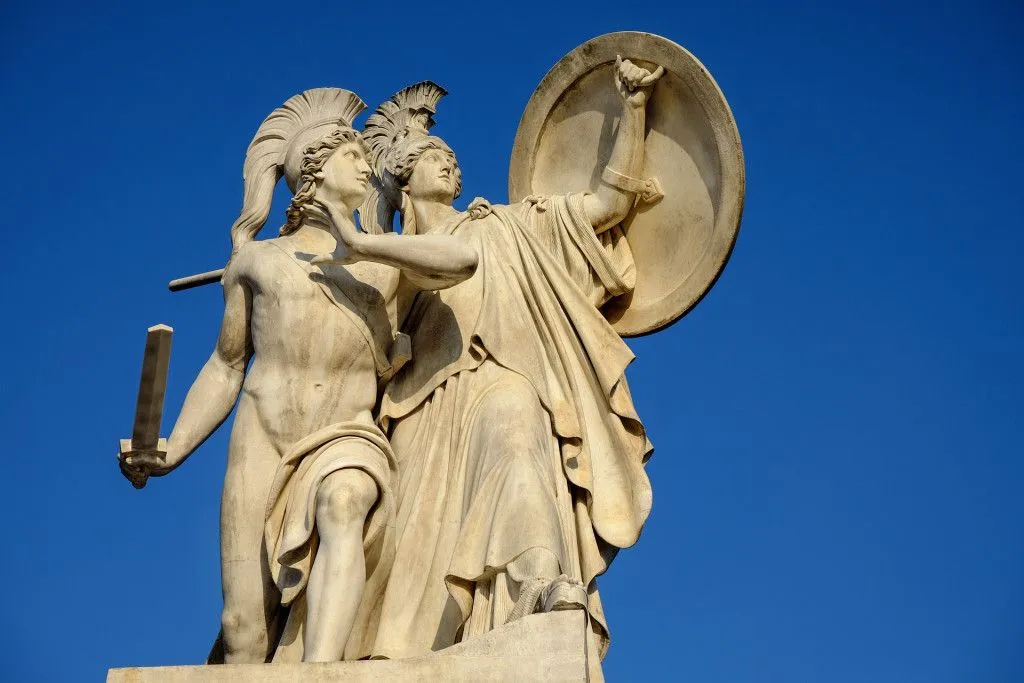
This syncretization of gods shows exactly how deep of a cultural impact Greece had on Rome. Syncretization wasn’t based on perfect synonymity, but usually on one common thread that may not have been very significant at all. Mars, a local Roman deity with agricultural roots, thus became associated with the Greek god of war, Ares. The common link here was the martial, warlike aspect they were both supposed to represent.
The Roman goddess Venus, a patron of agriculture and fertility, became syncretized with the Greek Aphrodite, a goddess of love and sexuality. The Egyptian goddess Isis had alternatively been referred to as Persephone, Demeter and Aphrodite. Aphrodite, in addition, was associated with the Egyptian goddess Hathor. Thus, syncretization was an imperfect and complicated process, one where the ease of a myth was given importance over precision in domain and influence (a god’s stories had more weight than his powers, so to speak).
A Common Link?
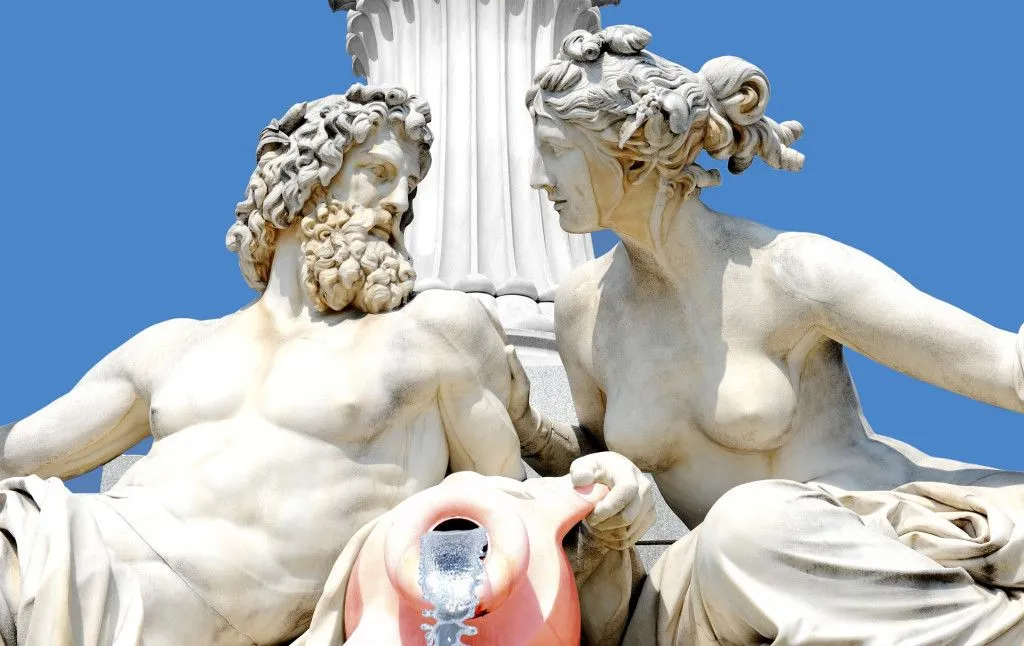
Sometimes these gods were associated with each other due to their very obvious common features, domains and spheres of influence. Thus, the King of the Gods, the head of the pantheon, Jupiter, became associated with Zeus, while the Queen of the Gods and goddess of marriage, Hera, became associated with Juno. However, much like the languages of the Proto Indo-European family, it seems that their gods also had a common ancestor. *Dyḗus was the common sky god from whom the Roman Jupiter or Jove, Greek Zeus, Vedic Dyaus Pita, and Albanian Zojz, among others, descend. A similar idea diverges when these traditions are developing and converges when they interact later on.
Of course, this isn’t an all-pervasive theory, and cannot explain the syncretization in every case, but it does show how some of these relations weren’t motivated simply by exigencies (the Romans adopted the Anatolian goddess Cybele after a prophecy claiming that to defeat Carthage in war, they would have to import the goddess) or cultural impacts. A parallel in cases like this was drawn because there were shared roots.
Which Civilization Borrowed The Most Gods From Greece?
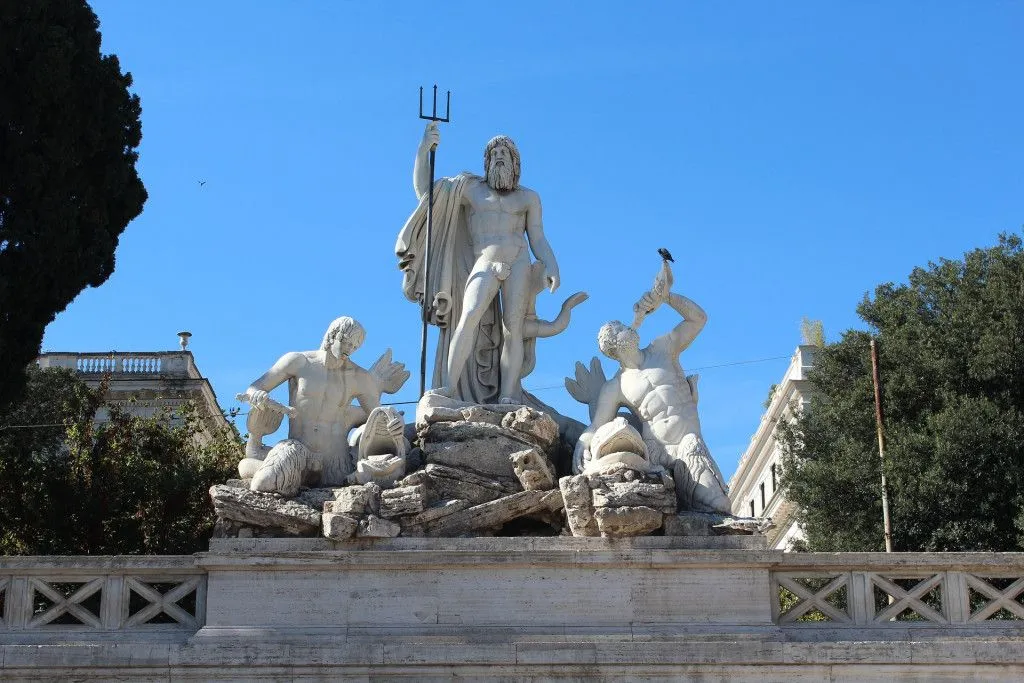
If you have ever been asked which ancient people took the most gods from Greek mythology, the answer that history points to is the Romans. Almost the entire upper tier of the Roman pantheon has a recognizable Greek twin, which is why a Roman temple and a Greek one could feel like two branches of the same family. The Romans generally kept their own old Latin names but adopted the richer Greek myths told about each figure, so the stories of Zeus simply migrated under the name Jupiter (the World History Encyclopedia notes that, with only a few exceptions, most of the Roman gods had a Greek counterpart).

Here are the headline pairings, with the Greek deity first and the Roman name second:
- Zeus → Jupiter (king of the gods, sky and thunder)
- Hera → Juno (queen of the gods, marriage)
- Poseidon → Neptune (the sea)
- Athena → Minerva (wisdom and war)
- Ares → Mars (war)
- Aphrodite → Venus (love)
- Hephaestus → Vulcan (the forge)
- Hermes → Mercury (messengers and trade)
- Artemis → Diana (the hunt and the moon)
- Demeter → Ceres (the harvest)
- Dionysus → Bacchus (wine)
- Hades → Pluto (the underworld)
- Hestia → Vesta (the hearth)
Notice that Apollo barely changes at all, since the Romans imported him under his own Greek name. Under this Greek influence the Roman gods even became more anthropomorphic, picking up the very human jealousy, love and spite of their Olympian models. So while plenty of cultures syncretized a god or two, none absorbed Greek mythology as wholesale as Rome did.
What Else Did The Romans Borrow From The Greeks?
Gods were only the beginning. Once Rome conquered the Greek world in the 2nd and 1st centuries BCE, Greek culture flooded back across the Mediterranean and reshaped Roman life so thoroughly that the poet Horace summed it up in a famous line: Graecia capta ferum victorem cepit, or "captive Greece took captive her savage conqueror, and brought the arts into rustic Latium." Horace himself, as the World History Encyclopedia records, openly admired the Greeks and believed Rome had to acknowledge their superiority in intellectual and cultural fields.

The borrowing showed up everywhere a Roman looked:
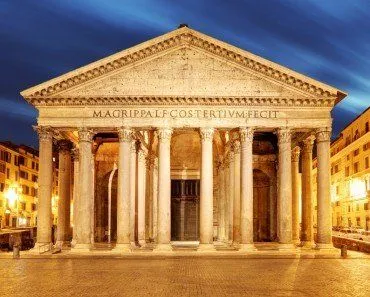
- Architecture: Roman builders kept the three Greek column orders (Doric, Ionic and Corinthian) and favored the ornate Corinthian above all. You can still see those Greek-style columns fronting the portico of the Pantheon in Rome. What the Romans added was their own: concrete, the arch, the vault and the dome, which let them build on a scale the Greeks never attempted.
- Literature and theatre: Roman literature only really began near the end of the 3rd century BCE, and it began as adaptation. Comic playwrights such as Plautus and Terence reworked Greek comedy for the Roman stage, often setting their plays in Greek cities with Greek-named characters.
- Philosophy: Educated Romans took up Greek schools of thought, with Stoicism and Epicureanism becoming hugely influential among the Roman elite.
- Art: Roman generals shipped home Greek statues as war booty, and Roman sculptors copied Greek originals so faithfully that many lost Greek masterpieces survive today only as Roman marble copies.
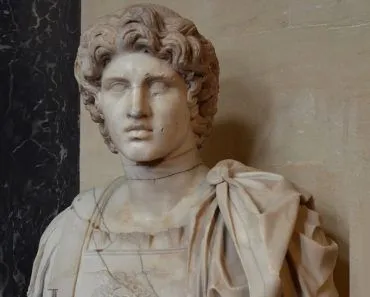
This wave is what historians call Hellenization, and it built on the Greek culture that Alexander the Great had already spread across the eastern Mediterranean. So when people ask what the Romans took from the Greeks, the honest answer is: not just the gods, but the columns, the plays, the philosophy and much of the art that we now think of as classically "Roman."
Conclusion
The Romans were adapting other traditions to make better sense of their own, which is not an uncommon thing to do even today. People who learn a new language or visit a new country use the additional information from that new experience and understand it in terms of their original way of thinking. By drawing parallels to an existing pool of information, a new set can be incorporated into the existing corpus.
It turns out, therefore, that the Romans weren’t plagiarizing, but were actually using others’ stories as undiscovered but existing background info for their own!
References (click to expand)
- Ogilvie R. M. (2011). The Romans And Their Gods. Random House
- (1963) The Greeks under the Roman Empire - JSTOR. JSTOR
- R Nickel. Myths of the Greek and Roman Gods. openlibrary-repo.ecampusontario.ca
- Walton, F. R., & Scheid, J. (2015, December 22). Cybele. Oxford Research Encyclopedia of Classics. Oxford University Press.
- (1996) From Ishtar to Aphrodite - JSTOR. JSTOR
- Dyaus. Encyclopaedia Britannica.
- Roman Religion. World History Encyclopedia.
- Roman Literature. World History Encyclopedia.
- Roman Architecture. World History Encyclopedia.