Ancient Egyptians revered cats for two main reasons. First, cats protected grain stores from mice, rats, and snakes, which made them economically priceless to a civilization built on Nile-valley agriculture. Second, several Egyptian deities (most famously Bastet, the goddess of home, fertility, and protection, and Sekhmet, the lioness of war and healing) were depicted with cat features, so cats themselves came to be treated as sacred reminders of divine protection (strictly speaking, Egyptians revered the gods that cats represented, not the animals as gods).
When you think of Egypt or its ancient civilization, what’s the first thing that comes to your mind? The pyramids? Hieroglyphic paintings? The Sphinx? Cleopatra? All iconic, of course, but for me, the first thing that pops into my head is cats. Ancient Egypt is the place that took an opportunistic desert cat and turned it into something close to a household god.
Protectors Of Food
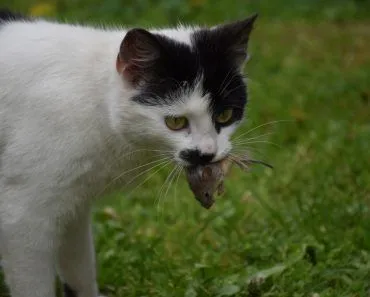
Ancient Egyptian civilization ran on grain. Mud-brick granaries packed with emmer wheat, barley, and flax underwrote the tax system, the temples, and almost every meal. They also acted as gigantic buffets for house mice, black rats, and the dozen-odd snake species that share the Nile delta, including cobras and vipers. Cats, which silently kill all three, were not a luxury for ancient Egyptians; they were pest-control infrastructure.
The relationship is older than most people realize. At Hierakonpolis in Upper Egypt, archaeologists have found Predynastic burials (c. 3800–3600 BCE) containing a jungle cat with healed leg fractures (meaning it had been cared for by humans for weeks) and a separate pit with a male, a female, and four kittens buried together. That pushes deliberate cat-keeping in Egypt back nearly 2,000 years earlier than older estimates.
Symbiotic Relationship With Cats
Cats weren’t bred into existence the way dogs were. The current view is that the African and Near Eastern wildcat (Felis silvestris lybica) essentially walked into the deal: when humans started storing grain in Neolithic villages of the Fertile Crescent around 10,000 years ago, rodents followed the grain and wildcats followed the rodents. The friendlier individuals tolerated humans, humans tolerated them back, and a long, lazy commensal partnership began.
A landmark 2017 paleogenetics study (Ottoni et al., Nature Ecology & Evolution) sequenced ancient cat DNA from across 9,000 years and 30 archaeological sites. It found two big dispersals: an early Near Eastern lineage, then a distinctly Egyptian mitochondrial lineage that spread across the Mediterranean and Europe from the 1st millennium BCE onward, hitching rides on trade and naval ships. A follow-up paper in Science in late 2025 (De Martino, Ottoni et al.) used nuclear DNA to show that fully domestic cats only reached Europe roughly 2,000 years ago, and that the most likely source was Roman-era North Africa, with Egypt at the center of the dispersal. In other words, the cat sitting on your laptop today is, genetically speaking, closer to an Egyptian temple cat than to anything Mesopotamian.
Beliefs, Myths And Cats
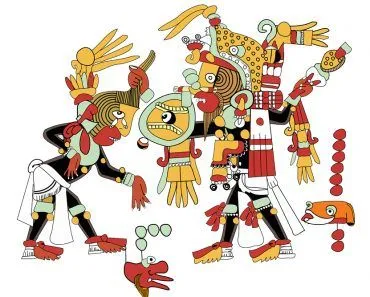
Cats were stitched into Egyptian theology from very early on. The earliest cat-like deity, Mafdet, appears in First Dynasty records (around 3100 BCE) as a panther-like protector who slays snakes and scorpions on behalf of the pharaoh. Later, Bastet (also Bast) took over as the most popular feline goddess. Her cult center was Bubastis (Tell Basta) in the Nile Delta, and although she was originally depicted as a lioness, she shifted to a domestic-cat form once house cats became common around 1500 BCE. She was a daughter of the sun god Ra, and she presided over home, fertility, music, and the protection of pregnant women and children.
Sekhmet, the lioness-headed "Powerful One," ran the harsher side of the same divine family. She was the destroyer that Ra sent to punish humanity, but also a goddess of healing whose priests were among Egypt’s earliest physicians. In the Book of the Dead, the "Great Cat of Heliopolis" (a form of Ra himself) is shown decapitating the chaos serpent Apophis under the sacred ished tree, a scene painted on tomb walls in places like Deir el-Medina. A cat that killed snakes, in other words, was doing the work of the sun god.
The Greek historian Herodotus visited Egypt in the 5th century BCE and wrote that the annual festival of Bastet at Bubastis drew enormous crowds (his figure of 700,000 attendees is almost certainly inflated). But the basic picture is clear: cats stood at the busy intersection of fertility, sunlight, protection, and household luck.
Did Ancient Egyptians Actually Worship Cats As Gods?
Here’s a twist that might surprise you: according to the curators who study them, the ancient Egyptians didn’t really worship cats, at least not in the way we usually picture it. When NPR asked Antonietta Catanzariti, curator of the Smithsonian’s Divine Felines exhibition, whether the Egyptians worshipped cats, her answer was blunt: “No, they did not worship cats. What they did is to observe their behavior.”

What the Egyptians observed was a split personality. Cats and lions were gentle, protective mothers one moment and quick, precise killers the next. Gods with that same mix of nurturing and ferocity were often given feline features. As Yekaterina Barbash of the Brooklyn Museum (where Divine Felines was first organized) puts it, “Egyptians did not worship felines.” Rather, they believed that feline deities shared certain character traits with the animals. The cat on your windowsill was a reminder of Bastet, not Bastet herself.
Cats weren’t unique in this, either. The Egyptians tied many animals to their gods: the falcon to Horus, the crocodile to Sobek, the jackal to Anubis, the ibis to Thoth, and the cow to Hathor. Only a few individual animals were treated as a god’s living vessel, the most famous being the Apis bull. There was only ever one Apis bull alive at a time, and its death triggered national mourning and royal ritual. The millions of other animal mummies, cats included, were votive offerings. Pilgrims bought and dedicated them at sacred sites like Saqqara and Bubastis, hoping that the properly buried animal would intercede with the god on their behalf. The dog catacombs of Anubis at Saqqara alone may once have held up to 8 million animals, most of them young dogs, often just days or weeks old, which puts even the cat cemeteries in perspective.
So when people say Egypt “worshipped cats,” what they really mean is that Egypt worshipped gods who looked, and behaved, a lot like cats. The cats just got the VIP treatment by association (which, if you’ve ever met a cat, they probably felt was overdue).
Ancient Egyptians And Their Utmost Devotion To Cats
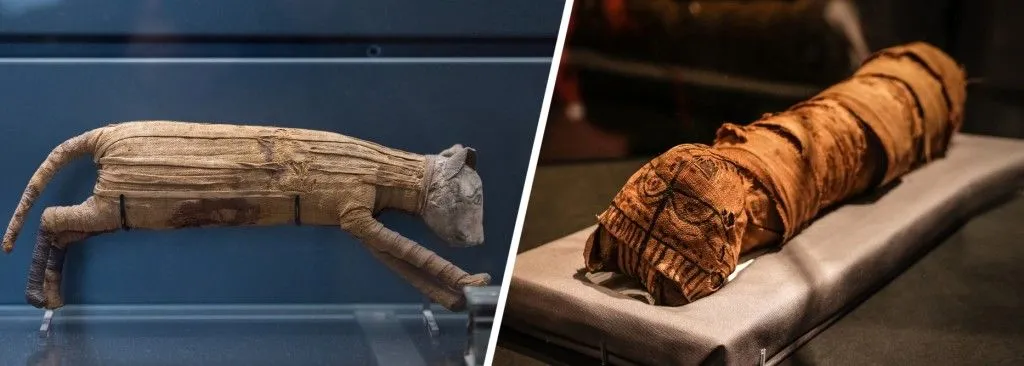
Devotion turned into industry. From the Late Period through Ptolemaic times (roughly 664–30 BCE), pilgrims at Bastet’s temples could buy mummified cats as votive offerings, and entire catacombs were carved out to hold them. The Bubasteion at Saqqara is one such complex; another cat cemetery, at Beni Hasan, was emptied on an industrial scale in the 19th century: in 1890, some 19.5 tons of its cat mummies were shipped to Liverpool and crushed up for use as fertilizer. CT scans of surviving mummies show many were 2 to 9 month-old kittens, bred and killed specifically for the votive trade, an uncomfortable footnote to all the reverence.
Several famous stories of Egyptian cat-worship come from Greek and Roman writers, and they should be read with some caution. According to the Roman-era Greek author Polyaenus (writing more than 600 years after the event), the Persian king Cambyses II won the Battle of Pelusium in 525 BCE by having his soldiers march behind cats and paint cat images on their shields, leaving the Egyptians too afraid of harming sacred animals to fight back. The story is delightful, but Herodotus (our earliest surviving account of the battle) doesn’t mention it at all, and most modern historians treat the cat-shield tale as a later moralizing embellishment rather than military history.
Diodorus Siculus, writing in the 1st century BCE, claimed that killing a cat (even accidentally) was punishable by death in Egypt, and that the state sent agents abroad to retrieve smuggled cats. No Egyptian legal text mandating either of these has been recovered, so they’re best read as one ancient observer’s account rather than a confirmed Egyptian law code. What is well attested is everything else: cats were routinely mummified and buried with grave goods, owners shaved their eyebrows in mourning when a household cat died, and ongoing excavations at Saqqara (including major Egyptian-led missions in 2018, 2019, and 2022) keep turning up new cat mummies, cat statues, and bronze figurines of Bastet.
Why Is The Mummy Afraid Of Cats?
If you grew up on Hollywood adventure films, your first brush with Egyptian cats might have been The Mummy (1999). In it, the resurrected high priest Imhotep, a villain who can unleash biblical plagues, recoils in terror from an ordinary white house cat. When the heroes ask why he doesn’t like cats, the answer comes back: “Cats are the guardians of the underworld. He will fear them until he is fully regenerated.”
That line is movie mythology, not a quote from any Egyptian text, but it does have a real ancient echo. In Spell 17 of the Book of the Dead, a great cat (a form of the sun god Ra himself) guards the sacred tree at Heliopolis and slices into the chaos serpent Apophis with a knife. In Egyptian myth, Apophis attacked the sun god’s boat every night as it sailed through the underworld, trying to kill Ra and stop the sunrise. So a cat really was pictured as a defender against the forces of darkness, which is probably as close as ancient Egypt gets to Hollywood’s idea.

Nobody in ancient Egypt ran away from cats, though. Quite the opposite. Pilgrims offered countless images of seated cats and cats with kittens to Bastet, many inscribed with wishes for health, children, life, and protection. A cat was the creature you wanted on your side, not the one you feared. If anything, an undead priest in Egypt should probably have been more worried about Anubis, the jackal-headed god of mummification.
Why Did Cat Worship In Egypt Come To An End?
If cats were so revered, why aren’t there still temples full of them along the Nile? The short answer is that Egypt’s religion changed, and the cat cults went down with the old gods.
The decline was slow. As National Geographic notes, animal cults began falling out of favor by the end of the Ptolemaic period in the 1st century BCE. During Roman rule, as Christianity spread through Egypt, the old gods were gradually abandoned. A monotheistic faith had no place for a cat goddess, let alone for a temple economy that bred kittens to be sold as mummified offerings.

The final blow was legal. In a series of decrees between 389 and 391 CE, the Roman emperor Theodosius I effectively banned pagan worship across the empire. Scholar Kevin Wilkinson has argued in the Journal of Roman Studies that temple cults in Alexandria had been legally exempt from earlier bans until 391, when Theodosius took that protection away. Around the same time, the Serapeum, Alexandria’s grandest temple, was torn down.
The cats themselves didn’t go anywhere, of course. As the genetic studies above show, domestic cats were already spreading from North Africa across the Roman world by then. They simply traded divinity for their original day job, keeping mice out of the granary, which is right where this whole story began.
So, now you know why Egyptians loved their cats so much: a mix of solid agricultural economics, deep religious symbolism, and a few centuries of compounding cultural affection. Next time you see one on the street, you may want to treat it with a bit more respect, just like ancient civilizations were doing thousands of years ago.
References (click to expand)
- Cats in the Ancient World. World History Encyclopedia.
- Ottoni, C., Van Neer, W., De Cupere, B., et al. (2017). The palaeogenetics of cat dispersal in the ancient world. Nature Ecology & Evolution.
- De Martino, A., Ottoni, C., et al. (2025). The dispersal of domestic cats from North Africa to Europe around 2000 years ago. Science.
- Bastet. Encyclopaedia Britannica.
- Bubastis. Encyclopaedia Britannica.
- Van Neer, W., et al. (2014). More evidence for cat taming at the Predynastic elite cemetery of Hierakonpolis. Journal of Archaeological Science.
- No Kitten Around: Museum Exhibit Celebrates ‘Divine Felines’ (2017). NPR.
- Barbash, Y. Cats, Bastet and the Worship of Feline Gods. American Research Center in Egypt.
- “Divine Felines” Highlights the Importance of Cats in Ancient Egypt. Smithsonian’s National Museum of Asian Art.
- Ikram, S., & Nicholson, P. (2018). Sacred Animal Cults in Egypt: Excavating the Catacombs of Anubis at Saqqara. Expedition Magazine, Penn Museum.
- From cats to cows to crocodiles, ancient Egyptians worshipped many animal gods. National Geographic.
- Apophis. World History Encyclopedia.
- Wilkinson, K. W. (2025). A legal exemption for the temple cults of Rome and Alexandria in the fourth century. The Journal of Roman Studies.
- Persecution of pagans under Theodosius I. Wikipedia.
- Animal mummies revealed (2016). Department of Archaeology, Classics and Egyptology, University of Liverpool.