Table of Contents (click to expand)
People feel heavier when they are unconscious because their body has gone limp. This limpness means that the person’s weight is imbalanced and constantly shifting. So, one would have to put in more effort to hold person in such a way that their weight remain equally balanced. When a person is awake, they are able to control their muscles and maintain their center of gravity.
Have you ever had to pick up your partner from the couch after they fell asleep during a movie? What about ensuring that a friend who has had a few too many drinks gets safely to bed? If you’ve ever tried to pick up or lift an unconscious person, you’ll have noticed one very important thing.
Aside from the task being a bit annoying, it also feels like the person is heavier than they normally would be. It doesn’t seem to make physical sense, and yet anecdotal evidence and the experience of millions of people seem to say otherwise…. so why do unconscious people feel heavier?
What Is Dead Weight?
There is a term that you’ve likely heard before, when someone or something is “dead weight”. That phrase seems a bit morbid, but it stems from the experience of this very phenomenon. When someone is “dead” or “unconscious”, the person does appear to weigh more, but in reality, this apparent weight change has very little to do with the presence of life or consciousness, and much more to do with the placement of weight.
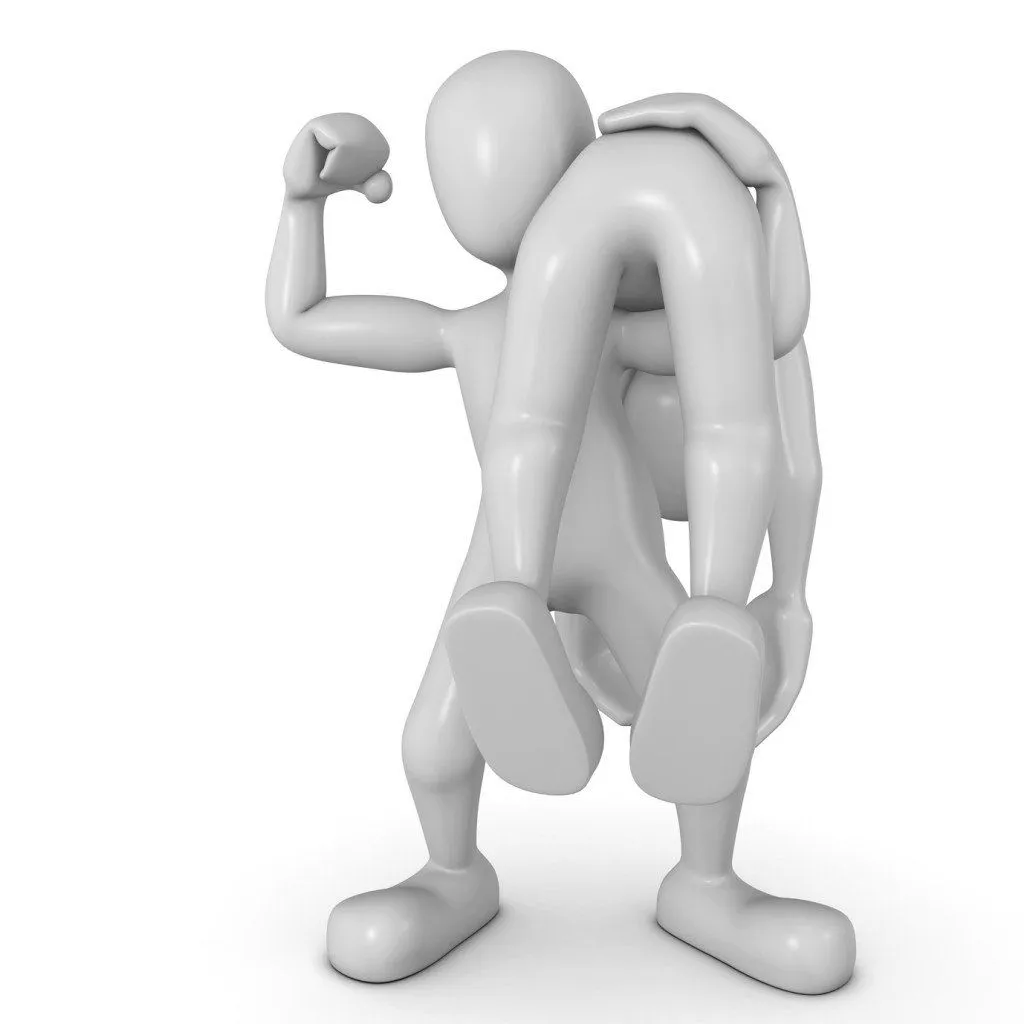
Center of mass is an important consideration when lifting anything; if you pick up a 100-pound box, it would be much easier than picking up a 100-pound pile of assorted metal junk, because balancing that unequally distributed weight would impact your own balance and stability. You wouldn’t be able to engage the same muscles in a continual exertion.
Instead, you would be compensating for the shifting parts of the pile, adjusting your grip and balance with every step and change in weight distribution. This would require more effort and strain for you, thus making it seem heavier than a compact 100-pound package.
The Difference Between Carrying A Conscious And An Unconscious Person
In answer to our main question of this article, when a conscious person is being carried or picked up, their core often contracts and their muscles tense in an effort to make them a more “manageable package”. Even if you are injured or being rescued by someone (say Superman or a SWAT officer), you will likely wrap your arms around their neck, and try to remain as still as possible.
This isn’t a conscious decision by most people to maintain their center of mass; it’s simply a more convenient and safe way to be carried for everyone involved.
If you are unconscious, however, that idea of dead weight comes into play. Your limbs will likely be limp and swinging to and fro without any effort to stop them, and your head will be rolling from side to side. You will be much more likely to slip out of someone’s grasp when your body fails to react to bumps, jolts, and even simple steps taken by your carrier.
The center of mass becomes a dynamic element of the person’s body, and ceases to be held directly in the hands. Some of that mass shifts to below the body, where the swinging limbs are, making it much harder to control. Furthermore, all the responsibility lands squarely on the carrier’s arms and back.
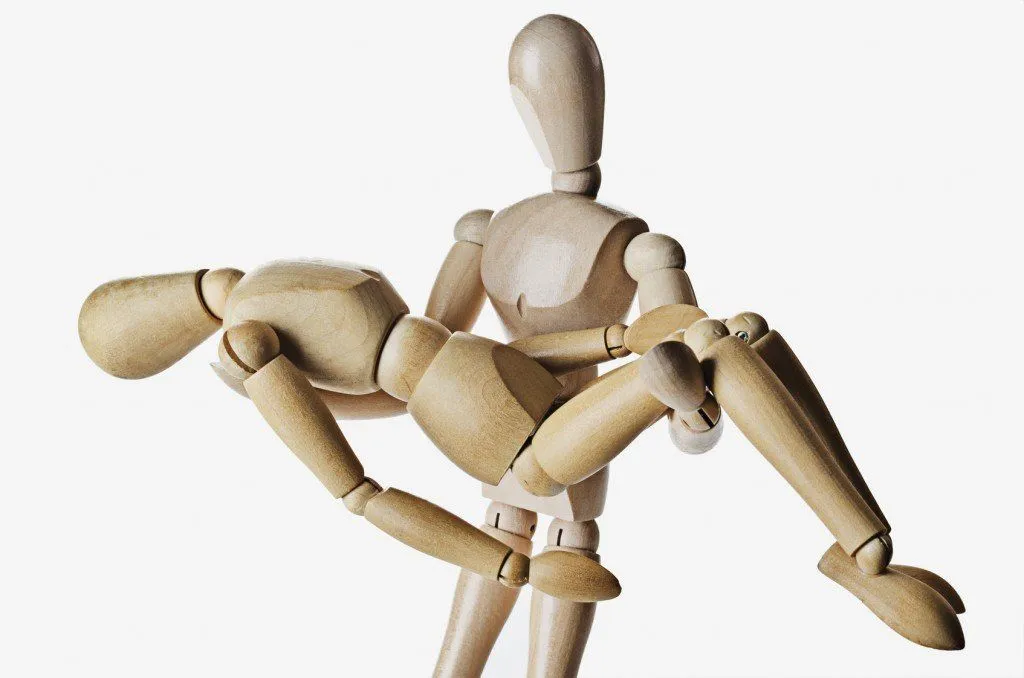
When a conscious person wraps their arms around a carrier’s neck, some of their weight is managed by the muscles of the neck and shoulders, thus relieving some of the strain from the arms and back. Dead weight doesn’t have any consideration like that, however, and just flops around like a sack of potatoes, weighting us down.
Even if someone being carried doesn’t wrap their arms around the person’s neck to hold on, they will still unconsciously tighten their core and other muscle groups to make the trip as comfortable and manageable as possible.
In other words, for any of those people worried about putting on weight the moment they die, or about mysterious mass gain once they fall asleep, stop worrying! Better yet, just avoid situations when you might end up needing anyone to pick you up – like a crazy night out at the club.
What Does “Dead Weight” Actually Mean?
Strip away the morbid imagery and “dead weight” is really just a handling term. It describes any load that does nothing to help you move it. A cooperative passenger steadies their own head, grips your shoulder, and quietly braces their core, so a big chunk of their mass is, in effect, managing itself. A limp body offers none of that. Every kilogram has to be controlled by you, the carrier, alone.
So is dead weight a real thing? Absolutely, but not in the way the phrase implies. The person is not physically heavier. Put an awake adult and that same adult, fully relaxed, on a bathroom scale and the number will not budge. What changes is the distribution and predictability of that weight. A conscious person is a single, stable package; an unconscious one is closer to a bag of loose sand that keeps sloshing toward whichever side is lowest.
That sloshing is the whole story. As we saw above, a shifting load forces your muscles into constant micro-corrections instead of one steady hold, and it drags your combined center of mass away from the strong, stacked position your body wants. Your back and arms end up doing extra work just to stop the load from rolling out of your grip. The brain reads all that added effort as “this is heavy,” even though the scale would politely disagree.
Do Bodies Really Get Heavier When You Die Or Fall Asleep?
This is where folklore quietly sneaks in. People have long assumed a corpse, or even a sleeping friend, somehow gains mass. It feels true when you are the one doing the lifting. It is not.
The most famous version of the myth comes from a 1907 experiment by physician Duncan MacDougall, who weighed dying patients and claimed the body lost about 21 grams (0.7 oz) at the instant of death, supposedly the weight of the departing soul. Modern reviewers are blunt about it: the sample was tiny, the method sloppy, and the results all over the place. MacDougall even admitted his handful of trials proved nothing. There is no measurable mass lost at death, and certainly none gained.
The same goes for sleep. You do not pack on grams when you drift off. What actually changes is your muscle tone, the faint, involuntary tension your muscles hold even at rest to keep you upright against gravity. When you fall asleep, that postural tone steadily drops from wakefulness through light sleep, and during REM sleep it nearly switches off entirely, a state called muscle atonia that briefly leaves you almost paralyzed. An unconscious or heavily intoxicated person loses that tone for the same neurological reason. The mass is identical; the body has simply stopped holding itself together, so all the work transfers to you.
It is a close cousin of why a pilot who blacks out goes instantly limp: cut the conscious and reflexive control of the muscles, and the body becomes a passive object obeying nothing but gravity.
How Much Harder Is Dead Weight To Lift?
There is no tidy “dead weight is X percent heavier” figure, because the difficulty is not extra mass, it is extra load on your spine from poor leverage. Biomechanics, though, gives us a clean way to picture it.
The strain on your lower back depends less on how many kilograms you hold and more on how far that weight sits from your spine. Lifting researchers call this the moment arm. Cornell University’s ergonomics notes work a tidy example: a 14 kg (30 lb) load held about 45 cm (18 in) in front of the lumbar spine produces a turning force of roughly 540 inch-pounds on the lower back. Pull that same load in tight against your body and the strain drops sharply, which is exactly why every safe-lifting guide repeats the mantra “hug the load close.”
Now apply that to a limp body. You cannot hug a sleeping adult tight, because their arms, head, and legs keep flopping outward, pushing mass away from your spine and lengthening that moment arm with every step. A cooperative person does the opposite, curling in toward you and shortening the lever. So a 70 kg (154 lb) friend who has passed out can feel dramatically harder to carry than a 70 kg friend giving you a piggyback ride, even though a scale insists they weigh exactly the same. The numbers on your back, not on the scale, are what changed.
Why A Real Corpse Handles Differently From A Sleeping Body
People often lump “dead bodies” and “sleeping bodies” together, but they do not behave the same way in your arms, and the reason is rigor mortis.
For the first hour or two after death, a body is just as floppy as a sleeping one, since muscle tone is gone and nothing is holding the limbs in place. Then chemistry takes over. Living muscle needs a constant supply of ATP (the cell’s energy currency) to let its contractile filaments release and relax. After death, ATP production stops, calcium leaks into the muscle fibers and locks the actin and myosin filaments together, and the muscles seize. According to StatPearls, rigor mortis begins about 1 to 2 hours after death, reaches full stiffness around 12 hours, then gradually fades as tissues break down.
That stiffening changes the handling, not the weight. A body in full rigor is rigid rather than floppy, so it no longer sloshes, but it also cannot be repositioned or curled in close, which brings its own awkwardness. Crucially, none of this is a change in mass. Whether a body is asleep, unconscious, freshly deceased, or stiff with rigor, the scale reads the same number. If you want the full sequence of what happens to the body over the hours and days afterward, we cover it in our piece on the stages of death.
References (click to expand)
- Biomechanics of Safe Lifting. Cornell University
- Ergonomics - OSHA Technical Manual
- Muscle Tone Physiology and Abnormalities. Toxins (Basel), 2021 (PMC).
- Control of Motoneuron Function and Muscle Tone During REM Sleep. PubMed.
- Postmortem Changes (Rigor Mortis). StatPearls. NCBI Bookshelf.
- The 21 Grams Experiment That Tried to Weigh a Human Soul. Popular Science.
- Applications Manual for the Revised NIOSH Lifting Equation. NIOSH / CDC.