Table of Contents (click to expand)
- Wild Animals Develop A Tolerance Towards ‘Bad’ Water
- Not All Water Sources Are Contaminated To A Dangerous Level
- Not All Bacterial Illnesses Are Necessarily Fatal
- Evolution Plays A Role.
- Animals That Drink Water From Dirty Ponds Die All The Time
- Why Can Animals Drink Dirty Water But Humans Can’t?
- How Do Animals Get Their Water In The First Place?
- Are There Animals That Never Drink Water?
Because they repeatedly drink water from the same source, or drink water with bacterial profiles that are not drastically different from each other, their bodies tend to develop a sort of resistance against such ‘bad’ water.
You will agree that free access to clean, drinkable water is one of the greatest challenges facing the modern world. Our planet is home to more than 8 billion humans, but there are still parts of the world where a bottle of clean, hygienic water is considered a prized possession.
I stress the word “clean” because water that is otherwise filled with germs or is unhygienic in other ways does more harm than good to one’s well-being.
Therefore, one should always take proper precautions while drinking water, especially when traveling abroad. This makes perfect sense, as waterborne diseases are among the deadliest diseases and cause more than a quarter of a million deaths worldwide each year.
However, here’s an interesting question: If drinking unclean water is so bad, how do wild animals, whose primary – or, in fact, only – water source are rivers, ponds, and lakes that are anything but hygienic, survive drinking this germ-ridden water? Why does it seem like beasts of the wild do just fine drinking ‘bad’ water?

There are a few reasons for this, and we will look at some of them below.
Wild Animals Develop A Tolerance Towards ‘Bad’ Water
Forests are not usually teeming with water bodies. In other words, there are only a handful of lakes, ponds, or other small bodies of water that quench the thirst of a lot of animals that live in nearby wildlife areas.
In fact, many animals come from far-flung regions, braving dangers on their path just to seek out a source of water. As a result, these animals do not really have the choice to give up on one lake and casually stroll across to another. They have to drink water from that very lake – their lives depend on it!
Because they repeatedly drink water from the same source or drink water with bacterial profiles that are not drastically different from each other, their bodies tend to develop a sort of resistance to such ‘bad’ water. Their immune system recognizes certain bacteria through repeated encounters with them and becomes more effective in dealing with them.
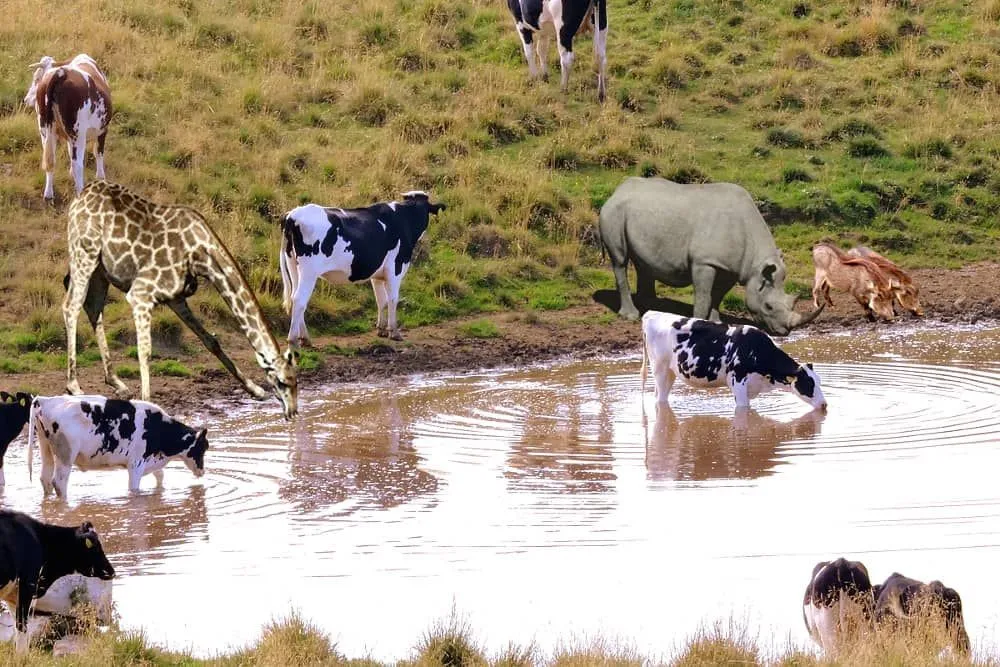
However, if a particular body of water suddenly undergoes a major change in its profile of pathogens, it will certainly lead to the death of a large number of animals who drink from it.
Not All Water Sources Are Contaminated To A Dangerous Level
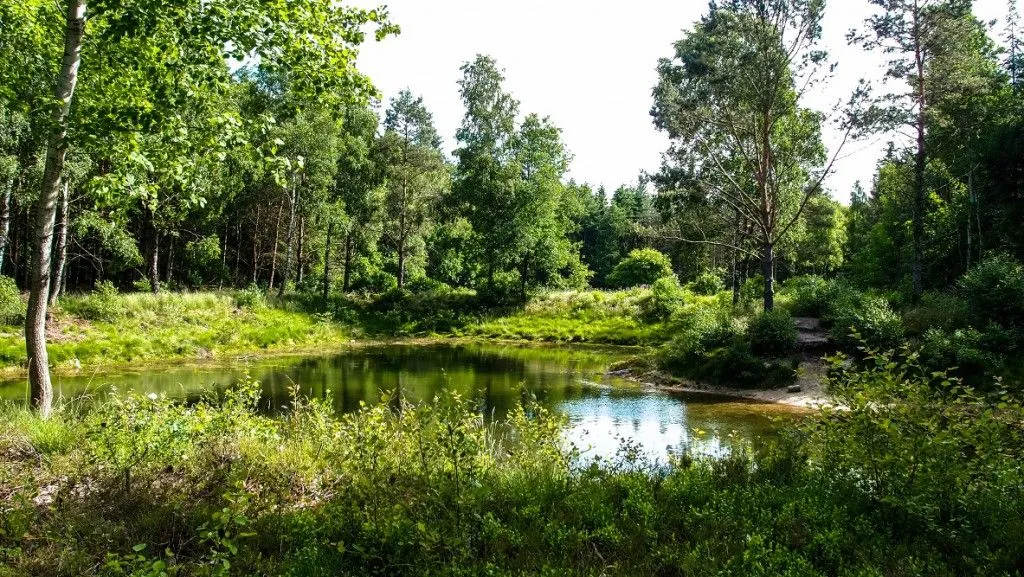
Many people believe that the water sources in the wild are all contaminated to a large degree, but they are not all that bad in reality. I mean, they may be contaminated to some extent, but they are not so full of germs that it will be a problem for anyone who drinks them, whether they are animals or even humans.
Moreover, most mammals have a finely developed sense of smell, which helps them determine to a certain extent whether a water body is bacteriologically active. When they encounter such a body, they often simply pass on the idea of drinking from it.
Not All Bacterial Illnesses Are Necessarily Fatal
As it turns out, many illnesses caused by bacteria or other pathogens present in water bodies aren’t life-threatening. In that sense, they’re more of an inconvenience than an actual threat to the lives of anyone who drinks from these water bodies.
Evolution Plays A Role.
The animals that survive after drinking water from “dirty” ponds will reproduce and pass on their “superior immune system” genes (this is not formal and recognized nomenclature) to their offspring, who then become inoculated (sort of) against a certain profile of microorganisms that occur in water.
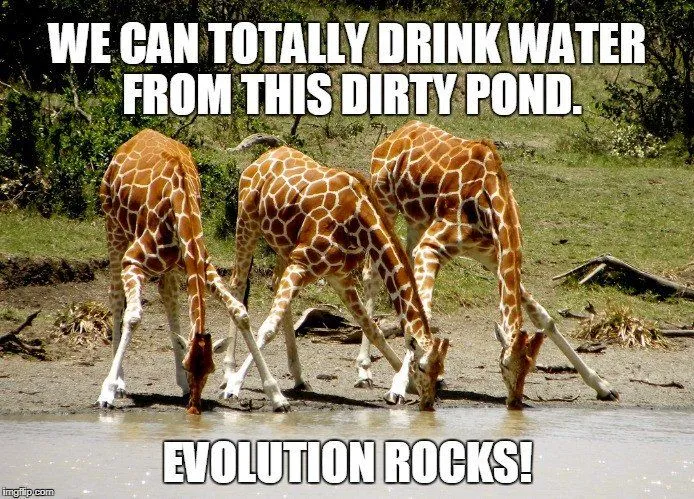
This is an oversimplification of the underlying evolutionary process. Still, in short, it simply means that animals that can drink water from the dirtiest puddles without major consequences have an advantage over those that become sick or die.
Animals That Drink Water From Dirty Ponds Die All The Time
Having read all the above points, one might think that animals digest even the dirtiest water fairly well and that drinking unclean water isn’t that bad.
If you have this idea, then let me tell you something…

The truth is that animals get sick and die all the time from drinking bad water. We only see them drinking water from such dirty ponds and assume that they digest all the contaminated stuff like champs. However, we do not see them hiding somewhere (under the bushes or in the undergrowth), puking themselves out, and dying prematurely from infections they have contracted from the water they have drunk from a filthy pond.
Many animals tend to hide when they are dangerously ill and stay in hiding until they recover or die. Therefore, you normally don’t see the animals who have become ill from drinking water from dirty sources. This hiding behavior is a survival instinct that reduces predation risk when an animal is vulnerable. A somewhat analogous behavior in humans is terminal burrowing, observed in cases of severe hypothermia (Source).
In a nutshell, while it is true that not all water bodies in the wild are so contaminated that even a sip of water from them will kill anything that drinks from them, that does not mean that it is inherently okay to drink contaminated water and assume that one’s immune system will protect them, regardless of how bad the water is.
Why Can Animals Drink Dirty Water But Humans Can’t?
This is the question that probably brought you here, so let me address it head-on. The honest answer is that the gap is smaller than people imagine, but it is real, and it comes down to three things: the chemistry of the gut, the company of microbes living in it, and a lifetime of exposure.
Start with stomach acid. Our stomachs are surprisingly acidic, sitting at roughly pH 1.5, and that acidity is not just for digestion. A study published in PLOS ONE in 2015 that compared 68 species of birds and mammals found that scavengers and meat-eaters keep the most acidic stomachs of all, and that this acid works as a chemical filter, controlling which microbes survive long enough to reach the gut. The same study noted that humans, despite being omnivores, have scavenger-like acidity, a hint that our ancestors ate their share of risky food. That low pH kills many waterborne germs before they get a foothold, which is why a sip of murky water does not automatically make an animal (or a person) ill.

The second factor is the community of gut bacteria an animal carries. A wild animal that drinks from the same pond every day hosts a microbiome that has, in effect, met the local germs before and learned to crowd them out. Our guts, by contrast, are tuned to filtered tap water, refrigerated food and a far cleaner microbial world, so they have never built that defense.
The third factor is plain familiarity. As earlier sections explained, repeated low-dose exposure trains the immune system, so an animal that has sipped from a pond a thousand times is primed for its pathogens. A traveler who has not is exactly the person who comes down with “traveler’s diarrhea” from water the locals drink without a second thought. So it is less that animals have a superpower and more that we have traded constant microbial exposure for sanitation. Lose the exposure, and you lose the tolerance.
How Do Animals Get Their Water In The First Place?
We picture animals lapping from a pond, but drinking is only one of three ways they take in water, and for many species it is not even the main one. The first route is the obvious one: drinking free-standing water from rivers, ponds and lakes. The second is the water already locked inside food, called preformed water. The third is water the body manufactures itself, called metabolic water.

Preformed water is a bigger deal than you might think. Fresh leaves, fruit, succulents and prey are all mostly water, so an animal eating them is effectively drinking. Desert antelopes such as the oryx feed on shrubs and acacia late at night, when the cool, humid air leaves the foliage far moister than it is in the parched afternoon, squeezing the most water out of every mouthful. They also let their body temperature drift up through the day rather than sweating to stay cool, a heat-storing trick that can save hundreds of milliliters of water daily. Carnivores get a similar deal from the blood and flesh of their prey, which is why a lion or a fox can go long stretches without visiting a waterhole.
Metabolic water is the cleverest source of all. When the body oxidizes food for energy, water is one of the byproducts of that chemical reaction. The yield depends on the fuel: oxidizing fat releases roughly 1.07 grams of water per gram, carbohydrate about 0.60 grams, and protein only about 0.41 grams. For most animals this covers a small slice of the daily budget, but for desert specialists, as the next section shows, it can be the whole story. If you are curious about the human side of this, we have a separate piece on how water and other fluids are handled inside the body.
Are There Animals That Never Drink Water?
Yes, and the headline example is the kangaroo rat of the North American deserts. This little rodent can live its entire life without taking a single sip of free water. It survives almost entirely on metabolic water made from the dry seeds it eats, backed up by a set of water-saving adaptations that border on the extreme.

How does it manage? Its kidneys are astonishingly efficient, producing urine about four times more concentrated than ours (roughly 5,500 mOsmol per liter versus around 1,400 mOsmol per liter for humans). Its nasal passages act as a counter-current heat exchanger that reclaims moisture from every breath: at 30 °C (86 °F) it recovers about 54% of the water vapor it would otherwise exhale, rising to 83% in cooler air, where a human recovers only about 16%. It also stays in cool burrows during the day to cut evaporation. The spinifex hopping mouse of the Australian outback pulls off a similar feat, even shifting its metabolism toward carbohydrates when water is scarce because that fuel yields more water per breath of oxygen used.
You may have seen the viral riddle claiming a kangaroo rat “dies if it drinks water.” That is folklore, not physiology. The truth is simply that it never needs to drink; it is exquisitely built to avoid water loss, not poisoned by water itself. The koala is another famous near-teetotaler, getting most of its water from its eucalyptus-only diet, though a 2019 study showed koalas do seek out free water during heatwaves and droughts when the leaves alone aren’t enough. So “does every animal drink water?” has a satisfying answer: no, and the ones that don’t are some of the most impressive water engineers on the planet.
References (click to expand)
- Welch, T. E. (2000). Risk of giardiasis from consumption of wilderness water in North America: A systematic review of epidemiologic data. International Journal of Infectious Diseases. Elsevier BV.
- Rothschild, M. A., & Schneider, V. (1995, September). ?Terminal burrowing behaviour? ?a phenomenon of lethal hypothermia. International Journal of Legal Medicine. Springer Science and Business Media LLC.
- Immune systems of healthy adults 'remember' germs to which .... Stanford University School of Medicine
- Common Drinking Water Problems and Solutions. The Pennsylvania State University
- Ask IFAS - Powered by EDIS - edis.ifas.ufl.edu
- Water Quality and Common Treatments for Private Drinking .... The University of Georgia
- Water Chemistry - the Digital Atlas of Idaho. Idaho State University
- Water Resource Characterization DSS - Dissolved Oxygen Levels - www.water.ncsu.edu
- Ozone Disinfection of Produce Washwater - www.msu.edu:80
- Beasley, D. E., et al. (2015). The Evolution of Stomach Acidity and Its Relevance to the Human Microbiome. PLOS ONE.
- Animals at the extremes: the desert environment. The Open University (OpenLearn).
- Takei, Y., et al. (2012). Water deprivation induces appetite and alters metabolic strategy in Notomys alexis. Proceedings of the Royal Society B.
- Mella, V. S. A., et al. (2019). Needing a drink: Rainfall and temperature drive the use of free water by a threatened arboreal folivore. PLOS ONE.
- Ostrowski, S., Williams, J. B., & Ismael, K. (2003). Heterothermy and the water economy of free-living Arabian oryx. Journal of Experimental Biology.