Table of Contents (click to expand)
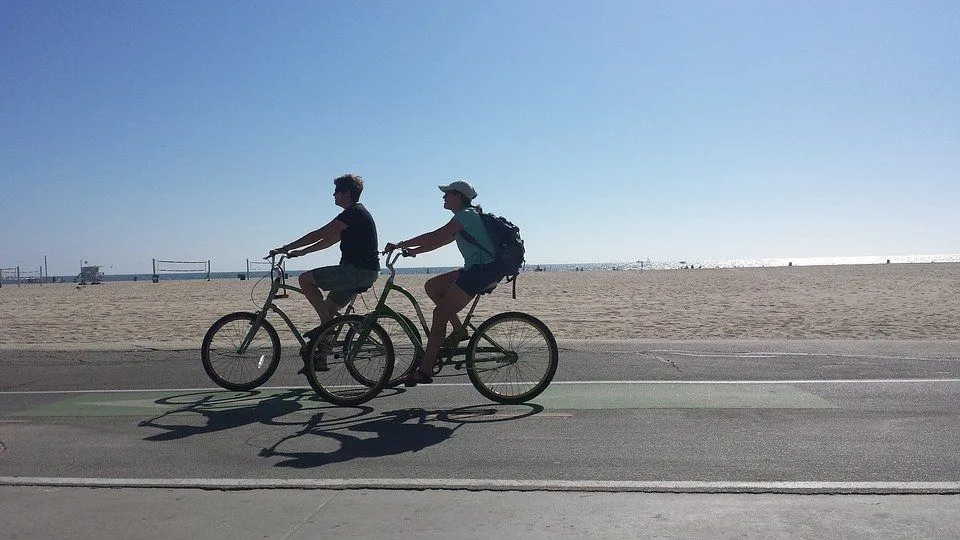
You never forget how to ride a bike because the skill is stored as muscle memory, a type of long-term procedural memory. Despite the name, this memory lives in the brain (the motor cortex, basal ganglia and cerebellum), not in the muscles. Repeating an action makes it automatic, so you can perform it later without conscious thought, even after years away.
Picture this… After 20 years away from home, you find your old bicycle in the basement, old and rusted and forgotten. For old times’ sake, you bring it out, hop on, and pray that you don’t fall off and damage those old bones! Miraculously, you manage to keep your balance as you pedal, slowly at first and then faster as you grow more confident. It’s as though you never stopped cycling!
It’s a common belief that once you learn how to ride a bike, you can never forget how to do it. Even if you haven’t been within 30 km (about 20 miles) of a bike for decades, you still won’t forget the skill. It’s an ability chalked up to muscle memory.
Procedural Memory
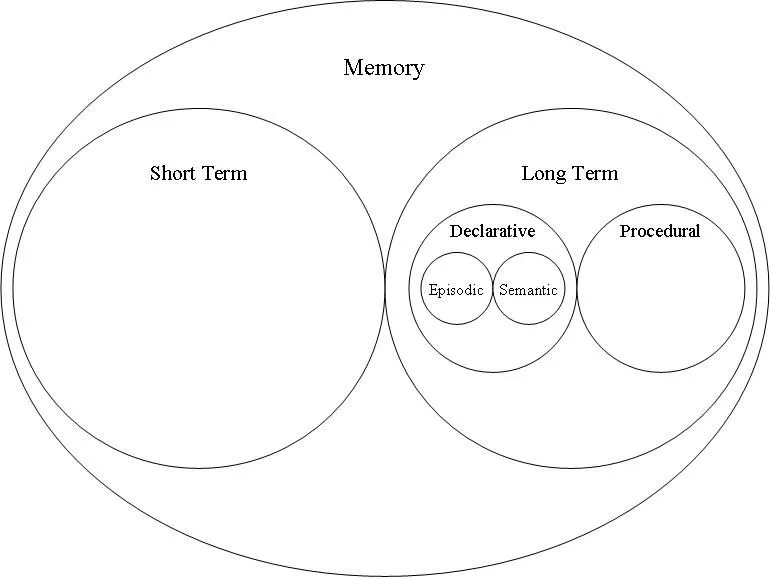
Any discussion about muscle memory would be incomplete (and quite frankly, hard to follow) without some basic knowledge of procedural memory. Long-term memory can be divided into 2 major classes: procedural and declarative. Declarative memory can be recalled consciously, and involves facts and events. Procedural memory, on the other hand, cannot be consciously recalled. It usually consists of skills, routines or actions that you may perform on a regular basis. For instance, think about riding a bike: it involves many different actions like maintaining balance, pushing the pedals, maintaining the position of the handle, etc. If asked to explain, you won’t be able to put all that into words, but you will still be able to ride the bike. This is because the act of riding a bike has become set in your procedural memory.
Procedural memory is a form of long-term memory. It takes time for an action or routine to become embedded in your long-term memory, but once it does, that act can be performed without consciously giving it much attention. Another example is learning to drive. Especially in a manual-driven car, or even an automatic one, when you first learn how to drive, it takes up all of your attention and focus. However, once you get the hang of it and with enough practice, you can multitask while driving, like having a conversation, singing along to your favorite song, etc.
Muscle Memory
Muscle memory is a type of procedural memory. However, the name of this particular phenomenon is a bit of a misnomer. Although it includes the word ‘muscle’, the memory center actually lies in the brain, not in the muscles. When we repeat an action over and over again, it gets transferred from our short-term memory to our long-term storage. In the beginning, our brain is more actively working to perform the task, but as we practice or repeat it, over time, our brain needs to pay less attention to successfully perform that task.
Another way that some researchers express the concept of muscle memory is with the term ‘zombie agents’. Neuroscientists Francis Crick and Christof Koch coined the phrase to describe the agents in our brain that carry out a particular task without us being aware of it, and without any application of judgment. Tellingly, riding a bike and driving a car are among their go-to examples. For instance, imagine that you drive to your workplace every day. One evening, you need to go out for a social commitment and take your car, but something is on your mind, keeping you distracted. By the time you realize what you’ve done, you have started to drive your car on the usual route to work! Keep in mind that the muscle memory at play here is not just about remembering the route, but also the act of driving the car. You will honk when necessary, change lanes, speed up and slow down, but you still may not realize that you’re going to the wrong place. This example aptly shows just how efficient muscle memory can be.
This form of memory doesn’t only develop for tasks that we actively practice. Studies have shown that simply watching the same task being performed can prime the brain for learning it, because the motor regions you would use to do the action become active just from observing it. Watching alone won’t hand you a finished skill, but it gives your muscle memory a head start. Obviously, the longer you actually practice or repeat an action, the more firmly it becomes embedded in your memory.

Benefits Of Muscle Memory
Needless to say, this feature of our memory system has some amazing benefits and applications. Muscle memory is employed by us in such seemingly common tasks that we may fail to even realize it. For instance, a person’s written signature quickly becomes a part of their muscle memory. This is helpful for people who experience amnesia as the result of any type of trauma. Procedural memory is stored in deeper brain structures, such as the basal ganglia and cerebellum, that don’t rely on the hippocampus the way conscious, declarative memories do. Because these regions are less likely to be damaged, most amnesiacs tend to retain their procedural memories. Famous amnesic patients like H.M., who lost the ability to form new conscious memories, could still learn new motor skills without any memory of having practiced them.
Muscle memory is used while driving, walking, swimming, playing an instrument, etc. Walking requires a complex number of muscle movements and coordination between the sense organs, the brain and the muscles. It may not be possible for a person to even begin to explain how we can walk, but even when we’re preoccupied and thinking about a hundred other things, we don’t stumble through our steps.
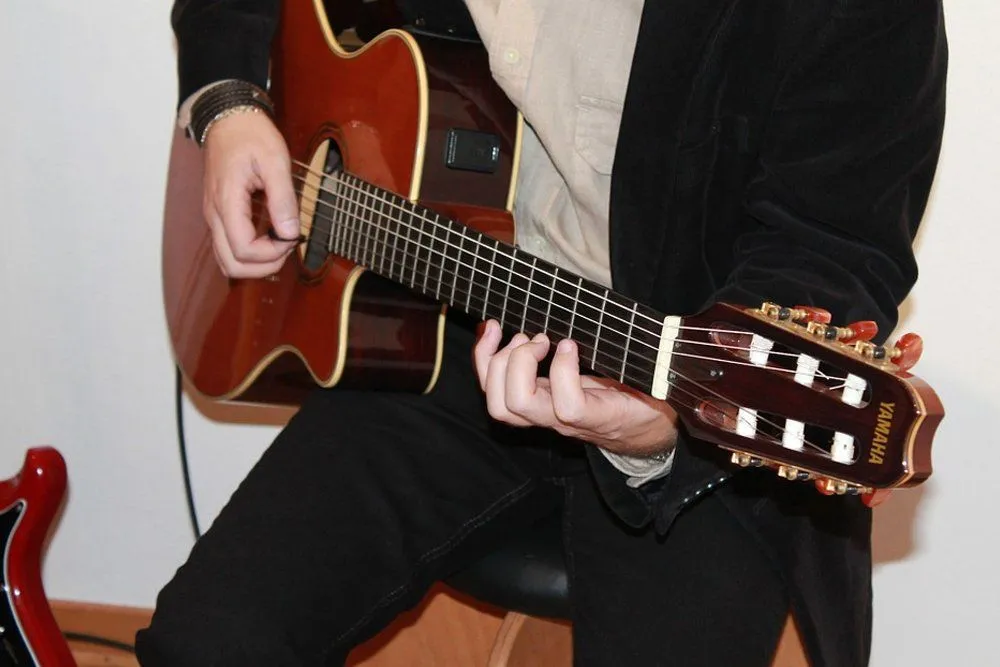
Muscle memory is also a critical part of playing an instrument. When you start playing, the main focus is on learning the various notes and chords and transitioning between them. As a person practices, they can become more adept at that and will pay attention to the main tune of the song. Once this part has been mastered, a person may even be able to sing along while playing the instrument.
One research study measured the brain activity of a professional pianist and a new piano student playing the same piece of music. Results revealed that there was a much higher amount of brain activity in the learner, as compared to the professional pianist. This also proves that, once an action becomes a part of our muscle memory, we can spend less focus on it and invest our attention elsewhere.
Muscle memory starts to develop from a very young age, and the younger we start an action, the more firmly it is embedded in our brain. This is because our brain is more active at a young age, meaning that more neural connections can be established. As we can clearly see, this is an essential part of living, coming into play in countless moments when we don’t even realize it. Without muscle memory, multitasking would be impossible, and in today’s fast-paced world, we’d probably get left behind!
References (click to expand)
- Brain Systems Underlying Declarative and Procedural Memories. Neuroscience, 2nd edition. NCBI Bookshelf
- Long-Term Memory - The Brain From Top To Bottom. McGill University
- Neurons in Primary Motor Cortex Engaged During Action Observation. PNAS. PMC
- Zombie Behaviors Are Part of Everyday Life, According to Neurobiologists. California Institute of Technology (Caltech)
- Muscle Memory: It's in Your Head, Not Your Limbs. Psychology Today