Athletes chew gum during play for three measurable reasons. (1) Chewing increases blood flow to the brain and activates the prefrontal cortex, modestly sharpening attention and reaction time. (2) It triggers serotonin release, which lowers in-game stress and steadies decision-making. (3) It stimulates saliva, which keeps the mouth from drying out across 90-minute matches. Many modern players also use caffeine gum for an extra lift in the final minutes - 97% of English professional soccer clubs administer caffeine to players in some form.
To all football fans worldwide, I’m sure you know how tense every Liverpool fan was as they watched their club fail to grab the impossible quadruple during the 21/22 season. I watched all their games religiously and couldn’t help but notice how many footballers chew gum while playing! I’d seen this for years, but never really thought much of it until now. I always thought of it as a choking hazard, so why would they risk it?
Chewing Gum Increases Response Time And Improves Concentration
Who would have thought that chewing gum affects cognition, but studies have found a link between chewing and brain function.
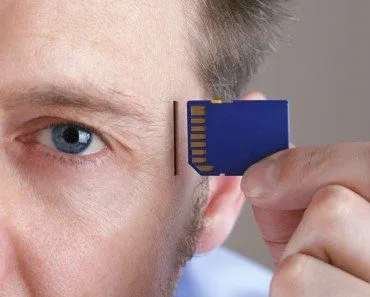
When we chew something, the receptors in our mouth that sense taste and pressure from the jaw movements start firing and sending electrical signals to the brain. These electrical nervous system signals move to the brain, which works to understand these signals. This added brain activity places the mind in a more alert state, which is why focus and concentration are improved.
Additionally, increased brain activity means more energy for those mental metabolic processes, so blood flow to the brain also increases while chewing. The greater blood demand from the brain makes the heart beat quicker so it can supply what is needed.
To sum it up, chewing activates the receptors in our gums that send information to the brain. The added bonus of an increased heart rate also allows the muscles to receive more blood.
So now you may be wondering… does this mean that the harder you chew, the better the focus levels? Yes… to an extent. Chewing harder gum does boost attention more than softer gum. Similarly, chewing flavored gum is better for cognitive functioning, as it activates more receptors in the mouth than chewing flavorless gum.
This is why so many professional footballers and basketball players chew gum. They think faster and it speeds up their actions and reflexes.
Chewing Gum Lowers Stress Levels
Chewing gum is also reported to decrease stress and anxiety levels, which helps improve focus.
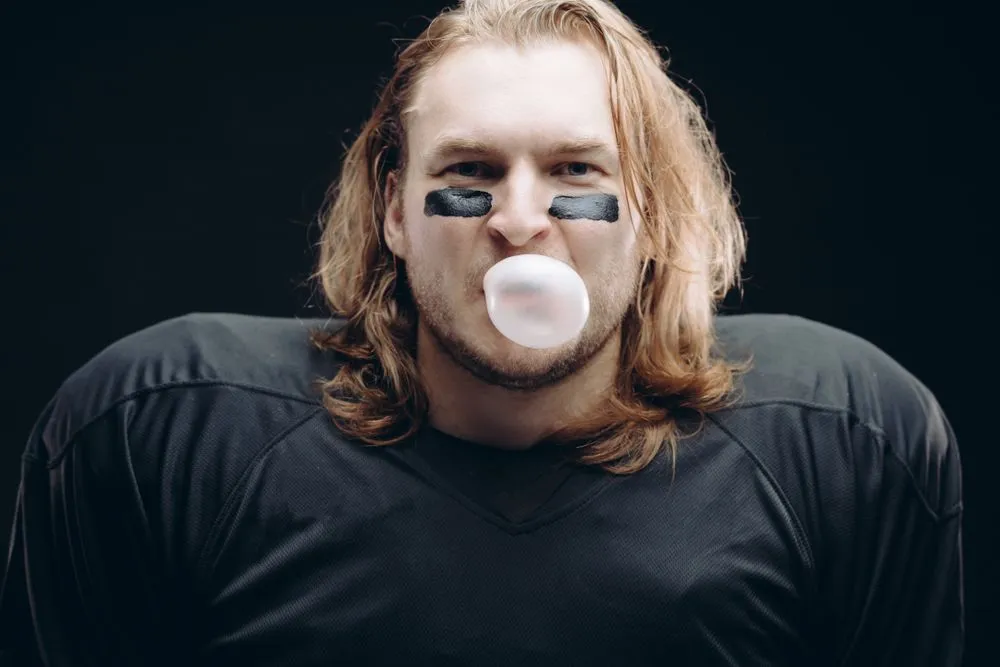
The brain activity sparked by chewing gum occurs in the prefrontal cortex, the brain region right behind our forehead. Once this region is stimulated, it makes our serotonergic neurons fire. Such neurons release serotonin, a “feel-good” neurotransmitter that relaxes the mind.
So, the next time you get exam jitters, try chewing gum while taking the test!

With lower stress levels and better focus, athletes have better decision-making abilities in the middle of the game. They pick out the better pass or make the best possible move at the best possible time. It also helps them keep their anxiety levels in check during big games like a final match or a title decider.
Chewing Gum Keeps The Mouth Moist
Most athletes are constantly running throughout their game or event. Footballers run around 6-7 miles per game. The mouth becomes quite dry without regular water breaks, as the player becomes dehydrated from running around. You have likely felt something similar during an intense game or workout.
When you chew gum, your mouth makes saliva. It’s the body’s natural response, as saliva contains enzymes that help break down food. Saliva is 99% water, so it helps to keep the mouth moist and stops dry mouth. This also helps the players keep their thirst levels in check on the field.
Why Do Footballers, NBA Players, And Baseball Stars Chew Gum?
The science above applies to every athlete, but each sport has its own backstory, and that's usually what people are really asking about.

In soccer, a lot of that gum is doing double duty as a caffeine delivery system. A survey of English professional clubs published in Biology of Sport found that 97% of them give players caffeine to boost performance, and 57% do it through caffeinated gum, most often right before kickoff and at half-time. That blue gum you sometimes spot footballers chewing on the touchline is often this caffeinated kind. Because the caffeine seeps straight through the lining of the cheek, it reaches the bloodstream faster than a drink does, which is handy for a lift in the final, leg-heavy minutes.
Baseball has the most interesting history. Dugouts were once full of chewing tobacco, and one study in the Journal of Athletic Training found that 31% of rookies entering the pro ranks were recent spit-tobacco users. As the cancer risks became impossible to ignore (smokeless tobacco is a confirmed cause of oral, esophageal and pancreatic cancer) and the leagues clamped down, players swapped their dip for bubble gum and sunflower seeds. It kept the same fidgety, mouth-busy ritual that settles the nerves during all that standing around, minus the harm.
For basketball and NBA players, it is mostly the focus and dry-mouth reasons we covered, packed into a fast, stop-start game. And it is not just players: snipers and soldiers chew gum on long, monotonous watches to stay alert and fight a dry mouth. The U.S. Army's Walter Reed Army Institute of Research even developed a caffeine gum, with about 100 mg per piece, absorbed through the mouth in roughly five minutes versus 20 to 25 for coffee, to help sustain reaction time and vigilance during sleep loss (though, to be fair, the research did not find it sharpened actual live-fire marksmanship). Even coaches join in, chewing on the sideline to burn off the same nervous energy, just without kicking a ball.
Is It Safe To Chew Gum While Playing Sports?
For most people, an occasional piece during light exercise is fine, but there is a genuine catch worth knowing about.

The real risk is choking. A hard tackle, an awkward fall or a sharp gasp for air can send your gum down the wrong way. It is not just theoretical: doctors writing in Respiratory Medicine Case Reports described a 15-year-old whose airway became partly blocked after he swallowed his gum, and because gum is sticky and squashy, it is notoriously stubborn to remove once it lodges. That is exactly why contact sports and gum are an uneasy mix, and why sticking to a single piece, then spitting it out before the rough stuff, is the sensible move.
There is a breathing angle too. When you are working flat out and gulping air through your mouth, a wad of gum sitting in there can throw off your rhythm and feel like more effort than it is worth. And while chewing does trigger saliva, that is no substitute for actually drinking, so keep hydrating rather than relying on gum to fight a dry mouth. Finally, go easy on the quantity: the sugar alcohols in many sugar-free gums (such as sorbitol and xylitol) can have a laxative effect in large amounts, which is the last thing you want mid-match.
A Final Word
Athletes chew gum to gain a competitive advantage. At such high levels, the tiniest differences can go a long way, but don’t misinterpret the science. Chewing gum won’t make you twice as focused. It just gives your body a little boost.
I should warn you to be careful if you’re chewing gum while working out or playing a sport. Contact sports like football or rugby, where you may be tackled to the ground, can force you to swallow your gum and perhaps choke. It is always safer to chew just one piece to reduce this choking risk.
Another performance enhancement that athletes use is caffeine. Athletes use coffee’s special component to boost their endurance, alertness and heart rate. That might be why former Liverpool right-back Trent Alexander-Arnold (now at Real Madrid since 2025) was known for downing a Red Bull before every match.
Now, science has combined these two super ingredients in the form of a caffeinated chewing gum. Often, athletes will have a caffeine-rich beverage or ingest a caffeine pill before a game, but caffeinated chewing gum would give athletes the benefits of both chewing and caffeine.
It will be healthier than drinking an energy drink, and the body can easily absorb the caffeine from the chewing gum.
That said, it wouldn’t be wise to pop copious amounts of gum before a workout or big match. Remember that little warning mentioned on the packets of gum? Too much chewing gum can make you feel like pooping, as the sugars used in chewing gum can have a laxative effect!
References (click to expand)
- Evans, M., Tierney, P., Gray, N., Hawe, G., Macken, M., & Egan, B. (2018, May 1). Acute Ingestion of Caffeinated Chewing Gum Improves Repeated Sprint Performance of Team Sport Athletes With Low Habitual Caffeine Consumption. International Journal of Sport Nutrition and Exercise Metabolism. Human Kinetics.
- Yaman‐Sözbir, Ş., Ayaz‐Alkaya, S., & Bayrak‐Kahraman, B. (2019, June 14). Effect of chewing gum on stress, anxiety, depression, self‐focused attention, and academic success: A randomized controlled study. Stress and Health. Wiley.
- Allen, A. P., & Smith, A. P. (2015). Chewing Gum: Cognitive Performance, Mood, Well-Being, and Associated Physiology. BioMed Research International. Hindawi Limited.
- Allen, A. P., & Smith, A. P. (2012, July). Effects of chewing gum and time-on-task on alertness and attention. Nutritional Neuroscience. Informa UK Limited.
- Hirano, Y., & Onozuka, M. (2015). Chewing and Attention: A Positive Effect on Sustained Attention. BioMed Research International. Hindawi Limited.
- K Kurokawa. The effects of gum chewing on the body reaction time. Tokyo Dental College
- The prevalence and practices of caffeine use as an ergogenic aid in English professional soccer. Biology of Sport (2021). NCBI/PMC.
- Spit (Smokeless)-Tobacco Use by Baseball Players Entering the Professional Ranks. Journal of Athletic Training (2003). NCBI/PMC.
- Smokeless Tobacco and Cancer. National Cancer Institute (NIH).
- Caffeine improves reaction time, vigilance and logical reasoning during extended periods with restricted opportunities for sleep. Psychopharmacology (2014). NCBI/PMC.
- Caffeine Gum for Troops Helps With Alertness. DVIDS, U.S. Army.
- Upper airway obstruction in an adolescent: Can airway foreign bodies be missed without self-reporting? Respiratory Medicine Case Reports.