Table of Contents (click to expand)
Permanent marker sticks to skin because its alcohol solvent (typically n-propanol or n-butanol) carries dye into the outer keratin layer, where it lingers until the dead cells flake off. Fresh blood has no such solvent, so it sits on the surface and rinses off, until it dries, when clotted proteins and oxidized hemoglobin glue it in place.
Here’s a throwback to my childhood days – back when I was in 6th grade, I got in a fight with a classmate. He had an ink pen, which he deliberately swung a few inches away from me, leaving a blue streak of ink across my face and neck.
I was mighty angry, but we’re not here to discuss all that, we’re only interested in the fact that ink stains (like that one) stick pretty well to human skin. When I got home that day, I had to spend quite a bit of time in the bathroom scrubbing my face and neck like crazy to get that stain to disappear.
On the other hand, blood, which, if you think about it, is just another pigment, doesn’t stick to the human skin as ‘adamantly’ as ink. However, if blood dries on the skin, then it also becomes very hard to remove. Why is that?
Much of this can be explained by the structure of skin and fabric, and by understanding how ink or blood ‘particles’ interact with other objects.
Ink And Skin
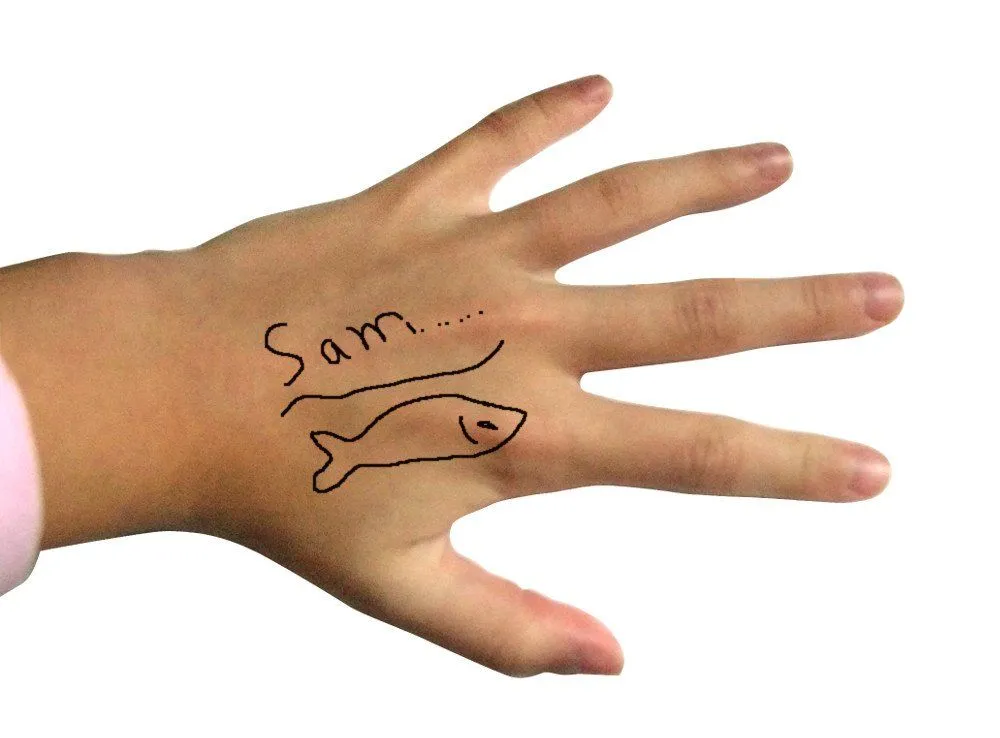
When you draw on your skin with a permanent marker, ink travels from the tip to your skin in a solvent, typically an alcohol like n-propanol or n-butanol (a Sharpie safety data sheet lists both, along with diacetone alcohol). The solvent evaporates quickly, but before it does, it carries dye into the keratinized outer layer of your skin (the stratum corneum). Most of the pigment stays on the surface, but a small amount tucks itself into the dead-cell brickwork of that layer. In other words, ink really can get under your skin… literally.
The dye and pigment particles in marker ink are tiny, far smaller than a red blood cell (which is about 7.5 micrometers, or roughly 0.0003 inches, across), and the alcohol carrying them is smaller still. That is why the alcohol-and-dye combo can slip between the corneocytes in your stratum corneum, where a chunky red blood cell simply cannot fit.
When you try and wash ink stains off your skin, they usually come off easily. If the ink is not water soluble, using soap can help to accelerate the ‘cleaning’. However, even when you use soapy water, there may still be a little ink left, which is very stubborn, that you can’t get completely rid of. That’s the small portion of the ink that got inside the top layer of your skin. So, when you really go to town while scrubbing your skin to remove that stain, you essentially scrub off some of the outer layer of your skin.
Is that brief contact with a marker dangerous? Probably not. Standard fine-point Sharpies carry the ACMI AP (Approved Product) seal, meaning a toxicologist has reviewed them and judged the ink non-toxic when used as intended. That said, Sharpie itself does not recommend using their markers on skin, and the heavy-duty Magnum, King Size and Touch-Up markers contain xylene, an industrial solvent that can irritate skin and shouldn’t go anywhere near it. If you want to draw on your kid for face-paint day, stick to cosmetic body markers or washable Crayola pens.

Blood stains, however, are a different story.
Blood Stains
The composition of blood is quite different from that of ink, which accounts for the difference in how blood and ink interact with either skin or fabric.
Red blood cells are about 7.5 micrometers across, much bigger than the dye in marker ink, so they cannot push past the keratin of the stratum corneum to begin with. And unlike marker ink, blood does not arrive with its own alcohol solvent (it is roughly 92% water), so there is nothing to carry pigment into the skin. Barring stray pores and hair shafts, fresh blood has little to grab onto and rinses off the skin easily (a lot easier than ink).
However, blood stains do not come off easily from fabrics, because clothes have many holes, pores and crevices where blood can enter and be absorbed by the fabric itself. This makes the blood stain ‘stick’ to the fabric, making it difficult to remove quickly.
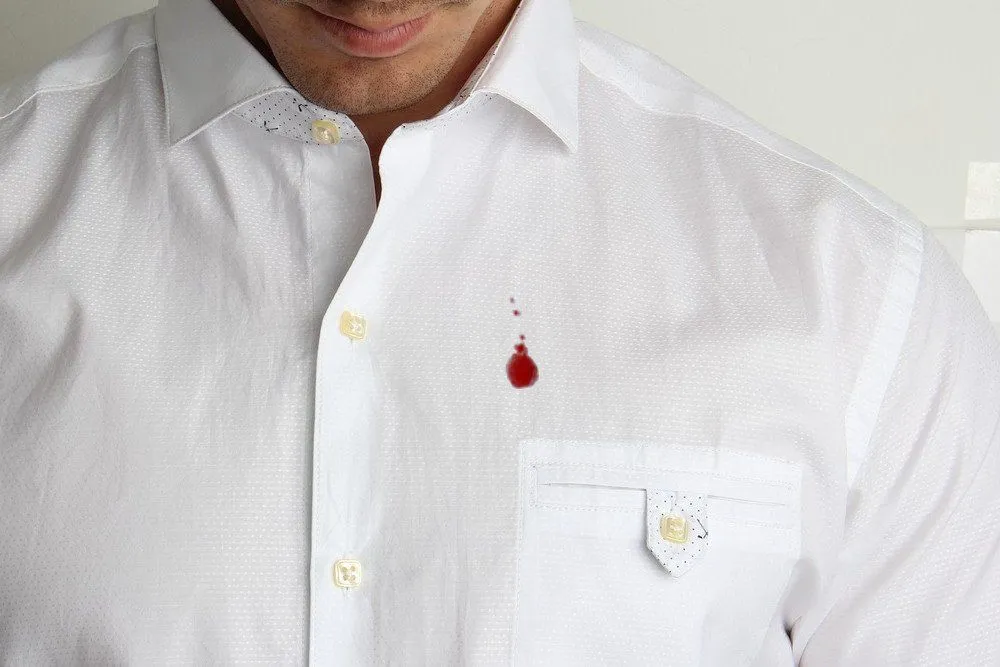
However, if the blood stain is dry, then the dynamics change.
If blood is left on skin or cloth long enough to dry, two things happen at once. First, the clotting machinery that blood is built for kicks in: fibrinogen turns into long, sticky fibrin threads that weave a mesh around the red and white cells, locking them onto whatever surface they are sitting on. Second, as the water evaporates, the proteins in that mesh harden and the iron in hemoglobin oxidizes (which is also why old bloodstains turn brownish-rust rather than bright red).
The result is a hardened, glue-like film that bonds to the host surface. That is what makes dried blood stains so much harder to scrub off than fresh ones, especially without an enzyme detergent or some kind of cleaning agent.
Here is a fun fact about blood stains: most household stains come out more easily in hot water, but blood is the opposite. Hot water denatures the proteins in the stain (think of how an egg white turns from clear and runny to solid white when you cook it) and bonds them permanently to the fibers. That is why every laundry guide, from the University of Georgia Extension on down, tells you to use cold water on blood, and a protein-digesting (protease) enzyme cleaner if the stain has already set.
How Long Does Permanent Marker Last On Skin, And How Do You Get It Off?
If you just leave it alone, a permanent marker doodle is not all that permanent on skin. According to Healthline, the ink usually fades on its own within two to three days, and even the stubborn trace that tucked itself into the stratum corneum disappears within a couple of weeks, because that outer layer of dead cells is constantly flaking off and being replaced from below. Your skin, in other words, does the erasing for you.
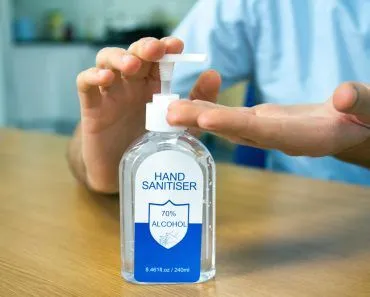
If you would rather not wait, the trick is to use the same chemistry that got the dye onto your skin in the first place. Marker ink rides in on an alcohol solvent, so a splash of rubbing alcohol (isopropyl) or an alcohol-based hand sanitizer on a cotton pad will dissolve the dye and lift it off. Because alcohol is drying, it helps to follow up with a moisturizer. For faces, and for anyone with sensitive skin, a gentler option works just as well: baby oil, coconut oil or olive oil loosen the pigment so it wipes away without harsh scrubbing, and ordinary makeup remover does the job too.
A couple of things are worth avoiding. Healthline specifically warns against reaching for bleach or baking soda, which are too harsh or abrasive for skin. And resist the urge to scrub yourself raw. As we saw above, aggressive scrubbing works mainly by sanding off the outer layer of your own skin, which is a lot more uncomfortable than simply waiting a day or two.
What About Squid Ink?
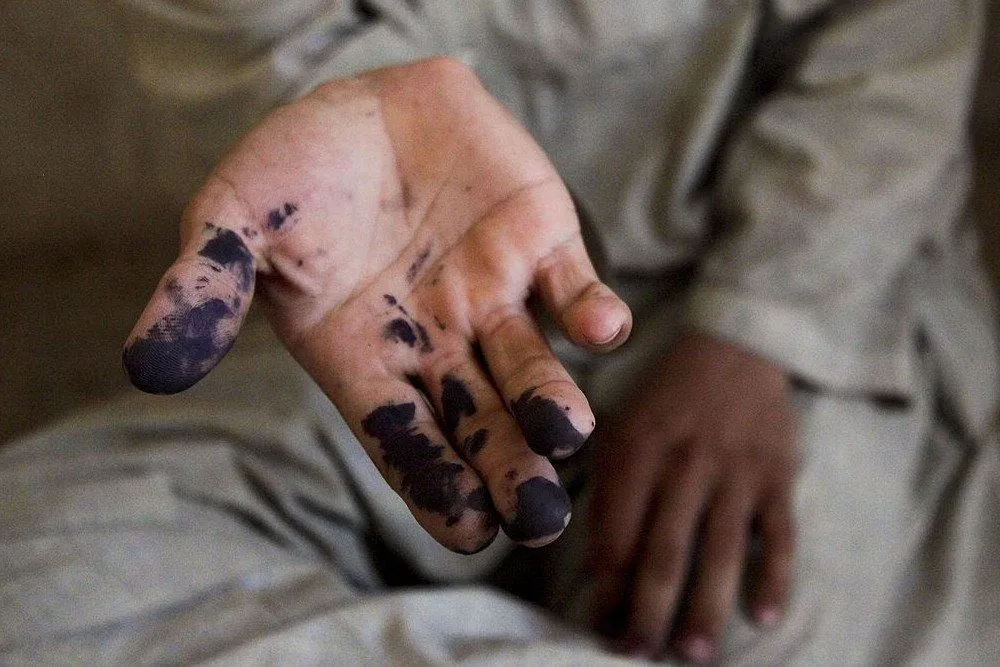
There is a third pigment people constantly ask about: squid ink. If you have ever cooked with it (or handled a fresh squid) and ended up with black-stained fingers that refused to rinse clean, you already know it behaves less like blood and more like that stubborn marker. The science explains why.

The dark color of squid, cuttlefish and octopus ink comes from eumelanin, the very same family of pigment that colors human skin, hair and eyes. In cuttlefish (Sepia) ink, melanin makes up roughly 15% of the ink's wet weight (each ink sac holds about 1 gram of it), with proteins adding another 5 to 8%. The animal's ink sac supplies that melanin, while a separate funnel organ mixes in mucus, which is what gives the ink its thick, clingy consistency. Cephalopods normally squirt this cloud to confuse predators and make a getaway.
On skin, squid ink splits the difference between our two earlier examples. Like blood, it arrives with no alcohol solvent (it is mostly water and mucus), so it cannot drive pigment deep the way a marker does. But unlike blood's bulky red cells, melanin particles are tiny and the mucus is sticky, so the ink coats the surface and settles into the dead-cell brickwork of the stratum corneum. Melanin is also an unusually tough, heavily cross-linked molecule that resists being broken down, which is exactly why it stains fabric so stubbornly and does not simply wash out with water.
The good news is that because the pigment sits in that outermost dead layer rather than in living skin, it fades over the following days as the layer sheds and renews, much like the marker. Soap and a little patience speed things along. And if you got it on yourself in the kitchen, there is nothing to worry about: squid ink is non-toxic and is eaten all over the world, from Spanish arroz negro to Italian pasta al nero di seppia.
References (click to expand)
- Remove Stains From Blood. University of Georgia Extension.
- Histology, Red Blood Cell. StatPearls. NCBI Bookshelf.
- Red blood cells (erythrocytes). Encyclopaedia Britannica.
- Histology, Stratum Corneum. StatPearls. NCBI Bookshelf.
- What makes a marker permanent? Sharpie Help Center.
- Quick ‘n Easy Stain Removal. University of Illinois Extension (archived).
- How to Get Sharpie Off of Skin: Tips and Tricks. Healthline.
- Cephalopod Ink: Production, Chemistry, Functions and Applications. Marine Drugs.