The sudden clarity in hearing after popping your ears is caused by the equalization of air pressure on either side of the eardrum. When the pressure is equalized, the eardrum is able to vibrate more freely, resulting in clearer hearing. However, the clarity does not last long because the brain quickly adjusts to the new level of hearing and everything starts to sound normal again.
The other day I was traveling by bus in a mountainous region, so naturally, there were countless sharp turns and bends in the road. The elevation of the roads also varied a lot during the 5+ hour road trip. Throughout the trip, I experienced at least 9 or 10 episodes of ‘ear popping’. At first, I was consciously registering every pop, but then I got bored and lost interest. Nevertheless, I could still tell when my ears had popped. Can you guess how?
Obviously, because I could suddenly hear sound with an astounding clarity after an ‘ear-popping’ instance. In other words, I could suddenly hear everything with amazing clarity, which convinced me that my ears had just popped.
I’m sure that you’re no stranger to this situation; you may have also experienced such ‘ear clarity’ episodes after your ears pop and everything around you sounds incredibly clear. However, do you know what causes this sudden upgrade in our hearing abilities following an ear pop?
It gets more interesting, actually. You may have also observed that the sudden improvement following an ear-pop does not usually last for more than a few minutes. In other words, everything starts to sound normal again; that amazing clarity doesn’t stay around for long. Now, why is that?
Let’s start the discussion with why ears pop in the first place.
Why Do Ears Pop?
We’re surrounded by a dense atmosphere, one that contains a number of gases, including nitrogen, oxygen and many others in smaller amounts. The atmosphere is quite heavy too; it’s heavy enough to crush all of humanity beneath it.

Even so, you don’t hear about people getting crushed by the atmosphere because we, mankind, have evolved over the millennia in the constant presence of this thick soup of gases. More specifically, we have achieved a state of equilibrium between the pressure exerted on the body by the atmosphere and the pressure that the body exerts on the outside air.
The human ear consists of three parts: the outer, middle and inner ear. Sound waves are transmitted from the outer ear to the middle ear through a membrane that we call ‘the eardrum’.
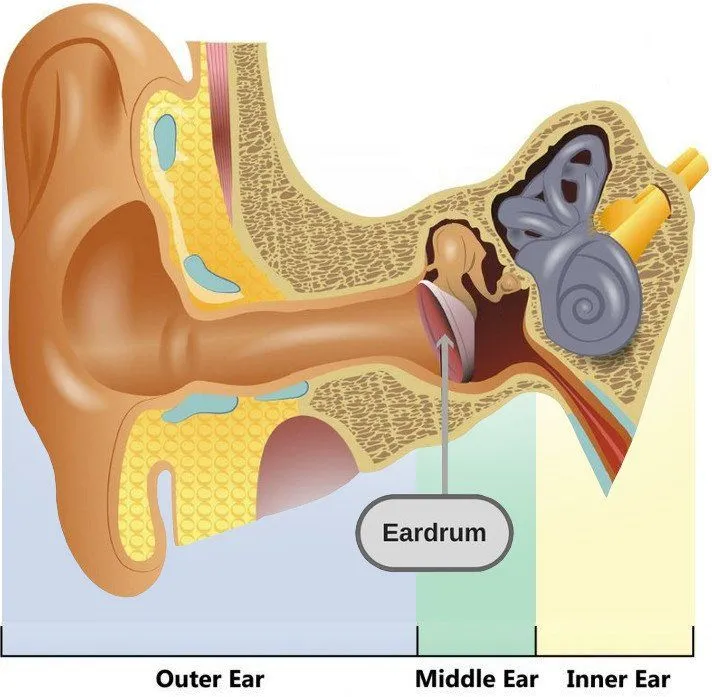
The thin eardrum acts as a barrier for liquids, but allows atmospheric reverberations to pass through. However, for the latter to occur, the air pressure on either side of the eardrum must be equalized. This is crucial for our sense of hearing to function.
Role Of The Eustachian Tube In Ear Popping
There’s a tube in the middle ear that links the side of the throat (nasopharynx) to the middle ear. It’s called the Eustachian tube or the auditory tube. Typically, the Eustachian tube is collapsed, but it gapes open when you swallow something. This is the part of the ear that’s primarily responsible for all that ear popping.
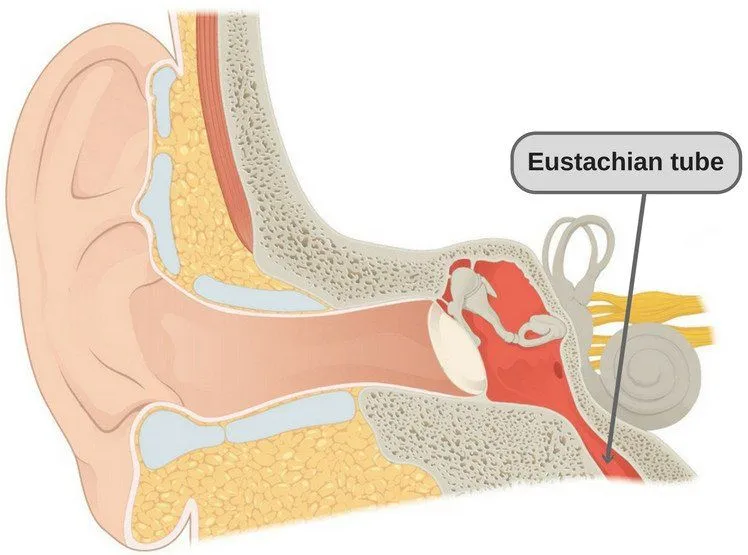
When you’re sitting in a plane as it ascends, the air pressure gradually decreases. As a result of this, the air in your middle ear expands as the plane gains altitude, pushing its way back into the back of the nose and mouth. Similarly, as the plane descends, the volume of air in the middle ear shrinks and a slight vacuum is produced.
The Eustachian tube is designed to facilitate air escaping from the inner ear into the throat, which, in turn, equalizes the air pressure on either side of the eardrum. The pop that you hear is actually the sound of the pressure in your ear equalizing with the outside air.
The pop that you experience in your ear is due to a small air bubble that enters the middle ear up from the back of the nose and mouth.
Now, let me break down the entire process in simple words: there’s a thin membrane deep inside your ear (eardrum). On the inside of the drum is a tiny room. On its floor, there is a tunnel (the Eustachian tube or ET), which leads to the back of your throat.
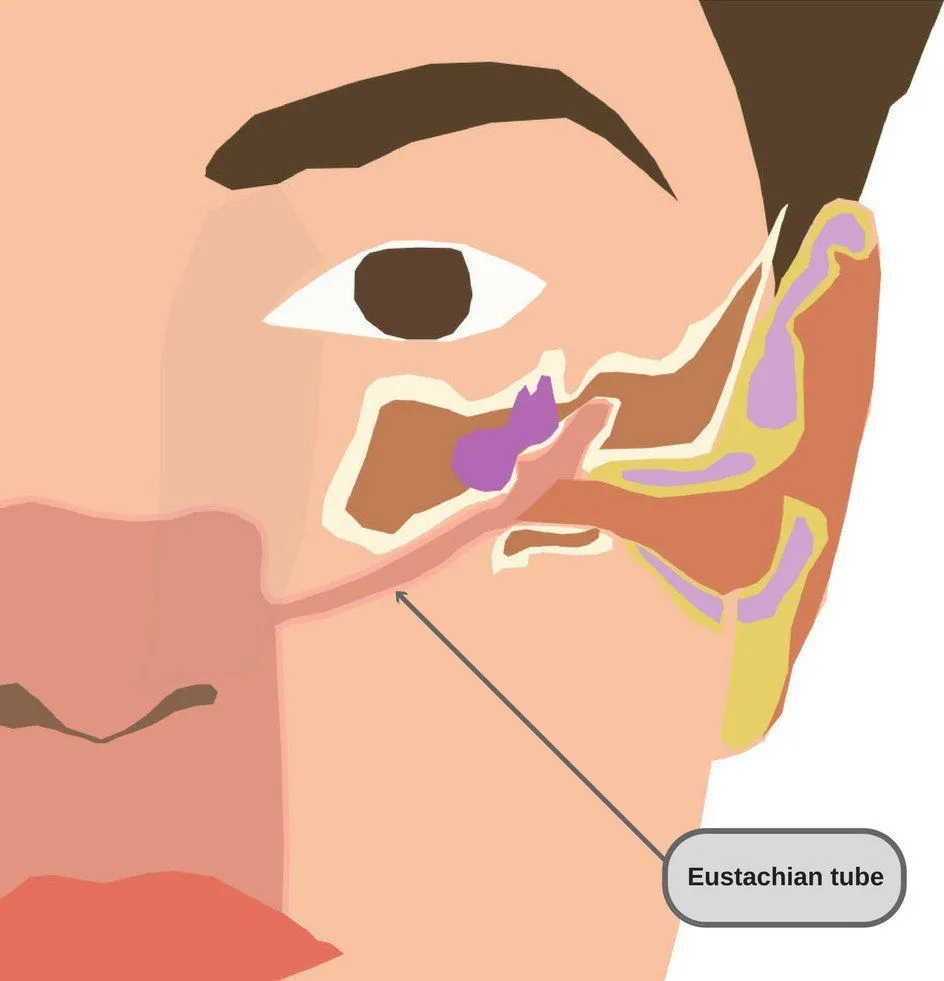
Now, when you’re sick, the tunnel can swell and become blocked. The same thing might happen when you’re traveling in an airplane. Thus, air can’t pass through the tunnel, and as a result, a small vacuum forms. This vacuum does its thing and pulls the drum in, making it tighter than normal. Hence, the drum doesn’t work normally and all the sounds you hear seem dull.

But when the underlying condition is fixed, i.e., when your sickness is cured, or you pop your ears purposefully, then air rushes into the tunnel. The air can come at a normal pace inside the tunnel, and you might not notice it. Or it can rush inside the tunnel, which is when you sense that characteristic pop inside your ear.
After the pop, as you know all too well, everything sounds insanely clear.

Why Doesn’t The Clarity In Hearing Last Longer?
Everything sounds unbelievably clear just after your ears pop, but the effect doesn’t last. With the pressure now balanced on both sides of the eardrum, your hearing has actually returned to its normal baseline, and what feels like “extra clarity” is just the contrast with the muffled state you were stuck in moments before. Within a few minutes, your brain habituates to the normal level of input and the world stops sounding crisp; nothing has changed in the ear, only your perception of it.
A related question that often comes up: do astronauts’ ears pop in space? Yes, most of the popping happens during launch and re-entry as the spacecraft’s cabin pressure shifts. Astronauts swallow or yawn to clear their ears the same way passengers do on an airplane. Once they’re in orbit and cabin pressure is stable, the Eustachian tubes have nothing to equalize and ear popping stops.
Why Do My Ears Keep Popping On Their Own?
So far we’ve talked about the satisfying, one-off pop you get on a plane or a mountain road. But what if your ears keep popping over and over, even when you’re just sitting still? That constant clicking or popping is usually a sign of Eustachian tube dysfunction (ETD), which simply means the little tube that equalizes your ear pressure isn’t opening and closing the way it should.

There are two flavors of this. In obstructive (dilatory) ETD, the tube stays stubbornly closed because it’s swollen or blocked, often from a cold, the flu, allergies, or even acid reflux. Pressure builds up, fluid collects behind the eardrum, and every time the tube does briefly crack open you hear a click or pop. In patulous ETD, you have the opposite problem: the tube stays open all the time, so you may suddenly hear your own breathing, heartbeat or voice echoing inside your head. Doctors note this open-tube version is often linked to things like significant weight loss, stress, anxiety or fatigue.
Most of the time, a few days of repeated popping after a cold is completely normal and clears up on its own. The general rule of thumb from ear specialists is that if the popping, fullness or muffled hearing hangs around for more than a couple of weeks, it’s worth getting checked, since long-standing pressure problems can occasionally damage the eardrum.
Why Won’t My Ears Pop, And How Can I Pop Them On Purpose?
The flip side of constant popping is the maddening feeling that your ears won’t pop at all. They feel plugged, full and muffled, and no amount of wishing seems to clear them. This happens when the Eustachian tube is swollen shut, usually during or just after a cold, allergies or a flight, so the trapped air can’t escape and the pressure won’t balance out.
The good news is there are a few gentle tricks that nudge the tube open. The simplest is to swallow, yawn or chew gum, since the muscles that work your jaw and throat are the same ones that tug the Eustachian tube open. If that isn’t enough, you can try the classic in-flight move, the Valsalva maneuver: close your mouth, pinch your nostrils shut and gently breathe out, as if blowing your nose, until you feel a soft pop. There’s also the Toynbee maneuver, where you pinch your nose closed and swallow at the same time. The key word in all of this is gently. The aim is a soft equalizing pop, not a forceful blast.
Many people also find that a saline nasal spray or a decongestant helps by shrinking the swelling in the nasal passages so the tube can open more easily. If your ears stay blocked for more than a couple of weeks despite all this, that’s the cue to see a doctor rather than keep straining.
Is It Bad To Pop Your Ears?
Popping your ears the normal way, by swallowing, yawning or doing a gentle Valsalva, is perfectly safe. It’s exactly what your body does on its own thousands of times, and it’s the recommended way to relieve that uncomfortable plugged feeling.
The danger comes from overdoing it. If you pinch your nose and blow extremely hard, especially while your Eustachian tube is swollen shut, you can send a violent spike of pressure into the middle ear. Medical sources describe how a forceful Valsalva maneuver can injure the eardrum or even the delicate round and oval windows of the inner ear, which can cause ringing, dizziness or hearing problems. It doesn’t take much: a pressure difference of only a few psi across the eardrum is enough to risk a rupture.
So the takeaway is reassuringly simple. Pop your ears whenever they feel blocked, but do it softly. If a gentle attempt doesn’t work, don’t keep cranking up the force. Give it time, try a yawn or some gum, reach for a decongestant, and if the blockage or pain lingers, let a doctor take a look rather than risk forcing it.
References (click to expand)
- Ears and Altitude (Barotrauma) - ENT Health. enthealth.org
- Background - Interventions for adult Eustachian tube dysfunction. The National Center for Biotechnology Information
- How to pop your ears | McGovern Medical School. The University of Texas Health Science Center at Houston
- Barotrauma - Harvard Health. Harvard University
- Eustachian Tube Dysfunction - StatPearls. NCBI Bookshelf
- Eustachian Tube Dysfunction. Cleveland Clinic
- Hyperbaric Complications - StatPearls. NCBI Bookshelf