Table of Contents (click to expand)
In typical full-disk pictures of Earth taken from space, we can’t see satellites or orbital debris because they’re far too small relative to Earth’s enormous surface. Most such images resolve only about 8–12 kilometers per pixel, while even the 109-meter International Space Station spans less than a hundredth of that. Although over 14,000 active satellites and 54,000+ trackable debris objects circle our planet, every single one is sub-pixel in the photograph.
We are often contacted by our readers with questions whose answers seem incredibly obvious. Posts like “Where does sugar go after being dissolved?“, “What is the ISS?” or “Where do fish come from in newly formed ponds?” are just some of the many articles that were attempts to answer such questions.
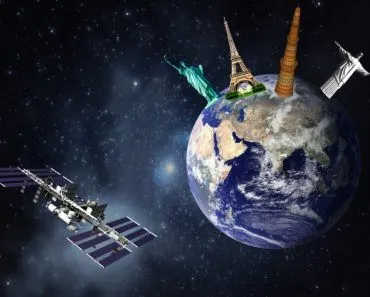
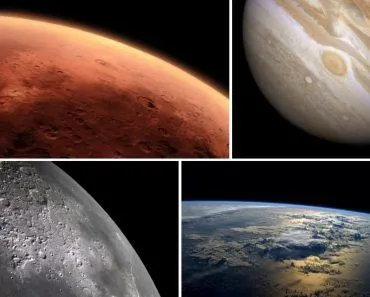
A few days ago, a reader wanted to know the answer to yet another seemingly basic, but very interesting question – why don’t we see any satellites in the numerous pictures of Earth taken from a great distance? If you’re not clear what we’re talking about, go ahead and look up ‘pictures of Earth’ on the Internet. To make it even more convenient for you, I’ll just put a collage of some pictures of Earth right here:
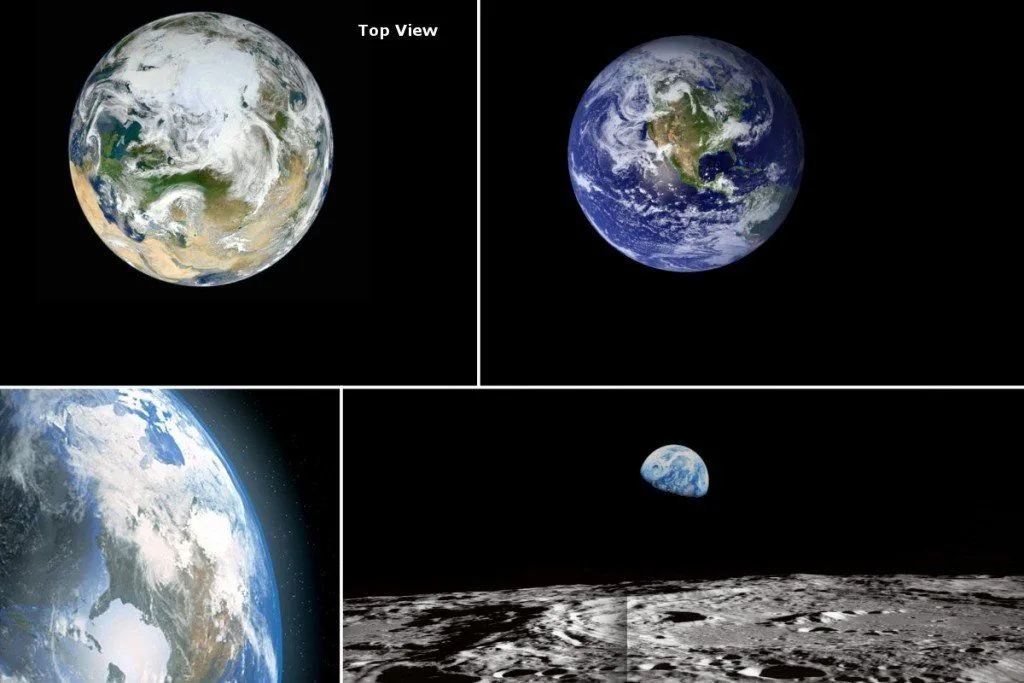
If you really think about it, it’s actually quite a valid question. I mean, there are now well over 14,000 active satellites whizzing around the Earth, and those are just the operational, man-made ones — SpaceX’s Starlink constellation alone accounts for more than 10,000 of them. If you throw in every object orbiting our planet, the number balloons spectacularly: as of 2025, the European Space Agency’s Space Environment Report tracks roughly 54,000 objects larger than 10 centimeters, an estimated 1.2 million pieces between 1 and 10 cm, and a staggering 130 million-plus fragments smaller than 1 cm spinning around the Earth right now.
Why don’t we see any of that in our numerous pictures of Earth?
Short answer: The Earth is too big and these objects are too small in comparison to be visible in the same photograph.
First, let’s briefly take a look at the number of ‘space objects’ circling our planet.
Objects Orbiting The Earth
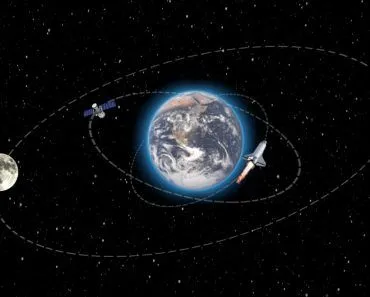
There are thousands upon thousands of objects spinning around the Earth. Some of them are very small (i.e. less than 10 centimeters across) while others are quite huge, relatively speaking.
Man-made Objects
Let’s briefly talk about the numerous man-made objects around the planet. Take the ISS, for example.
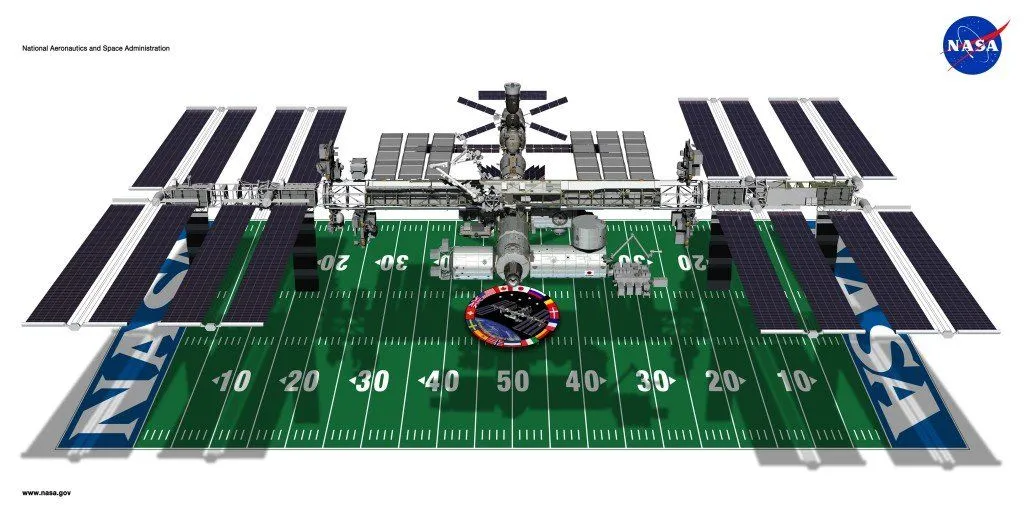
It’s approximately 109 meters (356 feet) by 73 meters (240 feet). To put in perspective, it’s slightly larger than a football field. This is the largest (and also, the costliest) man-made object currently orbiting the planet. Apart from that, there are thousands of man-made objects, including the Hubble Space Telescope, Astrosat, NOAA 18 and many other Earth-observation satellites constantly spinning around the Earth.
Space Debris
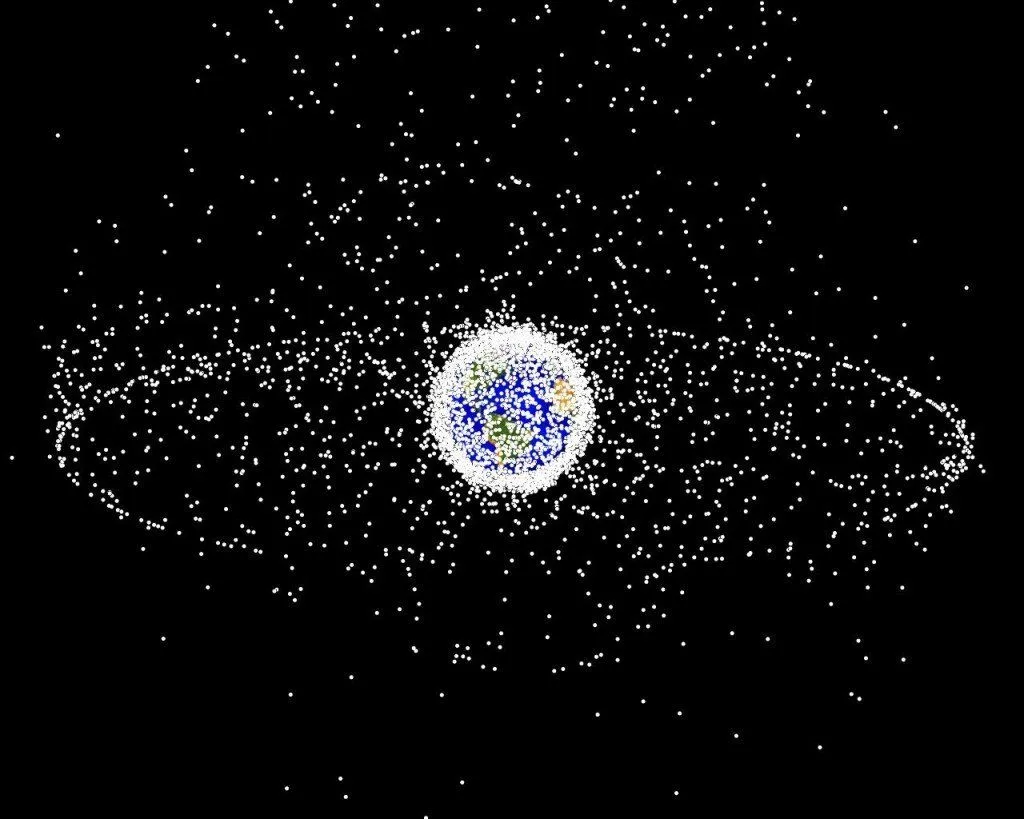
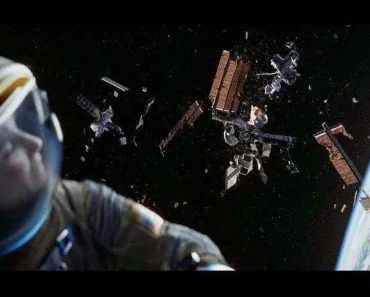
Note that these are only the currently operational ones; there are a number of defunct satellites up there too that cannot be repaired. They’re basically going to have to stay up there until they gradually lose altitude and burn up in the atmosphere. These types of satellites add up to a huge amount of space junk, which is a big cause of concern for future space flights.
Natural Objects
Apart from man-made satellites and space junk, there are also tens of thousands of celestial objects circling the planet. Such objects have sizes ranging from a couple centimeters to a few feet.
There’s one singular takeaway from all of this – there are a LOT of objects circling our planet.
Why Are Satellites And Celestial Objects Not Visible In Pictures Of Earth?
The answer is pretty straightforward – it’s because Earth is very, very big. It’s hard to say why, but people generally tend to underestimate the sheer enormity of our planet. Our planet is HUGE, in the real sense of the word. In comparison, the objects that orbit the planet are – for the lack of a better word to denote minuteness – puny.
Take the ISS – the biggest man-made object currently spinning around the planet – for example. It has a surface area of around 2,500 square meters or 0.0025 square km, which is almost equal to the size of a 6-bedroom apartment. (Source) In contrast, the surface area of the Earth is 510.1 million km squared. (Source). We can now calculate how many ISS’es would it need to completely cover the Earth’s surface by applying simple arithmetic.
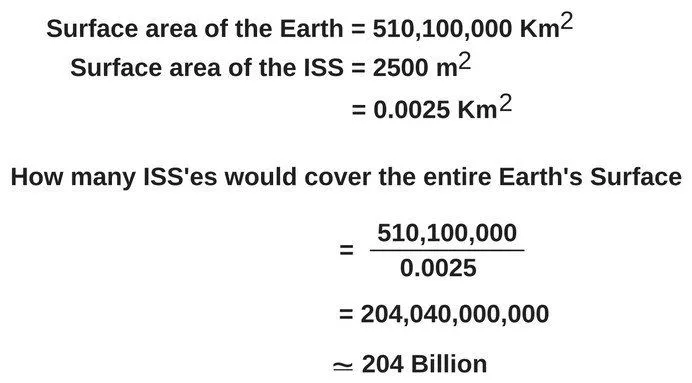
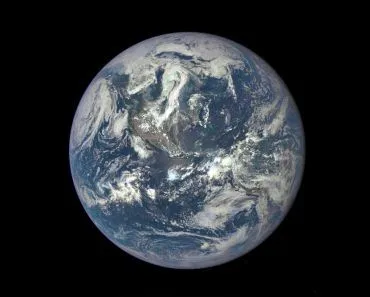
So, it would take 204 billion ISS’es to entirely cover the planet! To have some idea of what this means visually, take a look at this picture:
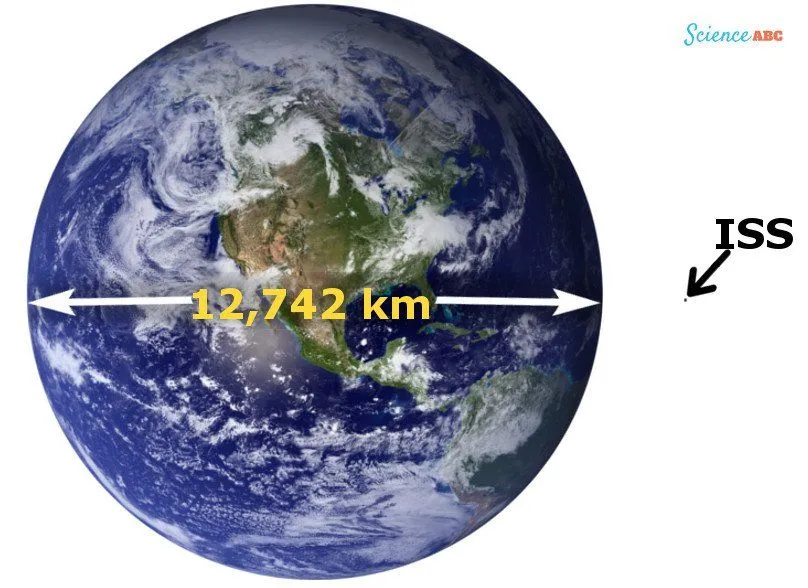
Note that the pictures of Earth do have satellites in them; however, they’re too tiny to be resolved in the image. Most full-disk images of our planet (think NASA’s DSCOVR/EPIC view from the L1 Lagrange point) are only a few thousand pixels in diameter, with each pixel covering 8–12 kilometers of Earth; so unless an object is of the order of a kilometer or more (which no object in the vicinity of the planet is), it would only be a fraction of a pixel, and thus invisible in the image. Furthermore, many satellites and a great deal of space debris orbit far above the ISS (which clicks a lot of pictures of our planet from low Earth orbit), so it’s not going to capture an enormous number of objects in the picture anyway, since they’re not there in the first place!
However, there are occasions when you can see a satellite in an Earth-picture, but it would be too small (yes, “magnifying glasses-small”), and practically indistinguishable from the stars in the backdrop. There’s also one notable exception worth flagging: in long-exposure astrophotography taken from the ground, Starlink “trains” are now famously visible — and increasingly notorious — as bright parallel streaks slicing across the night sky, much to the dismay of astronomers worldwide.
How Far Is The ISS (And Most Satellites) From Earth?
Part of why satellites vanish in a photo of the whole planet is that they’re sitting much further out than people imagine. The International Space Station orbits in low Earth orbit, at an altitude of roughly 370 to 460 kilometers (about 230 to 290 miles) above the surface, and it’s actually one of the closest things up there. It races around the planet at about 28,000 km/h (roughly 17,500 mph), completing one full lap every 90 minutes or so and circling Earth around 16 times a day.

And the ISS is the neighbor. GPS satellites loiter at around 20,200 km, while the weather and TV satellites parked in geostationary orbit sit a full 35,786 km (about 22,236 miles) out, almost three Earth-diameters away. So when a spacecraft snaps a full-disk portrait of the planet, the hardware it’s photographing is not only tiny, it’s scattered across a shell of space thousands of kilometers thick. There’s simply a lot of empty room between you and the nearest satellite.
Can You See Satellites With The Naked Eye From The Ground?
Here’s the twist: you absolutely can see satellites, just not in a still photo of Earth and not in the way most people expect. Step outside in the hour after sunset or before sunrise, look up, and you may catch the ISS sliding across the sky as a steady, bright point of light, moving faster than an airplane but without any flashing or colored lights. No telescope required.

The key is that satellites don’t glow on their own. They’re only visible because they reflect sunlight back down to you, like a mirror in the sky. That’s why the timing matters so much: at dawn and dusk, the ground beneath you has slipped into darkness while a satellite hundreds of kilometers up is still bathed in direct sunlight, so it stands out sharply against the dark sky. In the dead of night the satellite falls into Earth’s shadow too and goes dark, and in broad daylight the glare of the sky swamps it. NASA’s “Spot the Station” service will even tell you when the ISS is due to pass over your town. So the honest answer to “why can’t we see satellites” is that you can, you just have to look up at the right moment rather than at a photo of the globe.
Why Are There So Few Close-Up Photos Of Satellites In Space?
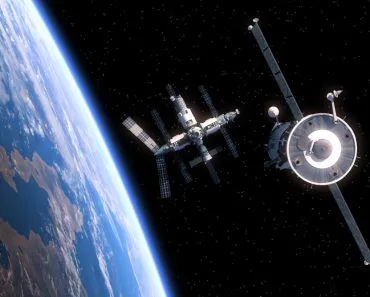
A related question pops up a lot, sometimes from genuine skeptics: if there are tens of thousands of satellites up there, why don’t we see crisp close-up photos of them drifting past one another? Rest assured, satellites are very real (the photo above is one of them), but catching two in the same frame is genuinely hard, and the reason is simple geometry.
Space near Earth is enormous, and the objects in it are deliberately spread out. Satellites are tracked and maneuvered specifically so their paths don’t cross, which is the whole point of collision avoidance. They also sit at many different altitudes, and they travel on very different headings: the ISS hugs a low-inclination orbit, whereas a great many imaging satellites fly polar orbits, looping north to south. Two craft on nearly perpendicular orbits almost never line up in the same patch of sky at the same instant. On top of that, the cameras on the ISS and on observation satellites are pointed at Earth, not at each other, and they use wide-angle lenses; a satellite would have to pass within a few kilometers just to register as a handful of pixels. Put those together and the rare close-ups we do have, like astronaut shots of visiting spacecraft, become the exception that proves the rule.
So, if someone asks why they can’t see satellites in the images of Earth, ask them why a picture of their house doesn’t show the two dozen flies nearby, or why a full-body picture doesn’t show the huge number of bacteria and germs living on their body. Hopefully, that will help them understand!
References (click to expand)
- Space Debris and Human Spacecraft - NASA. The National Aeronautics and Space Administration
- Artificial Satellites - students.um.edu.mt:80
- International Space Station Basics Components of the ISS. The National Aeronautics and Space Administration
- Distances in Perspective - www.pha.jhu.edu:80
- International Space Station (orbital altitude and facts) - NASA
- Spot the Station - NASA
- Types of Orbits - European Space Agency (ESA)
- GPS Space Segment (orbital altitude) - GPS.gov
- If Earth's Orbit Is So Crowded, Why Don't We See Space Junk In Photos Of The Earth? - Popular Science