Without continuous thrust, the lowest you can roughly maintain a circular orbit around Earth is about 160 km, the bottom of Low Earth Orbit (LEO). Below that, atmospheric drag bleeds off speed so fast that the satellite drops back into the atmosphere within hours or days. With continuous propulsion (as JAXA’s SLATS/Tsubame did at a record-low 167.4 km in 2019), satellites can dip even lower into Very Low Earth Orbit (VLEO).
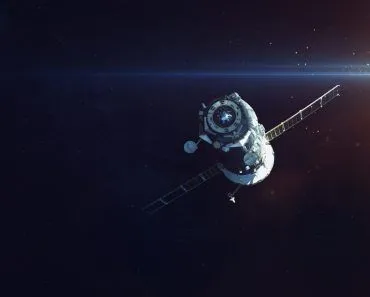
You are most likely aware that we have artificial satellites, primarily the ones that help broadcast TV and radio signals, that orbit our planet high up in space. These satellites, after they are sent up there, basically remain in orbit forever, even if they’re damaged or no longer used. Quite predictably, these satellites are unmanned. On the other hand, we have also had a few space stations – manned spacecraft that stay in space for a very long time.
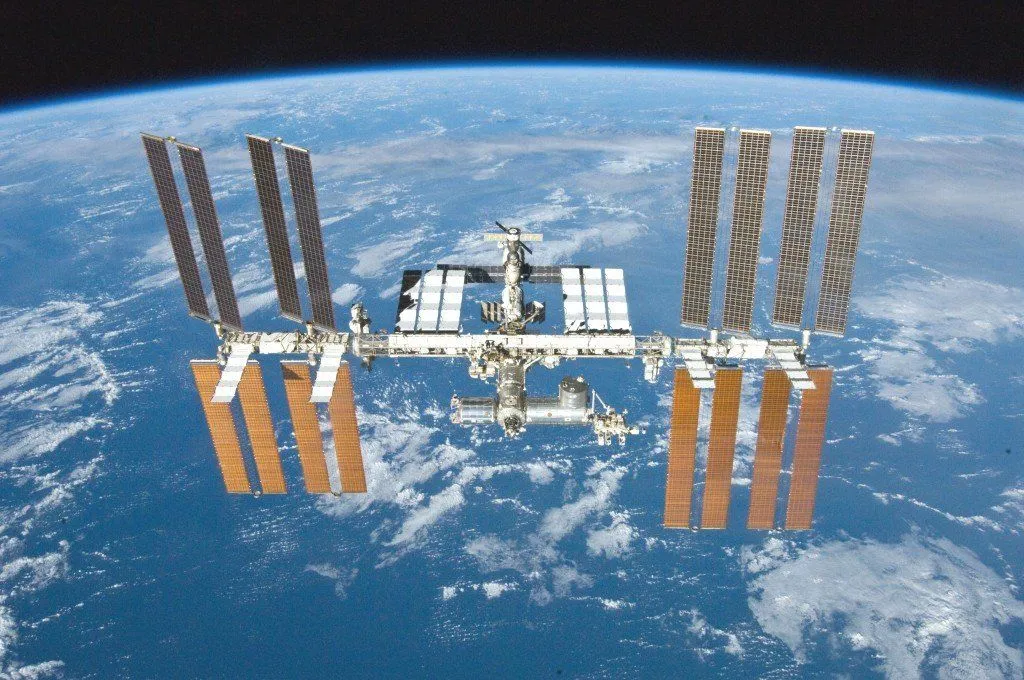
However, the principal difference between telecommunication satellites (the former) and space stations (the latter) doesn’t only concern the presence of humans in them; the main difference between the two is the location of their orbits around our planet. More specifically, the altitudes of their orbits is where the line is drawn.
With all of these satellites flying around above us, have you ever wondered how low a satellite can fall without plummeting back to Earth?
Short answer: 160 kilometers
What Is An Orbit?
Around every celestial body (e.g., a planet), there’s a region in space where its gravitational force is so strong that it pulls everything in that region towards it. If an object moves beyond that region, it no longer experiences the gravitational tug of that planet and is considered to have ‘escaped’ the planet’s gravity. In the case of Earth, you would still feel its gravitational pull even after you’ve gone as far as 384,000 kilometers – the distance at which the moon orbits the planet.
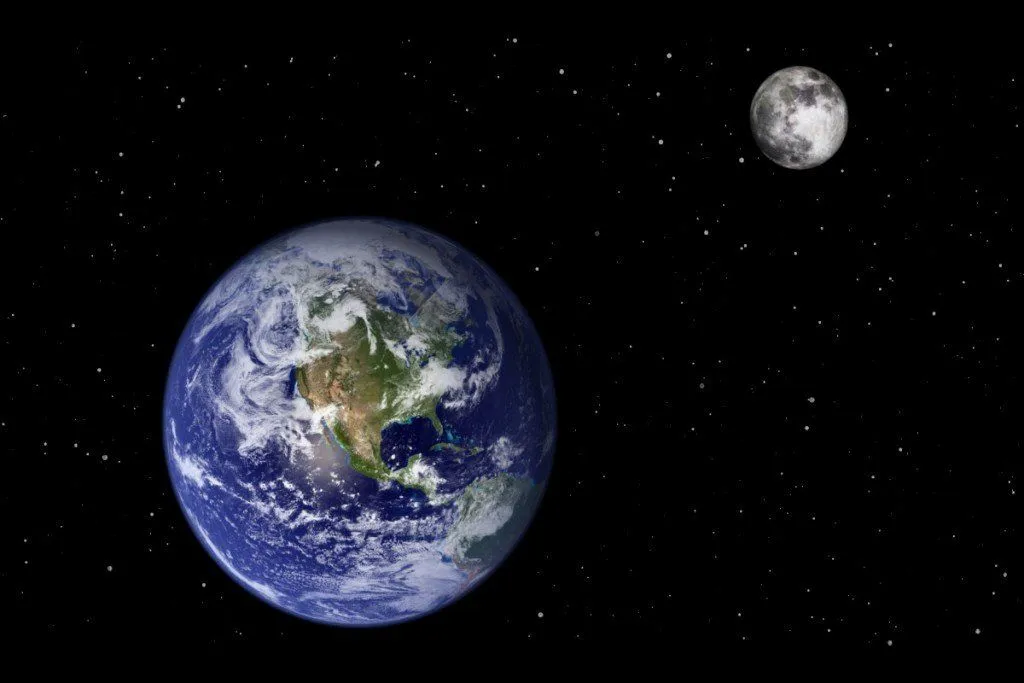
This region of the gravitational influence of a planet depends on the mass of the planet; it’s very large for planets of huge mass and much smaller for lighter planets. Furthermore, the gravitational force experienced by an object also depends on how far it is from the parent planet; the further away it is, the less gravitational pull it experiences.
An orbit is not a magical balance distance, however. An object is in orbit when it is moving sideways fast enough that, as gravity pulls it down, the curve of its fall matches the curve of the planet beneath it. It is, in effect, perpetually falling and perpetually missing. In the case of Earth, orbits are classified into three broad categories according to their altitudes: low, medium, and high orbit.
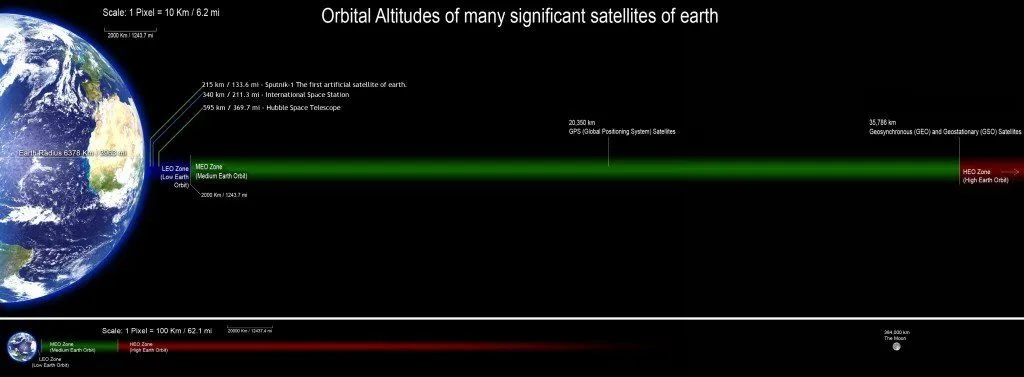
The names of these orbits are pretty self-explanatory; low orbit is at a relatively low altitude from Earth, and similarly, the high orbit is very high above the planet. However, the answer to the question posed in the title pertains to…
Low-Earth Orbit
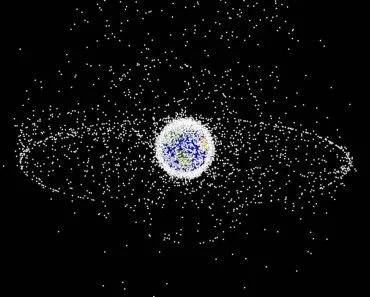
Often abbreviated as LEO, it’s an orbit around Earth at an altitude of 160 km to 2,000 km (99 – 1200 miles). In this orbit, the orbital period is 88 minutes, which means that an object can complete one revolution around the planet in less than an hour and a half!
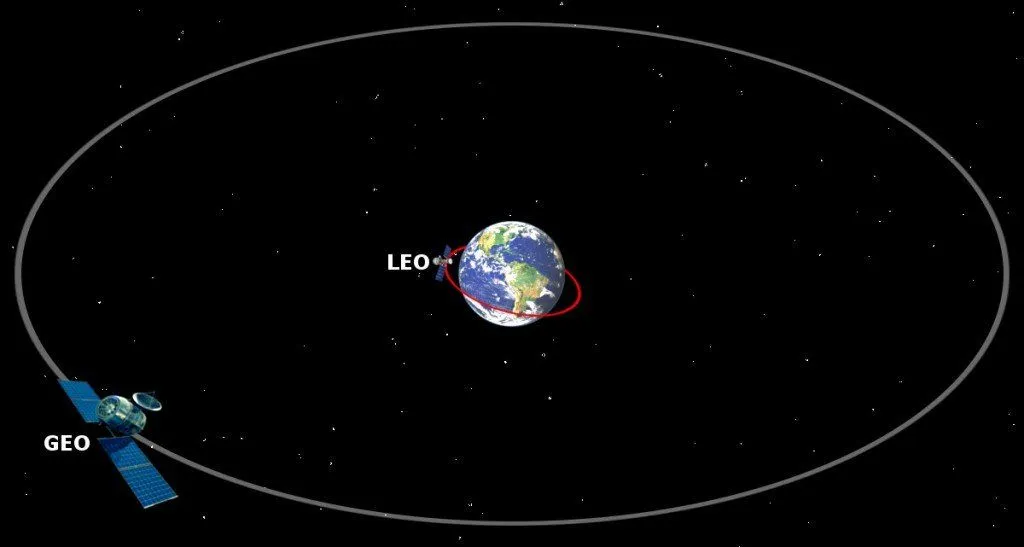
Here’s a fun fact: barring the Apollo flights to the Moon in 1968–1972 and NASA’s uncrewed Artemis I test in 2022, every crewed space flight in history has taken place within LEO. The International Space Station, the largest space station and most expensive object ever built by humans, orbits in LEO at around 408 km, and the vast majority of satellites either operate there or pass through it on their way to higher orbits.
The LEO is very, very important because, in that altitude range, a spacecraft doesn’t have to keep firing its thrusters in order to remain in motion around the planet. In short, it’s the altitude range where the gravitational pull of the planet is high enough that the object doesn’t fly off into space, but low enough that a spacecraft doesn’t instantly fall back to Earth in the absence of consistent boosts.
Above this range, the residual atmosphere thins out enough that satellites do not need much station-keeping. Below this range, the air at orbital speed acts like a stiff headwind: aerodynamic drag pulls energy out of the orbit faster than gravity can keep things stable, and the satellite begins plummeting toward the atmosphere very quickly. Uncrewed geostationary satellites, therefore, stay in the high-Earth orbit (about 35,786 km) so they don’t need periodic reboosts.
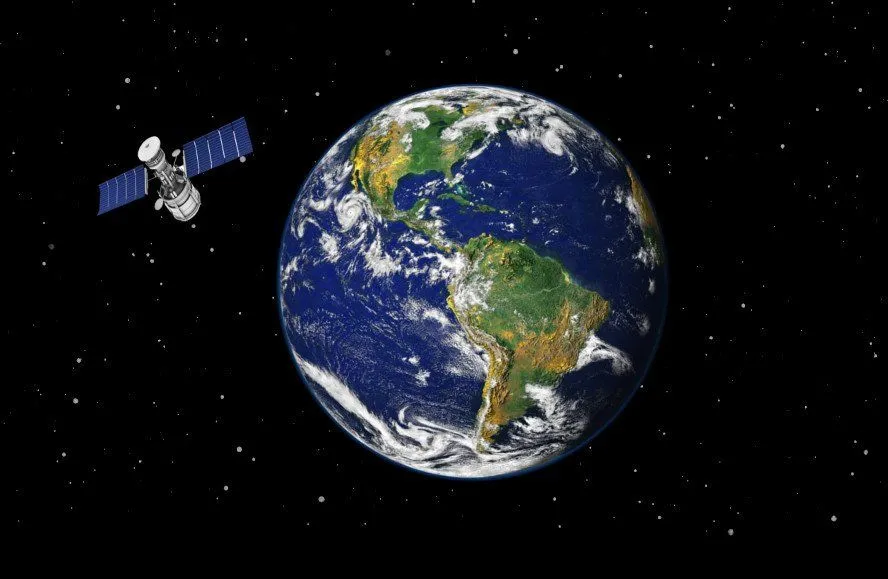
So, in answer to the original question, the lowest you can roughly maintain an unpowered circular orbit around Earth is about 160 km, the bottom of Low Earth Orbit. Below that, atmospheric drag is so strong that an uncrewed satellite without propulsion will spiral in within days. Crucially, this is not a hard wall: with continuous thrust to fight the drag, a spacecraft can sit much lower in what space agencies call Very Low Earth Orbit (VLEO). JAXA’s SLATS satellite (nicknamed Tsubame) used ion thrusters and small chemical RCS to hold a 167.4 km orbit in 2019, currently the Guinness record for the lowest Earth-observation satellite ever flown.
In a nutshell, if you ever plan to send a satellite of your own, you’ll need three things: a lot of permissions and approvals, a great deal of money, and the knowledge that the lowest any object can orbit around Earth without rockets is 160 kilometers.
Why Don’t Satellites And Astronauts Fall Back To Earth?
The most common assumption is that there’s simply no gravity up there, but that isn’t true at all. At the altitude where the ISS flies, around 400 km, Earth’s gravitational pull is still roughly 90% as strong as it is on the ground. So what actually keeps a satellite, or an astronaut, from dropping straight back down? The answer is sideways speed. A satellite is moving across the sky so fast that, in the time gravity pulls it a little closer to the surface, the curved surface of the planet has already fallen away beneath it by the same amount. It is genuinely falling the whole time; it just keeps missing the Earth.

Isaac Newton pictured this more than 300 years ago with a famous thought experiment. Imagine a cannon on top of a mountain so tall it pokes above the atmosphere. Fire the cannonball gently and it arcs to the ground. Fire it harder and it lands farther away. Fire it hard enough and the ground curves away as fast as the ball falls, so it never lands at all and instead loops right around the planet. That is an orbit.
In low-Earth orbit, the magic number is about 28,000 km/h (17,500 mph), or roughly 7.8 km per second. The ISS holds exactly that pace and laps the entire planet roughly every 90 minutes. This is also why astronauts appear weightless: they are not beyond gravity’s reach, they are simply falling around the Earth at the same rate as their spacecraft. With nothing pressing up against them, they float. Weightlessness, in other words, is just free fall that never ends.
What Would Happen If Earth’s Gravity Suddenly Switched Off?
This is a favorite physics puzzle: if Earth’s gravity vanished in an instant, what would happen to all the satellites circling overhead? The tempting answers are that they would drift gently away, or settle into a higher orbit. Both are wrong. Newton’s first law of motion says that a moving object keeps travelling in a straight line at a constant speed unless some force bends its path. Out in orbit, gravity is the only thing doing that bending. Take it away, and every satellite would instantly stop curving and shoot off in a straight line, flying outward along a tangent to its orbit at whatever speed it happened to be carrying.
It would not slow down, climb, or keep orbiting; it would simply head off into deep space in a straight line. To get a feel for how quick that line would be, consider the ISS, which is racing along at about 7.7 km per second (27,600 km/h). If you could point that straight-line motion at the Moon, some 384,000 km away, it would cross the gap in roughly 14 hours. Gravity, of course, isn’t going anywhere. The thought experiment just makes the real picture obvious: an orbit is a permanent tug-of-war between an object’s straight-line inertia and the steady inward pull of gravity, and the moment one side quits, the other wins.
Can The Earth Itself Fall Out Of Its Orbit?
If satellites are forever falling, it’s natural to ask whether our entire planet could one day fall out of its orbit, or simply ‘drop’ in space. Here the first thing to clear up is that there is no absolute ‘up’ or ‘down’ out there. Space has no floor for the Earth to land on and no meaningful ‘below’ the planet to fall toward, so the idea of Earth sinking like a dropped stone doesn’t really apply.
What Earth is actually doing is exactly what a satellite does, only on a far grander scale and around the Sun. It is sweeping sideways at a blistering 107,000 km/h (about 67,000 mph) while the Sun’s gravity tugs it inward, so it is perpetually falling toward the Sun and perpetually missing. That enormous sideways motion is what keeps the orbit going, and because nothing is around to cancel it, the orbit is extraordinarily stable. Earth has traced very nearly the same path around the Sun for billions of years and will keep doing so for billions more. A planet’s orbit can shift, but only very gradually, under the faint gravitational nudges of other bodies and over astronomical stretches of time. It cannot abruptly ‘fall out’ of orbit, because there is no sudden force capable of erasing all that built-up sideways speed.
Can You Orbit Earth In Any Direction?
In principle, yes: a satellite can loop around Earth at almost any angle you choose. But not every direction costs the same, and the reason comes back to the fact that the launch pad itself is already moving. At the equator, Earth’s surface is rotating eastward at around 1,675 km/h (1,041 mph). Launch toward the east and the rocket banks that speed for free, before its engines have done any orbital work at all. This is why the great majority of launch sites fire out over open water to the east, and why pads closer to the equator are especially prized (we dig into that in our piece on why rockets are launched from areas near the equator).
An orbit that runs with the spin, eastward, is called a prograde orbit. Go the other way, westward, and you have a retrograde orbit; the rocket first has to cancel out all of that ground speed and then build its orbital speed from zero, which wastes a lot of fuel for no benefit, so retrograde orbits are rare. Aim due north or south instead and you get a polar orbit, tilted about 90 degrees to the equator. It collects no rotational boost, but as the planet turns beneath it, the satellite eventually passes over nearly every point on the surface, which is ideal for mapping, weather, and reconnaissance work. So you really can orbit in any direction; physics simply charges you more fuel the further you stray from going along with Earth’s spin.
References (click to expand)
- Low Earth orbit - Wikipedia. Wikipedia
- Why do mass and distance affect gravity?. Northwestern University
- Super Low Altitude Test Satellite (SLATS / Tsubame) - Wikipedia
- Very Low Earth Orbit - Wikipedia
- What Is an Orbit?. NASA
- What Is Microgravity?. NASA
- Newton’s cannonball - Wikipedia
- Launch a rocket from a spinning planet. NASA Space Place