Table of Contents (click to expand)
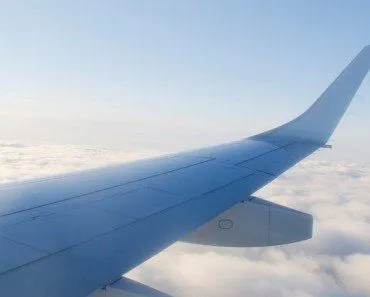
An airplane flies thanks to lift, an upward force created as its wings push against air molecules. Hot air is thinner and holds fewer molecules than cool air, so the wings make less lift and the engines make less thrust. That's why extreme heat makes takeoff and landing harder, and can force airlines to delay, lighten, or even ground flights.
The reason is simple: the more molecules your plane wings hit, the more upward force (or lift) is generated, which is exactly what you want. That’s why it’s undesirable to takeoff on particularly hot days, because air density is lower.
In order to understand why excessive heat creates problems while a plane lands or takes off, it’s imperative that we first understand how an airplane flies in the first place.
How Do Airplanes Fly?
You might have heard people answering this question with the classic ‘the plane’s wings generate lift, which helps it to fly’ explanation. Although this is not incorrect, it doesn’t present the whole picture, especially for someone who doesn’t understand what ‘lift’ is all about.
Well, the flying of a plane has everything to do with the momentum principle, which states that the total force on an object is equal to the rate of change of momentum (where momentum is represented by the product of mass and velocity). This principle can actually be deduced in the following manner:
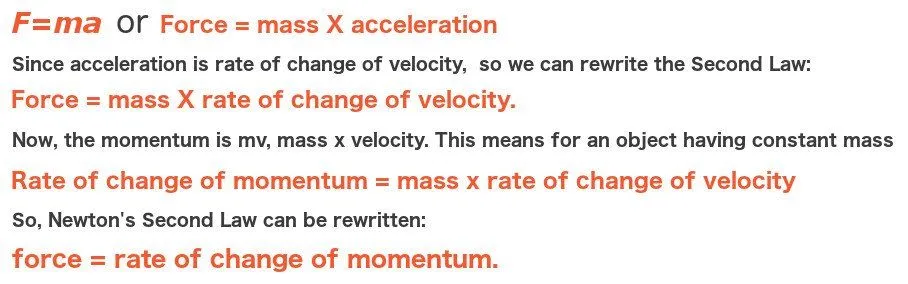
Now, consider the change of momentum of the air molecules colliding with the airplane as it moves through the air. As the plane wings hit these molecules, they change momentum, which obviously requires some sort of force.
Remember Newton’s third law of motion? For every action, there is an equal and opposite reaction. As such, the force that the wings exert on the molecules is of the same magnitude as the force the molecules exert on the wings. This provides an upward force to the wings (which people call ‘lift’), as well as a backward force (called ‘aerodynamic drag’ or simply ‘drag’). Both of these forces occur in pairs. There can be no lift without drag.

Lift helps the plane fly, while aerodynamic drag constantly slows it down. As a plane must move to generate lift, it requires some external thrust, which helps it go really fast. Not only that, but you also need thrust to counteract the drag that the plane experiences once it’s in the air and flying.
How Is A Plane’s Flight Affected By Temperature?
You might already know that if the temperature is high in a particular region, then the air density in that region would be low. In other words, the higher the temperature, the lower the air density, or you could say, the thinner the air.
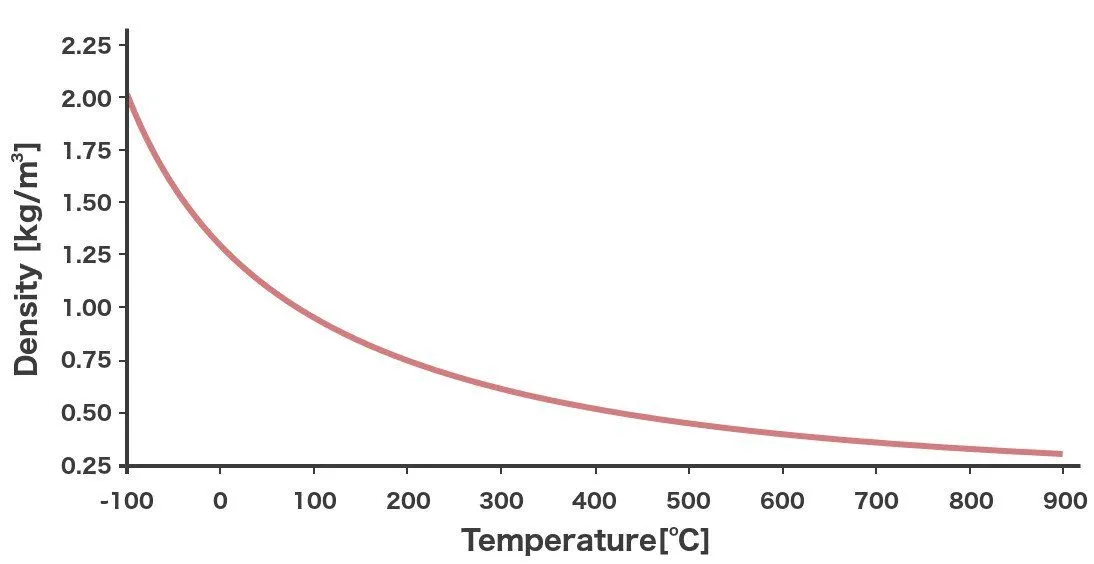
Now, thin air means it has fewer air molecules. This is a problem. Why?
Because in order to generate a large amount of lift, you need a large amount of air molecules. If you were just flying a kite, then you wouldn’t require many air molecules, but when we’re talking about flying an airplane, i.e., an enormous metallic tube that contains a couple hundred passengers inside, you obviously need a huge number of air molecules around your plane, regardless of whether you’re landing or taking off.
The reason is simple: the more molecules your plane wings hit, the more upward force (or lift) is generated, which is exactly what you want. That’s why it’s undesirable to takeoff on particularly hot days, because air density is lower.
In addition to that, if the air density is lower, then the combustion of the fuel is less efficient, which would mean less generation of power from the jet engines. This is another drawback of taking off on a particularly hot day.
But you can’t change the weather, right? So you have to find ways to tackle this issue. The question is, what can you do?
Longer Runways Help
There are several airports around the world that fall under the category of ‘hot and high’ airports – airports where the ambient temperature is unusually high, or they are located at high elevations, or both. Heat and altitude work in the same direction: both thin out the air, so the effect is described by a single number called density altitude (the altitude at which the air would feel that thin on a standard day). The hotter and higher the airport, the higher its density altitude, and the harder a plane has to work to get off the ground.
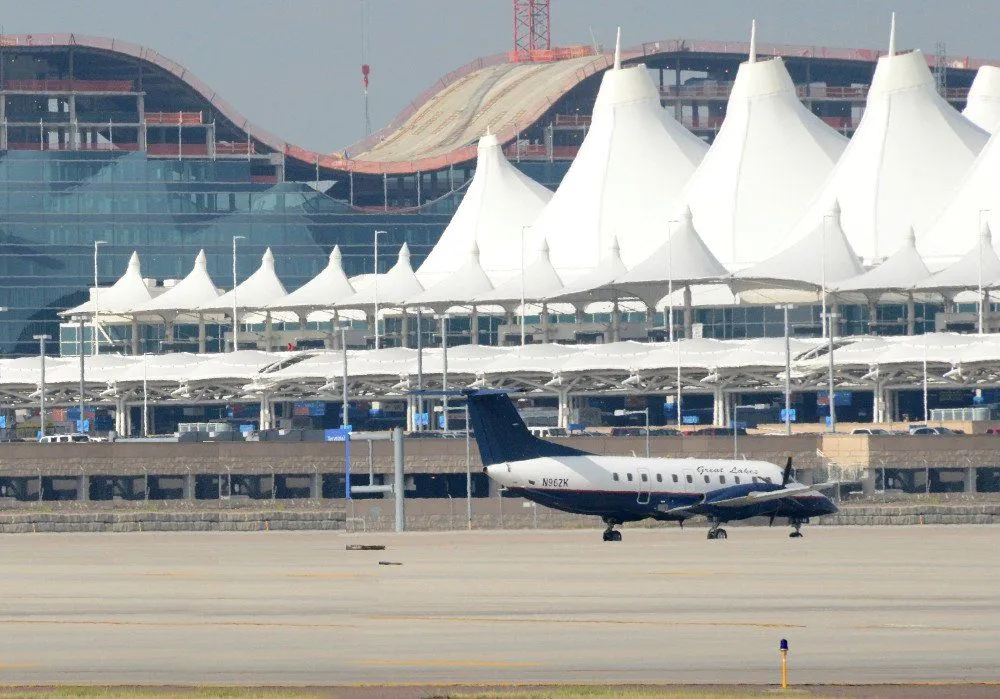
If you want to land your plane in one of those ‘hot and high’ airports, you will also need longer runways. That way, you’d be able to generate more momentum before taking off, which would provide more energy for the subsequent climb into the sky (to read more about longer runways, check out this article).
Reduce The Load Of The Plane
Reducing the plane’s overall load helps it to take off relatively easily on a hot day, as a lighter plane needs less lift than a heavier plane. That’s why airlines often don’t fill their seats completely at certain airports on particularly hot days. Also, they may carry less fuel. They may then land and refuel at a cooler airport. Easy peasy!
Don’t Take Off In The First Place
That’s quite a neat option, wouldn’t you say?

If the day is really hot and you’re not sure if the length of the runway will give you enough momentum before takeoff, it’s better to stay grounded than to risk flying. In fact, that’s what some airlines at certain airports do during peak summers.
This isn’t just a thought experiment. In June 2017, American Airlines had to cancel around 50 flights out of Phoenix, Arizona, when the temperature climbed toward 49 °C (120 °F). The grounded planes were Bombardier CRJ regional jets, which the manufacturer certifies to operate only up to about 48 °C (118 °F). The bigger Boeing and Airbus jets, with higher temperature limits, mostly kept flying, but they too have to watch their weight closely when it gets that hot.
References (click to expand)
- Momentum, Work and Energy - Galileo and Einstein. The University of Virginia
- Theory of Flight. web.mit.edu
- Aeronautics - What Makes An Airplane Fly - Level 1. Florida International University
- Effects of changes in air pressure and density on the human .... The University of Arizona
- Pilot's Handbook of Aeronautical Knowledge, Chapter 11: Aircraft Performance. Federal Aviation Administration
- It's Too Hot For Some Planes To Fly In Phoenix. NPR