Table of Contents (click to expand)
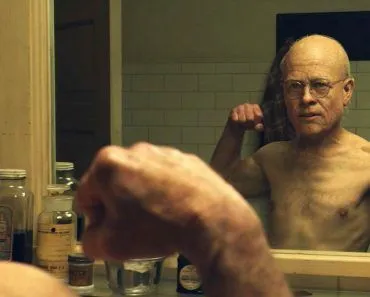
Deadpool’s superpowers (fast healing, regeneration of severed limbs, near-immortality, and the disfiguring scar tissue covering his body) all come from an out-of-control healing factor grafted onto him by the Weapon X program. The healing factor and his terminal cancer are tied together: it stops the cancer from killing him, but it also rebuilds the tumors as fast as it heals his wounds, which is why his face stays scarred and why he cannot simply be cured.
Deadpool, the infamous ‘mercenary with a mouth’, is a well-loved anti-hero for any Marvel fan. His comic antics and sarcastic one-liners are the crux of his popularity.

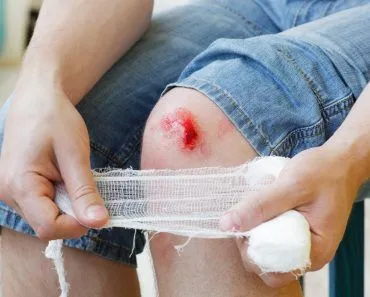
The majority of his superpower comes from the fact that he can recover from fatal injuries, such as bullet wounds, decapitations and even chopped off limbs. This is all thanks to an out-of-control healing factor derived from another mutant in the Marvel universe, Wolverine. Deadpool possesses a similar (perhaps even more powerful) healing factor to Wolverine and is therefore capable of healing almost any injury.
Although his superpowers are impressive, they are not free from their consequences. Deadpool also suffers from an advanced form of cancer. The healing factor was specifically engineered to keep the cancer from killing him, but it has also been revealed that if his cancer were to be cured, the healing factor would continue to create new replacement cells faster than his body required, eventually killing him. So technically, he isn’t immortal. Physical injuries can’t kill him though.
Origin Of Deadpool
Wade Wilson, a.k.a Deadpool, is an ex-Special Forces operator, working as a mercenary for hire. He acquires his powers when a shady person in a neat business suit approaches him, promising to treat his malignant cancer. Wade unknowingly signs up for the Weapon X program (the same agency that provided the mutant Wolverine with his exceptional healing powers). Deadpool gained his ability to regenerate any destroyed tissues or organs at a superhuman rate; however, the procedure was not without its side effects. His new power also increased the rate of growth of the cancerous tumors. This resulted in the spread of his tumor throughout the body rapidly, which resulted in the formation of a colossal amount of scar tissue.

His brain cells are similarly affected, with dying brain cells being rejuvenated at an extremely accelerated rate, which allows him to recover from any and all head wounds. This renders him nearly invulnerable to psychic and telepathic powers, as the altered or damaged brain cells quickly regenerate back to their original state. On the downside, it is also the cause of his psychosis and mental instability.
Cause Of Deadpool’s Super Healing Powers.
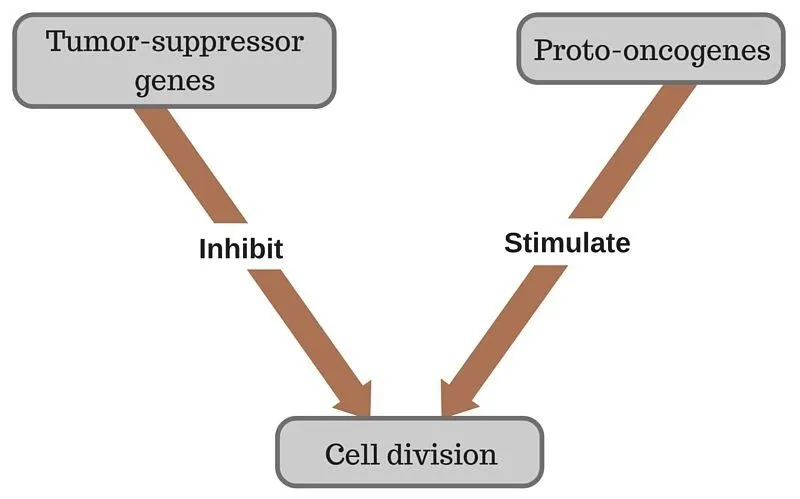
You’ll be surprised to know that it is actually the cancer that gives him his abilities. It is no secret that cancer cells replicate extremely quickly. They pull other cells into giant tumors and stop the body from functioning properly. This happens when genes called oncogenes (a gene that in certain circumstances can transform a healthy cell into a tumor cell) multiply and spread all over the body. The tumor suppressor genes function as regulators of cell division. Thus, these two genes work together as a team, giving Deadpool his amazing abilities.
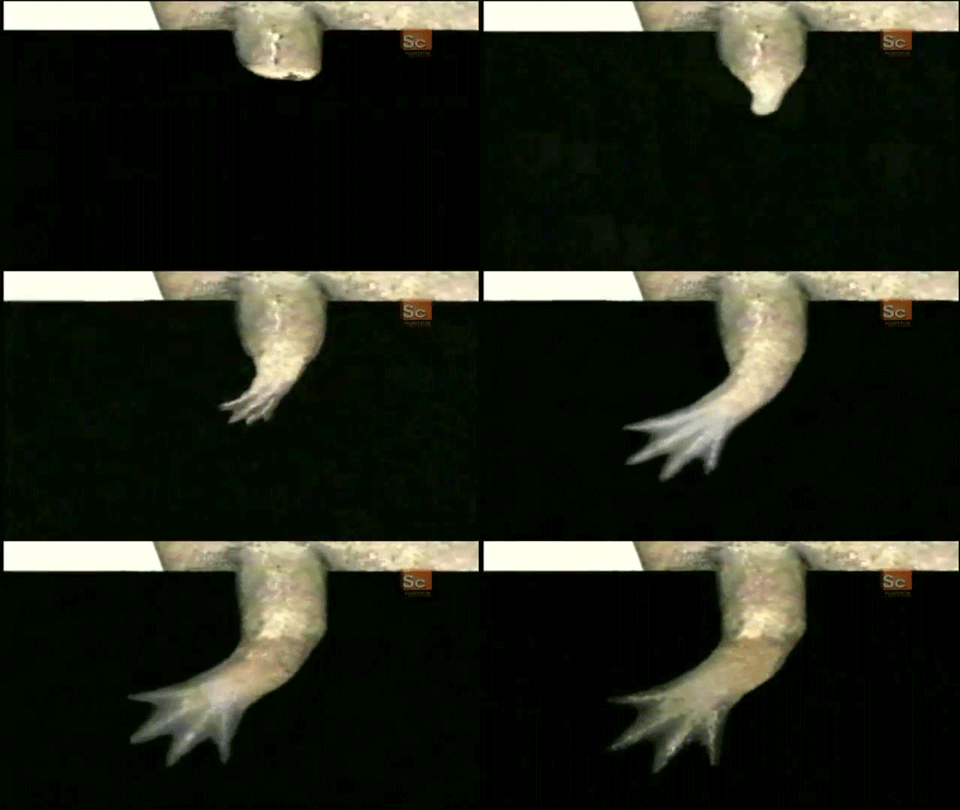
At one point in the movie, Deadpool regenerates his hand. The regenerated hand starts off as a small limb, eventually growing into a full-sized limb.
How Is Cancer Related To Healing?
There’s actually an animal that uses a similar relationship between oncogenes and tumor-suppressor genes to regenerate body parts. The axolotl, a type of salamander native to Mexico, can regrow its limbs, pieces of its spinal cord, eyes, and even sections of its brain. Oncogenes and tumor suppressor genes can be considered a regulator of cell division. Oncogenes can speed it up, sometimes out of control, while tumor suppressor genes can slow it down, even telling cells when to die.
You might be wondering, with all his super healing abilities, why is Deadpool unable to cure his own cancer? This is because Wade Wilson is infused with mutant genes, so every cell in his body has inherited the regenerative ability – including the tumor cells. Therefore, along with the healthy cells, the cancerous cells also get regenerated.
What Kind Of Cancer Does Deadpool Have?
In the 2016 film, before Wade Wilson ever becomes Deadpool, a doctor hands him the worst possible news: his cancer has already spread everywhere. Wade being Wade, he jokes about it: "Cancer's only in my liver, lungs, prostate, and brain. All things I can live without." That throwaway line is actually a very grim diagnosis. A cancer that has already seeded itself in four separate organs is what oncologists call late-stage or metastatic (stage 4) disease, and in real life a spread that extensive is almost always terminal. That death sentence is the whole reason Wade agrees to the shady Weapon X experiment in the first place.
Here is the cruel twist that trips a lot of people up: even after the procedure hands him a jaw-dropping healing factor, the cancer never actually disappears. His regeneration does not cure the disease, it simply fights it to a permanent standstill. The tumor cells keep multiplying and his healing factor keeps repairing the damage, locked in an endless tug-of-war. That stalemate is exactly why his skin never smooths back out. The scar tissue smothering his body is really the visible scoreboard of a battle that never ends.
Is Deadpool Actually Immortal, And Can He Ever Die?
Fans endlessly ask whether Deadpool can truly die, and the honest answer is "almost never, but not quite." His healing factor lets him shrug off gunshots, decapitations and worse, yet it still has limits. If enough of his body is destroyed at the same instant, or if the healing factor itself is switched off, he can be killed. In one storyline the Weapon X program did exactly that, reversing his healing factor until his cells broke down and he dissolved into a puddle. So the injuries themselves never finish him off, but sabotaging the healing factor can.
The comics also give his near-immortality a wonderfully petty backstory. Both Deadpool and the mad titan Thanos are hopelessly in love with the physical embodiment of Death, known as Lady Death. Jealous that Death seemed to return Wade's affection, Thanos cursed him to live forever, guaranteeing that Wade can never actually die and be reunited with her. Deadpool's endless life, in other words, is less a gift than a punishment engineered to keep him away from the one thing he wants.

Is anything in the real world genuinely immortal? Not among animals like us, but one creature comes startlingly close. The tiny immortal jellyfish, Turritopsis dohrnii, can respond to injury, sickness or old age by reverting all the way back to an earlier polyp stage, essentially rewinding its own life cycle through a cellular process called transdifferentiation. In theory it can repeat this trick indefinitely, which is why biologists call it "biologically immortal", though in practice it can still be eaten or fall ill. It is about the closest nature gets to a healing factor of its own.
Can Deadpool Really Regrow From A Single Cell?
One of the wildest claims about Deadpool is that as long as a single living cell of his survives, he can rebuild his entire body from scratch. It sounds like pure comic-book nonsense, and for a human it is. But nature actually runs a scaled-down version of this trick, and it is every bit as strange as it sounds.

Meet the planarian, a humble freshwater flatworm and the reigning champion of regeneration. Slice one into pieces and each fragment can regrow into a complete, perfectly proportioned worm, so a single dismembered planarian can give rise to several hundred tiny new animals. Their secret is a reserve of adult stem cells called neoblasts, which are the only cells in the worm that divide. Neoblasts are pluripotent, meaning a single one can turn into every cell type the animal needs. In a landmark experiment, researchers transplanted just one neoblast into a worm whose own cells had been wiped out by radiation, and that lone cell rescued the animal and rebuilt a whole healthy worm. That is about as close as real biology gets to Deadpool's "one cell is enough" boast.
So why can't we do the same? Humans simply do not keep a reserve of body-wide pluripotent cells lying around the way a planarian does, which is a big part of why we can't regrow lost organs or limbs. Our healing tops out at knitting bone, sealing skin and patching up the liver. Regrowing a hand, let alone an entire body from a single cell, stays firmly in Wade Wilson's world.
Can His Abilities Be Replicated In Normal Humans?
Aggressive research is being done in this particular field. Modern molecular tools are allowing us to define the genes and cells implicated in salamander regeneration, which may soon provide insights that are useful in treating many injuries or diseases in humans. However, this doesn’t mean that all humans will be transformed into superheroes. It might not be possible to harness this power in humans, but there’s clinical potential in the axolotl. As exciting as this may sound, in the end, there are always biological limitations that are impossible to overcome.
One promising lead is the Lin28a gene, which is normally active in embryos. A 2013 Cell paper from George Daley's lab at Harvard showed that switching Lin28a back on in young mice reactivates an "embryonic" metabolic state (boosting glycolysis and mitochondrial energy production) and lets the animals regrow tissue (including parts of digits and ears) more effectively. It is not a one-step ticket to embryonic stem cells, but it shows that adult mammals still carry some of the same regenerative machinery the axolotl uses. The research is still in its infancy.
In short, it’s highly unlikely that we’ll see an army of Deadpools running around the city anytime soon. On screen, though, Wade has been busy: 2024’s Deadpool & Wolverine (directed by Shawn Levy) brought Ryan Reynolds back as the regenerating mercenary and reunited him with Hugh Jackman’s Wolverine, who conveniently for the plot shares that same out-of-control healing factor.

References (click to expand)
- LIN28 - Wikipedia. Wikipedia
- Oncogene - Wikipedia. Wikipedia
- Axolotl - Wikipedia. Wikipedia
- Shyh-Chang, N., et al. (2013). Lin28 Enhances Tissue Repair by Reprogramming Cellular Metabolism. Cell.
- Deadpool (2016) cancer quote. MagicalQuote
- Why Deadpool's Powers Won't Heal His Face and Body. Screen Rant
- Thanos Gave Deadpool His Immortality Out of Jealousy. Screen Rant
- Turritopsis dohrnii - Wikipedia. Wikipedia
- Rink, J. C. (2013). Stem cell systems and regeneration in planaria. Development Genes and Evolution.
- Flatworms, the masters of regeneration. Max Planck Society