If a meat has a lot of pathogens that can infect humans, it’s probably not safe to eat that meat raw.
Imagine you are in your favorite sushi bar. The tea has been poured, the seaweed salad has been eaten, and you are eagerly awaiting your sushi platter. When it finally arrives, you see pink fat marbled salmon sitting atop the perfectly shaped rice, and your mouth begins to water.
So why is it okay to eat raw fish (and even beef) but not raw chicken or pork? Many even shy away from raw eggs.
Short answer: Raw meat from certain animals, such as fish, contains fewer pathogens (bacteria, viruses, and parasites) that infect humans. Eating raw meat depends on several factors, including preparation, hygiene conditions, the animal species, and where that animal is sourced from.
Which Meats Can You Eat Raw?
While some people are paranoid about undercooked food, there is actually a range of meat you can eat raw.
Why Is Eating Beef Raw Or Rare Okay?
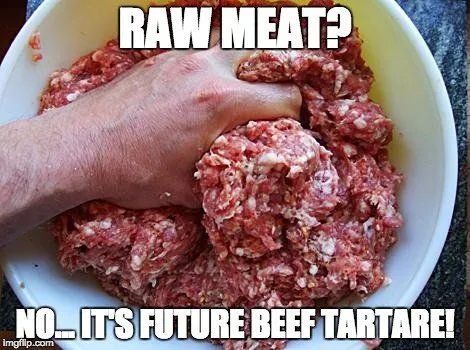
Steak tartare, a popular dish in some European countries, is raw minced beef or horsemeat flavored with spices and vegetables, topped with a raw egg.
The restaurants serving the dish use only the highest quality beef from a few select butchers.
It is also essential that the meat is fresh and stored in cold conditions.
What about rare steak?
Since the 1990s, industries have developed new techniques to limit the contamination of pathogens in beef. Most pathogen contamination occurs because the hide of the animal is contaminated. This discovery has led to interventions where the hide is cleaned, limiting the meat’s contamination.
Searing the outside kills any bacteria on the surface. So once the outside is cooked, a rare steak is perfectly safe to eat.
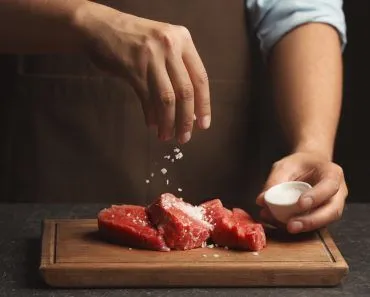
But, eating beef raw or cooked rarely comes with a caveat. It is only safe to consume beef this way if it is prepared hygienically. Some red flags to look out for are if the butcher doesn’t sanitize their countertop, doesn’t wash their hands between cutting different types of meat, or prepares the beef on the same surfaces as they cut chicken or pork (two types of meat that you should not eat raw).
Fish
Sashimi and sushi restaurants are popular worldwide; the raw fish is a delicacy.
Not all fish are fit to be eaten as sushi or sashimi. The fish commonly eaten as sushi are expensive marine fish such as tuna, yellow tail, and red snapper. These fish rarely have pathogens that infect humans. And for these fish, there is a process that makes them sushi-grade fish.
Although "sushi-grade" is not an official FDA designation, the FDA does require specific freezing protocols for fish intended to be eaten raw. To prepare fish for raw consumption, it is bled thoroughly and gutted soon after it is caught. After this, the fish is iced, and fish such as salmon are flash frozen at -31°F (-35°C) or below. Freezing the fish kills any parasites that may be present.
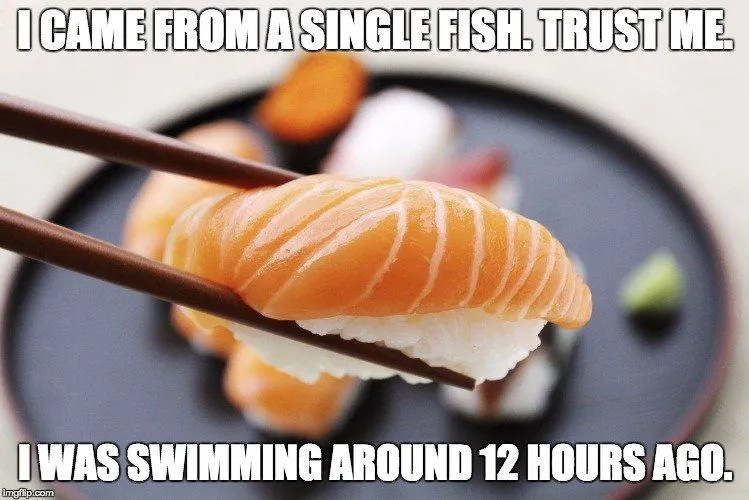
One study found that industrially prepared sushi fish had more instances of bacterial pathogens than fresh fish. According to a study, the number of cases of infection from pathogens in sushi fish (consumed in Japan), such as tapeworm or herring worms, is low.
Finally, the fish you buy is usually not minced, which is common with beef, chicken, and pork. This means that an infected fish cannot infect other fish.
But, if you are worried, use your nose. Smell the fish you’re about to eat. If it smells offensive, don’t eat it.
Which Meats Can’t Be Eaten Raw And Why?
Beef
Beef is on this list. Raw beef is a delicacy and, like all delicacies, is rare and expensive. Cuts of beef that most of us can afford can be infected with a few problematic pathogens.
One such pathogen is beef tapeworm, which causes almost 50 million cases worldwide each year. It is caused by eating raw or undercooked meat. Bacteria such as salmonella, listeria, and Shiga-toxin-producing E. coli may also exist. But, the spread of these bacteria can be limited if the beef is processed properly.
Another is Toxoplasma gondii. This parasite spreads through cat feces into other animal’s muscles, where it lies dormant, waiting to end up in a cat to complete its life cycle. Toxo does infect many mammals, including us.
Pork
Raw pork isn’t something you hear about too often, but that’s more because raw pork doesn’t taste as great as cooked pork.
But pork has its share of the pathogen. Trichinosis, caused by the parasitic roundworm Trichinella, was historically a major concern with pork. However, modern farming practices have virtually eliminated this risk from commercial pork. A 2024 USDA study that sampled 3.2 million commercially raised pigs found zero Trichinella infections. Today, the roughly 15 cases of trichinosis reported annually in the US come almost exclusively from wild game such as bear or wild boar, not commercial pork. Still, pork from backyard or non-commercial sources can carry Trichinella and other parasites, and bacteria such as Salmonella and Yersinia enterocolitica remain a concern in undercooked pork. Since pork is one of the most widely consumed meats in the world, proper cooking remains important.
Chicken
The thought of raw chicken turns people’s stomachs, conjuring up the word Salmonella and the violent gut troubles Salmonella can cause.
Chickens tend to harbor a large amount of Salmonella and E. coli, particularly when kept caged without access to their normal diet. Despite decades of industry efforts, Salmonella outbreaks from chicken have not declined since 1998. A growing concern is a multidrug-resistant strain of Salmonella Infantis, which by 2023 accounted for 97% of S. Infantis isolates from chicken carcasses. Even properly pastured, healthy chickens carry these risks, and few people would forego a perfectly cooked piece of chicken for a slippery raw breast.
How Do You Know Meat Is Safe To Eat Raw?
There is no black-and-white answer to this question.
There are several factors to consider, such as how the meat is prepared, where it comes from, and under what conditions the animal was raised.
Even when it comes to sushi, fish that has been defrosted and refrozen isn’t the best option. Sushi tastes best and is safest to eat when the fish is fresh or at least not more than 2-3 days old. Don’t worry… there are many delicious and reputable sushi spots out there.
With beef, look for a butcher you can trust to give you quality beef.
Since the 1990s, we’ve developed new techniques to limit the contamination of pathogens in beef. Most pathogen contamination occurs because the hide of the animal is contaminated. This discovery has led to interventions where the hide is cleaned. A good butcher will be able to source the best quality.
In short, you can potentially trust raw meat from farms and distributors that employ humane and sustainable methods of raising their animals, but remember, there is always a certain amount of risk with raw meat, so choose wisely!
Why Can Wild Animals Eat Raw Meat When We Can't?
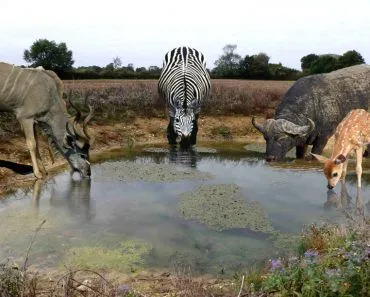
Here is a question that lands in a lot of search bars: a lion tears into a fresh kill, a fox gulps down a rotting rabbit, and neither one calls in sick the next day. So why would the same meal send a human to the hospital? Part of the answer lives in the stomach.

A 2015 study in PLOS ONE measured stomach acidity across the animal kingdom and found a clear pattern: the more an animal relies on carrion and risky meat, the more acidic its stomach. Obligate scavengers like vultures averaged a stomach pH of about 1.3, acidic enough to act as a chemical kill-zone that destroys most bacteria and parasites before they ever reach the gut. The researchers argued that this fierce acidity evolved as a filter against pathogens, which is exactly why a vulture can clear out a carcass that would floor you or me. (We cover this in detail in our piece on how vultures eat rotting flesh without getting sick.)
Humans actually sit surprisingly high on that scale. Our resting stomach pH of roughly 1.5 is closer to a scavenger's than to a typical plant-eater's, a hint that our ancestors ate their share of risky meat. But our defenses are not absolute. Stomach pH climbs while we digest a meal, letting more pathogens slip through, and our long intestines (built to wring nutrients out of a mixed diet of meat, starches, and plants) give surviving microbes more time to multiply than a carnivore's short, fast gut does. Add in the fact that we no longer eat freshly killed prey on the spot, and the picture is clear: it is less that we cannot handle any raw meat, and more that our bodies offer a thinner margin of safety than a wolf's or a vulture's.
Why Can You Eat Raw Fish But Not Other Raw Meat?
Sushi and sashimi feel like the great exception to every raw-meat rule, and there are real biological reasons for that. Fish simply share fewer pathogens with us than mammals and birds do. We are warm-blooded land animals, and so are cattle, pigs, and chickens, which means the bacteria thriving in their guts (such as Salmonella and certain E. coli) are already well suited to surviving at human body temperature. Many fish parasites and microbes, by contrast, are adapted to cold ocean water and are less likely to set up shop inside us.

The bigger reason, though, is how raw fish is handled. Wild fish can carry parasitic worms such as Anisakis, but freezing reliably kills them. Under the US FDA Food Code, fish meant to be served raw must be frozen using one of three set protocols: held at -20 °C (-4 °F) or below for at least 7 days, frozen solid at -35 °C (-31 °F) and held there for at least 15 hours, or frozen solid at -35 °C (-31 °F) and then held at -20 °C (-4 °F) for at least 24 hours. That cold step is the safeguard a rare steak or raw chicken breast never gets.
One more difference matters: a fillet of fish is a single, intact piece of muscle, so any surface contamination stays on the surface. Ground beef or minced chicken mixes the outside (where bacteria live) all the way through, which is why a burger has to be cooked further than a steak. Between cold-adapted pathogens, mandatory freezing, and whole cuts, raw fish earns its place on the menu in a way raw poultry never will.
How Are Cured Meats Like Prosciutto Safe Without Cooking?
If raw pork is risky, how does prosciutto, an uncooked pork product, end up sliced paper-thin on a charcuterie board? The trick is that "uncooked" does not mean "untreated." Dry-cured meats like prosciutto, jamón, and many salamis are never heated, but they are transformed by salt and time.

The key concept is water activity, a measure of how much unbound water in a food is available for microbes to use. Bacteria such as Salmonella, Listeria, and E. coli need that free water to grow, so packing the meat in salt and drying it over months pulls moisture out and effectively locks the rest away. The USDA's Food Safety and Inspection Service treats a water activity of 0.85 or below as the threshold for a shelf-stable product, the point at which dangerous bacteria can no longer multiply. Traditional prosciutto is dried well past that line, which is why it can hang at room temperature and be eaten without a single minute on the stove.
It is worth being precise here, though. Curing is what makes prosciutto crudo safe to eat raw; an ordinary fresh ham or a "cured to destroy trichinae" cut from the supermarket still needs cooking. And the rule does not transfer back to a plain cut of raw pork, which has none of these defenses. The lesson is the same one running through this whole article: it is rarely the animal alone that decides whether meat is safe raw, but what we do to it before it reaches the plate.
References (click to expand)
- Northrop-Clewes, C. A., & Shaw, C. (2000, January 1). Parasites. British Medical Bulletin. Oxford University Press (OUP).
- Roberts, T. (1985, December). Microbial Pathogens in Raw Pork, Chicken, and Beef: Benefit Estimates for Control Using Irradiation. American Journal of Agricultural Economics. Wiley.
- You Asked: Why Can't I Eat Raw Meat?.
- Nawa, Y., Hatz, C., & Blum, J. (2005, November 1). Sushi Delights and Parasites: The Risk of Fishborne and Foodborne Parasitic Zoonoses in Asia. Clinical Infectious Diseases. Oxford University Press (OUP).
- Djurković-Djaković, O., Bobić, B., Nikolić, A., Klun, I., & Dupouy-Camet, J. (2013, July). Pork as a source of human parasitic infection. Clinical Microbiology and Infection. Elsevier BV.
- Li, Y., Carrillo, J. A., Ding, Y., He, Y., Zhao, C., Liu, J., … Song, J. (2015, September 14). Transcriptomic Profiling of Spleen in Grass-Fed and Grain-Fed Angus Cattle. (S. D. Fugmann, Ed.), Plos One. Public Library of Science (PLoS).
- Power, A. G., & Mitchell, C. E. (2004, November). Pathogen Spillover in Disease Epidemics. The American Naturalist. University of Chicago Press.
- i The Chicken or the Egg? Hen Health and Food Safety on ....
- Beasley, D. E., et al. (2015). The Evolution of Stomach Acidity and Its Relevance to the Human Microbiome. PLOS ONE.
- Freezing and Parasite Destruction (FDA Food Code 3-402.11). Legal Information Institute, Cornell Law School.
- Shelf-Stable Food Safety. USDA Food Safety and Inspection Service (FSIS).