In the 1930s Nikola Tesla proposed Teleforce, a particle-beam weapon also nicknamed the "peace ray," that he claimed could destroy aircraft within 200 miles of a defended border and make any country "impregnable" to attack. The Soviet Union paid him $25,000 in 1935 for the plans, but no working Teleforce was ever built. Modern directed-energy weapons used today are laser-based; a functional particle-beam weapon still does not exist.
Humans are truly inscrutable creatures; first, we discover the hidden power of atoms and their unmatched potential as a power source, and then we take the same discovery to an altogether different level and make a weapon of mass destruction from it!

Fortunately, human progress is not all that bleak. While there are scientists who dedicate their lives to weapons of war, other scientists have also toiled to create anti-war weapons – tools that would play a defensive role and prevent wars from occurring in the first place. Nikola Tesla, the well-known inventor and electrical engineer, designed one such anti-war weapon that had an unprecedented potential to limit countries’ invasive military actions against other nations.
Teleforce Or “The Peace Ray”
Teleforce (a charged particle beam projector), also referred to as the ‘peace ray’ (since it was considered to be an anti-war weapon) was a particle beam electromagnetic weapon that attracted attention in the 1920s due to its novel way of preventing invasions of hostile groups. It repelled attacks by bombarding these beams on the invading fighter aircraft, which would disrupt their atomic structure and bring them down. Please note that this was only a ‘theoretical weapon’, meaning that it was never actually designed and put into use.
The idea of Teleforce is often attributed to the ‘death ray’, which first surfaced in 1923. This weapon was quite similar to Teleforce, as it also made use of charged particle beams to down enemy aircraft. However, Tesla was quick to negate such claims, saying, “this invention of mine does not contemplate the use of any so-called ‘death rays’.”
The Problem With Projecting Rays Over Large Distances
The thing, according to Tesla, that made Teleforce different from the death ray is that he claimed the rays couldn’t be produced in large quantities, and as such, the rays’ intensity would diminish rapidly as they traveled away from the source. He pontificated that if all the energy of New York (2 million horsepower, at that time) were converted into rays and transmitted over twenty miles, it would become so dispersed in its intensity that it wouldn’t be able to kill a single human being, let alone an aircraft made of strong metal.
Tesla claimed that his weapon, Teleforce, could repel any attack within 200 miles of the city. In his own words, “it can destroy anything approaching within 200 miles… [and] will provide a wall of power” in order to “make any country, large or small, impregnable against armies, airplanes, and other means for attack.”
How Did Teleforce Work?
Teleforce required certain integral components, namely a device to produce a manifestation of energy in free air (which was readily available) instead of in a vacuum, a device to generate a large amount of electric force, an apparatus for amplifying the generated force, and a device to produce a tremendous repelling force (like a gun or a cannon).
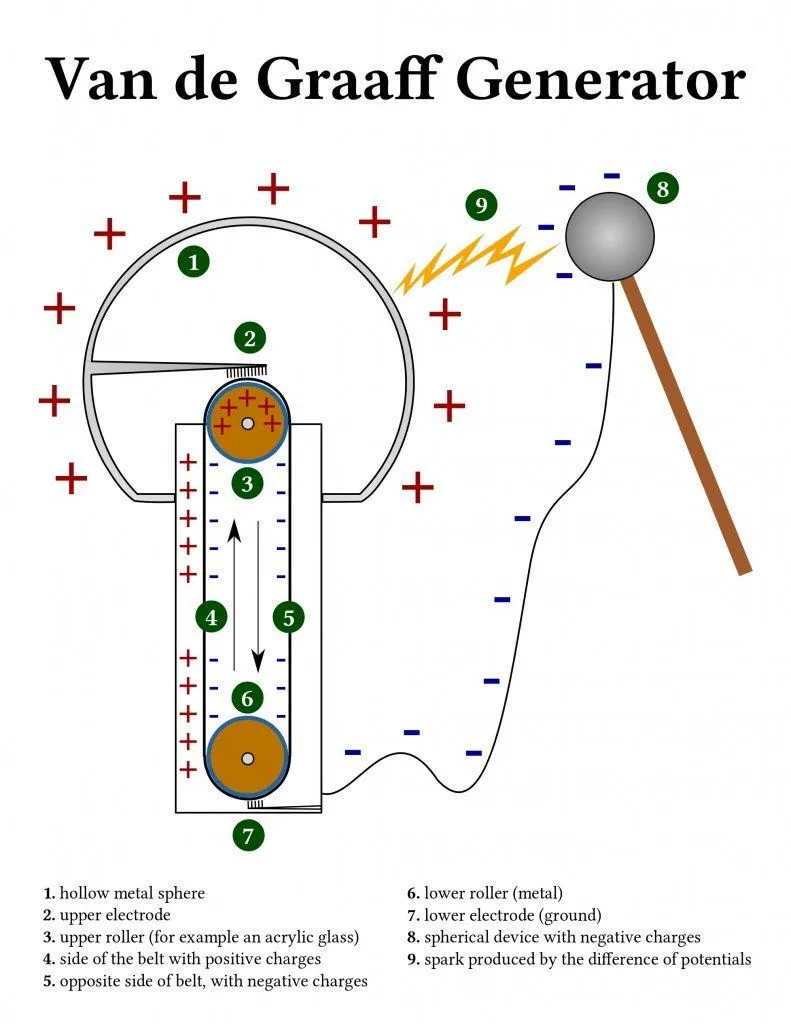
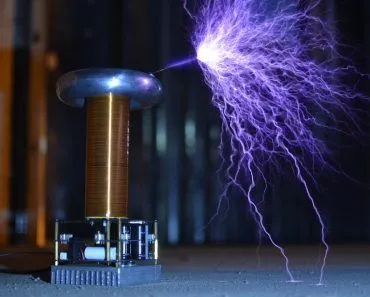
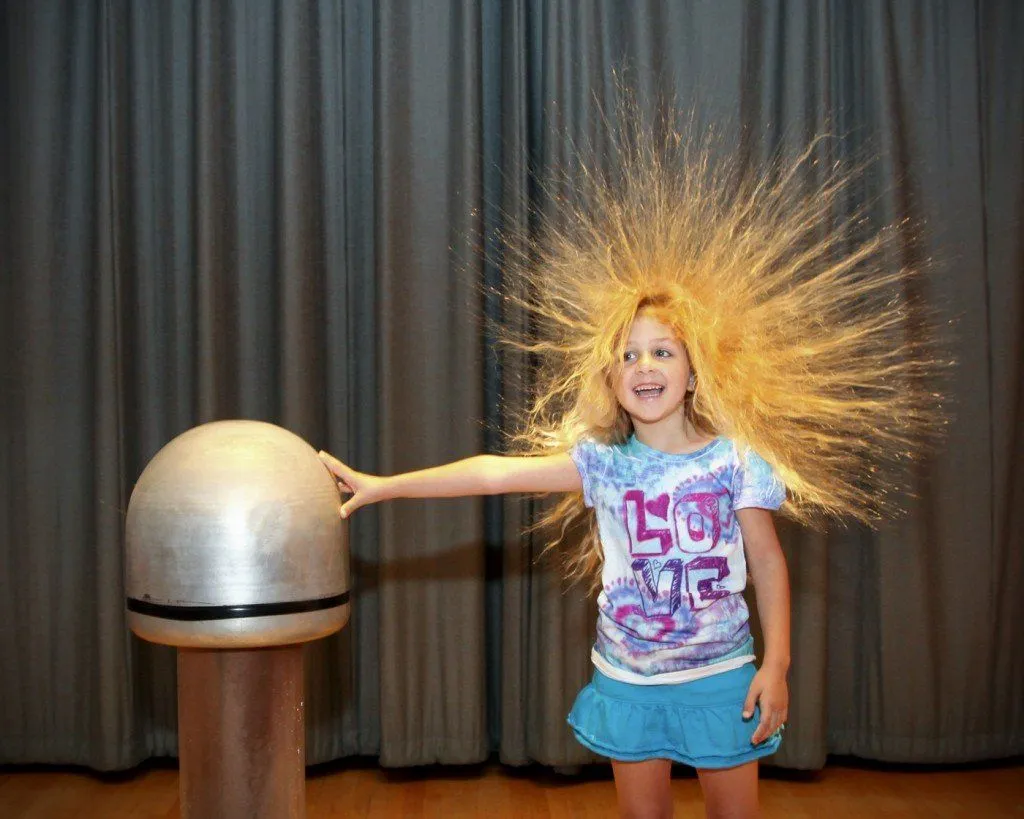
Tesla was a great admirer of the Van de Graaff electrostatic generator, so after doing extensive research on the device, he used the same design as the generator to create tremendous charges. Taking cues from that generator, he used an electrified stream of air to repel tiny pellets made of tungsten. The same pellets were shot by a vacuum tube, which was pretty similar to a standard cannon, at least in appearance.
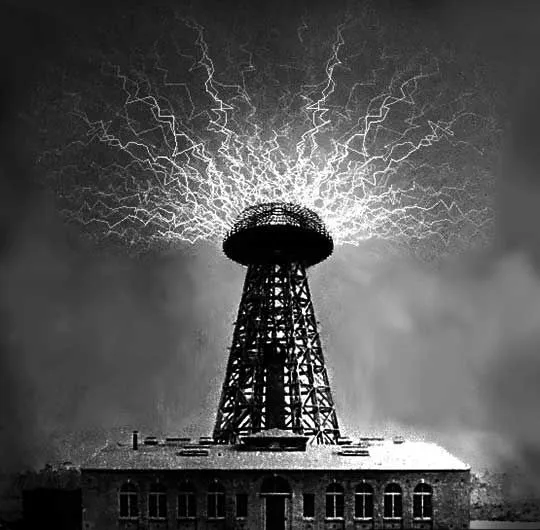
This setup was designed in the form of a tower, as large as the one at Wardenclyffe. It consisted of a tall shaft and a round bulbous part at the top. The shaft would contain the ionized stream of air and the bulbous part would hold the charge around it. From the top of the bulbous part, a cannon-shaped beam gun could emerge and be used to shoot down enemy aircraft over long distances.
What Were Teleforce’s Particles, And How Fast Were They Meant To Fly?
Here’s the part most retellings skip: Teleforce did not shoot a glowing ‘ray’ of light at all. Tesla wanted to fire matter, specifically microscopic particles of metal such as tungsten or mercury, charged to tens of millions of volts and flung out of his tower at colossal speed. The Science History Institute describes the design as a beam of metal ions hurtling along at roughly 270,000 miles per hour (about 435,000 km/h). At that velocity, a stream of tiny metal grains carries far more punch than any beam of pure energy ever could, which is exactly why Tesla kept insisting his invention was not a ‘death ray’.

So why had nobody managed it before? The trouble is that charged particles stubbornly repel one another, and they also collide with air molecules, so a beam naturally spreads out and loses its bite over distance. Most early particle accelerators sidestepped this by working inside a sealed vacuum, useless for a weapon that has to reach an aircraft kilometres away in the open sky. Tesla’s headline trick, the first of his four pieces of apparatus, was a claimed method for “producing manifestations of energy in free air instead of in a high vacuum.” In other words, he believed he had found a way to keep the beam tightly bunched as it tore through ordinary atmosphere. Whether that method actually worked is a question nobody has ever been able to settle, because he never published the full details.
Was Tesla’s Teleforce Ever Made?
No. Tesla's contemporaries regarded Teleforce as highly unfeasible and no functional weapon was ever built. The greatest interest in his design came from the Soviet Union: in 1935, via the Amtorg Trading Corporation in New York, the USSR paid him $25,000 for the detailed plans and specifications, but no Soviet device was ever publicly demonstrated either. Still, the full-blown Teleforce model was never made. In a famous 1937 remark, Tesla said, “But it is not an experiment… I have built, demonstrated and used it. Only a little time will pass before I can give it to the world.”
Tesla's Teleforce never produced a working weapon, and to this day no nation deploys a functional particle-beam weapon. Today's operational directed-energy weapons, such as the U.S. Navy's laser systems, the U.S. Army's Stryker-mounted high-energy lasers, and Israel's Iron Beam, are laser-based, not particle-beam-based. Particle-beam weapons remain an active research area but have never made the leap from concept to deployed weapon. Tesla’s ‘peace ray’ was indeed a path-breaking invention at a time when the world desperately needed it. A weapon like his was necessary to put a stop to wars that engulfed the entire world in tragedy and violence. Who knows, if someone had thrown a bit more investment money to Tesla, maybe wars would no longer even exist!
Have Particle-Beam Weapons Gotten Any Further Since Tesla?
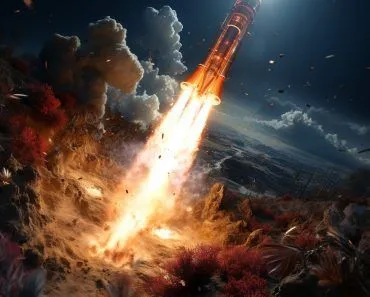
A little, but not in the way Tesla imagined. The closest anyone has come to a working particle-beam weapon was the Cold War ‘Star Wars’ era, when the United States poured money into the Strategic Defense Initiative. In July 1989, a Los Alamos team ran an experiment called Beam Experiments Aboard a Rocket (BEAR). A sounding rocket launched from White Sands, New Mexico carried a small particle accelerator to an altitude of about 195 km, fired a beam in space, and was then parachuted back to Earth and recovered. It successfully showed that a beam could be generated and propagated outside the atmosphere, just as predicted.

The telling detail is what BEAR actually fired: a neutral hydrogen beam, not a charged one. Engineers deliberately stripped the charge so the particles would not blow the beam apart through mutual repulsion, the very problem Tesla waved away. And it only behaved itself in the near-vacuum of space, not in open air. That is the catch Tesla never cracked: in the real atmosphere, a particle beam scatters and weakens fast. This is a big reason today’s operational directed-energy weapons, from the U.S. Navy’s shipboard lasers to Israel’s Iron Beam, are lasers rather than particle beams. Nearly a century on, Tesla’s peace ray remains a brilliant idea that physics has yet to let anyone build.
References (click to expand)
- Teleforce - Wikipedia. Wikipedia
- Nikola Tesla - Wikipedia. Wikipedia
- Van de Graaff generator - Wikipedia. Wikipedia
- Death ray - Wikipedia. Wikipedia
- The Undying Appeal of Nikola Tesla’s ‘Death Ray’. Science History Institute
- Beam Experiments Aboard a Rocket (BEAR) Project. Final Report, Volume 1. OSTI.GOV (U.S. Department of Energy)