Table of Contents (click to expand)
- Why Do You Need Network Coverage At All?
- Can You Make Emergency Calls Without Service?
- What If Your SIM Card Doesn’t Work?
- What If There Is No Network Coverage At All?
- Can You Send An Emergency SOS By Satellite?
- What If You Only Have Wi-Fi And No Cell Signal?
- Which Emergency Number Should You Dial Where?
- What If There Is Truly No Signal, Of Any Kind?
Yes, you can call 911 without your own carrier’s service. When your phone shows “Emergency calls only,” it has dropped its home network but found another carrier’s tower, and U.S. rules require that tower to carry the 911 call. If no tower is in range at all, iPhone 14 and newer, Pixel 9 and newer, and several 2025 flagships (plus T-Mobile’s Starlink network) can send the SOS over satellite.
People often resort to unusual measures to find network signals; some even panic if they don’t see those network bars in the top corner of the phone’s display.
In such situations, when there is no network coverage on your phone, the phone usually displays an almost rude message, stating that there is “No network, just emergency calls.”
But wait a minute, isn’t this message contradictory? How can you make “emergency calls” if you don’t have network coverage on your phone?
Why Do You Need Network Coverage At All?
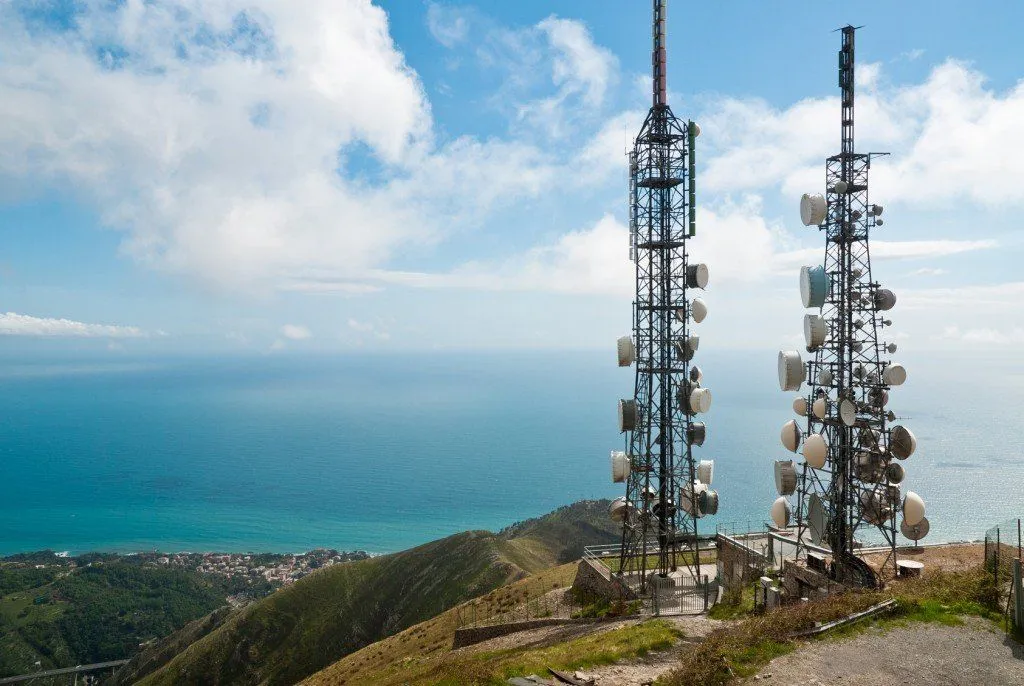
Network towers are an essential component of wireless telephony. Let’s say you want to call a friend. Once you press the SEND button to make a call, your phone sends a signal to the nearest network tower.
The signal then goes through a series of steps to reach the tower nearest to your friend. Finally, the signal is transmitted to your friend’s phone, and you can start talking.
In short, network towers allow us to make wireless phone calls by transmitting signals from one phone to another.
The bars in the top corner of your phone indicate your network service provider’s “usable strength.” If the bars disappear, network coverage is not strong enough to make calls, send SMS, etc. If that is true, how can you make those “emergency calls”?
Can You Make Emergency Calls Without Service?
Cell phones need a network signal to make calls. But, if the signal strength of the mobile network of your service provider is not strong enough in the location where you’re trying to make the call, your phone will use the network of another service provider whose signal strength is strong enough to make the call.
Modern cellular networks (4G LTE and 5G, defined by the international standards body 3GPP) are required to carry an emergency call from any compatible handset, even one that is not authenticated on that network. So if your carrier’s tower is too far away, your phone scans the airwaves and registers on whichever other carrier’s tower has the strongest signal, purely for the purpose of dialing 911.
This is not the same as “roaming.” Roaming requires a commercial agreement and a working SIM authenticated against a partner carrier. What is happening here is called emergency camping: the phone attaches to a foreign network long enough to set up the emergency call, and the network is obligated to route it to the nearest Public Safety Answering Point (PSAP).
In the United States, this behavior is mandated by the FCC under 47 CFR §20.18, which requires every wireless carrier to deliver 911 calls regardless of which network the caller subscribes to. The UK, Australia, Canada, and the EU have parallel rules for 999, 000, and 112.
What If Your SIM Card Doesn’t Work?
In the United States, the United Kingdom, Australia, Canada, and across the EU, you can still dial the emergency number (911, 999, 000, or 112) on a phone whose SIM card is missing, damaged, or has never been activated. The hardware that talks to the cell tower is your phone’s antenna and modem, not the SIM.
The SIM is more than just “your phone number.” It is a tiny secure chip that stores your IMSI (the unique 15-digit identity your carrier uses to recognize you), a 128-bit secret key called Ki, and the cryptographic algorithms that prove to the network that you are a paying customer. None of that is required to route an emergency call; the network deliberately bypasses subscriber authentication for 911.
One important caveat: without a working SIM, the PSAP that answers your call will not see a real call-back number, and the location information it receives may be limited to whatever GPS your handset can share over the call. So the call goes through, but the dispatcher may not be able to ring you back if you get cut off. In 2008 the FCC clarified that carriers may also filter calls from non-service-initialized devices that are clearly being used for fraudulent or harassing 911 calls.
What If There Is No Network Coverage At All?
This used to be straightforwardly bad news. If there is no network tower in range, an ordinary cell phone has nothing to talk to and goes silent. Until very recently, that meant your only options in the backcountry were a dedicated satellite phone (Iridium, Globalstar) or a two-way radio.
That picture has changed dramatically since 2022. Several recent consumer phones can now reach emergency services directly through satellites orbiting overhead, with no cell tower involved at all. If you are heading into the kind of remote place where signal bars vanish (a national park, a hiking trail, an offshore boat, a long drive across the Australian outback), this is the development worth knowing about.
Can You Send An Emergency SOS By Satellite?
Yes, on a growing list of phones. The catch is that the device, the operating system, and (in some cases) the carrier all have to support it.
Apple Emergency SOS via Satellite. Apple launched this with the iPhone 14 in November 2022 and it now ships on every iPhone 14, 15, 16, and 17 model. When you dial 911 and your phone has no cellular or Wi-Fi signal, iOS prompts you to point the phone at the sky; it then walks you through a short multiple-choice questionnaire and shoots a compressed message containing your answers, location, and Medical ID to a Globalstar satellite. The satellite relays it to a Public Safety Answering Point (PSAP) that accepts text-to-911 or, if none is reachable, to Apple’s Emergency Relay Center, where a human operator phones the PSAP on your behalf. The service is currently free for two years from device activation and is available across the U.S., Canada, Mexico, much of Western Europe, Australia, New Zealand, and Japan.
Google Pixel Satellite SOS. Google added the equivalent feature to the Pixel 9 series in August 2024 and continues it on the Pixel 10. Pixels use the Skylo non-terrestrial network, which relays your text 911 through geostationary and low-Earth-orbit satellites. The interface looks much like Apple’s: a sky-pointing UI, a short questionnaire, and a hand-off to the local emergency dispatcher. Google offers two free years from purchase.
Samsung Galaxy S25 / Snapdragon Satellite. Samsung’s S25 series, released in February 2025, was the first to ship Qualcomm’s Snapdragon Satellite chipset, which also rides on the Skylo network. In the U.S., Verizon customers get this free; on other carriers the same hardware sits idle for now.
T-Mobile + Starlink (T-Satellite). Starting July 2025, T-Mobile and SpaceX began running a different kind of service: ordinary 4G LTE phones, with no special hardware at all, can register directly onto Starlink v2 satellites that broadcast over T-Mobile’s PCS spectrum. It started as text-only (including 911 text-to-911) and added limited voice and data through late 2025. AT&T and Verizon customers can buy it as an add-on, and AT&T has its own forthcoming service with AST SpaceMobile.
All of these services are still young, none of them replace a proper satellite phone for full two-way voice, and some require a clear view of the sky for a minute or two to complete a single message. But the floor for what a phone can do in the wilderness has risen sharply: a 911 text from the bottom of a canyon is now a realistic option for millions of devices in active use.
What If You Only Have Wi-Fi And No Cell Signal?
If you are stuck somewhere with no cell signal but a working Wi-Fi connection (a basement, a thick-walled building, a rural cabin), modern phones can still dial 911. The feature is called Wi-Fi calling, and the four major U.S. carriers (Verizon, AT&T, T-Mobile, US Cellular) all support routing 911 through it; iOS has supported it since iOS 9 and Android since 5.1.
One important quirk: when 911 is dialed over Wi-Fi, the dispatcher’s location comes from the home or work address you registered with your carrier when you set Wi-Fi calling up, not from real-time GPS. The FCC recommends keeping that registered address current. If you are calling from a Wi-Fi network that is not in your registered location, tell the dispatcher where you actually are.
Which Emergency Number Should You Dial Where?
The emergency code is not the same everywhere, but most modern phones recognize the locally correct one and also accept 112, the universal mobile emergency number defined in 3GPP standards.
- United States and Canada: 911 (112 is also routed to 911 on most carriers).
- United Kingdom: 999, or 112.
- Australia: 000, or 112 from a mobile.
- European Union: 112 across all member states.
It is worth telling the people you travel with: if you are abroad and panicked, dial 112 on the keypad. It works on essentially every GSM-era and later phone, anywhere there is a signal, and the network is required to forward it to local emergency services.
What If There Is Truly No Signal, Of Any Kind?
Despite everything above, there are still places where no terrestrial network reaches and your phone is not new enough for satellite SOS, including deep slot canyons that block the sky and remote stretches of ocean and polar regions where even Globalstar coverage is patchy.
For trips that take you that far off the map, the older advice still applies: rent or buy a dedicated satellite communicator. A Garmin inReach, ZOLEO, or Iridium handset will get a distress message out from almost anywhere on Earth, including via the global Cospas-Sarsat search-and-rescue system. If you are heading into the Amazon basin, into Antarctica, or across an ocean by sailboat, ensuring that you have one of these along is still the wise choice it always was.
Last Updated By: Ashish Tiwari
References (click to expand)
- Barnes, R., & Rosen, B. (2014, April). 911 for the 21st Century. IEEE Spectrum. Institute of Electrical and Electronics Engineers (IEEE).
- Moore, Linda KS. Emergency communications: The future of 911. Congressional Research Service, 2009.
- Markakis, E. K., Lykourgiotis, A., Politis, I., Dagiuklas, A., Rebahi, Y., & Pallis, E. (2017, January). EMYNOS: Next Generation Emergency Communication. IEEE Communications Magazine. Institute of Electrical and Electronics Engineers (IEEE).
- 47 CFR §20.18 - 911 Service. Code of Federal Regulations, Federal Communications Commission (FCC).
- Wireless 911 Services. Consumer Guide, Federal Communications Commission (FCC).
- Use Emergency SOS via satellite on your iPhone. Apple Support.
- Use Satellite SOS on your Pixel phone. Google Pixel Help.
- T-Satellite with Starlink. T-Mobile.
- 3GPP TS 22.101 - Service aspects; Service principles (defines 112 as universal mobile emergency number).