Table of Contents (click to expand)
Foldable phones work by replacing rigid glass with a flexible OLED screen built on a bendable plastic substrate, paired with a hinge that lets the device fold like a book or flip shut. The main limitations are durability (the crease, hinge wear, and a softer screen than normal glass) and cost, with book-style folds running USD 1,800 to USD 1,900.
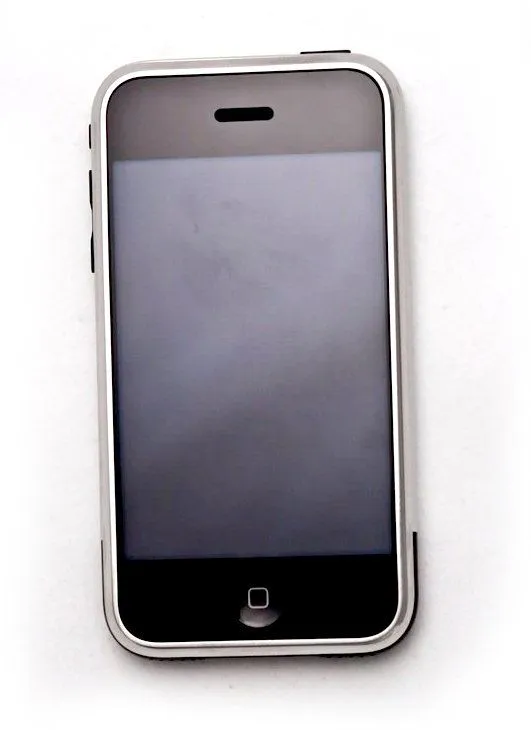
Remember the first iPhone launch back in 2007? The screen size of that iPhone was charmingly small at only 3.5 inches (measured diagonally). Fast-forward to today, when a top-tier phone like the iPhone 16 Pro Max carries a 6.9-inch display, and a foldable like the Samsung Galaxy Z Fold7 opens out to an 8-inch screen. We have well and truly crossed the line from "phone" into "pocketable tablet."
Need For Foldable Phones
The evolution of smartphones in an expanding-screen pattern is quite evident, but this suggests another implication. Bigger screens mean that the mobile device itself must get bigger. As a result, removing or reducing the bezels has been on the priority list of smartphone makers for years. Once virtually every mid- to high-range smartphone arrived with a near “bezel-less display”, manufacturers ran out of real estate that could be squeezed from the screen without making the phone too uncomfortably large to hold. That is exactly why major players of consumer electronics, including Samsung, Google, Motorola, and Huawei, turned to a different way to make the display larger without jumbo-sizing the entire device. The answer was something that folds open like a book, a foldable smartphone. What started as a concept on stage is now a shipping product line: Samsung launched its first Galaxy Fold in 2019, and by 2025 you can buy book-style folds (the Galaxy Z Fold7 and Google Pixel 10 Pro Fold), flip-style clamshells (the Galaxy Z Flip7 and Motorola Razr), and even a tri-fold (the Huawei Mate XT) that unfolds into a 10.2-inch screen.
Science Of Foldable Electronics
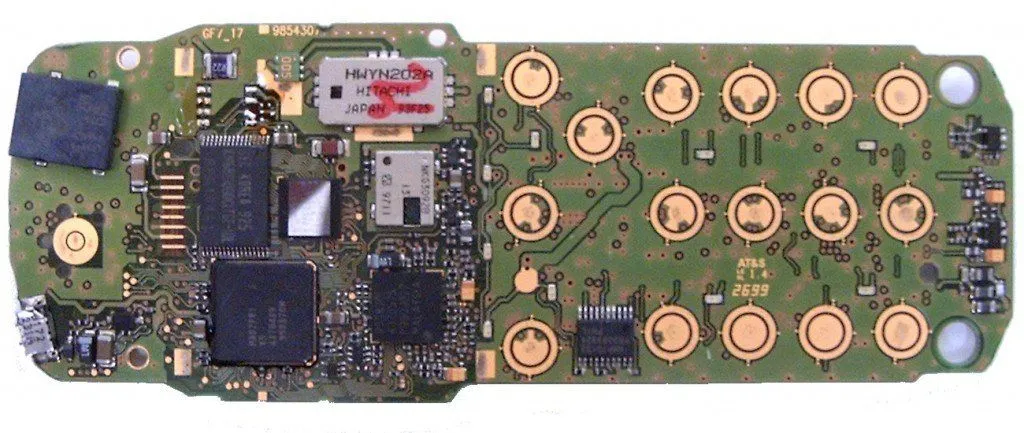
Traditional electronics boards, like the PCB (printed circuit boards) in mobiles and tablets, are rigid. That does not reflect the human body’s design, which is full of bends and curves, especially when we’re moving.
Foldable phones are no longer a what-if. They have been on store shelves since 2019, yet the engineering inside the bend is still the hard part, and manufacturers guard the exact recipe for their flexible displays and hinges to protect their market advantage. So what actually lets a screen fold?
OLEDs
The key to a screen that bends lies in organic semiconductors. Organic semiconductors are specially arranged materials, often built around hydrogen or carbon, which are strong yet unbelievably pliable. The flexible organic light-emitting-diode screen (OLED) is exactly what makes every foldable on the market today possible, from Samsung’s Galaxy Z series to the Google Pixel Fold. A flexible OLED is built on a bendable substrate, typically plastic rather than rigid glass. These plastic display panels are light, thin and surprisingly durable.
Kirigami
Material scientists are also borrowing tricks from an unlikely source: kirigami, the Japanese art of cutting and folding paper. By etching tiny cut patterns into a conducting polymer sheet, researchers can let it stretch and flex in ways a solid film never could. A typical flat-screen conducting film can deform only a few percent from its original shape before it starts losing electrical conductivity. In one widely cited 2018 study, a kirigami-patterned conducting polymer nanosheet could be stretched up to 2,000 percent while still carrying current, a hint at just how far stretchable electronics might eventually bend.
Why Foldable Phones?
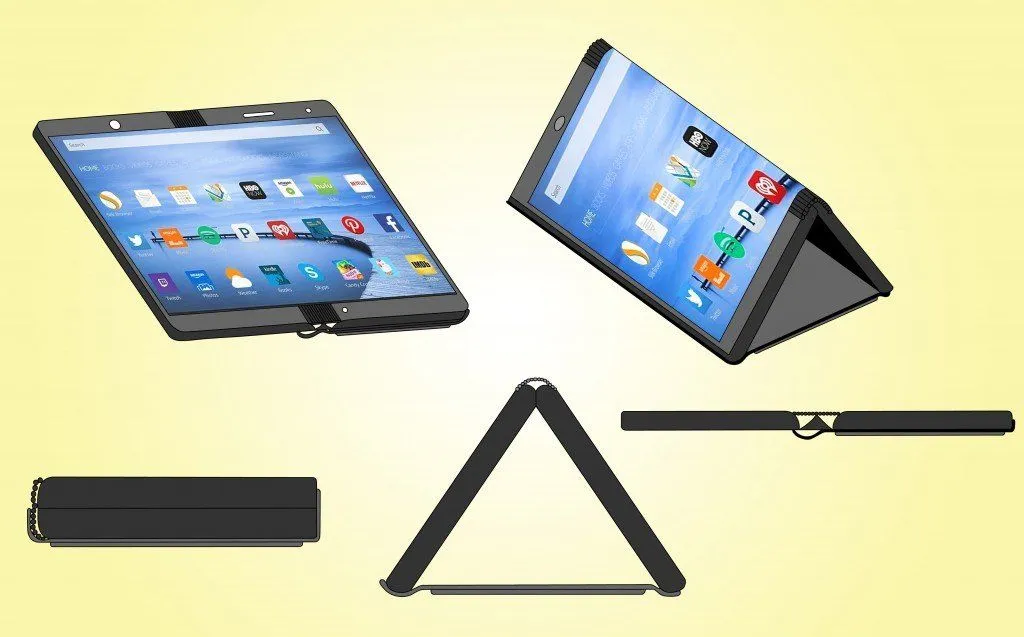
Now that you know the science behind making foldable display phones, some of you might be wondering why you would need a foldable phone in the first place. Justin Denison, who unveiled Samsung’s foldable display as the company’s Senior Vice President of Mobile Product Marketing, has an interesting answer for you. He pitched it like this: when you open a foldable phone, it becomes a tablet, offering a big-screen experience, but when closed (folded), it turns back into a phone that neatly fits inside your pocket. His explanation does seem enticing. Imagine just curling up your tablet into a normal phone that easily fits in your palm, allowing you to easily scroll through your social media feeds as you walk to the grocery store. When you’re back home, you can unfold the phone back to its full size and enjoy your favorite Netflix shows.
Limitations Of Foldable Phones
A foldable phone might sound like the best new thing you want to buy, but there are a couple of challenges baked into the design. The first is the screen itself. Early foldables couldn’t use thick, rigid glass like Gorilla Glass or Dragontrail at all, because rigid glass simply doesn’t bend, so they relied on softer plastic polymer covers that scratch far more easily than the glass you’re used to. Samsung tackled this in 2020 by introducing ultra-thin glass (UTG) on the Galaxy Z Flip, a sheet of real glass roughly 30 micrometers thick that is flexible enough to fold yet tougher than plastic. UTG and its successors have since become the norm, but there is still a trade-off: the foldable layer remains more delicate than a standard phone’s glass, it dents and scratches more readily, and a visible crease usually lingers down the middle of the screen.
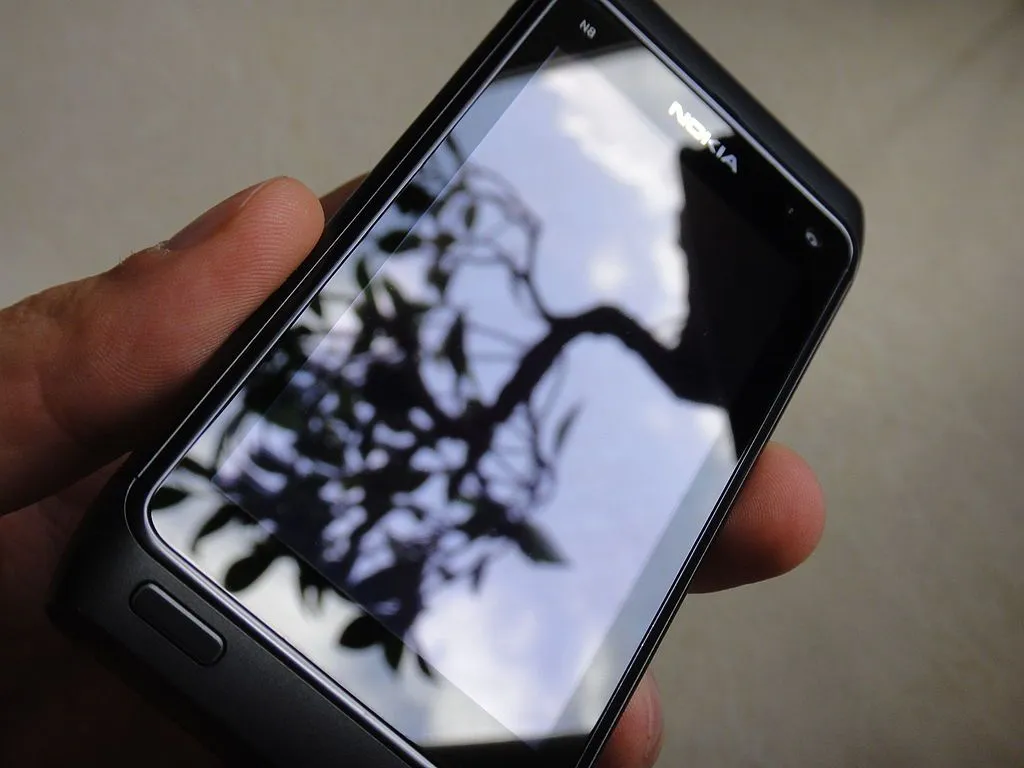
Traditional smartphones are bereft of moving parts, with buttons being the only exception, which makes the design robust. A folding device cannot make that promise, because the hinge is its whole reason for existing. According to surveys, Americans check their phones around 80 times a day, so a foldable’s screen and hinge have to survive being opened and closed tens of thousands of times over the life of the phone. If you fold something over and over on the same seam, you are introducing stress with every bend, and eventually that stress finds a weak point, because there is no way to escape the laws of physics. Manufacturers have made real progress here: Samsung has its folding displays certified to roughly 200,000 folds (verified by the testing agency Bureau Veritas), which works out to several years of normal use. Even so, the hinge and crease remain the parts most likely to wear out first, and the original 2019 Galaxy Fold famously had to be delayed for months after review units failed when dust crept in past the hinge.
Cost is the other critical factor. Foldables use specialized materials and a more complex manufacturing process than a slab phone, and that shows up on the price tag. As of 2025, a book-style Galaxy Z Fold7 starts around USD 1,900 and a Google Pixel 10 Pro Fold around USD 1,800, while flip-style models like the Galaxy Z Flip7 are gentler on the wallet at roughly USD 1,100. At the far end, Huawei’s tri-fold Mate XT launched at about USD 2,800. That premium is a big reason foldables, despite years on the market, still make up only a small slice (under 2 percent) of global smartphone shipments.
References (click to expand)
- Foldable interactive displays - dl.acm.org
- Guan, Y., Zhang, Z., Tang, Y., Yin, J., & Ren, S. (2018, March 30). Kirigami‐Inspired Nanoconfined Polymer Conducting Nanosheets with 2000% Stretchability. Advanced Materials. Wiley.
- Americans Don't Want to Unplug from Phones While ... - Asurion. Asurion, LLC
- Unfolding right now at #AndroidDevSummit!. android-developers.googleblog.com
- Samsung Display Introduces Foldable Display with Easily Bendable, Ultra-thin Glass. Samsung Newsroom.
- Samsung Galaxy Z Fold7: Raising the Bar for Smartphones. Samsung Newsroom.
- Introducing Pixel 10 Pro Fold: Google's most durable foldable phone. Google Blog.