Israel's Iron Dome is a short-range air defense system, built by Rafael Advanced Defense Systems, that works by spotting incoming rockets and artillery shells on radar, calculating where they will land, and firing Tamir interceptor missiles to destroy only the threats headed for populated areas. Operational since 2011, it is reported to intercept around 90% of the rockets it engages.
War is an undesirable situation in any part of the world. It consumes resources that could otherwise be invested in development that propels the human race forward as a whole. However, the urgency of war compels science and engineering applications to their very extreme. Amongst many examples, one that stands out today is Israel’s Iron Dome. Let’s dig in deeper to understand more about this.
What Is The Iron Dome?
The Iron Dome is a short-range aerial defense system designed to neutralize incoming rockets, artillery shells and mortars before they can reach the ground. It was developed by Rafael Advanced Defense Systems together with Israel Aerospace Industries, and has been operational since 2011, when the first battery was deployed near the city of Beersheba in southern Israel. The name captures its purpose well: it acts like a protective dome over Israeli airspace, shielding the areas underneath from aerial attack.
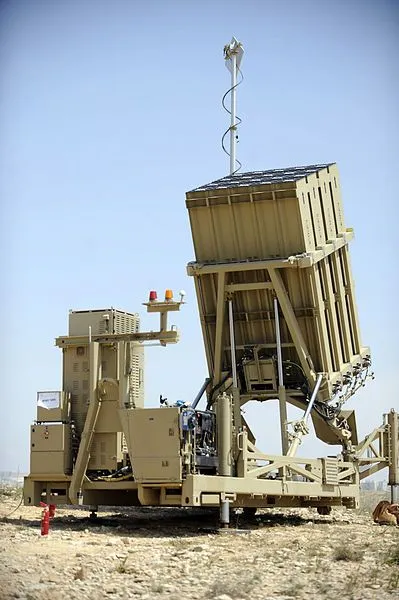
Whenever a rocket enters Israeli airspace, the Iron Dome detects it on its radar and, if the rocket is judged to be heading for a populated area, fires an interceptor missile (called a Tamir) to counter it. The collision, known as 'interception' in military lingo, usually happens mid-air to prevent any damage to human life or property on the ground. The system is built to handle short-range threats fired from roughly 4 to 70 km (2.5 to 43 mi) away.
It is known for its high effectiveness, along with its ability to operate even in harsh weather conditions. The detection, tracking and intercept calculations are automated, which is why the system reacts so fast, but a human operator stays in the loop and authorizes each engagement rather than letting the system fire on its own.
Underlying Technology
In this age of information, communication and data are the spine of any operation, whether big or small. The Internet of things (IoT) enables devices to communicate amongst themselves and take action in the case of an event. A simple example would be smart homes, where room temperature can be set based on user preference, bath water can be heated up without needing to touch a switch and alarms can be programmed based on your routine.

With machine learning protocols built into intelligent systems, they only improve over time. When this concept is extended to warfare, intelligent defense systems (IDS) are born.
IDS that operate from the ground to secure the skies from aerial attacks are known as aerial defense systems. They are capable of protecting the skies against missiles, rockets and even propelled ammunition like artillery fire and grenades.
Components Of An Aerial Defense System
The Iron Dome is not the first of its kind; various countries have their own spin-offs. An aerial defense system, the Iron Dome included, is usually made up of three main components.
1. Radar
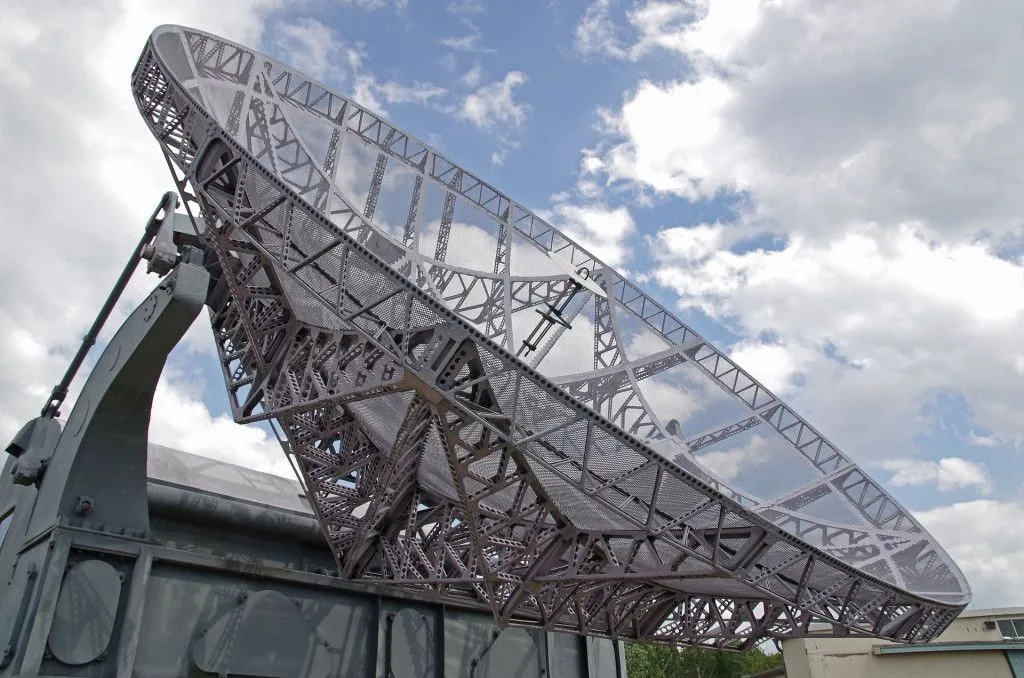
Radars operate on radio waves that work even in foul weather and adverse conditions with great accuracy. They detect foreign rockets in their designated airspace and relay the information to the battle management system. The Iron Dome uses an ELM-2084 radar that both detects an incoming rocket and tracks its trajectory.
2. Battle Management System
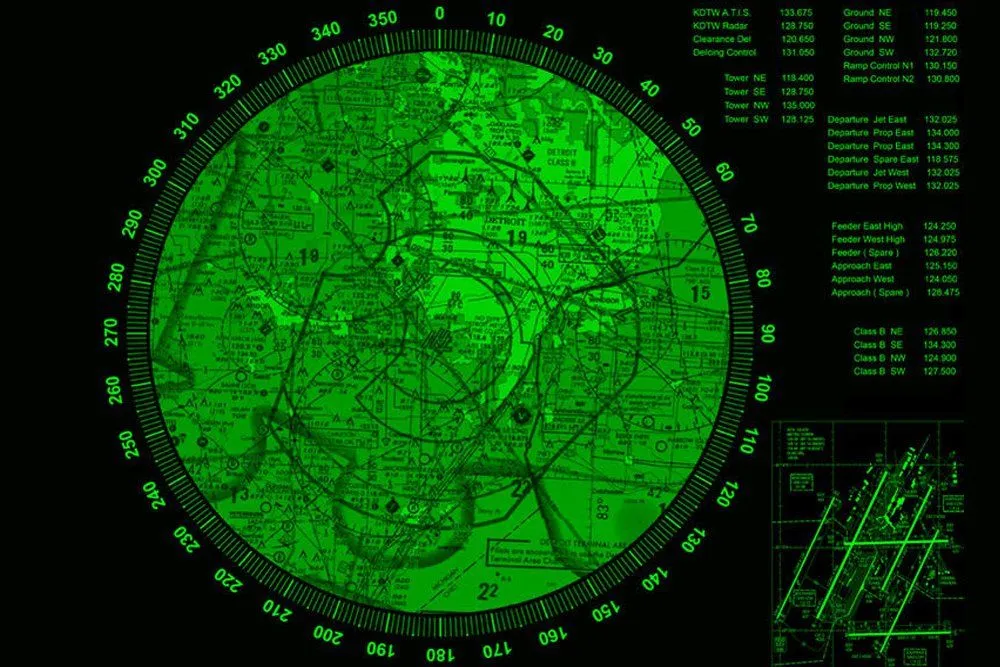
The battle management system (BMS) and weapon control unit is the heart of any aerial defense system. On the Iron Dome this part is called the Battle Management and Weapon Control (BMC). It helps defense personnel become aware of the actual situation in the airspace above without having to enter it, something known as virtual reconnaissance. Crucially, it is also where the system works out where an incoming rocket will land and decides whether it is worth intercepting at all.
3. Firing Unit
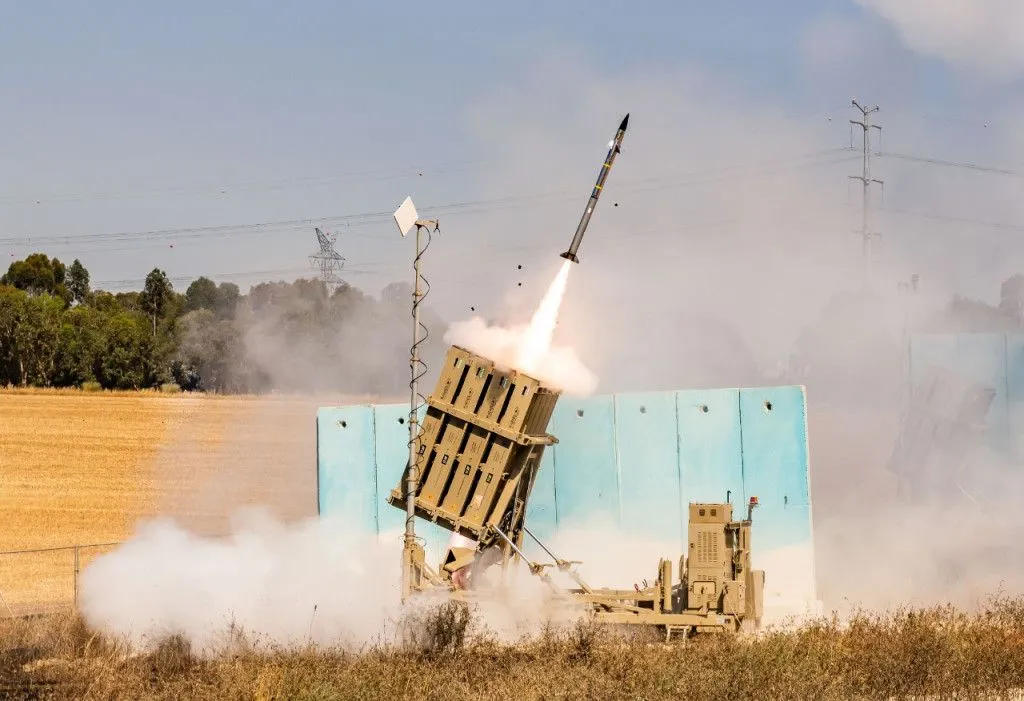
The firing unit is tasked with the interception of inbound ammunition. In matters of aerial defense, these firing units are armed with interceptor missiles. The Iron Dome's launchers are each loaded with up to 20 Tamir interceptors, and a typical battery has three or four such launchers. Each Tamir carries a small explosive warhead that detonates close to the target, destroying it in mid-air rather than relying on a direct hit.
How Do Aerial Defense Systems Work?
The defense system is activated when the radar detects a foreign rocket in the airspace of the home territory. It records various parameters such as size, velocity and the location in terms of geographical coordinates.
The central role in an aerial defense system is played by the Battle Management Unit. It collects data from the radar, GPS, maps and other devices that may be present on the actual site. These could include surveillance cameras, face recognition devices, RFID tags etc.
The data is woven together to recreate the battle scenario in real time, but without having to be present on site. However, even in the absence of on-site devices, the data provided by the radar is sufficient to ward off initial threats.
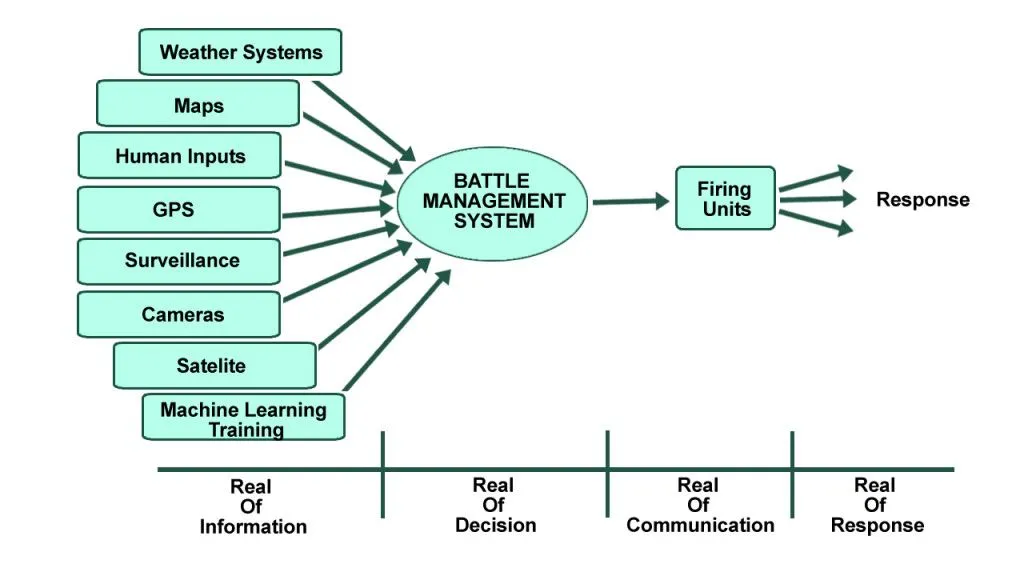
The information presented by the BMS is instrumental in formulating a response to the ground situation. For example, a small rocket with an explosive radius of 50m cannot be countered with a rocket that has a radius of 75m. Not only would this be overkill, it would also carry the risk of expensive collateral damage.
Similarly, a grave situation cannot be responded to lightly. It may involve the mobilization of forces that are not necessarily present at the site.
The BMS works through these calculations in a fraction of a second, then recommends a response that a human operator confirms before any missile is launched. One of its most important jobs is deciding what not to shoot at: an interceptor is only fired when a rocket is on course to hit a populated area, so rockets headed for empty fields or the sea are simply left to fall. This selectivity matters because of a basic cost imbalance. Each Tamir interceptor costs tens of thousands of dollars (commonly cited figures put it in the $40,000 to $80,000 range), while the crude rockets it shoots down can cost only a few hundred dollars each. Firing expensive missiles at cheap rockets is, in the long run, an expensive way to play defense, which is exactly why the system tries to engage only the rockets that genuinely threaten lives or property.
Advantages Of Aerial Defense Systems
After World War 2, major laws pertaining to the safety of civilians in wartime were passed. Compared to old and unsophisticated war equipment, the aerial defense system is quick in reaction and targeted in its focus. It can be loaded with a variety of interceptors to be able to defend against an array of threats.
Effectiveness is the headline selling point. Israeli officials have repeatedly reported that the Iron Dome intercepts roughly 90% of the rockets it engages, a figure cited across several rounds of conflict since 2011. It is worth noting that this number is debated: some independent analysts argue the real-world rate is lower, partly because it is hard to confirm interceptions from the ground, so the 90% figure is best read as a reported estimate rather than a guaranteed result.
Their ability to hit targeted areas without causing much damage to the surroundings makes them ideal for deployment near civilian areas.
As weapon technology advances, missile launching does not need a very elaborate, stationary infrastructure. This gives the advantage of mobility to firing units. Their area of coverage is vast, in comparison to the actual space they occupy on the ground. This makes them difficult to be identified as a concentration of ammunition by satellite surveillance and gives them the required stealth and flexibility.
Disadvantages Of Air Defense Systems
While they can be outfitted with a variety of interceptors, aerial defense systems are usually meant for short- to moderate-range threats. The Iron Dome, for instance, is built for the short-range rockets and artillery in its 4 to 70 km band, and it is not designed to stop long-range ballistic missiles. This is why Israel does not rely on the Iron Dome alone. It sits at the bottom of a layered shield: David's Sling handles medium-range rockets and missiles out to a few hundred kilometers, while the Arrow 2 and Arrow 3 systems are reserved for long-range ballistic missiles, some of which are intercepted high above the atmosphere. A newer addition, the Iron Beam laser, is intended to knock down short-range rockets and drones far more cheaply than a Tamir missile can.
While their mobility is their advantage, it brings about the need for being filled in terms of fuel and ammo at all times. This is not always possible in hostile environments. That said; their collective advantages far outweigh their disadvantages, making them an important asset in the defense of airspace in various countries.