Table of Contents (click to expand)
SAR (Specific Absorption Rate) is the rate at which radio-frequency energy from a cell phone is absorbed by the body, measured in watts per kilogram (W/kg). The FCC caps a phone's SAR at 1.6 W/kg averaged over 1 gram of tissue in the U.S.; the ICNIRP limit used across Europe is 2 W/kg over 10 grams.
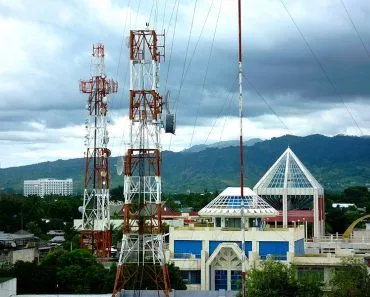
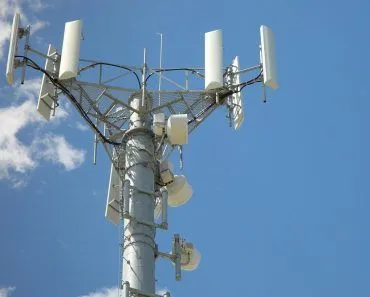
We all know that mobile phones use electromagnetic radiation. This radiation that mobile devices emit is used for communication with cell towers.
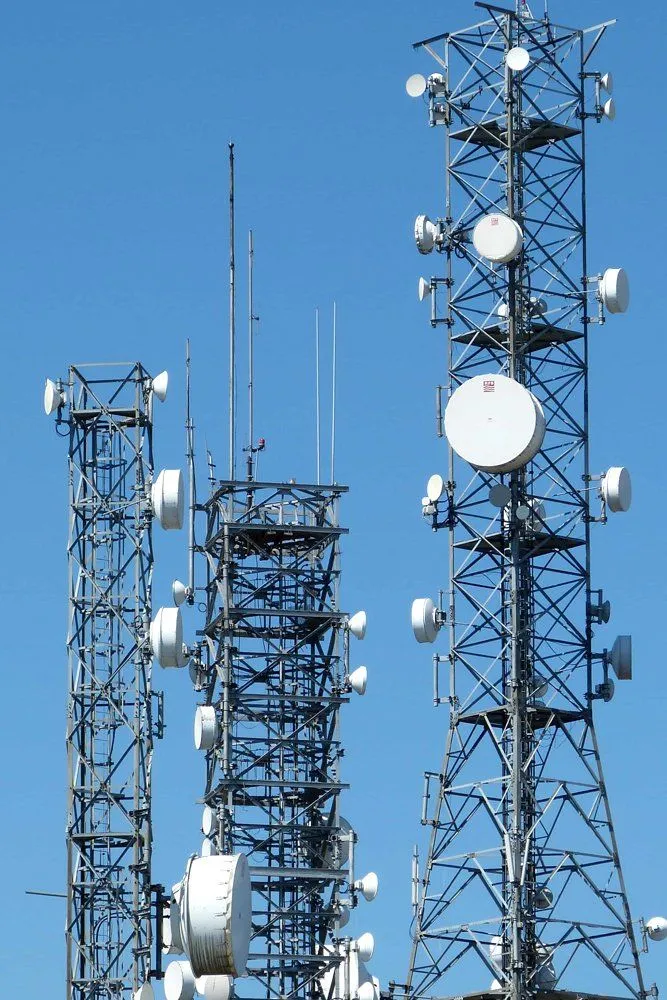
Depending on the model and carrier network, mobile phones use radio waves that span a wide stretch of the spectrum: from roughly 600 megahertz (MHz) on the low end of 4G LTE and 5G up to around 6 gigahertz (GHz) for sub-6 5G, with millimeter-wave 5G operating in the 24-39 GHz range. These waves can carry our voice or other data at the speed of light through the air. They disseminate in all directions, but they can be absorbed or reflected by surfaces in the surrounding environment in which they propagate. Thus, when we talk on the mobile device and keep our phone close to our ear, a part of the radiation emitted from the device is absorbed by our body. The specific absorption rate (SAR) value measures this rate at which radiation is absorbed by the human body when exposed to radio waves.
Basic Of Cell Phone Network Connectivity
Before we start our discussion about SAR value and its significance, we need to first understand some concepts of network connectivity, such as antenna and signal strength, to have a better grasp of SAR.
Now, every mobile phone out there has at least one radio antenna. An antenna can transmit or receive radio signals from the cell tower. Older phones (typically without Internet connectivity) used to have external antennas that handled the radio link. However, most mobile phones nowadays have built-in antennas for convenience. In fact, there is an assorted mix of antennas serving different purposes, such as WiFi (for surfing the Internet), Bluetooth (for sharing files), GPS (for location tracking) and so on.
 One of the common complaints we have regarding our smartphones is that “we don’t have a good signal”. The question is, what exactly does it mean when you say that?
Signal Strength
As mentioned earlier, mobile phone antennas do both of these things: transmitting and receiving signals from a cell site. Now, the magnitude of the signal received from a cell tower is technically called the “signal strength” of a cell phone.
We can easily check our phone’s signal strength on our mobile phones. This is usually located on the top right of the device. It is primarily represented by vertical lines, and we intuitively know that the more lines there are, the stronger the network.
Factors Affecting The Signal Strength
It must be noted, however, that there are many variables that can affect the signal strength. To start with, it depends on the quality of a phone’s antenna, followed by the distance between the cell site and the antenna. Moreover, the obstacles between the two will also affect the connectivity of the network signal. Last, but not least, the type of network technology used (e.g., GSM, 3G, 4G, WiMAX, 5G etc.) can also impact the signal strength.
Also, remember that the signal strength affects the battery life. If the signal is weak, the cell phone needs to emit more radiation, which in turn causes the battery to drain at a faster rate.
Apart from that, though, can we measure the intensity of the radiation absorbed by our body?
What Is SAR?
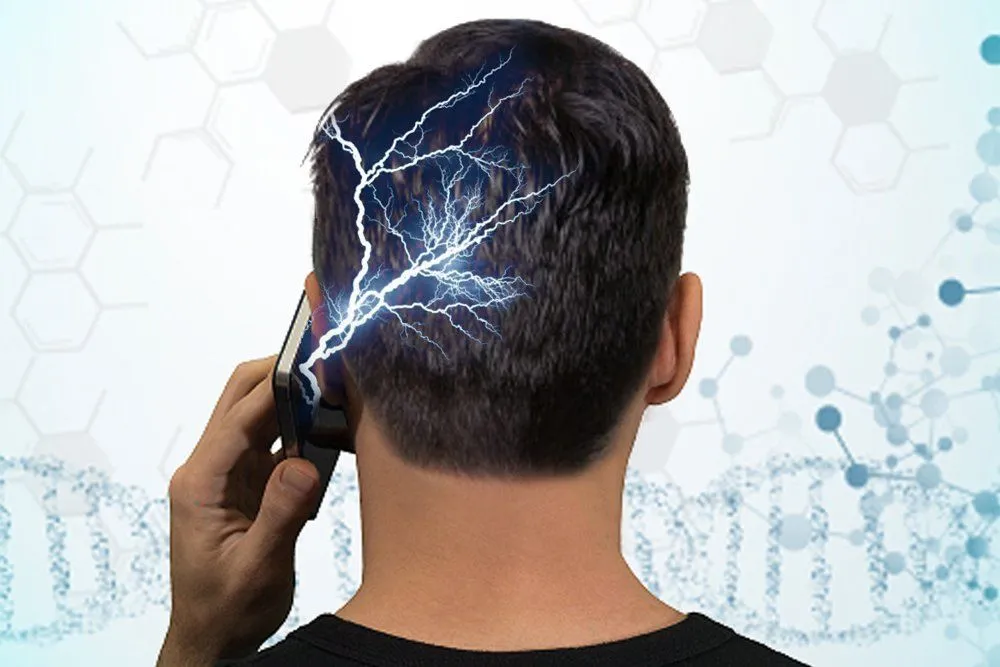
SAR, which stands for specific absorption rate, measures how much radiation is absorbed by the human body under the worst possible circumstances. Technically speaking, SAR is a measure of the rate at which radio frequency (RF) energy is absorbed by our body from a cell phone. SAR provides a straightforward method for evaluating the radiation exposure to our bodies from cell phones in order to ensure that they are within the safety guidelines set by regulatory bodies, such as the FCC in the US.

In mobile telephony, the SAR value indicates the energy absorbed by a particular mass of human tissue in a certain amount of time. SAR is measured in units of power per mass (W/kg).
How Is SAR Calculated?
Generally, when a device is sent for a SAR evaluation, the phone is placed against a standardized model of a human head called a SAM phantom (Specific Anthropomorphic Mannequin), filled with a liquid that mimics the radio-frequency absorption of human tissue. A robotic arm sweeps a tiny electric-field probe through the liquid while the phone transmits at maximum power, and software converts those readings into watts per kilogram. The whole procedure is laid out in international standards (IEC 62209 and IEEE 1528), and measurements are repeated at multiple positions (head-cheek, head-tilt, and against a flat body phantom) and across every band the phone transmits on. The largest value found across all of those conditions defines the SAR rating that ends up on the box.
Safe Limits Of SAR
As mentioned earlier, SAR evaluation is done under the worst-case scenarios. Thus, the SAR value that you find printed on the box of your smartphone (or in the legal-info menu inside the phone) is the highest possible value associated with that device.
The exact ceiling depends on where you live:
- United States and Canada (FCC, ISED): 1.6 W/kg, averaged over 1 gram of tissue, for the head and body. Limbs (like a phone in a pocket near a hand) are allowed 4 W/kg over 10 grams.
- Europe, United Kingdom, Australia (ICNIRP guidelines): 2 W/kg, averaged over 10 grams of tissue, for the head and body, and 4 W/kg over 10 grams for limbs. ICNIRP published its current radio-frequency exposure guidelines in 2020, replacing the 1998 version.
- India: aligned with the U.S. limit since September 2013, requiring 1.6 W/kg over 1 gram. The Telecommunication Engineering Centre (TEC) SAR Laboratory under the Department of Telecommunications runs independent audits of self-certified handsets.
One quick note before you panic-Google your phone's value: the U.S. and European numbers cannot be directly compared, because they average over different masses. A phone showing 1.5 W/kg under the FCC's 1-gram rule may show roughly half that on the European 10-gram rule, simply because the energy is spread across more tissue in the average.
What SAR Shows
Considering that the SAR evaluation is conducted under extreme circumstances (with maximum radiation), it indicates only the highest single measurement taken for the given frequency range. Approval from organizations like the FCC means that the cell phone will never exceed the maximum levels of RF exposure permitted by regulatory guidelines. It does not indicate the amount of exposure that consumers will experience in their day-to-day life.
What SAR Does Not Show
The radiation from mobile devices increases sharply in places with weak signal strength. Therefore, it doesn’t make much of a difference to use a smartphone with a low SAR value if it consistently operates at those higher levels, due to low signal strength.
A device with a higher SAR may have a better-quality antenna and thus better signal reception capability. With a better signal, it may emit less radiation than one with a low SAR value, but a poor-quality antenna.
The same applies to the distance between the mobile device and the body. Each of us has our own way of holding our phones, depending on the size and shape of the device. Even a small deviation in holding one’s phone may affect the radiation levels and thereby the percentage of radiation absorbed by our body.
Cell phones that meet the regulatory SAR standards have a SAR value that is generally at a level well below what can adversely affect our health, according to medical and biological experts. If you wish to further reduce your exposure to radiation, you must hold the cell phone away from your head or body and use a speakerphone or hands-free device while talking on the mobile phone. These measures tend to have much more of an impact on radio signal absorption than the small nuances in SAR value between different devices.
References (click to expand)
- Specific Absorption Rate (SAR) for Cellular Telephones. Federal Communications Commission.
- Wireless Devices and Health Concerns. Federal Communications Commission.
- Guidelines for Limiting Exposure to Electromagnetic Fields (100 kHz to 300 GHz). International Commission on Non-Ionizing Radiation Protection (ICNIRP), Health Physics 118(5), 2020.
- Cell Phones and Cancer Risk. National Cancer Institute (NIH).
- SAR Lab. Telecommunication Engineering Centre, Department of Telecommunications, Government of India.
- Lu, D. Cell Phone Radiation: Harmful or Not? Stanford University, PH 250 course paper.