Table of Contents (click to expand)
- What Is Soil Actually Made Of?
- Effective Stress: The One Idea That Explains Everything
- How Much Does A Skyscraper Weigh Per Square Meter?
- What Is A Floating Foundation?
- Do Skyscrapers Really Reach Down To Bedrock?
- Why A Deep Basement Tries To Float Upward
- Why Is The Leaning Tower Of Pisa Leaning?
- How Can Groundwater Sink A Whole City?
- Why Did San Francisco's Millennium Tower Tilt?
- So, Why Don't Skyscrapers Sink?
Skyscrapers do not sink because a wide foundation spreads their weight thin, so the ground under a tower often carries little more than the soil that was dug out to build the basement. Groundwater's real threat is not softening the mud but trying to float a deep basement upward like a boat, which is why some buildings are anchored down instead of held up. Every tall building settles a little over the years, and the engineer's job is to make that sinking slow, small, and even, not to stop it.
Stand at the base of a skyscraper and look straight up. Above you sit tens of thousands of tons of steel, glass, and concrete. Below you, if you could dig down 30 meters (100 feet) or so under most cities, you would hit water. The ground there is not dry rock. It is damp soil with water sitting in every gap.
So here is a fair question, and a lot of people have asked it. If the ground is soggy down there, why doesn't the whole building sink into it? Set a boot on wet mud and the boot sinks. A skyscraper weighs far more than a boot. It should sink faster.
It does not. And the reason is stranger than "the foundation goes deep." The water down there is a problem, but not the problem you would guess.
What Is Soil Actually Made Of?
Start with the thing the building sits on. We call it dirt, but to an engineer, soil is not a soft paste. It is a pile of solid grains stacked against each other, with water and air in the gaps between them.
Picture a jar full of marbles. The marbles touch. Push down on the top and the weight travels through the marbles, from one to the next, all the way to the bottom. The marbles are strong. It is their touching that holds the load.
Real soil is a jar of marbles the size of sand and clay grains. The load does not travel through the mud. It travels through the grains, wherever they touch. Engineers call the water sitting in the gaps the pore water. Hold on to those two ideas, the touching grains and the pore water, because the whole article turns on them.
The strength of soil is the amount of weight it can hold. It comes almost entirely from how hard those grains press together. Squeeze the grains harder and the soil gets stronger. Loosen their grip and it gets weaker. Nothing else about the soil has to change.

Effective Stress: The One Idea That Explains Everything
Now add the water back, under pressure. This is the idea that makes the whole subject click, and it has a name. In 1925, an engineer named Karl Terzaghi worked it out, and we call it effective stress.
Go back to the marbles. The weight pushing down squeezes the marbles together. But the water in the gaps pushes back, trying to spread the marbles apart. The grip that actually holds the load is the downward squeeze minus the upward water push. Written as a formula, it is short:
σ′ = σ − u
Here σ′ (said "sigma prime") is the real grain-to-grain squeeze. Next, σ is the total weight pressing down. Last, u is the pore water pressure. Terzaghi's principle names the culprit. Pore water pressure "reduces the normal stress and thus reduces the soil strength." Raise the water table, and u goes up. The grip goes down. The soil holds less, and you never touched the soil at all.
The numbers are not gentle. Push the water table all the way up to the surface. Now the soil under a shallow foundation can hold only about half as much weight as it did dry. Half the strength, from water alone. This is why groundwater matters, and it has nothing to do with the mud being slippery.

How Much Does A Skyscraper Weigh Per Square Meter?
Here is the second surprise. A skyscraper does not press down nearly as hard as you think.
Weight is not the same as pressure. A stiletto heel dents a wooden floor. A heavy elephant leaves the same floor untouched. The heel puts a big weight on a tiny patch. A foundation does the opposite. It spreads a giant weight over a giant patch.
Take the Empire State Building. It weighs about 365,000 tons. It sits on a base of roughly 79,000 square feet, about 2 acres. Spread that weight over that base. The pressure comes out to about 441 kilopascals. That is 64 pounds per square inch, only twice the pressure in your car's tires.
Look at what that number equals. Soil itself weighs about 19 kilonewtons per cubic meter. So 441 kilopascals is the weight of a soil layer about 23 meters (75 feet) deep. In other words, the building presses on the ground about as hard as the dirt that used to be there. (The Empire State Building happens to sit on rock close to the surface. That is one reason New York grew tall in the first place.)

What Is A Floating Foundation?
That last point hides a clever trick. A building presses down about as hard as the soil that used to be there. So digging a deep basement can cancel the building's weight out.
Think about it. Dig a hole for a basement and you carry away thousands of tons of soil. That soil used to press on the ground below. Now it is gone. Then you build the tower and put its weight back. If the tower weighs about the same as the soil you removed, the ground below barely notices the swap. Engineers call this a floating, or compensated, foundation. The building sits in its hole like a boat sits in water. The ground carries close to what it always did.
Mexico City is the proving ground for this. It sits on the soft clay of a drained lake. That is some of the worst building ground on Earth. The Torre Latinoamericana rests on 361 piles driven about 33 meters (108 feet) down, and it is built to float on that soft lakebed. It was the first skyscraper built to survive earthquakes on ground that bad. It stood through a magnitude 7.9 quake in 1957. It rode out a magnitude 8.1 quake in 1985, while sturdier-looking buildings around it fell. Floating, it turns out, is a feature.

Do Skyscrapers Really Reach Down To Bedrock?
Ask most people how a skyscraper stays up and they will say the same thing. It stands on deep columns that reach all the way down to solid rock. That is the neat answer, and it is often wrong.
Those deep columns are real. They are called piles, and they are long shafts of concrete pushed far into the ground. But a pile can hold a building up in two ways. It can rest its tip on hard rock, which engineers call end bearing. Or it can grip the soil along its whole length, like a tent peg held by the dirt packed around it. That grip is called skin friction. Most people forget the second way. The second way does most of the work.
The tallest building on Earth proves it. The Burj Khalifa stands on 192 concrete piles. Each is about 1.5 meters wide and reaches roughly 50 meters down. They hold the tower up mainly through skin friction, not by resting on rock. The world's tallest tower does not stand on bedrock. It is gripped in place by the soil, like a wildly expensive tent peg. Concrete is good at this job. It is strong under a squeeze even though it is weak under a pull, and a pile spends its life being squeezed.

Why A Deep Basement Tries To Float Upward
Now for the plot the water was hiding. Groundwater's biggest threat to a tall building is not that it weakens the mud. It is that it tries to lift the building out of the ground.
A deep basement below the water table is a sealed box sitting in water. And anything sitting in water gets pushed up. This is the same push that floats a boat, or floats an ice cube in your drink. Archimedes wrote it down thousands of years ago. The water does not care that the box is full of concrete and parking spaces. It pushes up all the same.
For a big empty basement, that upward push can be enormous. Sometimes the water's lift on a basement slab beats the weight of the building above it. Then engineers add tension piles. These are anchors that grip the ground and hold the structure down. Read that again. Sometimes the engineering problem is not holding a skyscraper up. It is stopping it from floating away. A half-built basement, before the heavy tower is added on top, is the most nervous moment of all.

Why Is The Leaning Tower Of Pisa Leaning?
The failures teach the rules better than the successes do. The most famous one has been leaning for 800 years.
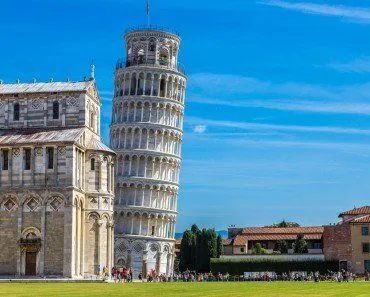
The Leaning Tower of Pisa did not lean on purpose. It stands on weak, soft layers of clay and silt, laid down unevenly by old rivers and the sea. Its foundation was too shallow for such poor ground. So one side settled more than the other, and the tower tipped. By the 1990s it leaned about 5.5 degrees. It was slowly getting worse, close to falling over.
The fix, led by the engineer John Burland, is beautifully backwards. Instead of jacking the leaning side up, the team gently dug soil out from under the high side. Starting in 2000, they removed about 38 cubic meters (roughly 70 tons) of soil. They took it out through 41 slim holes. That let the tall side sink to catch up with the low side. The tower straightened by about 45 centimeters (18 inches). That pulled it back to where it stood in the 1830s. They did not make it straight. They made it safe, and left the lean the tourists came for.

How Can Groundwater Sink A Whole City?
Pisa is one building on bad ground. There is a bigger version of the story, where the ground itself drops out from under everything.
It happens when a city pumps too much water out of the soil beneath it. Remember effective stress. Take the pore water away and the grains have to carry more of the load themselves. They pack down tighter. Once they do, they mostly stay packed. Pump the groundwater out, and the effective stress changes. The clay layers compact, often in a way that cannot be undone. The land above sinks.
Mexico City is the extreme case. It is draining the same soft lakebed its towers float on. Parts of the city now sink about 35 centimeters (14 inches) every year. Over the last century, it has dropped several meters. Here the lesson flips. The buildings are not settling into the ground. The ground is falling away from the buildings. Pile-supported towers can seem to rise slowly out of the pavement around them. Same principle, whole-city scale.

Why Did San Francisco's Millennium Tower Tilt?
The most modern lesson is still unfolding, and it is a serious one, so we will keep it plain.
San Francisco's Millennium Tower is a 58-story luxury high-rise that opened in 2009. Its original foundation used 990 concrete friction piles. They were driven about 90 feet down into dense sand, not to bedrock. The design expected a few inches of settling. Instead the building settled about 14 inches (36 centimeters) and began to tilt. At the top, the lean grew to feet, not inches. The trouble was settlement in the soil the piles were gripping, playing out under people's homes.
The repair is the same trick used for the tallest towers. Crews installed 18 new piles around the building's edge. This time they drove them all the way to bedrock. Then they shifted part of the tower's weight onto them. By 2023, the settling had stopped. The fix worked. But it is a costly reminder of what happens when a foundation trusts the soil more than the soil has earned.

So, Why Don't Skyscrapers Sink?
Put the pieces together and the answer stops being a mystery.
A skyscraper does not sink because it is smart about weight. A wide foundation spreads the load thin. The ground often carries little more than the soil that was dug away to make room for it. Deep piles then hand that load to stronger soil below, mostly by gripping it, sometimes by reaching rock. And where water tries to float the building out of the ground, anchors hold it down. The soggy soil the question worried about? It all comes down to one idea: the grip between grains.
Here is the part that surprises people most. Every one of these buildings is sinking right now, including the good ones. Soil squeezes down slowly, and clay can keep settling for decades. The engineer's goal is not to stop that. It is to make the movement slow, small, and even. The whole building drifts down together, by an amount decided in advance. A tower that settles a few inches evenly is fine. One that settles unevenly, like Pisa or the Millennium Tower, is the one that makes the news.
So the water under the city was never the enemy. The ancient Romans figured out most of the art of not sinking with far cruder tools than ours. We have only gotten better at it since. A skyscraper is not a building fighting the ground. It is a building that made peace with it, one grain at a time.
References (click to expand)
- Effective stress and Terzaghi's principle — Wikipedia
- The Effect of the Water Table on the Bearing Capacity of a Shallow Foundation — Applied Sciences 12(13):6571, MDPI
- Poulos & Bunce, Foundation Design for the Burj Dubai — ICCHGE / Missouri S&T
- Torre Latinoamericana: Seismic Engineering in Mexico — Institution of Civil Engineers (ICE)
- Methods of resisting hydrostatic uplift in substructures — Tunnelling and Underground Space Technology (ScienceDirect)
- Burland, The Stabilisation of the Leaning Tower of Pisa — Ingenia, Royal Academy of Engineering
- Groundwater Pumping Is Causing Mexico City to Sink — Eos (AGU)
- Over a Century of Sinking in Mexico City — Chaussard et al., Journal of Geophysical Research: Solid Earth (2021)
- Groundwater-related subsidence — Wikipedia
- Land Subsidence — USGS Water Resources
- Millennium Tower, San Francisco — Simpson Gumpertz & Heger (SGH)
- After 15 Years, Settlement Arrested at San Francisco's Millennium Tower — Engineering News-Record