Table of Contents (click to expand)
Yes. Hippos avoid sunburn by secreting a red, alkaline sweat loaded with hipposudoric and norhipposudoric acids, two pigments that absorb UV light. Zebrafish mothers coat their eggs with gadusol, a transparent UV-absorbing compound that shields developing embryos from DNA damage.
Imagine going to a beach on a bright, sunny day, but you forgot to apply sunscreen. It is a common story with a painful ending for many with sensitive or fair skin.
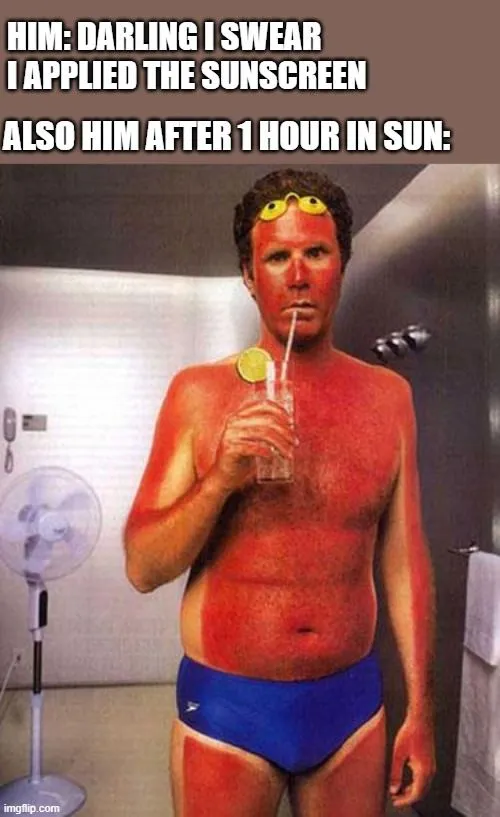
A few hours in the sun without sunscreen can turn our skin into a painful red disaster that feels hot to the touch, but have you ever wondered if animals face the same problem? Do they get tanned and sunburned? After all, they spend far longer than us out in the open, wandering in search of water and food in the unforgiving sun.
While a handy bottle of sunscreen can save us from the wrath of sunburn, is there anything that protects animals from getting scorched?
Do Animals Get Sunburn?
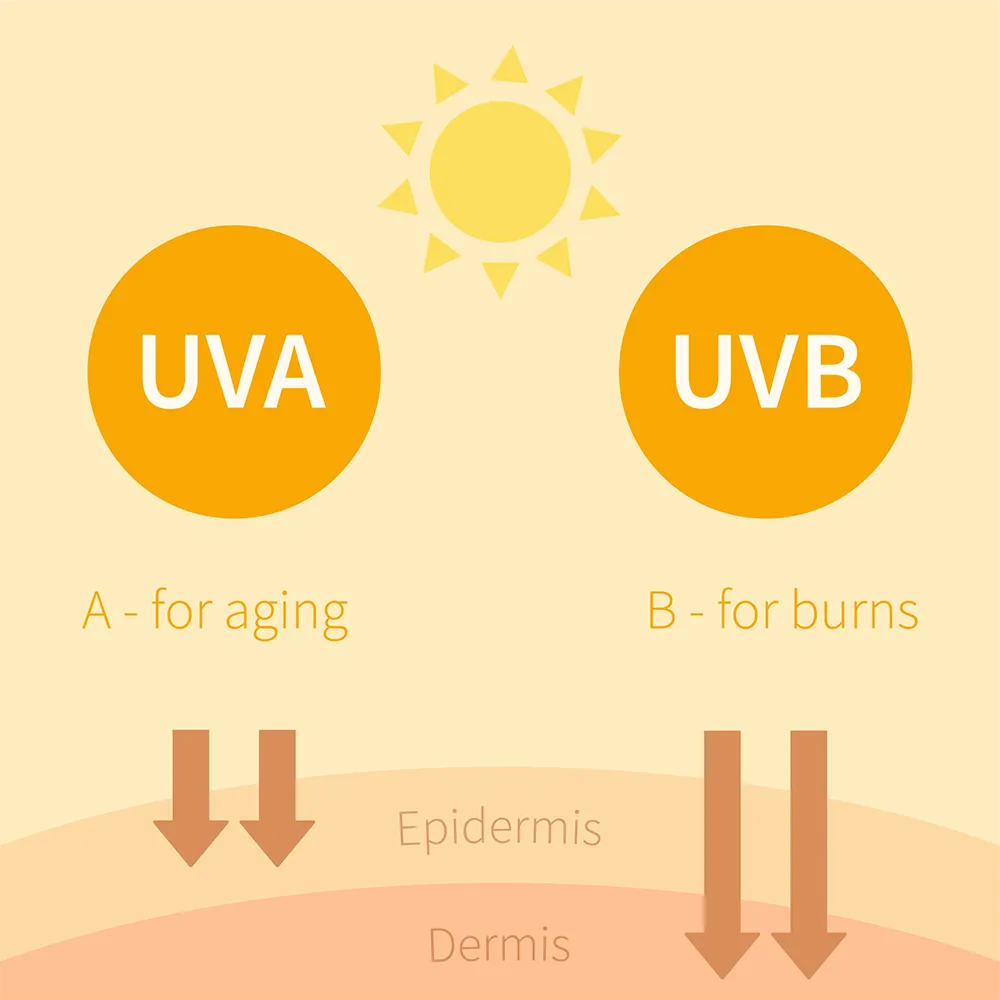
The culprit of sunburn is pretty apparent: the Sun. Prolonged exposure to the UV rays of the sun, mainly the UV-B rays, causes our skin to develop a sunburn.
And to answer the question, yes, animals do face the stinging feeling of sunburn. Just as humans stay protected by clothing and shade, so too does an animal’s fur keep the animal’s skin from harm. However, there are animals like pigs, hippos, rhinoceros, elephants and others that have very little hair covering their skin.
Without a layer of hair to protect them, these animals are left out in the cold, or to be precise, left out in the sun. When one door closes, however, nature opens a window: DIY sunscreen. Some animals have the gifted ability to create their own sunscreen.
The Red Sweat Of Hippos
Imagine that it’s a hot summer day and you can feel drops of water trickling down your forehead, while a dark and sometimes stinky wet patch forms on the sleeve under your armpit.
Sweat is common in most mammals, like monkeys and horses. Sweating, for the most part, helps in thermoregulation. It helps cool down the body on a hot sunny day.
However, unlike our sweat, which leaves us with an undesirable body odor, there is an animal whose sweat is of great value to them: Hippos, the big animals that look funny, but are actually angry all the time.
Hippos secrete a blood-red liquid that shields their hairless skin from the harsh sun. The secretion is highly alkaline, with a pH of around 8.5 to 10.5, compared with our own sweat at around pH 6.3. Strictly speaking, this isn’t sweat at all. The viscous liquid oozes out of subdermal glands, not from regular sweat glands.
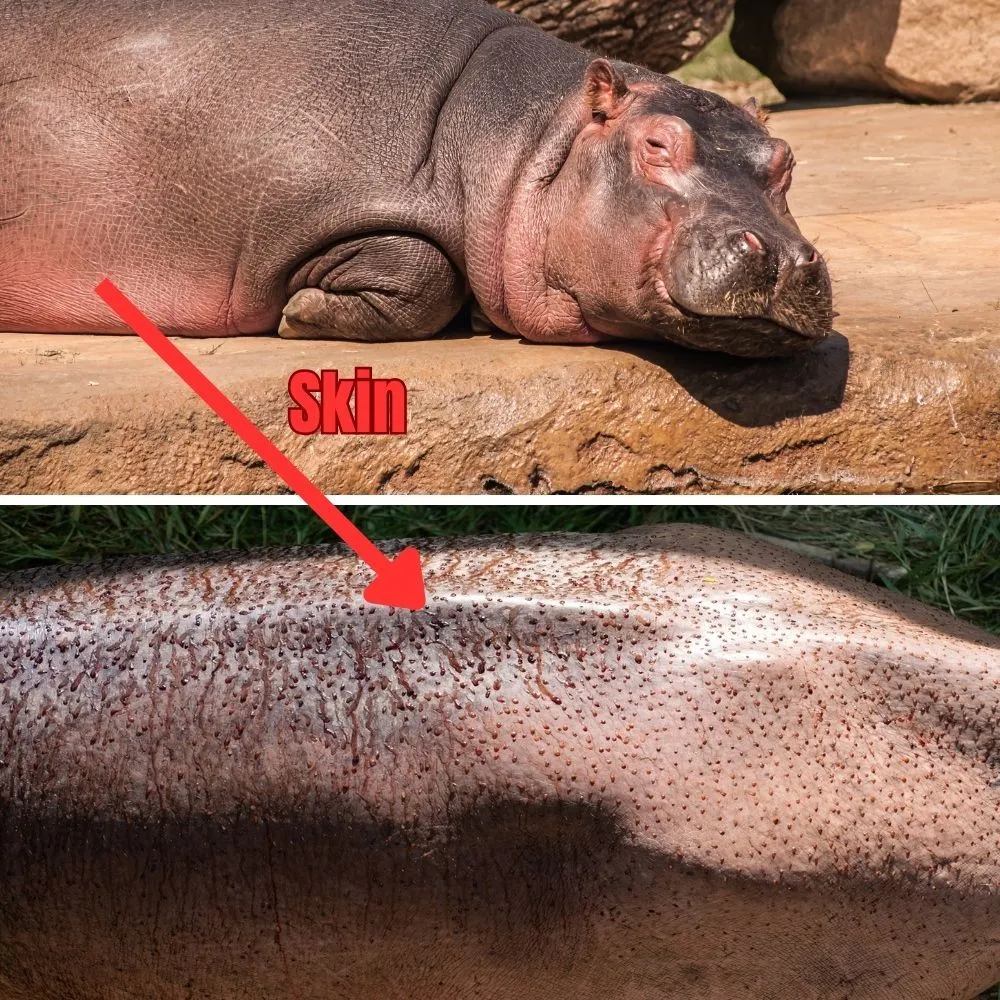
Initially, this secretion is colorless, but soon after exposure to the environment it turns red and then brown as the pigment gradually polymerizes. The pigments responsible for giving the secretion its blood-red identity were isolated and named hipposudoric acid (red pigment) and norhipposudoric acid (orange pigment).
The two pigments are the reason hippos are perennially protected from the sun. The secretions absorb light across a broad 200–600 nm range, covering UV-B, UV-A and part of the visible spectrum, which makes it safe to say they act as sunscreen. They also have antibiotic properties against some bacteria, including Pseudomonas aeruginosa and Klebsiella pneumoniae.
Do Fish Need Sun Protection?
You can clearly understand why animals wandering the land would require sun protection, but what about aquatic life? Given that they live almost exclusively underwater, do they risk getting sunburnt?
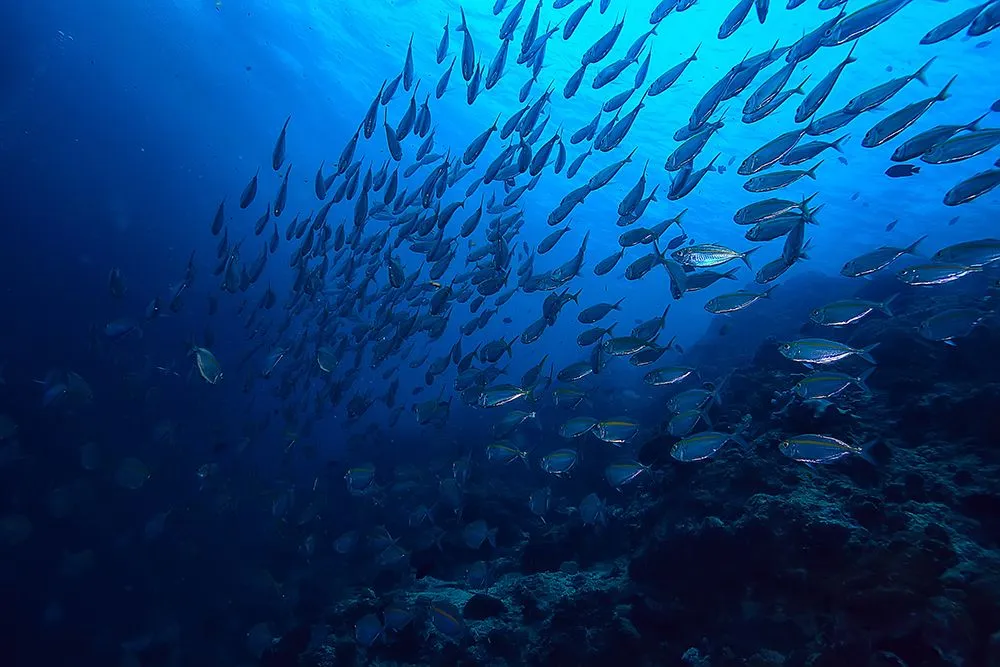
As improbable as it may seem, even underwater, fish are exposed to harmful levels of UVB rays. In clear ocean water the rays can reach depths of more than 10 m (33 ft), deep enough to cause measurable DNA damage. Various organisms have their own ways of adapting to UV exposure. Some have DNA repair mechanisms that undo the damage done by UV radiation.
However, these adaptations do not guarantee foolproof protection from UV damage. That’s why many aquatic organisms also produce their own sunscreen.
Gadusol
Animals, including humans, produce melanin that absorbs UV rays to protect the skin from sun damage. Fish and some other aquatic vertebrates have melanophores (similar to melanocytes in mammals) that produce melanin.
Although melanin does its job of sun protection, it is not the ideal sunscreen for a baby fish developing inside the egg, as melanophores appear late in the process of embryo development. Thus, the embryo in the early stages is left vulnerable to damage by harsh UV rays.
To counter this, a compound similar to Mycosporine-like amino acids (MAAs) called gadusol works to protect the eggs of some fish species. Mycosporine is a UV-absorbing compound mostly seen in fungi, algae and cyanobacteria.
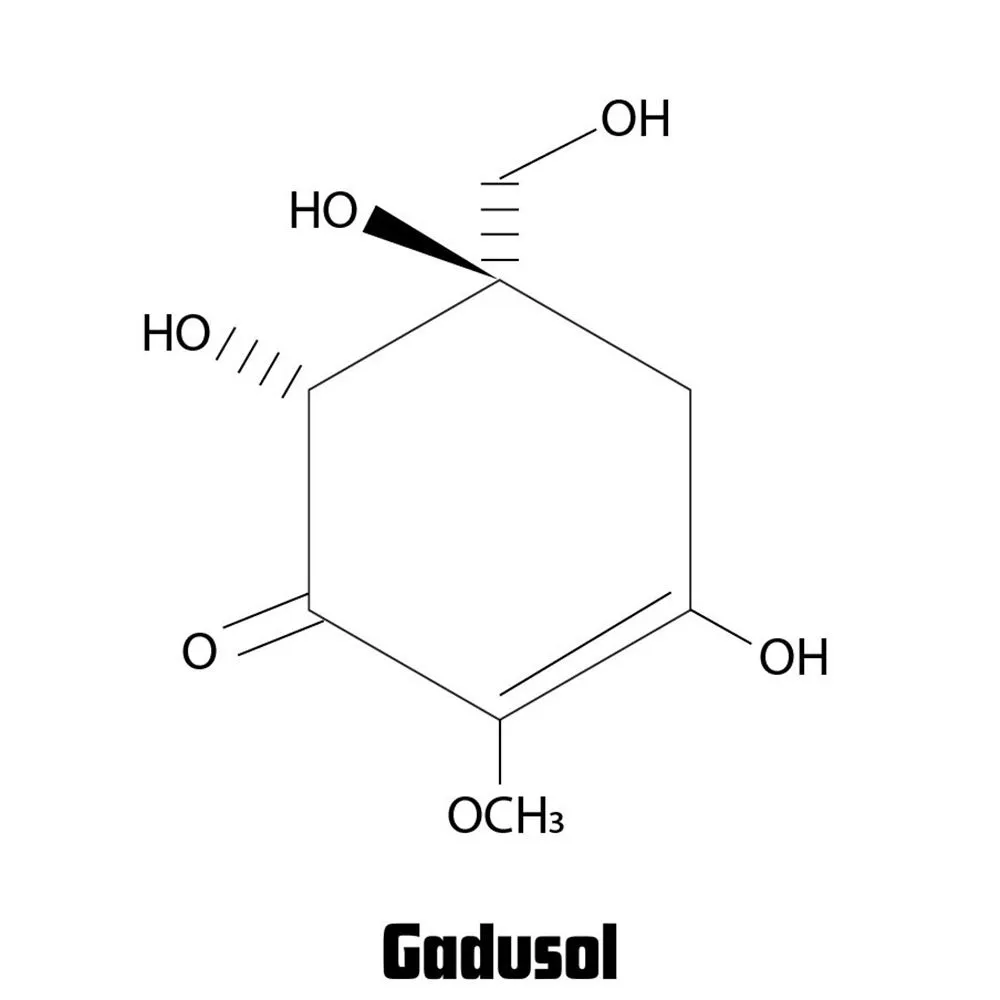
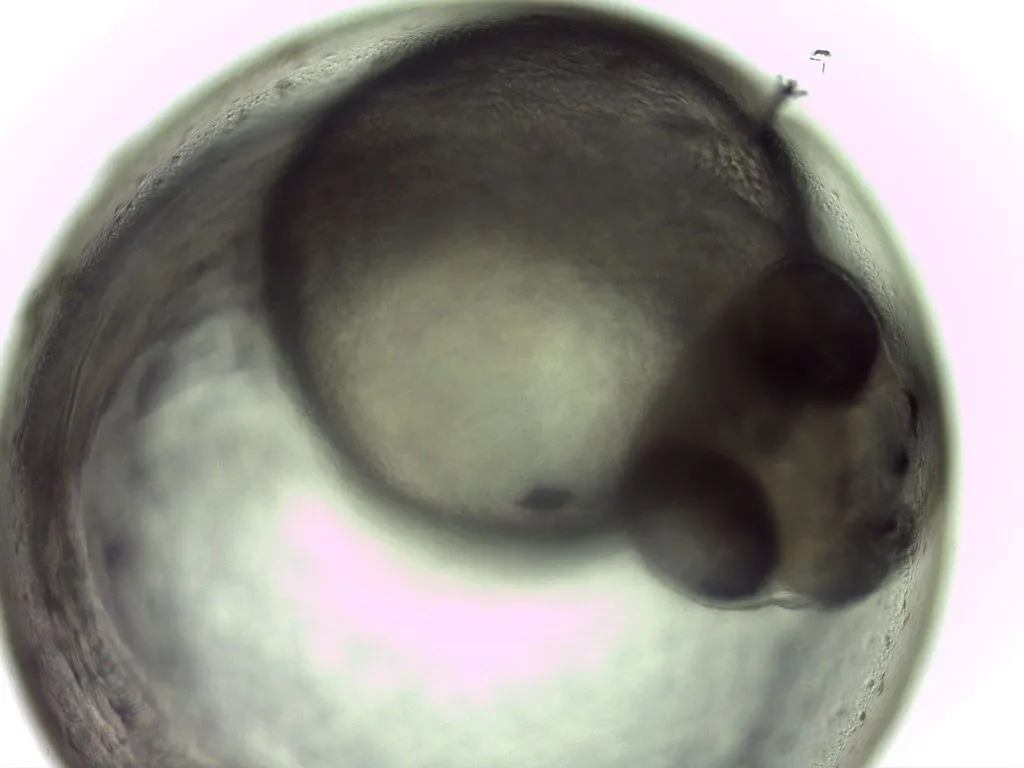
A study found that a mother Zebrafish deposits gadusol on her eggs to protect them from UV damage. To verify the sunscreen property of gadusol, researchers created a zebrafish mutant that produces little to no gadusol and exposed it to UVB radiation. These fish suffered developmental defects due to sun exposure. They were unable to inflate their swim bladder, which helps maintain their buoyancy.
Gadusol and melanin both work well to absorb UVB radiation. However, gadusol also fares well when it comes to helping aquatic animals with camouflage. It is a common behavior among them, as there aren’t many things to take cover behind in the open ocean. Melanin absorbs more of the light from the visible spectrum than gadusol. This makes melanin opaque and easily visible, while gadusol remains transparent and invisible.
Thanks to gadusol, an organism can remain inconspicuous, while also enjoying the benefits of nutrient-rich sunlit areas underwater. Thus, gadusol acts as a primary sunscreen for a developing fish, while melanin provides secondary protection from the sun.
Conclusion
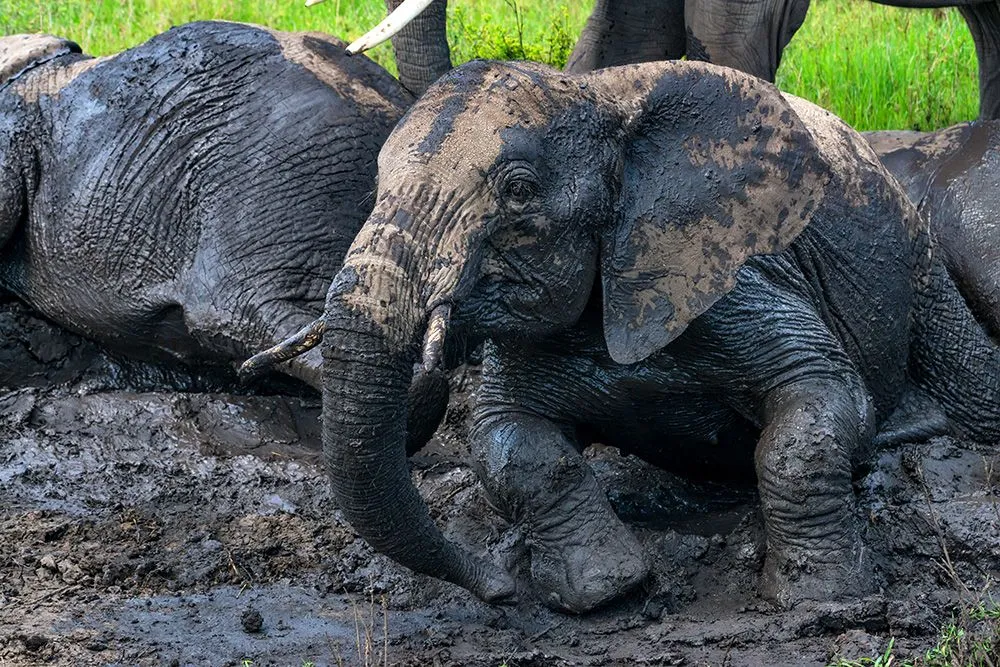
Humans have the luxury of creating artificial sunscreens to shield our skin from sun damage. There are a select few animals with the ability to secrete their own sunscreen without any external help, but what about the remaining animals? How do they keep painful sunburns at bay? Well, let’s just say that animals are resourceful beings. Elephants, rhinos and pigs wallow in mud (or, in the case of elephants, fling dust over their backs) to put a physical barrier between their skin and the sun. Other animals, including many primates and koalas, simply rest in the shade during the hottest hours and become active in the cooler early morning and evening.
References (click to expand)
- Saikawa, Y., Hashimoto, K., Nakata, M., Yoshihara, M., Nagai, K., Ida, M., & Komiya, T. (2004, May). The red sweat of the hippopotamus. Nature. Springer Science and Business Media LLC.
- Hashimoto, K., Saikawa, Y., & Nakata, M. (2007, January 1). Studies on the red sweat of the Hippopotamus amphibius. Pure and Applied Chemistry. Walter de Gruyter GmbH.
- Rice, M. C., Little, J. H., Forrister, D. L., Machado, J., Clark, N. L., & Gagnon, J. A. (2023, August). Gadusol is a maternally provided sunscreen that protects fish embryos from DNA damage. Current Biology. Elsevier BV.
- Geraldes, V., & Pinto, E. (2021). Mycosporine-Like Amino Acids (MAAs): Biology, Chemistry and Identification Features. Pharmaceuticals. NCBI PMC.
- Smith, R. C., et al. (1990). Penetration of solar UV radiation in clear ocean waters. Limnology and Oceanography.