Table of Contents (click to expand)
In a one-on-one fight, most experts and historical accounts give the edge to the tiger. Wild Siberian and Bengal tigers tend to be heavier than African lions on the upper end (the largest verified tigers exceed 300 kg vs roughly 230 kg for big lions), bite harder (about 1,525 N vs 1,314 N at the canines, per Wroe et al., 2005), and are solitary lifelong hunters with more muscle mass and greater agility. The lion’s main advantages (its protective mane, greater stamina, and experience fighting other lions to defend its pride) matter most when the cats are evenly matched. Outcomes still depend heavily on the individual animals’ size, age, condition, and mood.
If I ask you who is the king of the jungle, what would you say? “Lion” you will reply with confidence. Well, that’s what all of us have been taught since childhood – the lion is the king of the jungle.
Now that you know a bit about these mighty cats, let’s make a more quantitative comparison of these two masters of the wild.
Tigers
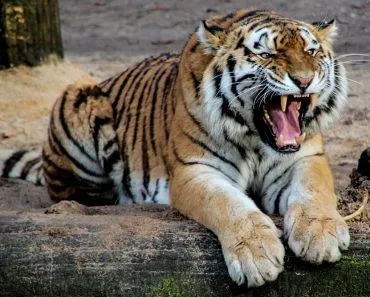
Tigers are among the largest land predators and generally outsize lions. Unfortunately, the tiger population has shrunk over time due to unabated poaching, and they are now only found in select tropical deciduous forests of Asia. The beautiful stripes on each tiger are unique and serve as identifiers for tigers, similar to our fingerprints!
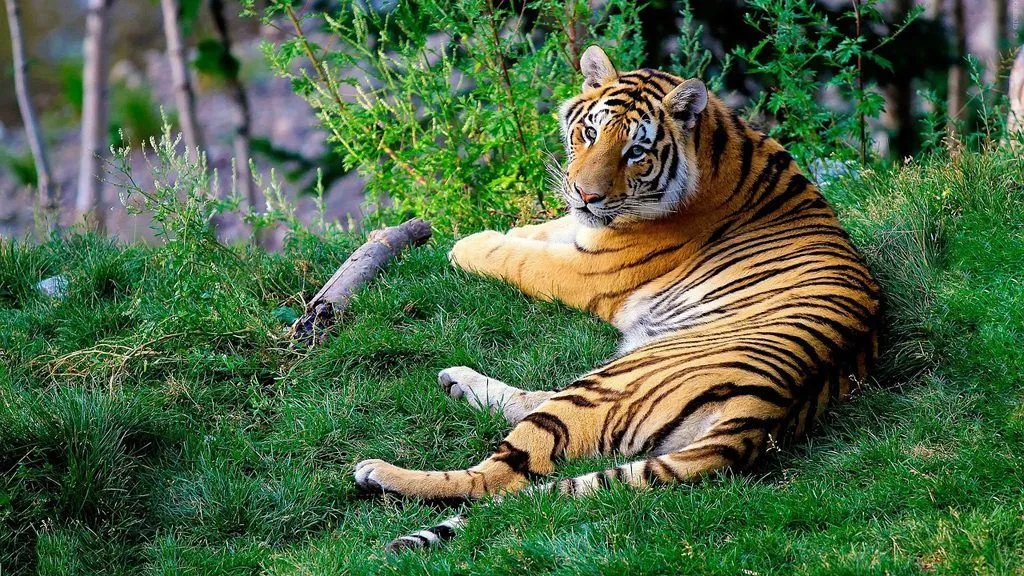
Tigers are solitary creatures that hunt and live alone most of their lives. They have a strong, muscular body that is agile and flexible. Tigers have excellent eyesight and can see their prey even in the dark.
Another notable feature of tigers is that they can easily climb trees and swim, even in fast-flowing rivers. Tigers are known to eat fish, turtles, and even crocodiles in the wild! Tigers are competent predators adapted to different ecosystems, from swimming in lakes to climbing trees. They can hunt their prey in broad daylight or ambush victims in the dark.

Lions
Lions are prodigious cats found on two continents: Asia and Africa. What’s striking about male lions is the distinctive thick and majestic manes around their neck.

Pride Of Lions
In contrast to the lifestyle of tigers, lions are very social, living in families called prides. Prides generally consist of one or two adult male lions with five to seven lionesses and their cubs. Male lions spend their lives defending their pride and protecting themselves from a hostile takeover by other vagrant lions. Interestingly, lionesses are the ones who actively hunt. At the same time, male lions only come into the picture when the need arises, like putting down a large mammal such as a giraffe or a buffalo.
Lion prides manifest great teamwork. Each member of the pride knows their role in hunting and other expeditions. Some go after the prey while others surround the prey so that it cannot escape. An adult male’s role is more likely to intimidate and defeat the biggest prey. For example, while hunting a zebra or a giraffe, a male lion would growl at the prey and drive them in a certain direction, where lionesses wait in ambush.
It must be remembered that lions are fighters from birth. They spend most of their lives protecting their pride and battling any opponent who attempts to take over the pride. Such frequent clashes make male lions experienced and fearsome fighters. Another intimidating aspect of lions is their fearsome roar, which can be heard up to a few miles away!
Now that you know a bit about these mighty cats, let’s make a more quantitative comparison of these two masters of the wild.
Comparison Of Lion And Tiger
- Body size: Although the size of both cats differs depending on their species, a large adult Siberian tiger can reach over 10 feet in length. An adult African lion, on the other hand, can grow up to 9 feet in length. A mature wild Siberian tiger averages around 175–190 kg (about 390–420 lb), with the largest verified individuals topping 300 kg (660 lb), while an adult African lion typically weighs 150–225 kg (about 330–500 lb). Roughly speaking, a tiger is 15-20% larger than a lion.
- Bite force: Both lions and tigers have 30 teeth, but a tiger’s upper canines are the longest of any living cat, typically 7–9 cm (about 3–3.5 inches), versus around 7 cm (under 3 inches) in lions. Peer-reviewed bite-force modeling (Wroe et al., 2005) puts the tiger’s canine bite at roughly 1,525 N versus 1,314 N for the lion, about 16% stronger in absolute terms, and roughly 14% stronger after correcting for body mass.
- Brain size: Yamaguchi et al. (2009) found that the tiger has a larger brain relative to skull length than the lion, leopard, or jaguar. The authors caution this likely reflects evolutionary phylogeny rather than any cognitive or behavioural superiority.
- Mane: Male lions have a distinctive mane around the neck. Many experts believe that this mane gives the lions a decisive advantage in a battle since an opponent cannot easily access the carotid artery or the cervical vertebra. Tigers have no such mane and are therefore more vulnerable to attacks on the neck.
Barbary Lion Vs. Siberian Tiger: The Biggest Of The Big Cats?
Plenty of readers don’t want a generic lion against a generic tiger; they want the heavyweights. So how would the largest lion that ever lived stack up against the largest cat alive today?

The Barbary lion (also called the Atlas lion) once prowled North Africa’s Maghreb, from the Atlas Mountains of Morocco east toward Egypt, before being hunted to extinction in the wild by the mid-20th century. It was among the largest lions ever known. Museum specimens measure roughly 2.3 to 2.8 m (7.5 to 9.2 ft) from nose to tail tip, and the biggest weighed as much as 230 kg (about 500 lb). The famous claims of 3 m (10 ft) giants topping 300 kg (660 lb) come from 19th-century hunters and are unsubstantiated.
The Siberian tiger (or Amur tiger) is widely regarded as the largest cat on Earth. Modern males average about 176 kg (390 lb), and individuals measured in the early 20th century averaged closer to 215 kg (475 lb), with reliable head-and-body lengths reaching around 2 m (6.5 ft) plus a tail of nearly 1 m. As with the Barbary lion, the gaudiest records (a 1943 Manchurian male said to weigh roughly 300 kg) trace back to dubious sources.
Strip away the tall tales and the pattern holds: on trustworthy measurements, the largest tiger still edges out the largest lion in sheer bulk, just as it does across the two species as a whole.
Why Is The Lion The “King Of The Jungle” And Not The Tiger?
Here is the irony buried in that famous title: lions barely set foot in a jungle. They live on open grasslands, savannas, and scrub, and rarely venture into dense, closed forest at all. The word jungle only adds to the confusion. It comes from the Hindi jangal, rooted in the Sanskrit jangala, which originally meant dry, sparsely wooded, uncultivated land. When English borrowed the word in the late 18th century, it broadened to mean almost any tangled wilderness. So “king of the jungle” really just means “king of the wild.”

The older and more accurate phrase is king of beasts, and that crown is a cultural inheritance, not a verdict from any cage match. Across Mesopotamia, Egypt, Greece, and the Bible, the lion was the standard emblem of power, courage, and royalty, and it remains one of the most widely recognized animal symbols in human culture, stamped on flags, coats of arms, and thrones.
Why the lion and not the tiger? Geography. Lions once ranged far beyond Africa, across the Middle East and into southeastern Europe, so the Mediterranean and Near Eastern civilizations that built Western heraldry actually lived alongside them. The tiger was a purely Asian animal those cultures rarely saw, except as an exotic import for the Roman arena. The male lion helped his own case, too: that great mane gives him a crown-like silhouette no tiger can match. The title, in other words, was won in mythology and heraldry, not in a fight.
Do Lions And Tigers Crossover In A Natural Habitat?
Lions and tigers generally do not cohabit in the same geographical regions, but there are places in India where lions and tigers cross paths. Because of unabated poaching, tiger populations have declined significantly.
Colin Tudge, a renowned biologist and science writer, postulates that in the past when the populations of the two cats were abundant, tigers and lions competed for the same prey. There were efforts in the past (and still ongoing) to co-locate lions and tigers in the same habitat. In recent decades, India set up the Kuno wildlife sanctuary in Madhya Pradesh as the planned second home for the rapidly depleted Asiatic lion population from the Gir forest of Gujarat. That Asiatic Lion Reintroduction Project has stalled for years over inter-state objections, and Kuno was eventually used in 2022 as the site of India's African cheetah reintroduction (the world's first intercontinental translocation of a large carnivore) rather than for big-cat-on-big-cat coexistence with tigers.
The Indian government has proposed the Asiatic Lion Reintroduction project to reintroduce the Asian lions to bring the rapidly depleted Asian lions from the Gir forest back to other regions, including sanctuaries where tigers live. This project has encountered several hurdles with the government of Gujarat, where the Gir forest is located, which strongly opposes the relocation of lions. One of the reasons for this refusal was the fear that the tigers would kill the incoming lions.

So far in this section, we explored the natural interaction of lions and tigers, but now let’s look at some famous fights between the two cats in captivity and the results of their bloody battles.
Famous Lion Vs. Tiger Fights
The battle between lions and tigers has always piqued the interest of humanity. Be it hunters, naturalists, historians, or even science writers like us!
Ancient Rome
In ancient Rome, exotic animals were often pitted against each other in arenas for cruel entertainment purposes. To attract the plebeians’ attention, Roman emperors organized fights between African lions and Asian tigers in the Colosseum. The Roman poet Martial, in De Spectaculis (c. 80 CE), famously described a tigress killing a lion, calling it a remarkable and unprecedented result. The surviving Roman record is too thin to claim tigers usually won, but the spectacles themselves are well attested.

Ferocious Gunga
One of the most famous tigers in this folklore was a Bengal tiger named Gunga, said to have defeated multiple lions in various encounters. Gunga reportedly came from the court of the Nawab of Awadh in India, who transferred the tiger to a zoological garden in London. Inflated numbers (“30 lions defeated,” “killed a lion in 10 minutes”) circulate online but do not appear in the original 19th-century sources, so treat them as legend rather than fact.
The one tale that does have a primary source is in Harper’s Weekly, 1859, which described a Bengal tiger from the King of Oudh staged against a lion in London. Before the fight, the tiger reportedly attacked its keeper, who injured it with a crowbar and blinded the beast in one eye. So legend has it that the tiger was partially blinded going into its epic duel with the lion.
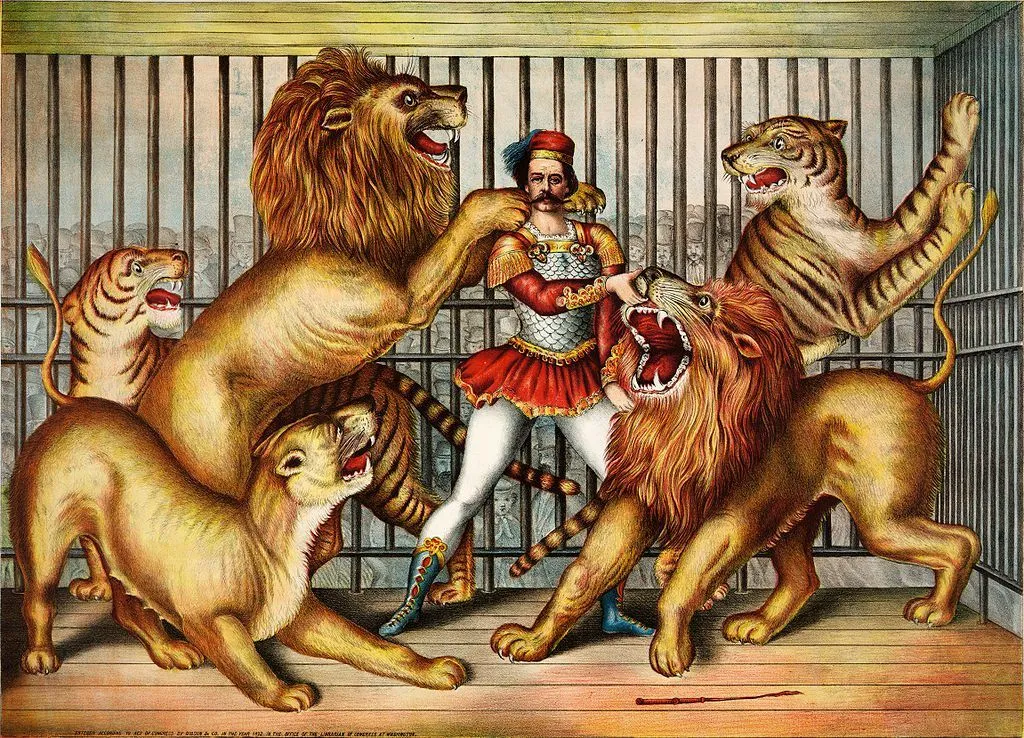
When the fight began, the tiger aggressively attacked the lion, and their fight lasted for some time before the tiger grew tired. Lions generally have greater stamina, and the lion took this opportunity to gain an advantage over the tiger. It pounced on Gunga, but the legendary tiger showed tremendous resilience. While lying on its back, Gunga used its back legs to deliver a swift counter strike to the lion. It tore open the lion’s stomach with these strikes, causing it to bleed heavily and die soon after.
When A Bengal Tiger Triumphed Over The Barbary Lion
Another gripping event in the rivalry between lion and tiger reportedly occurred at the end of the 19th century. The Gaekwad of Baroda, prince of a small state in colonial India, organized a fight between the two super cats in an amphitheater around 1899. He placed a sizeable bet on a Barbary lion called Atlas, brought from Algeria’s Atlas Mountains, to fight a Bengal tiger.
During the fight, both cats sustained injuries. Interestingly, the tiger withdrew from the mighty lion but later returned to fight again.
Despite the great valor displayed in the long fight with the tiger, the Barbary lion eventually succumbed to its injuries. The Gaekwad reportedly had to pay 37,000 rupees in lost bets and accept the tiger as the true king of the cat family.

Juno The Great
So far, we have only discussed encounters in which the tiger emerged victorious, but folklore also runs in the other direction. There is the saga of a brave lion called Juno, said to have killed as many as 13 tigers in various encounters. Like Gunga’s tally, the Juno legend has no primary documentation and survives mostly in 19th-century newspaper anecdotes and modern listicles, so treat the body count as folklore rather than fact.
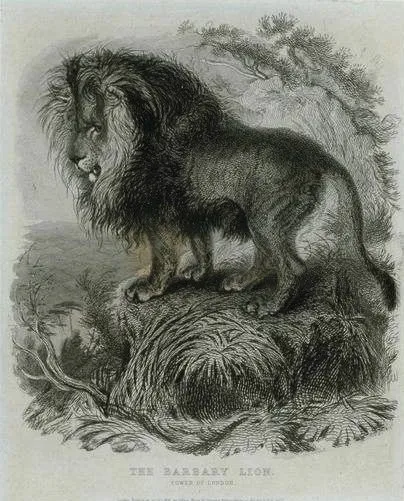
Lions also have a structural advantage in the wild that tigers don’t: they hunt in prides. Whatever the case may be, Juno was said to be one of the finest specimens of the Barbary lion, now extinct and known for thick, dark manes.
Lion Vs. Tiger: Who Is The Winner?
As already mentioned, the outcome of a fight between a lion and a tiger depends strongly on the individuals – their age, breed, their mood, their fighting style, and their physiology. Although there is no agreement among the experts about who would win, their decision favors the tigers.
Expert Opinion
An animal trainer named Alex Kerr, who has worked extensively with lions and tigers, mentions in his book that the tiger has traditionally triumphed in a fight between lion and tiger. John Varty, the owner of a private reserve in South Africa where lions rule the roost, also favored tigers over lions. He believed that tigers are superior fighters. Experts who worked with the Save China Project believed that tigers are stronger than lions in physical performance and that a Siberian or Bengal tiger would defeat an African lion.
However, not all experts assent to the tiger’s superiority. Some experts hold the opposite opinion. For example, Clyde Beatty, a renowned American animal trainer, said that a full-grown lion is more likely to triumph over a full-grown tiger. Well-known animal conservationist Kailash Sankhala, popularly known as The Tiger Man of India, ironically weighs more on lions than on tigers. He believes that the mane of the male lion gives them a strong advantage and serves as a shield to protect themselves from the tiger’s savage attack on the throat. Tigers have no such protection and are therefore much more vulnerable to an attack by a lion. In his book, he observes that a tiger cannot really keep up with a lion if pitted against a lion of equal size.
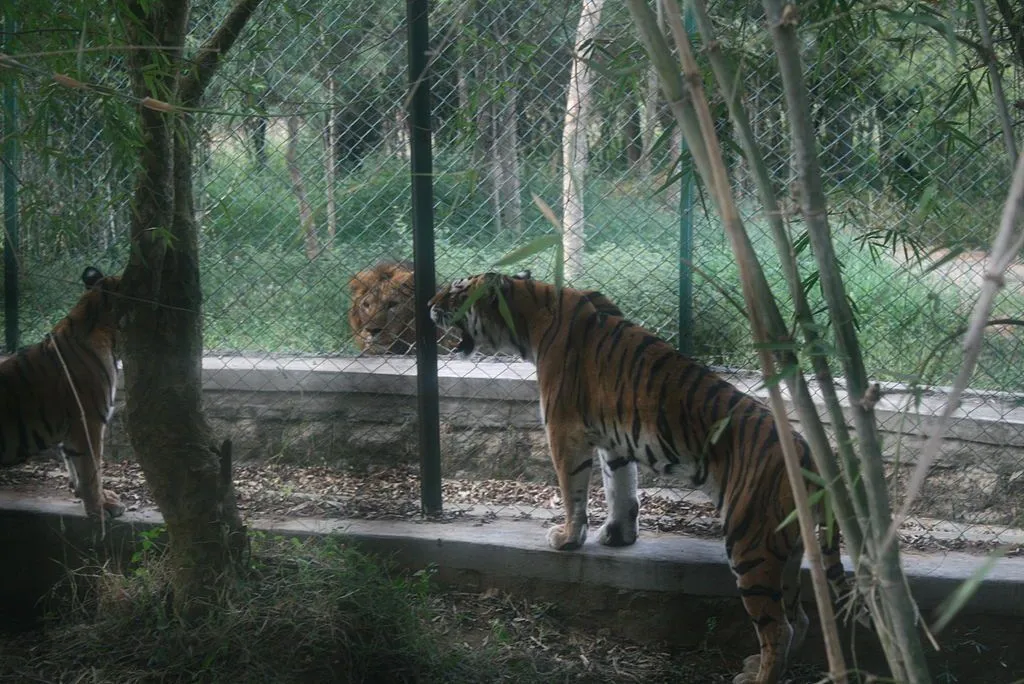
Summing It Up
Both cats have their own advantages and limitations. So the tiger, for example, is a lone hunter for most of its life and has more muscle mass. They are bigger and heavier in weight. In addition, they have sharper and longer fangs and claws. A tiger is arguably more ferocious and definitely more agile, although lions are actually the faster sprinters of the two. It can swim in the water and climb trees. Lions, on the other hand, are more resilient and brave. They have experience putting down large enemies, as big as an elephant or a giraffe, albeit in a group. Lions also have experience combatting other lions in the wild to defend their pride, something tigers lack.
Tigers are fierce predators, play it safe and quickly launch powerful attacks on their opponents. Lions first measure the strength of the opponent by striking with a single paw in duels. They usually take a little more time to go all out on the opponent. Perhaps this is because they generally have other lions as backups in the wild. Tigers are impulsive attackers who want to go all out from the beginning. Perhaps evolution has conditioned them to be more ferocious and always rely on the quick kill. Sometimes this can backfire, as a tiger could lose energy faster, and if it encounters a resilient lion, the tiger could fall victim to the lion!
Although it is not clear who the winner will be, tigers appear to be serious contenders for the King of Jungle, a designation usually reserved for lions!
References (click to expand)
- Frequently Asked Questions | College of Biological Sciences. The College of Biological Sciences
- YAMAGUCHI, N., KITCHENER, A. C., GILISSEN, E., & MACDONALD, D. W. (2009, August 25). Brain size of the lion (Panthera leo) and the tiger (P. tigris): implications for intrageneric phylogeny, intraspecific differences and the effects of captivity. Biological Journal of the Linnean Society. Oxford University Press (OUP).
- Shankaranarayanan, P., Banerjee, M., Kacker, R. K., Aggarwal, R. K., & Singh, L. (1997). Genetic variation in Asiatic lions and Indian tigers. Electrophoresis. Wiley.
- The Fighting Tiger of the King of Oude. Harper’s Weekly, 1859.
- Wroe, S., McHenry, C., & Thomason, J. (2005). Bite club: comparative bite force in big biting mammals. Proceedings of the Royal Society B.
- Siberian tiger. Encyclopaedia Britannica.
- Lion. Encyclopaedia Britannica.
- Barbary lion. Encyclopaedia Britannica.
- jungle (n.). Online Etymology Dictionary.
- History of lions in Europe. Wikipedia.