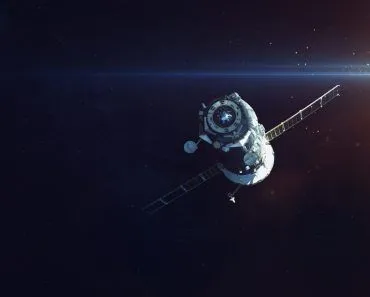
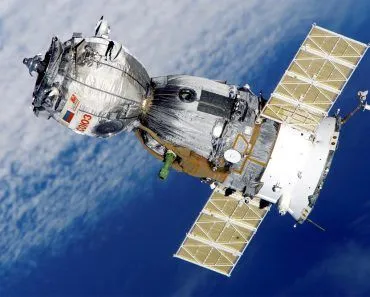
To put a satellite into orbit, a rocket carries it up through the atmosphere on an arcing trajectory called a gravity turn. Once the rocket reaches the target altitude, it tilts and accelerates the satellite horizontally to roughly 7.7 km/s (~17,400 mph for the ISS at 400 km), then drops away. The satellite stays up because that horizontal speed makes Earth curve away beneath it just as fast as gravity pulls it down — so it keeps "falling around" the planet for years.
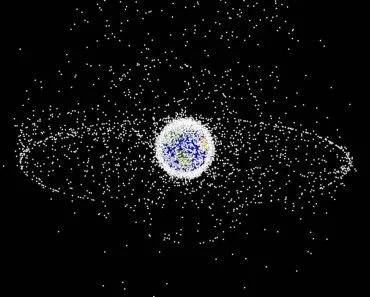
There are now more than 12,000 active artificial satellites orbiting Earth — a number that has exploded over the last few years thanks to SpaceX's Starlink and other megaconstellations. These satellites play an instrumental role in many fields, including digital communication all across the globe, weather forecasting, the transmission of radio and TV signals, military operations, and various other crucial areas that significantly impact our way of life and civilization as a whole.
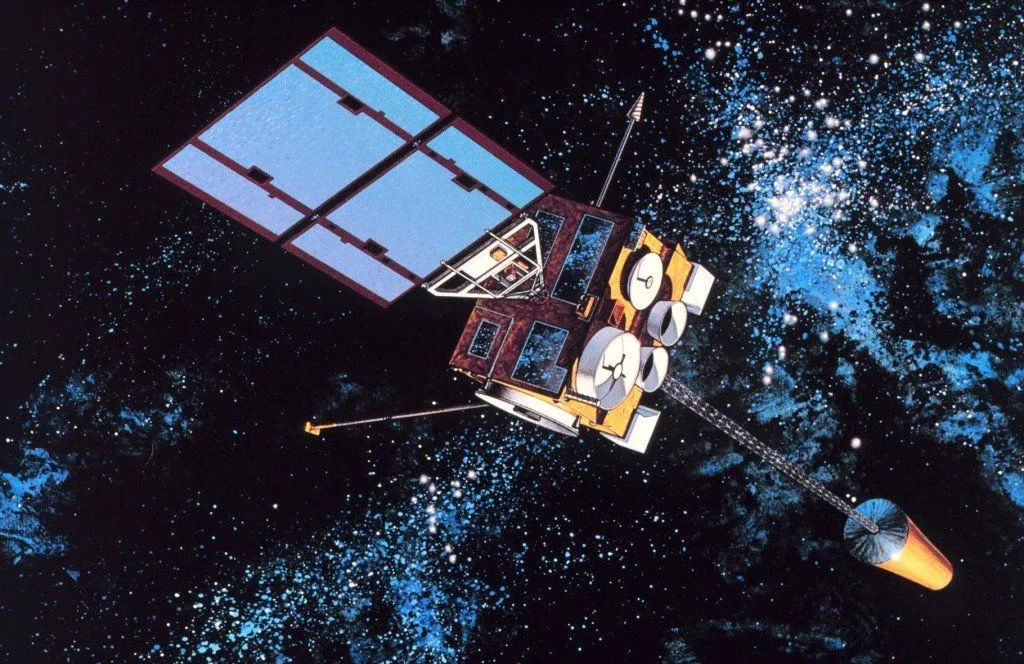
However, while watching a Yankees game live or video-calling a friend who is sitting thousands of miles away, have you ever wondered how all of that is accomplished? How is an artificial satellite put into orbit around the planet so that it stays up there for years – or even decades – to come?
How Is An Artificial Satellite Launched?
Every artificial satellite has a very definite purpose. Some satellites are launched to observe various geographical events in a region, others are used as spy satellites, and still more are launched by private organizations to broadcast communication signals all over the globe. Irrespective of the type and purpose of the satellite, every satellite must ‘achieve’ a particular orbit, i.e., get into an orbit around Earth.
Types Of Orbits Around Earth (Based On Altitude)
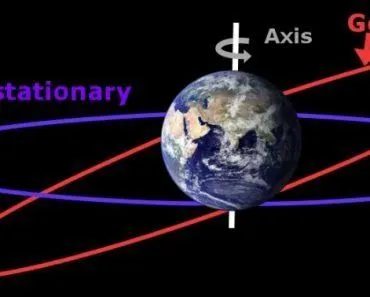
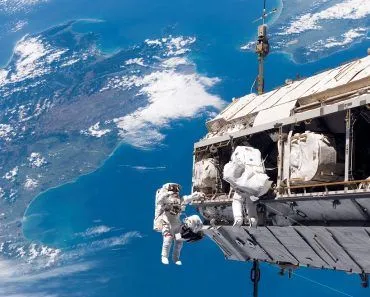
Depending on their respective altitudes from Earth’s surface, there are four main types of orbits around Earth, namely Low Earth Orbit or LEO (the International Space Station is in this orbit, at about 400 km up), medium Earth Orbit or MEO (home to GPS satellites), geostationary orbit, and High Earth Orbit or HEO (contains only a handful of satellites, like NASA’s Interstellar Boundary Explorer).
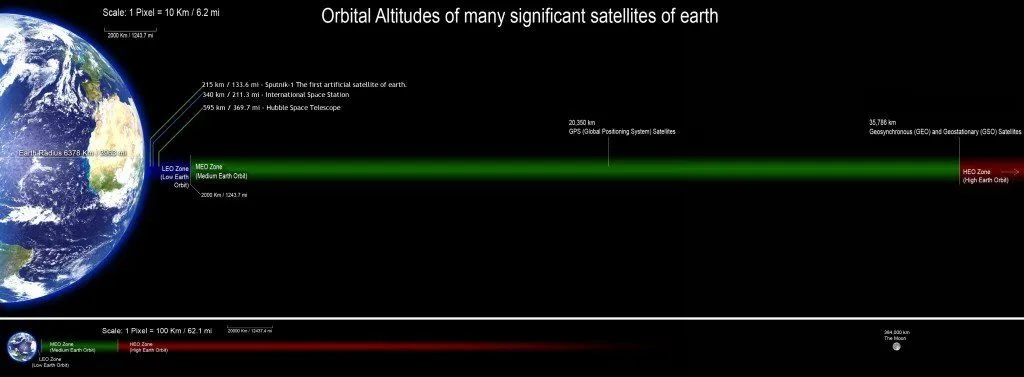
As of now, most functional artificial satellites operate in the LEO, while some others operate in the geostationary orbit and the MEO.
A Satellite Needs To Have A High Horizontal Velocity To Acquire An Orbit
An artificial satellite doesn’t have nearly enough accelerating power to ascend through the thick layers of the atmosphere and reach space all by itself. To help it accomplish that, it is attached to a launch vehicle – a rocket that rapidly accelerates the satellite before eventually separating itself and falling back to Earth.
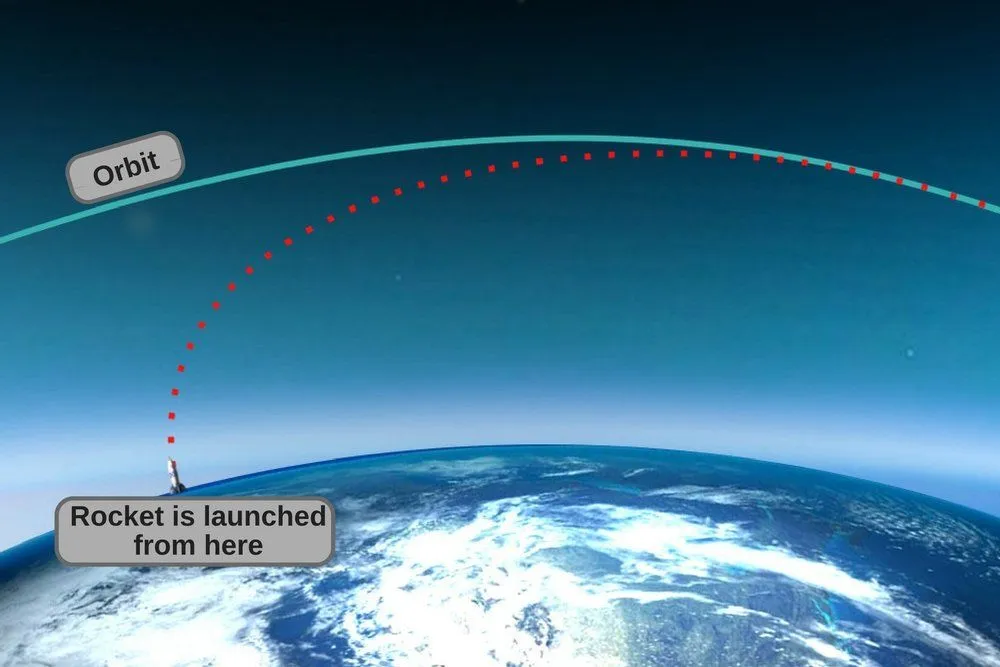
That rocket, as opposed to traveling straight all the way up, follows a curved trajectory to attain an orbit due to an interesting physical phenomenon first hypothesized by Sir Isaac Newton.
Newton’s Cannonball
Suppose you have a cannon from which you want to fire a cannonball. To be able to fire the ball as far as possible, you obviously need to be on high ground (so that the ball doesn’t have any obstructions in its path). Now, the more firepower you fire that cannon with, i.e., the higher the horizontal velocity of the ball, the farther it will go before hitting the ground.
If you keep increasing the horizontal velocity of the ball, at some point (when the horizontal velocity reaches roughly 7.9 km/s, or about 17,700 mph, at Earth's surface), it will go fast enough that it won't land on the ground at all! Instead, it will continue circling our planet along a fixed circular orbit. The following animation will help you visualize this better:
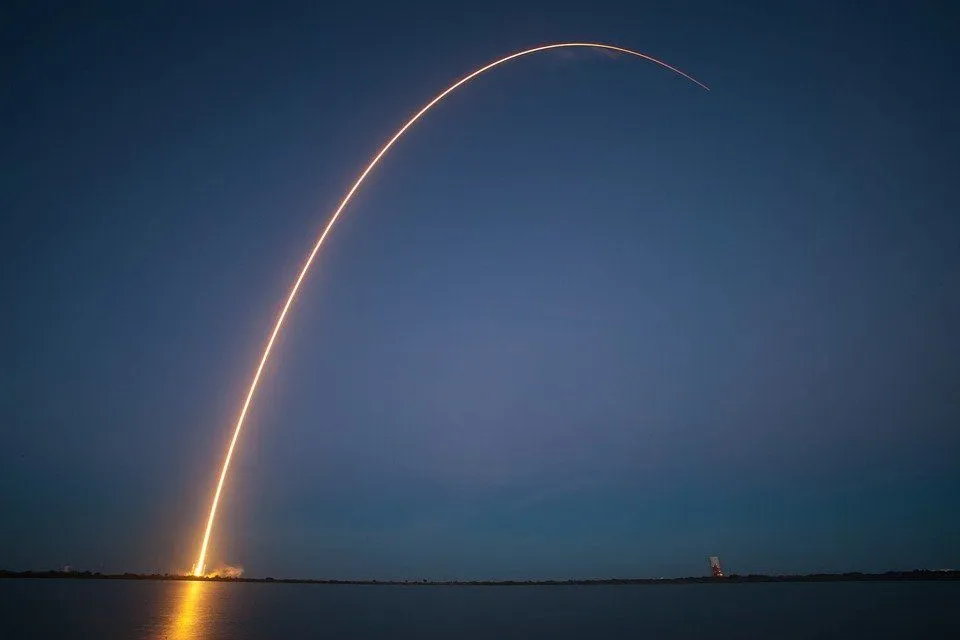
The exact same principle is applied while launching an artificial satellite. It is launched vertically, so that it crosses the thickest portion of the atmosphere as quickly as possible. However, once it reaches a desired, predetermined altitude, most of the rockets’ propelling power is then used to accelerate it horizontally so that it enters a stable orbit around the planet.
That's why a rocket carrying a satellite follows a curved, arcing trajectory (engineers call it a "gravity turn") instead of flying straight up; the satellite itself, once released, settles into an elliptical or near-circular orbit.
Since the gravitational pull of Earth is highest in the LEO, satellites in the LEO are more strongly pulled by the planet than those in the MEO or geostationary orbit. Because of this, the satellites in the LEO travel much faster (i.e., they have a high orbital velocity) than the ones in higher orbits.
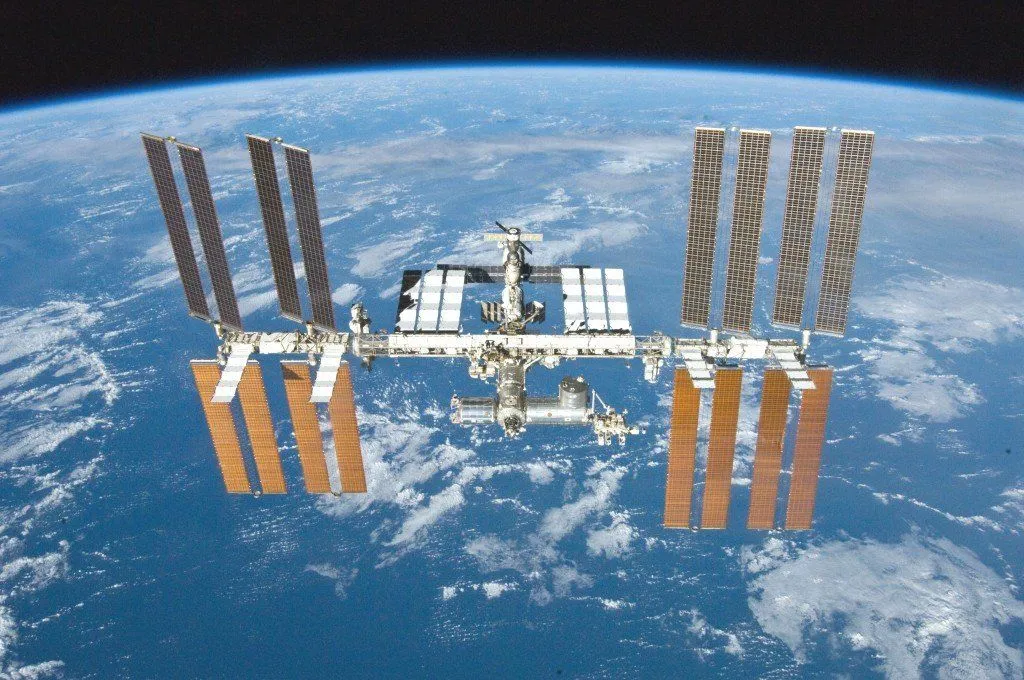
Now that we have an understanding of how a satellite is put into orbit, let’s move on to how it stays there for years or decades all by itself.
How Does A Satellite Stay In Its Orbit For Years?
This, again, can be explained by Newton’s cannonball thought experiment. In order for a satellite to stay in its orbit, it has to go incredibly fast around Earth so that it doesn't plummet back to the ground. Most of that speed is supplied by the launch rocket before separation, not by the satellite itself — most satellites have only small thrusters used for occasional reboosts and orientation. Once a satellite is up there and moving fast enough, no continuous thrust is needed; in the near-vacuum of space, there's very little to slow it down.
Note that these satellites are actually falling towards the ground all the time; it’s just that their horizontal speed is so high that the Earth curves beneath them as they perpetually head towards hitting the ground. Still, satellites that are close to Earth do lose their altitude (or experience ‘orbital decay’) more quickly (due to aerodynamic drag) than satellites that sit in the higher orbits.
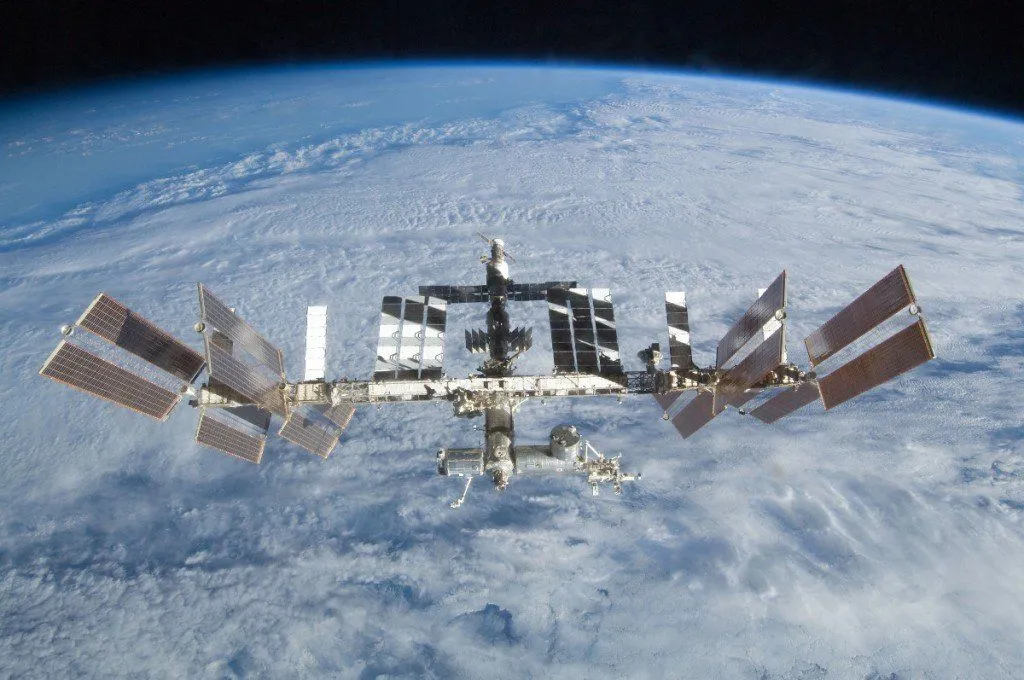
Such satellites (including the ISS) must be consistently boosted to maintain their orbit and avoid crashing back down to Earth.
In short, the closer your satellite is to the planet, the more quickly it will fall towards Earth. To ensure that doesn’t happen, it must have a very high horizontal speed, which basically means that you’ll have to spend a lot of cash (quite frequently) to adequately equip your satellite with all the necessary machinery and fuel. That's why the satellite business is so expensive — every kilogram of fuel and every reboost burn costs real money.
References (click to expand)
- Newton's cannonball - Wikipedia
- List of orbits - Wikipedia. Wikipedia
- Orbital decay - Wikipedia. Wikipedia
- How do we put spacecraft into orbit?. Northwestern University
- What Is a Satellite? | NASA. The National Aeronautics and Space Administration
- Space debris by the numbers (European Space Agency)
- Types of Orbits (NASA)