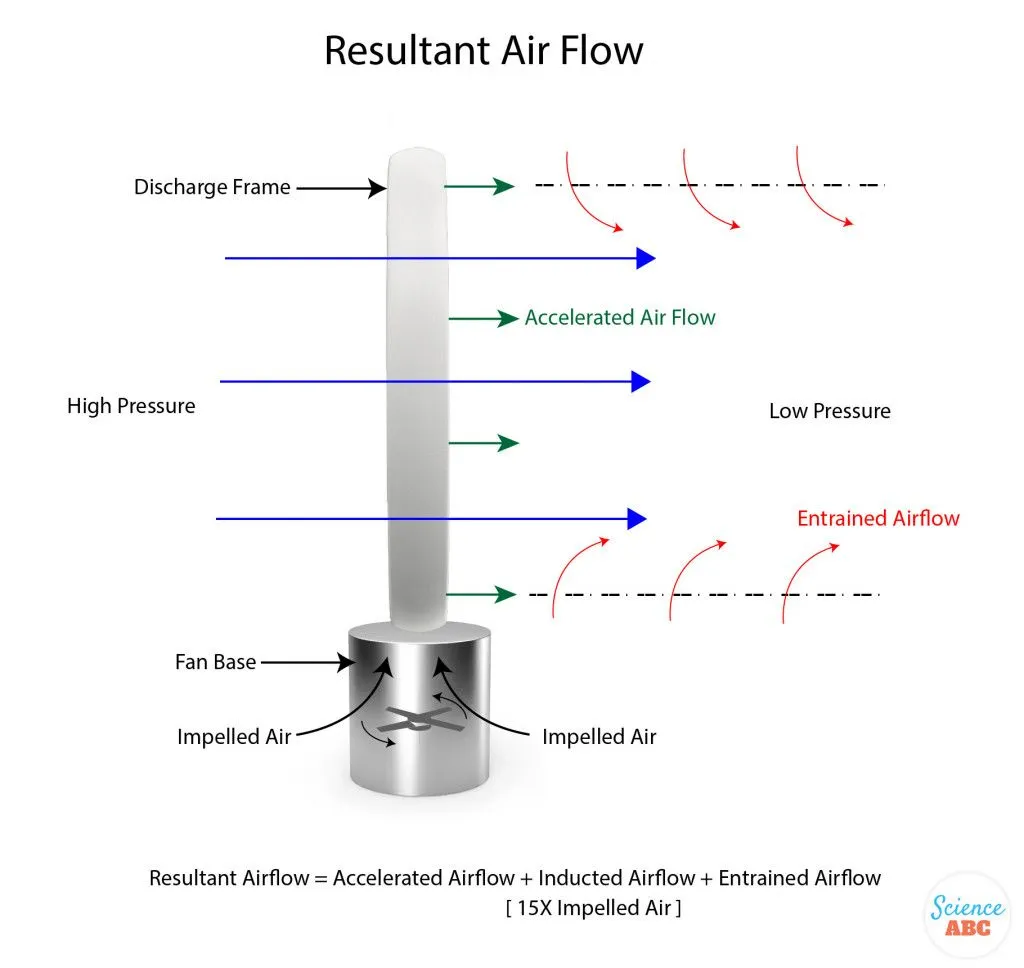
"Bladeless" fans are not really bladeless (they hide their blades inside the base). A small electric motor spins a mixed-flow impeller, which pushes air up into a hollow ring (the "hoop") shaped like an aircraft wing in cross-section. Air shoots out through a thin slit around the ring, dragging far more surrounding room air along with it (via induction and entrainment). The total airflow leaving the hoop can be up to about 15 times the air the impeller sucked in, which is why Dyson calls the design an "air multiplier".
The electric fan is one of the most mundane yet critical appliances in our daily lives. In the event of power outages, the absence of light is only a minor inconvenience as compared to the absence of flowing air. While the ergonomics of fans change to suit various needs (ceiling fans, pedestal fans etc.), the underlying design and principle remain the same.
However, what if I told you that there are fans without those commonly visible blades? They’ve actually been around for some time now, even though you might not be aware of them!

What Are Bladeless Fans?
All fans work with the flow of air to concentrate or dissipate its supply in a given region. Quite unlike a conventional fan, which has a lot of visibly moving parts, a bladeless fan is a static contraption that looks more ornamental than functional. It is, however, based on a very clever design utilizing the magic of fluid dynamics.
Construction
Bladeless fans consist of a base with a special kind of turbine called a mixed flow impeller. The impeller has asymmetrically arranged blades that draw in ambient air from all directions. It is driven by an electric motor and the entire setup is encased in a cover with holes to let air flow into it.

The discharge frame or the ‘hoop’ responsible for providing the air flow to the room is mounted on this stand and has a slit around its inner circumference to let air flow out. This slit is a part of a hollow cross-section shaped like an aircraft’s airfoil.
Working
Bladeless fans are also called air multipliers in proprietary parlance. This is because they leverage two very important phenomena to increase the amount of air passing through the hoop without necessarily drawing that air into the impeller. These phenomena are called induction and entrainment. Let’s try to understand each one in turn and see how they affect the final air flow.
Induction
Induction accounts for the bulk of air acceleration and multiplication that occurs in bladeless fans. In order to properly understand induction, we must understand Bernoulli’s theorem. This states that pressure and velocity are inversely related. Thus, an accelerating mass of fluid, in our case, air, will have lower pressure compared to a slower moving mass of air.
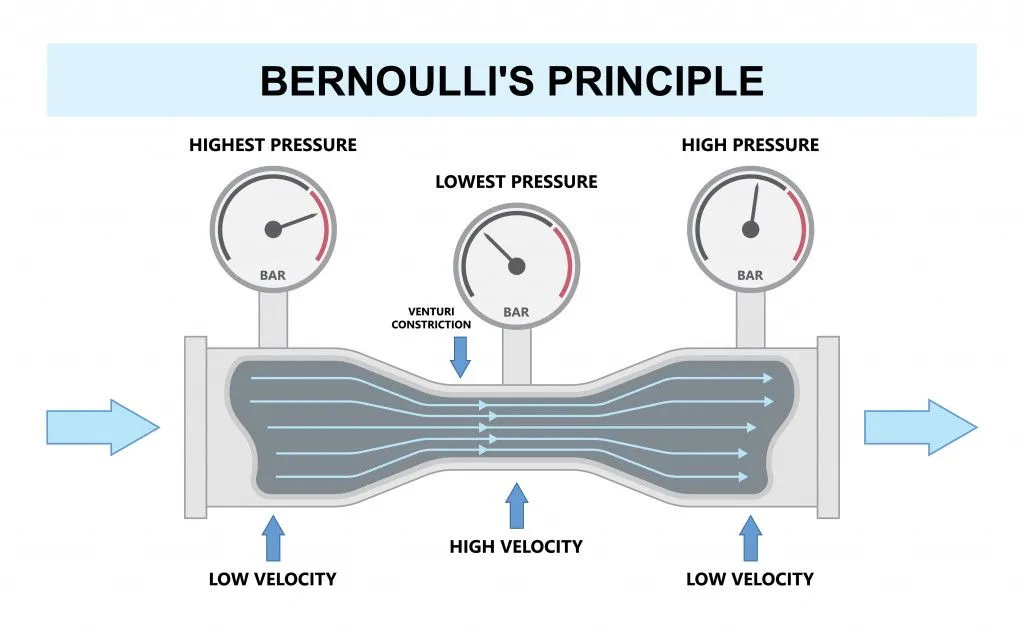
In the case of bladeless fans, air from the impeller gets forced into the discharge frame. This discharge frame has a cross-section that is similar to an aircraft wing airfoil, by which lift is generated.
However, this cross-section is hollow and open-ended, very similar to a paper clip, allowing air to exit through the slit. When air enters the discharge frame, it accelerates outwards. This causes a reduction in pressure of the accelerated air mass. However, ambient air that is already present in the discharge frame annulus is at lower velocities and higher pressure.
It therefore pushes the accelerated air mass towards the surface of the discharge frame and follows its profile even upon exiting. This is known as the Coanda effect. You can read more on this here.
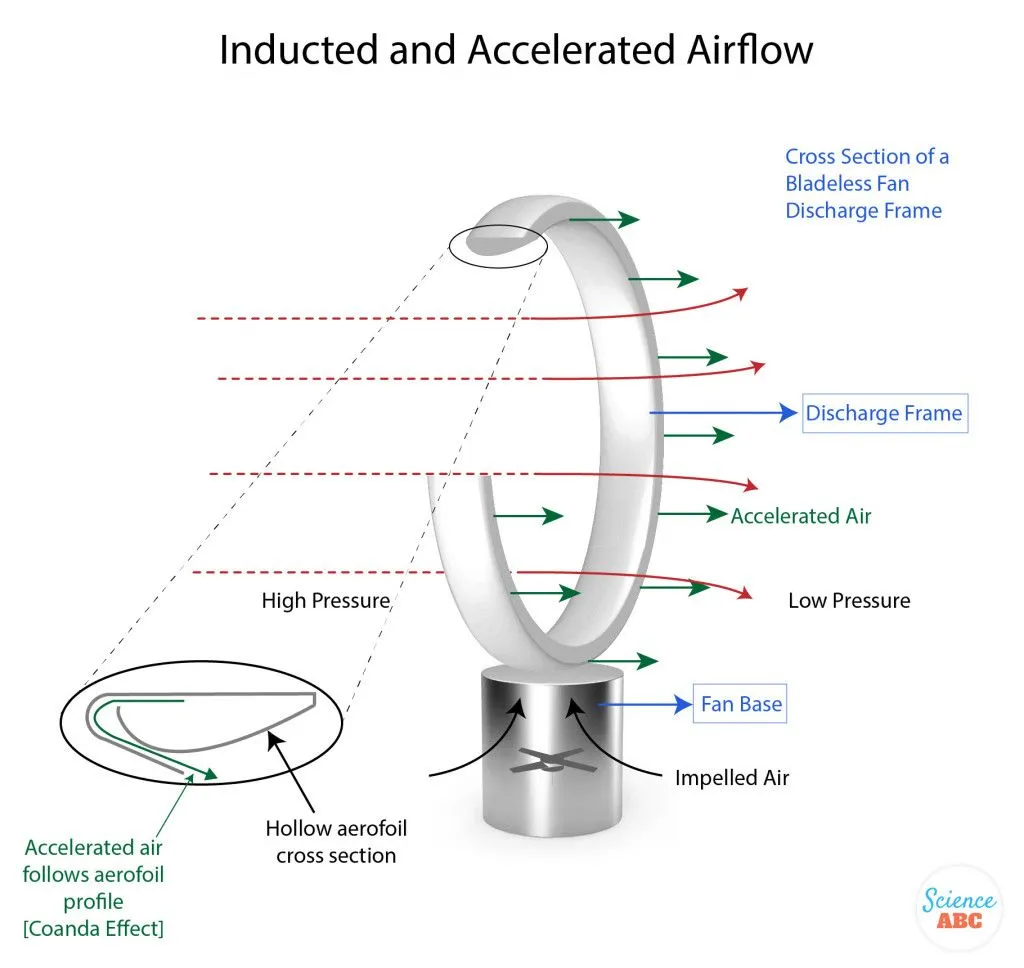
As the accelerated mass of air exits the slit, a ring of low pressure is created around the discharge frame. In order to equalize this pressure, ambient air from the room enters the ‘hoop’ from one side and exits from the other. This ambient air adds to the already accelerated mass of air that is exiting the slit of the discharge frame, in an area known as the mixed-flow region.
Entrainment
The air forced out of the discharge frame moves at a higher velocity as compared to the ambient air. It thus forms an invisible boundary with the ambient air mass. The air flow at this boundary, however, is not smooth. Instead, air flows in turbulent, swirling patterns in this region.
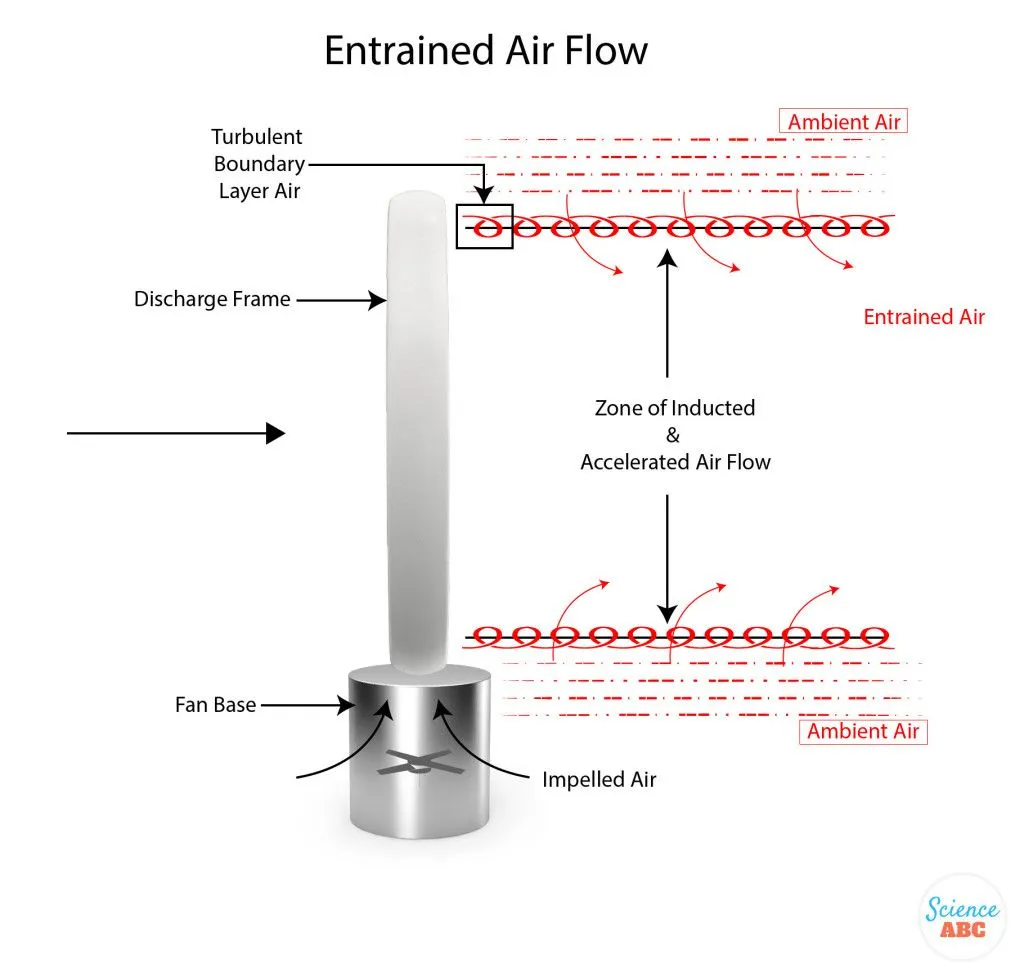
Such motion causes air to be drawn in from the ambient mass, into the accelerated mass that emanates from the discharge frame. This process is known as entrainment and further multiplies the amount of air flow.
The Resultant
Induction and entrainment occur simultaneously, and can cumulatively amplify the air flow by as much as 15 times the amount that originally entered the impeller. Changing various parameters, such as the design of the cross-section, the height of the discharge frame, and the power rating of the motor changes the air handling capacity of the fan. Bladeless fans are generally quieter than conventional fans, and easier to clean. They are not, however, more energy-efficient. The multi-stage flow path (impeller → hoop → induction) actually consumes more electricity to deliver a similar volume of moving air than a comparable bladed fan.
Advantages And Disadvantages Of Bladeless Fans
To their credit, bladeless fans are a much more stylish alternative to ‘bladed’ fans. The absence of exposed moving components adds to their safety in domestic applications. However, bladeless fans employ high-precision design and engineering in their components, such as the airfoils, mixed flow impellers and motors. At the same time, they are generally outfitted with remote control and IoT operations, making them more expensive than their conventional counterparts.
Who Invented The Bladeless Fan?
If bladeless fans feel like a distinctly modern gadget, the underlying idea is surprisingly old. A fan that pushed air out through a thin ring rather than spinning visible blades was patented by Toshiba back in 1981, but the design was never turned into a product and the patent eventually expired.
The version most of us picture today came from Dyson, the British company better known for its vacuum cleaners. In October 2009, founder James Dyson unveiled the Dyson Air Multiplier, and it was this machine that made the word "bladeless" a household term. Dyson's engineers reportedly spent around four years and hundreds of fluid-dynamics simulations fine-tuning the shape of the ring and the width of its slit. The early models (the AM01, AM02 and AM03) claimed to multiply the air drawn in through the base by between 15 and 18 times, with Dyson advertising an output of roughly 405 litres of smooth air every second.

Interestingly, when Dyson tried to patent the concept, examiners pointed out that it owed a great deal to that earlier Toshiba filing. So while Dyson did not strictly invent the bladeless fan, it was the company that solved the engineering and turned a dormant idea into the sleek appliance you can buy today.
Bladeless Fans vs Regular Fans: Which Is Better?
Before you swap out your trusty pedestal fan, it helps to separate the marketing from the physics. The first thing to clear up is a common misconception: neither a bladeless fan nor a regular fan actually cools the air. Both simply move it around. A breeze feels cooling because moving air speeds up the evaporation of sweat from your skin, but the room itself does not get any colder.

On raw airflow, a conventional bladed fan usually wins. Its large spinning blades can shift a bigger volume of air and cover a larger room, which is why cheap box fans are still the go-to for garages and workshops. Where the bladeless design pulls ahead is in the quality of the breeze. Because the air is smoothed out as it passes over the airfoil ring, there is no blade "chop", so the stream feels more even and is generally quieter, which suits bedrooms and offices.
The bladeless fan's biggest practical advantage is safety. With no fast-spinning blades within reach, there are no exposed parts for curious fingers or pets to catch, and cleaning is as simple as wiping the ring with a cloth rather than dismantling a blade cage. The trade-off is cost: bladeless models typically sell for several times the price of a comparable bladed fan, and their more elaborate air path means they are not the energy-savers they are sometimes assumed to be.
Is The Bladeless Fan Truly Bladeless?
Despite the tricky name, bladeless fans are not actually bladeless, as air is forced into the system by the impeller blades. That said, the moniker comes from the absence of visible components that are more commonly found in conventional fans.
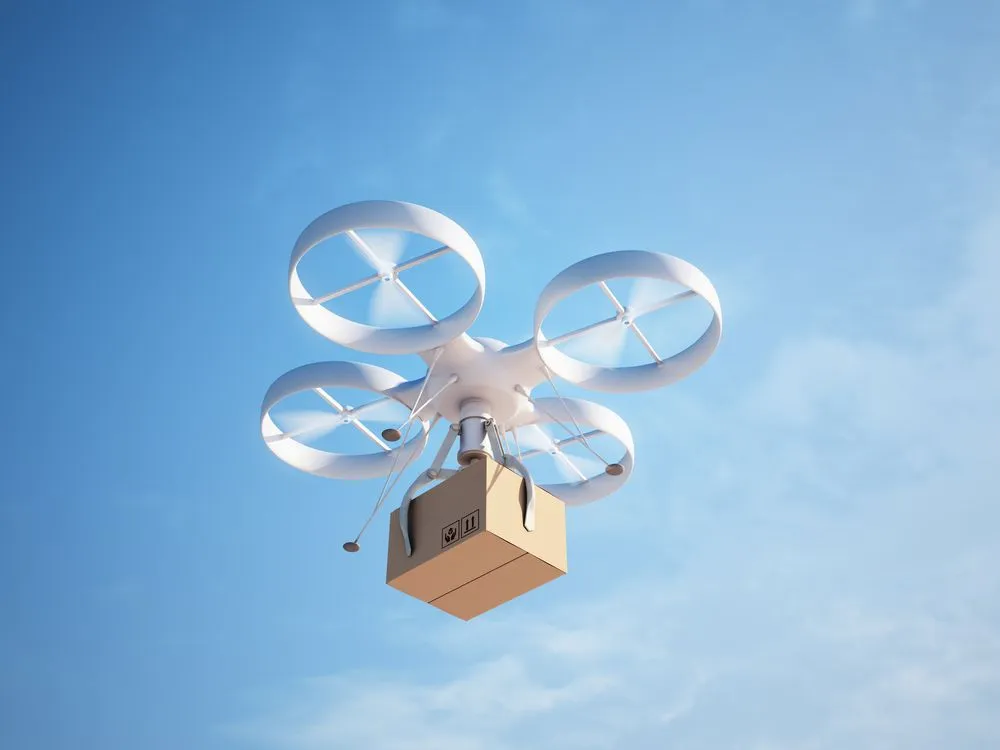
The potential for bladeless fan design to replace open blade designs shows great promise in high criticality operations like turbines and thrusters that can be used in aircraft, unaided aerial vehicles (UAV) and drones. So, is it possible for truly bladeless options to take over the market… only time will tell!