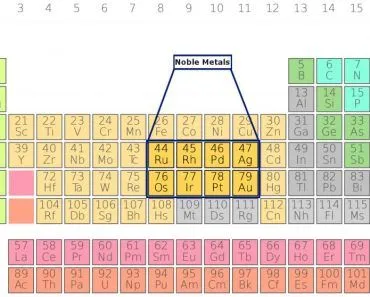
Yes, gold conducts electricity, but copper conducts it better, and silver is the best of all. Electronics still use gold on contact surfaces (connectors, bonding wires, switch pins) because gold is chemically inert: it doesn’t form an oxide layer that interferes with the tiny voltages used in modern signal paths. Copper would corrode within months and lose reliable contact; gold stays metallic for decades.
The answer relates to the properties of the metals. Gold is used in electronics because it is more inert, ductile and malleable than copper.
A few days ago, while buying a new hard disk for my laptop, I noticed that certain parts of it were plated with a gold-colored metal. It made me curious about whether the metal was actually gold or not.
A quick Google search confirmed that yes, gold was in fact used in electronics fairly regularly. That raised more questions for me. Why use gold when copper is a better conductor and a much cheaper option? So why do we use it? For this, we must first understand how conductors of electricity work.
What Is A Conductor?
Electricity is a necessary part of our lives today. It is essentially tiny charged particles called electrons hurtling through conductors from one point to another, carrying current. The current in the wire is dependent on the electrons moving through the conductor.
The speed of the electrons is dependent on whether it’s traveling through a good conductor of electricity or if it’s an insulator. A great conductor allows for electrons to pass through easily and quickly. An insulator blocks the passage of the electrons, limiting the current from flowing. Hence, a good conductor has “low electrical resistivity” and insulators have “high electrical resistivity”.
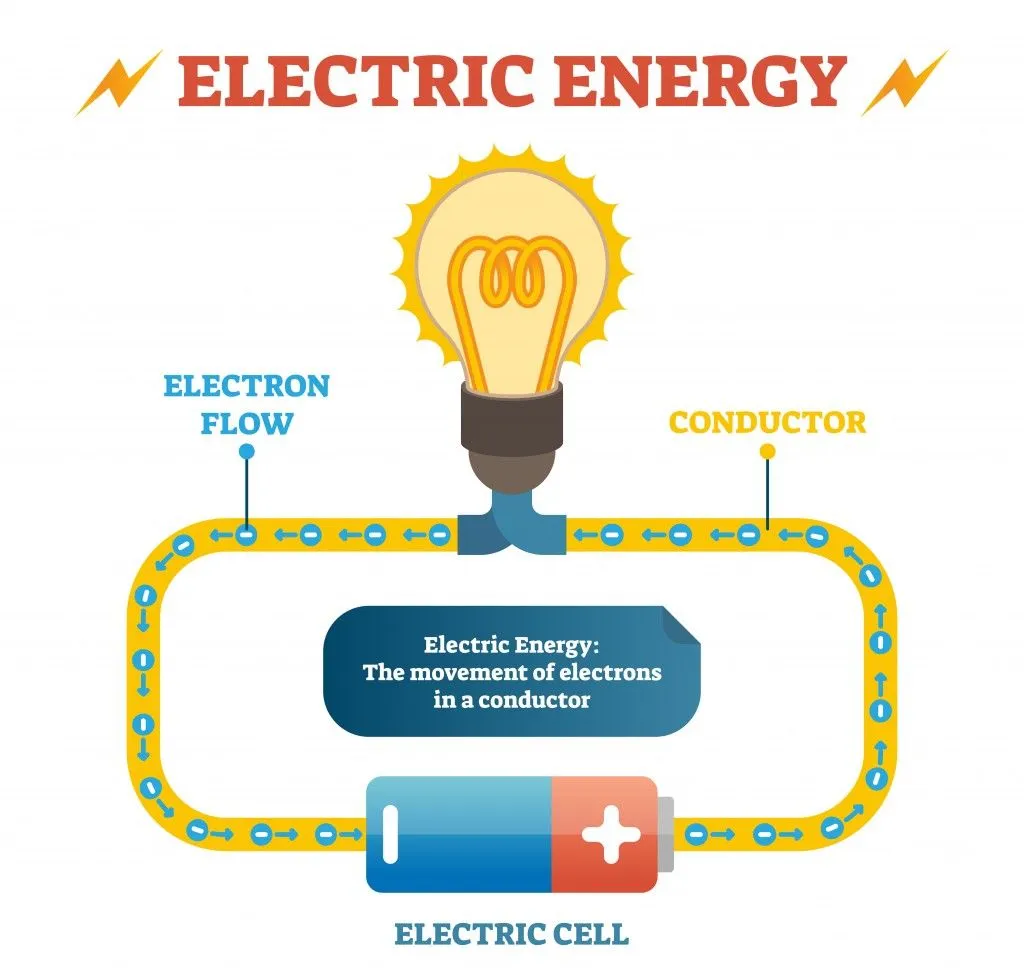
Copper is an excellent conductor of electricity; it is economical and easy to purchase, so it is the most common metal used in wiring. Plastic is an insulator and is often used to encase wires to prevent accidents. The best electrical conductors, ranked by conductivity, are silver, copper, gold, and aluminum. Silver is actually the best, but it’s expensive and tarnishes; iron, by contrast, is a relatively poor electrical conductor compared to the coinage metals.
Copper is a better conductor than gold. With this information comes the puzzle of why gold, instead of copper, is used in making connector ends, like those found on USB connectors.
The answer to this is both simple and complex, and lies in the properties of gold as a metal and the requirements for the conductors used in certain electrical components.
Is Gold A Conductor Or An Insulator?
Let’s clear this up first, because it’s the question most people actually arrive with: gold is a conductor, and a very good one. It is never an insulator. In fact, gold sits comfortably among the top handful of metals for carrying electricity, just behind silver and copper.

Why is every metal, gold included, a conductor? It comes down to how metal atoms bond. In a metal, the atoms pack into a tight lattice and let go of their outermost electrons, which are no longer tied to any single atom. Instead they form a shared “sea” of delocalized electrons that can drift freely through the whole structure (the so-called electron-sea model of metallic bonding). A gold atom contributes a single loosely bound outer electron to that pool.
When you connect gold to a battery, the voltage nudges this sea of free electrons into a steady drift, and that flow is an electric current. An insulator like rubber or glass does the opposite: its electrons stay locked to their atoms, so there is almost nothing free to move and the current is blocked. Gold has plenty of mobile electrons, which is exactly why it conducts, and why it turns up plated onto the contacts inside your phone and laptop. It also helps that gold is a noble metal that barely reacts with its surroundings, a point we will come back to.
Copper Vs Gold: Comparison Of Their Properties
Gold, a rare and valuable element, associated with grandeur and royalty, is often viewed as something not casually used by the average man. Traditionally, the metal has been used as a form of currency and for ornamental purposes. Evidence of its use dates back to the time of the ancient Egyptian civilization. It remains a popular metal in jewelry and the making of ornaments.

However, in modern times, gold no longer remains a novelty item. Chances are that if you own any form of sophisticated technology, it has gold as one of its parts. A small amount of the metal is used in the production of a variety of electronic components.
Gold is a ductile and malleable metal, so it can easily be drawn into wires and hammered into sheets. About 28 grams of the metal can be beaten into thin sheets of around 17 square meters (Source). Pure gold is a relatively soft metal and is therefore easy to use in the production process of the small and delicate circuits and connectors that are needed. Gold is the most ductile and malleable metal known to man.
Copper is comparatively not as malleable or ductile, and is, therefore, harder to work with. Another quality of the metal that makes its use favored over copper (or even silver) is its reactivity. Gold is known as a “chemically inactive” element, which means that it doesn’t react with other materials easily. Under normal conditions, it is inert, unlike copper or silver, both of which easily corrode and tarnish.

Silver, Copper Or Gold: Which Conducts Best?
If you line up the three famous “coinage metals” by how well they carry electricity, the order is silver first, copper second, and gold third. Here is roughly how their electrical conductivity compares at room temperature (about 20 °C):
| Metal | Electrical conductivity (S/m, 20 °C) | Relative to copper (IACS) |
|---|---|---|
| Silver | ~6.3 × 10⁷ | ~105% |
| Copper | ~5.96 × 10⁷ | 100% (benchmark) |
| Gold | ~4.1 × 10⁷ | ~70% |
| Aluminum | ~3.5 × 10⁷ | ~61% |
A handy way to compare conductors is the International Annealed Copper Standard (IACS), which fixes copper at 100%. On that scale silver comes in around 105%, gold about 70%, and aluminum roughly 61%. In plain terms, a gold wire carries only about 70% as much current as an identical copper wire, and silver edges out both.
So is gold more conductive than copper? No. Copper beats gold, and silver beats copper. That is exactly why your house is wired with cheap, abundant copper rather than gold, and why utilities favor aluminum for long overhead power lines (it conducts a little less than copper but is far lighter and cheaper). Gold earns its place in electronics for a different reason entirely, which is what the rest of this article is about.
Why Do We Use Gold In Electronics?
These properties discussed above collectively make gold a reliable choice to be used in electrical segments. Computers have the most gold in them. Less complex devices, like camcorders and microwaves, etc. have at least a small quantity of gold in them too!
Copper being more “chemically active” and less ductile is not favored in making the connectors used in technology. These components must be more robust and long-lasting. If the components made using gold are instead made of copper, their longevity and efficiency would be reduced and they would need to be replaced often, making the devices they are used in more expensive and demanding of high maintenance.
Today, the largest industrial use of gold is in the electronics industry. Due to it being relatively more expensive than other metals and the fact that there is a shortage of supply, there is a move to recycle gold used in old electronics because its demand is still high in the industry. Fun Fact: there are more YouTube videos on how to salvage gold from electronics than there is on why its use is favored!
Unfortunately, the consensus is that unless done on an industrial scale, the process is more expensive and dangerous than it’s worth. 10% of the recycled gold supply in the world comes from the industrial recycling of electronics.
With this laundry list of advantages of using gold to make electronic parts, it is no wonder that even with all the economic challenges its use poses, it is still preferred over copper and other conductors in the production of connectors and other delicate components.
Does Copper Conduct Heat As Well As Electricity?
Yes. Copper is famous as an electrical conductor, but it is an excellent conductor of heat too, which is the answer to that old quiz question: “copper is a good conductor of electricity and of what else?” That dual talent is why copper shows up in the base of good cookware, in car radiators, and in the heat sinks that pull warmth away from a computer’s processor.

The two abilities are linked, and not by coincidence. The same sea of free electrons that drifts along to carry an electric current also shuttles thermal energy from the hot end of a metal to the cold end. Because a single population of electrons does both jobs, metals that conduct electricity well tend to conduct heat well. Physicists pinned this down as the Wiedemann-Franz law, named after Gustav Wiedemann and Rudolph Franz, who noticed in 1853 that the ratio of a metal’s thermal conductivity to its electrical conductivity is about the same for most metals at a given temperature.
The heat ranking even mirrors the electrical one. Measured in watts per meter-kelvin (W/m·K), silver leads at around 430, copper follows near 400, gold sits about 315, and aluminum about 235. So copper’s reputation as a conductor is well earned on both counts, and it is once again gold’s chemical staying power, not raw conductivity, that wins it a job in electronics.
References (click to expand)
- The Many Uses of Gold - Minerals - Geology.com. geology.com
- Gold - Properties, occurrences, and uses | Britannica. britannica.com
- Gold Statistics and Information | U.S. Geological Survey. The United States Geological Survey
- Resistivity and Conductivity of Materials. HyperPhysics, Georgia State University
- Electrical resistivity and conductivity. Wikipedia
- Metallic Bonding. Chemistry LibreTexts
- Thermal Conductivity and the Wiedemann-Franz law. HyperPhysics, Georgia State University
- List of thermal conductivities. Wikipedia