Table of Contents (click to expand)
A phosphodiester bond is a covalent linkage in which a single phosphate group forms two ester bonds: one with the 3' carbon of one nucleotide’s sugar and another with the 5' carbon of the next nucleotide’s sugar. These bonds chain nucleotides together end-to-end to build the sugar-phosphate backbone of DNA and RNA, giving each strand a direction (5' to 3') and an electrically negative outer rail.
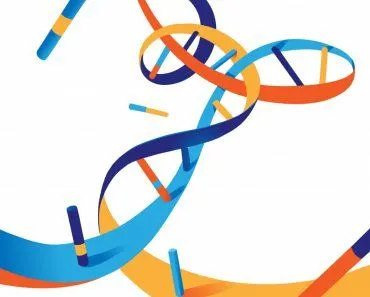
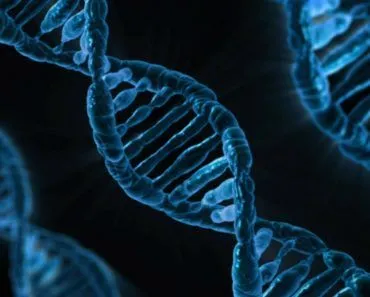
DNA and RNA, as we know, are extremely important biomolecules found in living organisms. They are responsible for making us what we are—similar, and yet so unique. Every person is aware of the famous double helix structure of DNA. If nothing, then you have seen it in movies like Spiderman: a winding, ladder-like structure, like a spiral staircase. Phosphodiester bonds are bonds between the phosphate group and the 2 sugar molecules in DNA or RNA.
Structure Of DNA And RNA
To understand a phosphodiester bond, we first need to understand the basic structure of DNA and RNA. We know that DNA has a double helix structure, whereas RNA has a similar structure, except that it only has a single strand.
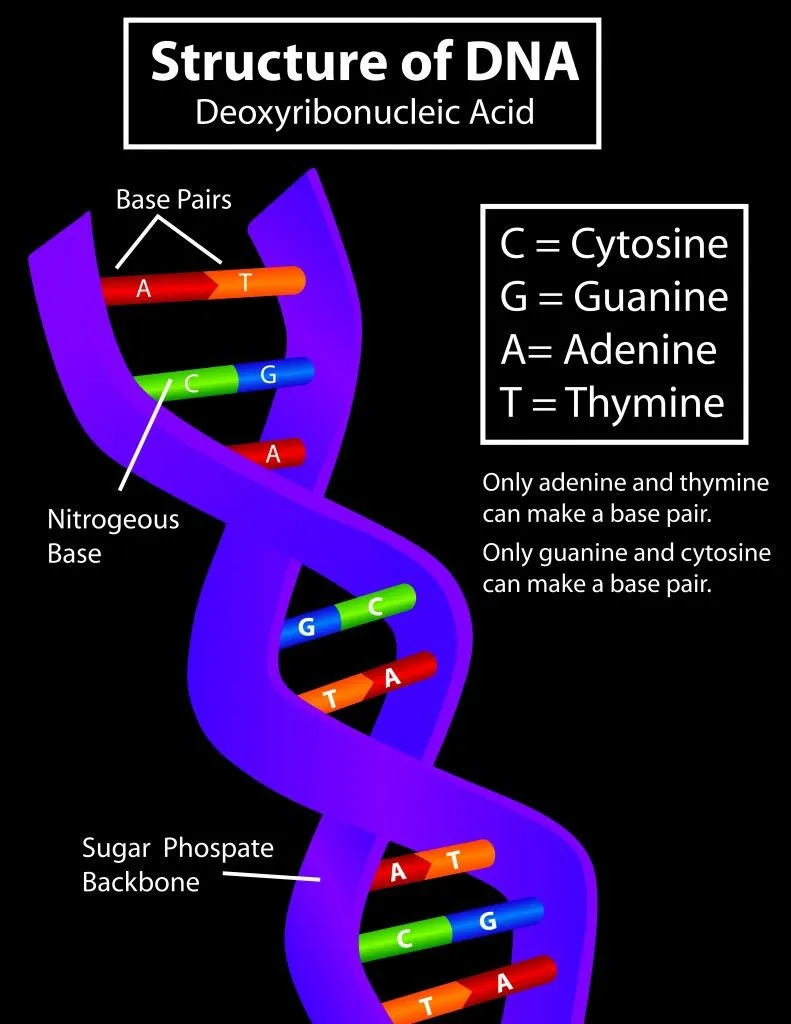
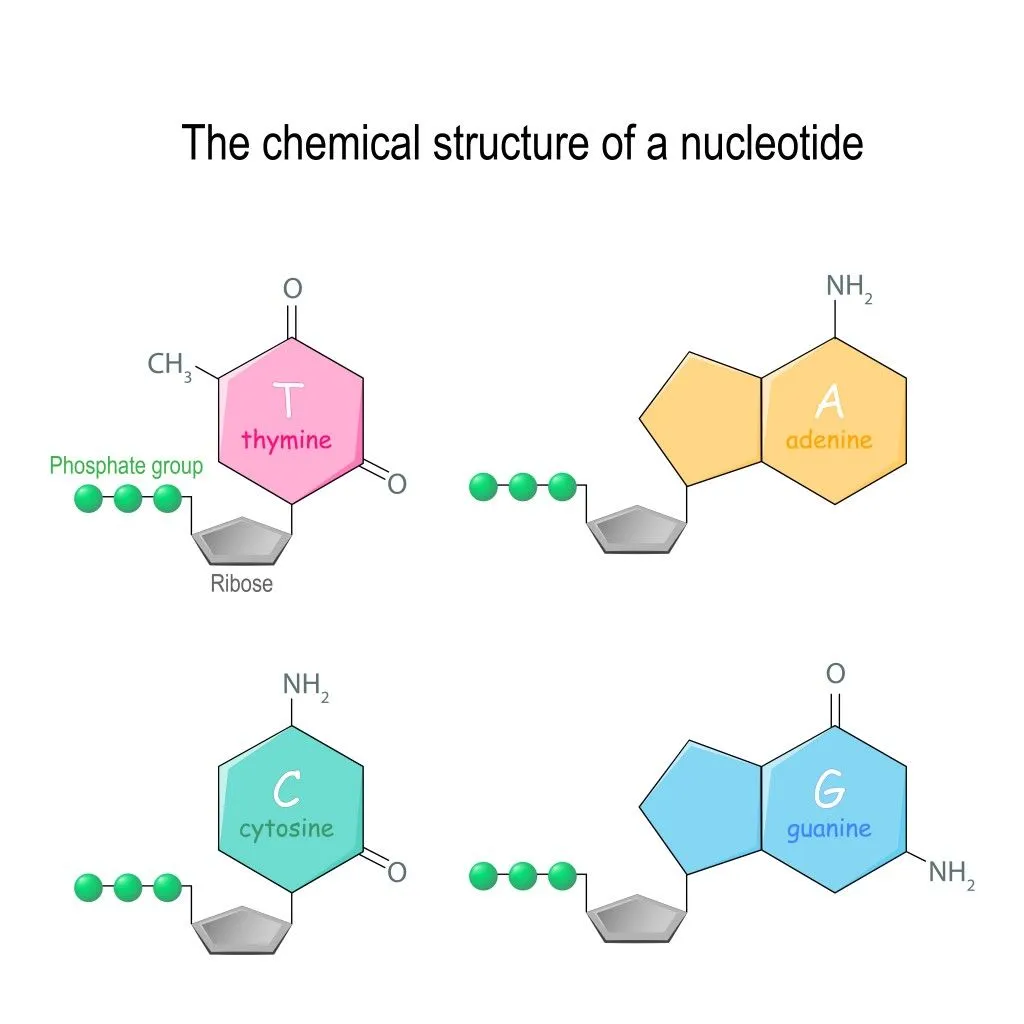
A nucleotide (the building block of DNA and RNA) consists of three parts: a nitrogenous base, a sugar molecule and a phosphate group. There are four nitrogenous bases: adenine, guanine, cytosine and thymine (uracil in RNA). The base, attached to the sugar molecule, is known as a nucleoside. The nucleoside attached to the phosphate group is called a nucleotide.
Nucleotide
As mentioned above, a nucleotide molecule consists of 2 parts–a nucleoside and a phosphate group. Interlinked nucleotides form a single strand of genetic material. In the case of DNA, two strands are linked together by their nitrogenous bases to form the double-stranded structure.
The sugar molecule in RNA is a ribose sugar, which is a 5-carbon sugar molecule (C5H10O5). In DNA, the sugar molecule has one oxygen atom less, which is why it’s called deoxyribose (C5H10O4). This sugar molecule is linked to the phosphate group. The phosphate group comes from phosphoric acid (H3PO4), which has lost 2 hydrogen atoms.
The attachment occurs at the 5th carbon of the sugar molecule. The carbon atom has 2 hydrogen atoms, and a hydroxyl group (-OH group). During bond formation, the phosphate group loses a hydrogen atom, while the 5th carbon of the sugar loses a hydroxyl group. Thus, a bond is formed between them with a water molecule, formed by the H of the phosphate group, and the OH of the sugar is released. This is an ester bond.
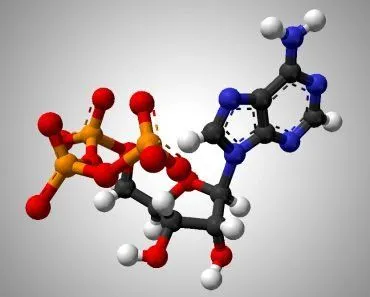
It is important to note that free nucleotides can carry one, two or three phosphate groups on the 5th carbon (you’ll see them as nucleotide monophosphates, diphosphates and triphosphates, like ATP or dATP). The triphosphate form is the “raw material” that cells use to build DNA and RNA: when each new nucleotide is added to a growing strand, two of those three phosphates are released as pyrophosphate, leaving just one phosphate per nucleotide in the finished backbone.
Phosphodiester Bond
A phosphodiester bond literally refers to the time when a phosphoric acid molecule forms two ester bonds. As shown above, a nucleotide molecule already has one ester bond when the nucleoside attaches to the phosphate group. This phosphate group attaches with the sugar molecule of the neighboring nucleotide to link them. This sugar-phosphate-sugar bonding forms the backbone of the DNA or RNA strand.
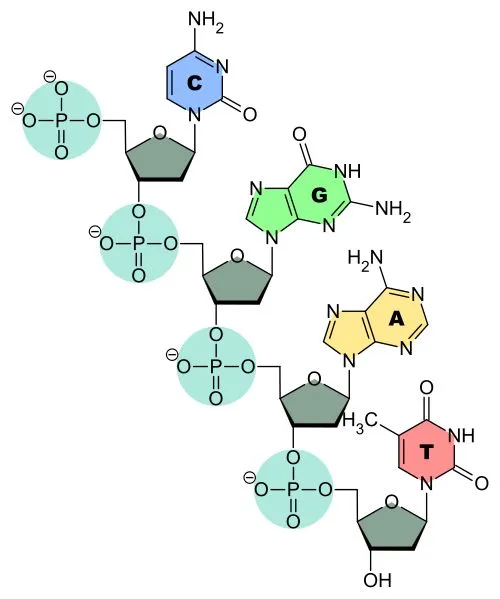
Consider a phosphoric acid molecule. It has already lost one hydrogen atom to a sugar molecule to form a nucleotide. This phosphoric acid now undergoes a similar process to link with another sugar molecule. However, the difference is that when it links to the sugar molecule while forming the nucleotide, it attaches at the 5th carbon of the ribose sugar. During bond formation between 2 different nucleotides, the hydroxyl group (-OH) is lost from the 3rd carbon of the ribose sugar. The same process ensues—a hydrogen is lost from the phosphoric acid and an -OH is lost from the sugar to form a water molecule.
This forms the second ester bond, so it gets the name phosphodiester bond.
As mentioned, free nucleotides can carry a monophosphate, diphosphate or triphosphate. During DNA and RNA synthesis, the cell starts with triphosphate forms (ATP, dATP and so on); two phosphates are cleaved off as pyrophosphate when each nucleotide is added, so each residue in the finished nucleic acid chain ends up holding just one phosphate group, connected on either side by phosphodiester bonds.
Phosphodiester Bonds In DNA: Building The Backbone
Now that we’ve seen how a single phosphodiester bond forms, let’s zoom out and look at what it actually does inside a DNA molecule. If a single nucleotide is a Lego brick, then phosphodiester bonds are the studs that lock the bricks into the long, twisted ladder that we recognize as the famous DNA double helix.
The Sugar-Phosphate Backbone
Inside the double helix, the nitrogenous bases (adenine, thymine, guanine, cytosine) point inward and pair up with bases on the opposite strand. The two outer rails of the ladder — what biologists call the sugar-phosphate backbone — are made up entirely of alternating deoxyribose sugars and phosphate groups, stitched together by phosphodiester bonds. Each phosphodiester bond connects the 3' (three-prime) carbon of one sugar to the 5' (five-prime) carbon of the next sugar through a shared phosphate group. The strand therefore has direction: one end terminates with a free 5' phosphate, the other end with a free 3' hydroxyl group.
Antiparallel Strands
Here is where DNA gets clever. The two strands of the double helix run in opposite directions — one runs 5' → 3' from top to bottom, the other runs 3' → 5'. They are described as antiparallel. This isn’t a quirk; it’s structurally necessary. The base-pairing geometry only works when the two strands run in opposite directions, because adenine and thymine (or guanine and cytosine) only line up correctly with their complementary partners under this orientation.
Antiparallelism also matters for biology. When DNA is copied during cell division, DNA polymerase — the enzyme that builds new DNA strands — can only add nucleotides in the 5' → 3' direction. This is why one of the two daughter strands (the “leading strand”) is built smoothly in one go, while the other (the “lagging strand”) has to be assembled in short, backwards-stitched pieces called Okazaki fragments.
Why The Backbone Matters
The phosphodiester bond is also what makes DNA chemically tough. Each phosphate group carries a negative charge, which makes the entire backbone hydrophilic — happy to sit in the watery environment of the cell — while shielding the more fragile bases on the inside. It is precisely this negative charge that allows scientists to pull DNA out of a cell using positively charged ions, and that lets gel electrophoresis push DNA fragments through a gel under an electric field.
RNA shares the same phosphodiester backbone, with one small but important difference: it uses ribose instead of deoxyribose, meaning RNA has an extra hydroxyl group on the 2' carbon of each sugar. That single extra –OH makes RNA far more chemically reactive — and far less stable — than DNA, which is one reason why life chose DNA as its long-term archive and RNA as a short-term messenger.
Finally, phosphodiester bonds are not unbreakable. Enzymes called nucleases (and a related family called phosphodiesterases) cleave these bonds precisely. Restriction enzymes, used in genetic engineering, are nucleases that cut at very specific sequences — they are essentially molecular scissors snipping phosphodiester bonds in exactly the right place.
Phosphoester Vs. Phosphodiester Bond: What Is The Difference?
A common point of confusion is the difference between a phosphoester bond and a phosphodiester bond. The distinction comes down to simple counting. A single phosphate group (from phosphoric acid) has several hydroxyl groups it can offer up, so it can form one, two, or even three ester bonds with the carbons of neighboring sugars.

When phosphoric acid forms just one ester bond, linking to a single sugar carbon, the result is a phosphoester bond (more precisely, a phosphomonoester). This is exactly what you get on a free nucleotide: the lone phosphate sitting on the 5' carbon of a nucleoside monophosphate is held by a single phosphoester linkage. A phosphodiester bond is what forms when that same phosphate goes on to make a second ester bond, bridging two different sugars (the 3' carbon of one nucleotide and the 5' carbon of the next). In other words, a phosphodiester bond is essentially two phosphoester bonds sharing one central phosphate. That is why each internal phosphate in the DNA backbone is a phosphodiester, while the phosphate hanging off the very end of a strand (the free 5' end) remains a phosphomonoester.
It is worth separating both of these from a third type you will meet in molecules like ATP: the phosphoanhydride bond. Phosphoanhydride bonds join one phosphate directly to another phosphate (not to a sugar carbon), so they are not ester bonds at all. They also store considerably more chemical energy than ester bonds, which is precisely why the cell taps them to power reactions.
Which Enzyme Forms Phosphodiester Bonds?
Phosphodiester bonds do not assemble themselves inside a cell. During DNA replication, the enzyme DNA polymerase is the one that stitches each new nucleotide into place. It does this by forming a phosphodiester bond between the free 3' hydroxyl group at the end of the growing strand and the innermost (alpha) phosphate of the incoming nucleotide. So the short answer to the common question "does DNA polymerase form phosphodiester bonds?" is yes, that is its central chemical job. RNA polymerase does the same work when building RNA.
There is a neat energy story here. The incoming nucleotide does not arrive as a plain monophosphate; it comes as a nucleoside triphosphate (such as dATP or ATP), carrying two extra phosphates joined by high-energy phosphoanhydride bonds. As the phosphodiester bond forms, those two extra phosphates are cleaved off together as a molecule called pyrophosphate. Forming the phosphodiester bond by itself is barely favorable, so the reaction is pulled forward by the subsequent breakdown (hydrolysis) of that pyrophosphate, which releases a large amount of energy. In effect, the phosphoanhydride bonds of the triphosphate pay for building the backbone.
DNA polymerase is not the only phosphodiester-building enzyme. DNA ligase makes the same kind of bond, but its job is to seal "nicks", the small gaps left in a sugar-phosphate backbone, by joining a 3' hydroxyl to an adjacent 5' phosphate. This is how the short backwards-built pieces of the lagging strand (the Okazaki fragments) are finally joined into one continuous strand. DNA ligase draws its energy from ATP in animal cells and from a related molecule, NAD+, in most bacteria.
Phosphodiester, Hydrogen And Glycosidic Bonds: Which Bond Does What In DNA?
DNA is held together by three different kinds of bond, and it is easy to mix them up. The trick is to remember what each one connects.

Phosphodiester bonds are strong covalent bonds that run along each strand, connecting one nucleotide to the next through the sugar-phosphate backbone. If your question is "what kind of bond connects one nucleotide to the next in the same strand?", the answer is the phosphodiester bond.
Hydrogen bonds do something quite different: they hold the two strands together. Each nitrogenous base reaches across to its partner on the opposite strand and forms hydrogen bonds with it. Adenine and thymine share two hydrogen bonds, while guanine and cytosine share three. Individually these bonds are weak, which is exactly what allows the double helix to be "unzipped" during replication and transcription, but collectively (over millions of base pairs) they hold the helix firmly shut.
Glycosidic bonds are the third type. An N-glycosidic bond attaches each nitrogenous base to the 1' carbon of its own sugar, locking the base onto the backbone within a single nucleotide. So the answer to "what attaches the base to the sugar?" is the glycosidic bond. Put simply: phosphodiester bonds build each strand, glycosidic bonds fasten the bases onto that strand, and hydrogen bonds clasp the two finished strands into a double helix.
References (click to expand)
- phosphodiester bond definition.
- Phosphate Backbone (sugar-phosphate-sugar via phosphodiester bonds). NHGRI Talking Glossary of Genetics.
- Polymerization of Nucleotides (Phosphodiester Bonds).
- Kokubo, T. (2013). Phosphodiester Bond Formation. Encyclopedia of Systems Biology. Springer New York.
- Alberts B, Johnson A, Lewis J, et al. Molecular Biology of the Cell. 4th edition. NCBI Bookshelf.
- DNA Replication Mechanisms - Molecular Biology of the Cell - NCBI Bookshelf.
- A personal recollection of the discovery of Okazaki fragments. PMC.
- Phosphodiester bond (a phosphate forming two ester bonds). Wikipedia.
- Phosphoester Formation (phosphoester, phosphodiester and phosphoanhydride bonds). Chemistry LibreTexts.
- Pyrophosphate hydrolysis is an intrinsic and critical step of the DNA synthesis reaction. Nucleic Acids Research (2018).
- DNA ligase (forming phosphodiester bonds to seal nicks; ATP vs NAD+). Wikipedia.
- Interactions That Hold DNA Together (phosphodiester vs hydrogen bonds). News-Medical.
- Nucleoside (N-glycosidic bond between base and 1' carbon of the sugar). Wikipedia.