Table of Contents (click to expand)
The secret to smooth, creamy mac ‘n’ cheese is keeping the cheese from breaking. A flour-and-butter roux thickens the sauce, while an emulsifying salt (like the sodium citrate in American cheese) chelates calcium from the casein proteins so they melt evenly instead of clumping into grainy curds. Use younger cheeses and gentle heat for the best result.
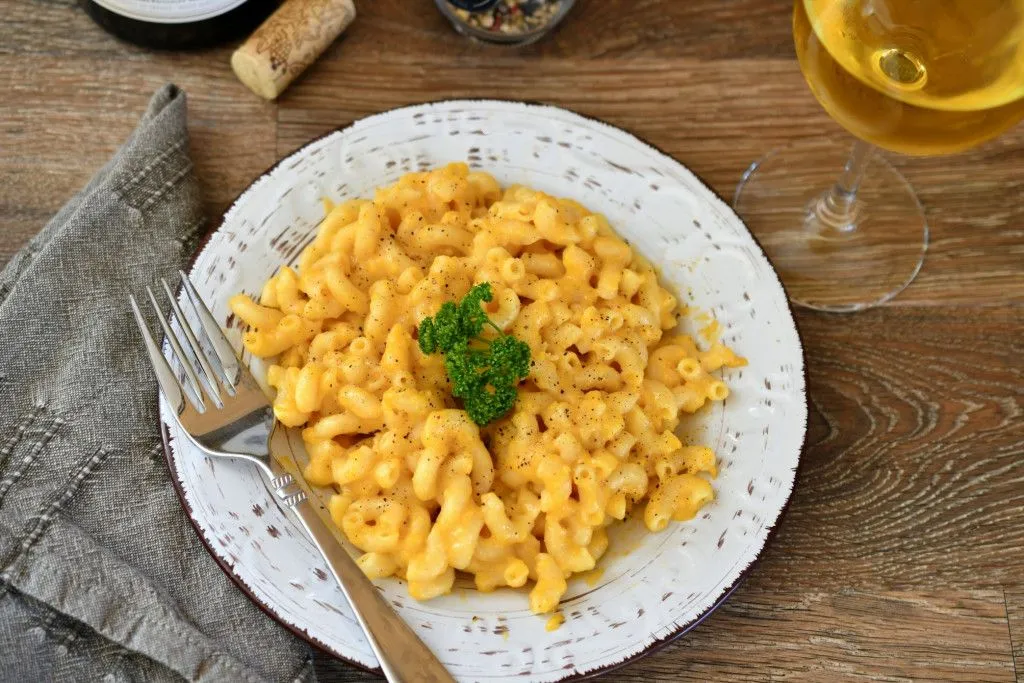
I know what you’re thinking… why not just get one delivered to your doorstep? Well, if soggy pasta and curdled sauce are your idea of a good meal, then pick up the phone! Personally, I would rather make it at home and use a little bit of help from some science nerds to create mac ‘n’ cheese magic.
Here’s how you can make the perfect bowl…
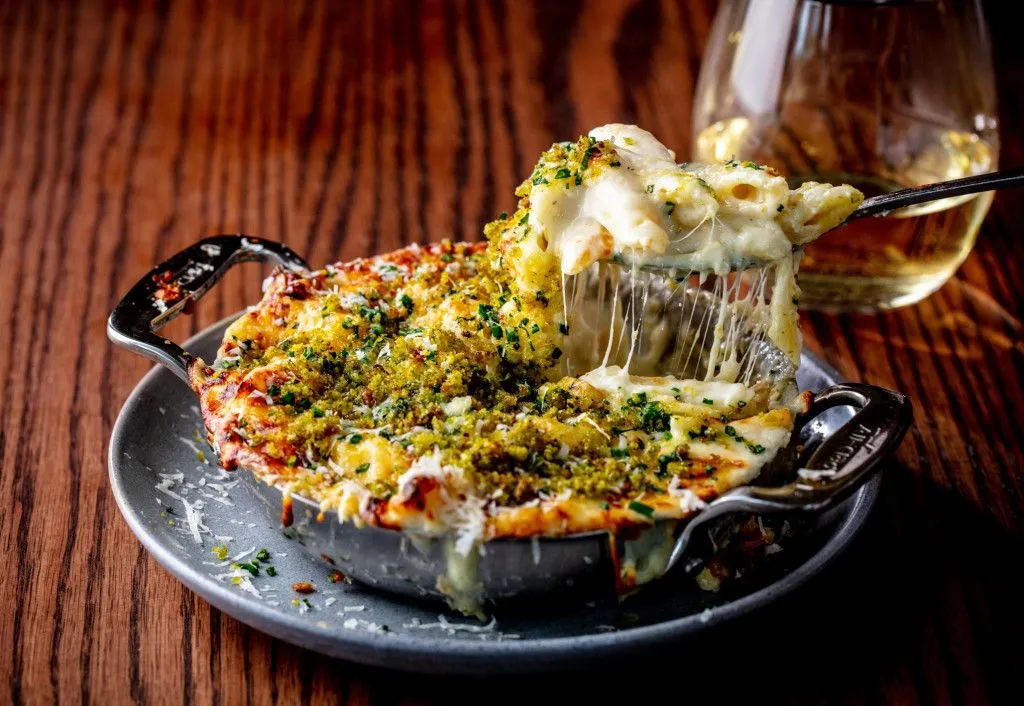
What Goes In
We don’t need truffle oil or Himalayan pink salt to make this dish one that will leave you wanting more. All you need is pasta, pasta water, flour, cheese, milk/cream, and the seasoning of your choice.
Sauce It Up
Let’s assume that you have ventured into a kitchen before and are vaguely aware of how to make macaroni and cheese (or perhaps you’ve seen it made on a cooking show). The first step begins with simultaneously boiling the pasta in water and preparing the sauce. It is the sauce that has the power to make or break this dish.
Thick Tricks – Viscosity And The Sauce
You want to make a sauce that is thick, not runny, smooth, not clumpy, and most importantly, able to coat your pasta and not slip off. Imagine putting in all this effort, only to end up eating a bowl of cheesy milk with macaroni floating in it. To avoid such a dilemma, it’s best to add a thickener. In this case, the choice is usually flour.
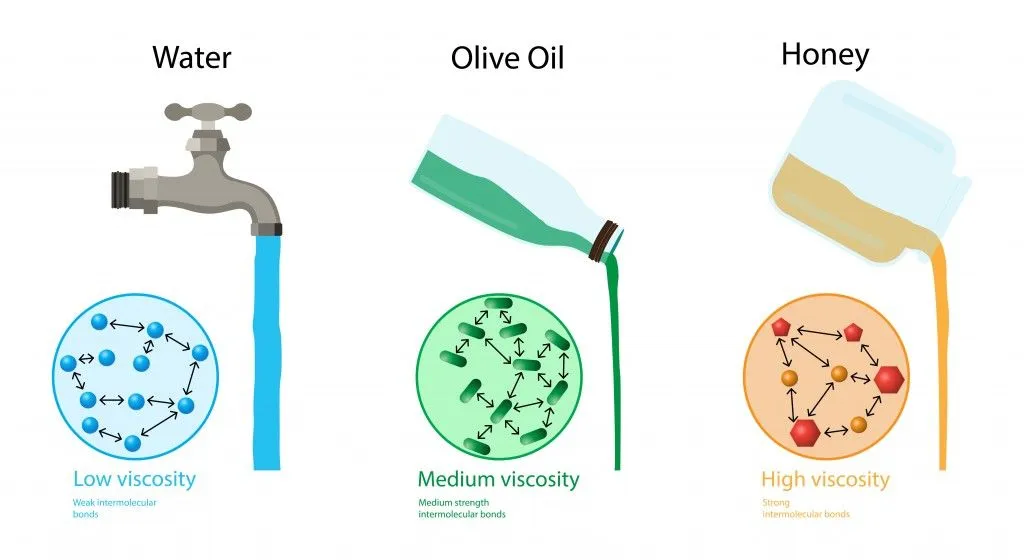
Thickening works on the principle of viscosity. All liquids have the property of viscosity, which means there is resistance to flow freely. Water, for example, has low viscosity, as it flows freely and is therefore considered ‘thin’. Glue, on the other hand, has high viscosity and flows with a lot of resistance, and is therefore considered ‘thick’.
So what makes a liquid viscous? Well, the stronger the bonds between molecules within the liquid, the more viscous it is, and vice versa. These strong bonds obstruct the flow of the liquid. In fact, the larger the molecules, the more they will aid in viscosity. Chefs often use starches like flour as thickeners, as they absorb the surrounding water present in the milk and swell up, forming bigger particles. Due to this, even the addition of a small amount of starch can increase the viscosity of a sauce, thereby thickening it.
Smooth As Butter
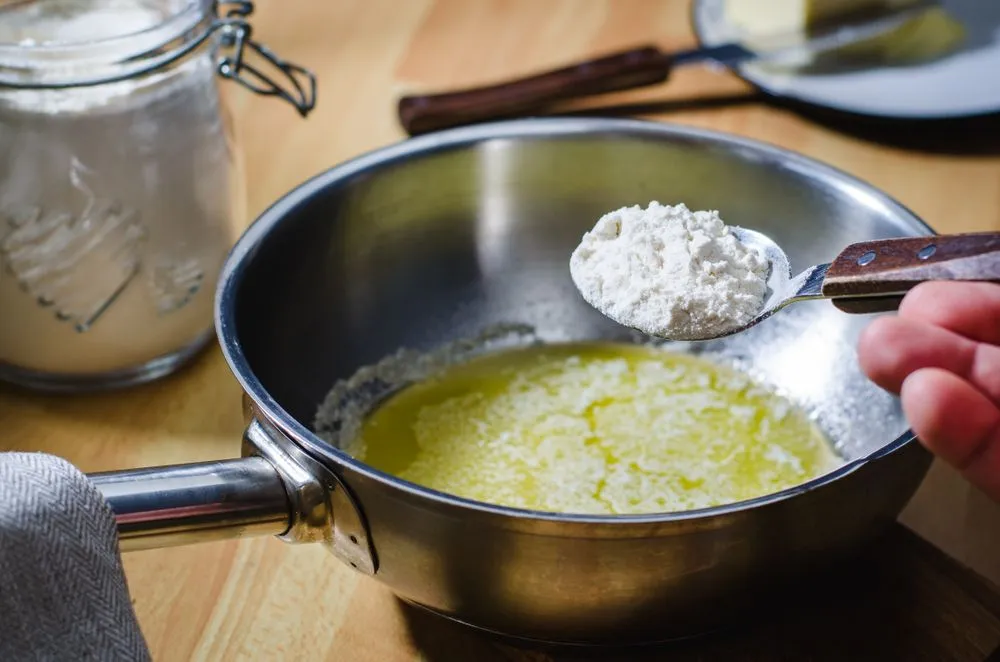
Traditionally, the preparation of mac ‘n’ cheese sauce begins with a roux. The word is French for ‘reddish-brown’ (short for beurre roux, or browned butter), describing the color the mixture takes on as it cooks. It is prepared by sautéing flour in butter (or any other fat) until it forms a smooth paste. Milk is then whisked in and made homogeneous with constant stirring, turning the roux into a béchamel. Stir cheese into that béchamel and you have a Mornay sauce, the classic base for mac ‘n’ cheese.
The reason one prepares a roux and does not directly mix the flour into milk is that the starch molecules swell up in the presence of water within the milk. At that point, they tend to attract each other, forming clumps of dough.
When the flour is coated with a layer of butter, a.k.a fat, the particles swell up but remain separate. This is how a smooth sauce is achieved!
The Cheese
Temperature Check
One of the most common issues faced by people making mac ‘n’ cheese from scratch is the curdling of the sauce upon adding the cheese.
Cheese is an emulsion of protein, fat, and water held together by a network of casein proteins. When the cheese melts, that protein should stay evenly dispersed through the fat and water. If you push the heat too high, the casein proteins tighten and bond too strongly with each other, squeezing out the fat and water and leaving clumps of protein floating in a greasy, watery pool. Applying low to medium heat helps prevent this.
Grate Or Be Late
It’s much easier to melt cheese when it is grated. Grating results in cheese particles that are smaller in size and surface area. This allows an even distribution of heat, thereby preventing the overexposure of one section of cheese to heat. It also melts the cheese at a much quicker rate.
The Real Secret: Emulsifying Salts
Heat control and grating help, but the single biggest reason restaurant and boxed mac ‘n’ cheese stays so reliably silky comes down to chemistry: emulsifying salts. In the cheese, calcium ions act like glue, cross-linking the casein proteins into a tight network. Heat that network and the calcium makes the proteins clench, expelling fat and water (the grainy, oily split you may have battled at home).
Emulsifying salts, most commonly sodium citrate (the sodium salt of citric acid) or a sodium phosphate, fix this by chelating, or sequestering, those calcium ions. With the calcium tied up, the casein proteins loosen, hydrate, and spread out, so they can wrap around the fat droplets and hold a stable, creamy emulsion instead of breaking. This is exactly why a slice or two of American cheese (which already contains sodium citrate or sodium phosphate) blended into the sauce makes it melt so smoothly, and why a pinch of food-grade sodium citrate can turn even sharp cheddar into a glossy, fondue-like sauce.
It also explains a question many home cooks ask: why does mac ‘n’ cheese sometimes come out grainy instead of creamy? Aged cheeses such as sharp cheddar or Parmesan have had their casein proteins broken down and their moisture reduced over months of aging, so their protein network is more fragile and far more likely to break when heated. Younger, moister, less acidic cheeses melt more smoothly. Blending a good melter (mild cheddar, Gruyère, or Monterey Jack) with a sharper cheese for flavor, and adding an emulsifying salt, gives you both taste and texture.
The Pasta
Keep It Rolling
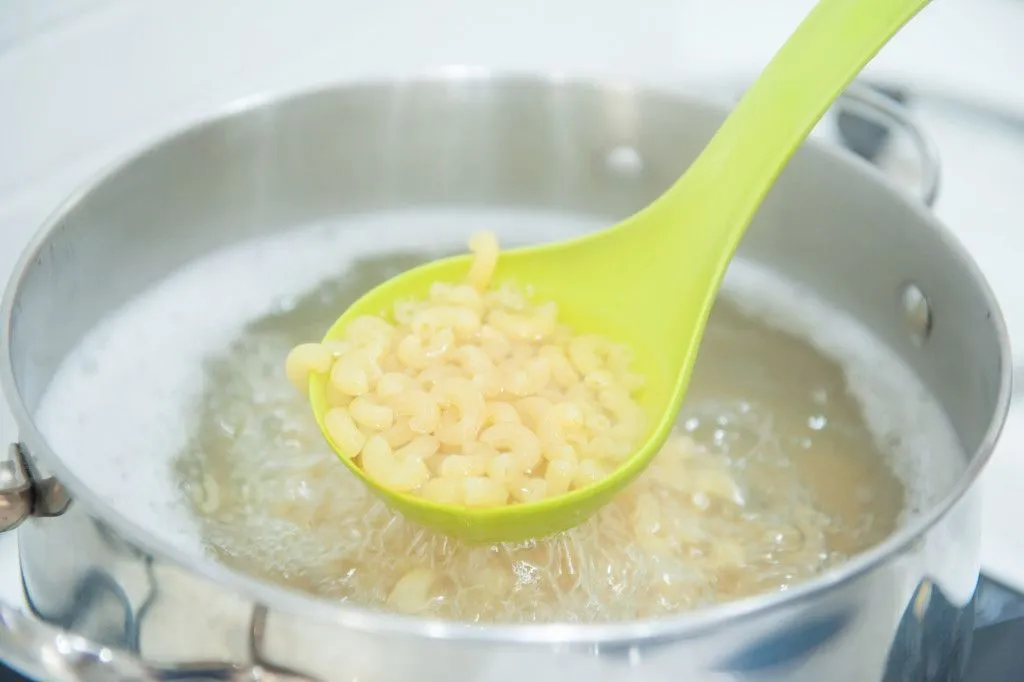
It is advised to add macaroni to boiling water, but not at any lower temperature. The water should continue to boil, forming bubbles in the water. This is because, as the starches in the pasta begin to cook, they swell to form a gel-like layer. This layer is sticky and causes the pieces of pasta to stick together. Rolling bubbles prevents this sticky situation.
Conclusion
You can season this delectable dish as per your choice, bake it, or serve it with your favorite condiments. Just keep the basic principles shared above in mind and rest assured that you will create a restaurant-level dish from your own kitchen. If anything, this should show you that making Mac ‘n’ cheese isn’t rocket science, but it is definitely scientific!
References (click to expand)
- Mac and Cheese Science: What Makes a Thick Sauce?. Scientific American
- Tharanathan, R. N. (2005, July). Starch — Value Addition by Modification. Critical Reviews in Food Science and Nutrition. Informa UK Limited.
- Guinee, T. P. (2003). Role of Protein in Cheese and Cheese Products. Advanced Dairy Chemistry—1 Proteins. Springer US.
- . (1984). Starch: Chemistry and Technology. []. Elsevier.
- A Review on the Effect of Calcium Sequestering Salts on Casein Micelles: From Model Milk Protein Systems to Processed Cheese. Molecules (MDPI), NCBI PMC.