Table of Contents (click to expand)
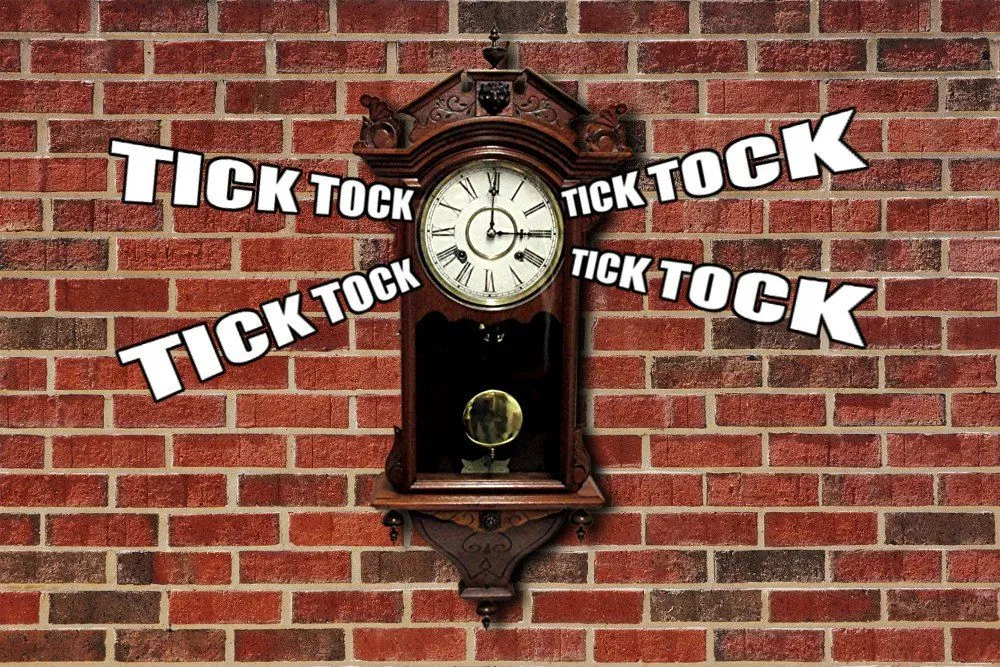
Ablaut reduplication is an unwritten English rule that governs the order of vowels in repeated word pairs and triplets. In a two-word pair the first word has an “I” vowel and the second has an “A” or “O” (think “tick tock,” “flip flop,” “hip hop”). With three words it’s always I-A-O, as in “bish bash bosh.” Linguists explain it by the fact that the tongue naturally moves from the front of the mouth (I) to the back (A, O).
There are many words that we use in our daily language that seem alright when spoken in a particular way, but somewhat weird when said in the ‘wrong’ order. There are many examples of this, such as when we say that a watch “tick tocks” instead of “tock ticks”. Similarly, “flip flop” sounds right, but “flop flip” sounds wrong for some inexplicable reason. “Ping pong”, “dilly dally” and “hip hop” are a few other common examples. Even the name of the popular fictional beast is “King Kong”, rather than “Kong King”.

Why is that? There is obviously no rule that says it must be “tick tock” instead of “tock tick”, right? Still, you’d observe this idiosyncrasy in every English-speaking country across the world. What’s the deal with this strange, unwritten rule?
Quite amazingly, there is actually a name for this uncanny phenomenon….
Ablaut Reduplication
Most people do not realize this, but when they say ‘tick tock’, they do so because they unwittingly follow an old grammar rule without actually realizing it – the rule of ablaut reduplication. This is one rule of grammar that you’ve been using your entire life without realizing that you are doing so.
Ask yourself: wouldn’t you feel a little weird if someone said lightning followed a ‘zag zig’ path? Or that ants ‘cross criss’ each others’ paths all the time? You surely would, because all this time, you’ve been unknowingly following the rule of ablaut reduplication.
A Subtle Rule Of Linguistics
As the word signifies, ‘reduplication’ in linguistics is when you repeat a word, sometimes with a modified vowel (e.g., ding dang dong) or sometimes with an altered consonant (e.g., nitty-gritty). As such, if there are two words, then the first word contains I, and the next word contains either A or O (e.g., ‘mish mash’, ‘hip hop’, ‘chit chat’ etc.).
However, if there are three words in question, then the first word contains I, the next contains A and the last word contains O (e.g., bish bash bosh). It doesn’t have anything definite about it, but it somehow just sounds right.
It’s one of those unconscious rules of English pronunciation that we all have. Without anyone telling us, we have somehow learned on our own that this is the correct order, and putting vowels and consonants in any order just sounds strange (if not outright wrong).
The term ablaut itself was coined by the German linguist Jacob Grimm in the 19th century to describe vowel alternation in Indo-European languages. The mainstream linguistic explanation for the I-A-O rule is articulatory: when you say bit bet bat bought but aloud, the vowels move steadily from the front of the mouth to the back, and ablaut reduplication seems to follow that same front-to-back path. Some linguists also point to a sonority hierarchy, in which more “closed” high front vowels naturally precede more “open” low back ones.
Consider the example of ‘hip hop’. We usually pronounce the word ‘hip’ with a higher tone than the word ‘hop’; therefore, an elevated ‘hip’ is followed by a lower-toned ‘hop’. While pronouncing the O in ‘hop’, the tone of the word is dropped a little, which is, in turn, associated with opening your mouth more than when you pronounce ‘hip’, which is of a higher tone, and is a bit tighter than ‘hop’.
In simple words, the quickness and tightness of the ‘I’ sound in ‘hip’ make it seem like something is going to follow it, while the ‘O’ (or ‘A’) sound in ‘hop’ is more drawn, and might give the idea of a conclusion, as if the word has come to an end. That’s why when you say ‘Kong King’ (instead of ‘King Kong’), it gives you the eerie feeling that something just isn’t quite right.
What Does ‘Tock’ Actually Mean?
Here’s a question that trips up almost everyone who stops to think about it: we all know what a ‘tick’ is, but what exactly is a ‘tock’? Reach for a dictionary and you’ll find that ‘tock’ carries no clever meaning of its own. It is simply an onomatopoeia, a word invented to imitate a sound, in this case the slightly lower-pitched click a clock makes on its return swing. The dictionary definition is almost circular: a tock is “a clicking sound similar to one made by the hands of a clock,” used in partnership with ‘tick’.

The word ‘tick’ has the older pedigree, with roots in a 14th-century Middle English word for a “light touch or tap”. ‘Tock’ is the younger sibling: lexicographers date its arrival in English to around 1913, and it seems to have been coined for one job only, to be the back-vowel partner that ‘tick’ needed. The pair ‘tick-tock’ itself is older, recorded by 1845 to describe the slow, recurrent ticking of a tall clock. So ‘tock’ is not a separate word doing separate work; it exists almost entirely so that ablaut reduplication has an ‘O’ to put after the ‘I’. In other words, ‘tock’ owes its existence to the very rule this article is about.
Does A Clock Really Go ‘Tick Tock’?
Now for the part that genuinely surprises people. Listen very carefully to a steady mechanical clock and try to separate the ‘tick’ from the ‘tock’. You may struggle, and for a good reason: a clock’s escapement, the toothed wheel that releases the gears one notch at a time, makes essentially the same sound on every beat. The clock does not actually alternate between a high ‘tick’ and a low ‘tock’. Your brain does that for you.
This is a well-documented perceptual effect called subjective rhythmization, first studied by the psychologist T. L. Bolton in 1894. When we hear a string of identical, evenly spaced sounds, the mind refuses to leave them as a flat, monotonous row. Instead it spontaneously bundles them into groups, most often pairs, and lends the first beat of each pair a stronger, slightly different quality. Researchers even refer to one version of this directly as the “clock illusion”, in which a regular tick-tick-tick-tick spontaneously turns into tick-tock-tick-tock, with events chunked into twos.
It is the same instinct that lets us hear a beat in music or a rhythm in a train rolling over the rails. Try the experiment in reverse: deliberately say tock-tick-tock-tick to yourself while a clock ticks, and after a moment the clock will seem to obey you, its ‘ticks’ becoming ‘tocks’. The takeaway is that ‘tick tock’ lives partly in the clock and partly in your head, which is exactly why the order feels so unshakeably correct once ablaut reduplication has assigned the ‘I’ to come first.
References (click to expand)
- Minkova, D. (2002, May). Ablaut reduplication in English: the criss-crossing of prosody and verbal art. English Language and Linguistics. Cambridge University Press (CUP).
- R - web.mit.edu
- Extra-grammatical morphology: English reduplicatives. Academia.edu
- Indo-European ablaut. Wikipedia.
- All about ablaut: a typology of ablaut reduplicative structures. Linguistic Typology, De Gruyter (2023).
- Tick-tock. Online Etymology Dictionary (Etymonline).
- tock. Wiktionary.
- Decomposing rhythm processing: electroencephalography of perceived and self-imposed rhythmic patterns. Psychological Research (2011). NCBI PMC.