Point blank range is any distance close enough that a shooter can aim directly at a target and hit it without compensating for gravity-induced bullet drop, typically a few inches to several meters, depending on the weapon. The phrase, first documented in the 1570s, most likely comes from the French pointé à blanc, meaning ‘aimed at the white’ centre of an archery target.
“After his cover was blown, the army sniper had to fire at the enemy at point blank range.”
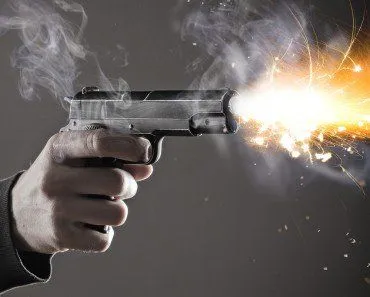
“The injuries caused by getting shot at point blank range are often quite grievous.”
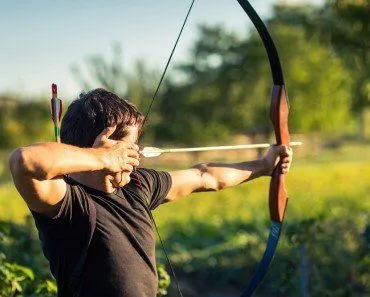
“Dave was so bad at archery that he hardly managed to hit the target, even at point blank range!”
Just like the examples above, you may have heard the phrase ‘point blank’ used in many conversations pertaining to firefights/gun battles and archery. Most action movies (like the James Bond, Jason Bourne, Mission Impossible series… just to name a few) involve gun fights where a lot of shooting occurs at point blank range.
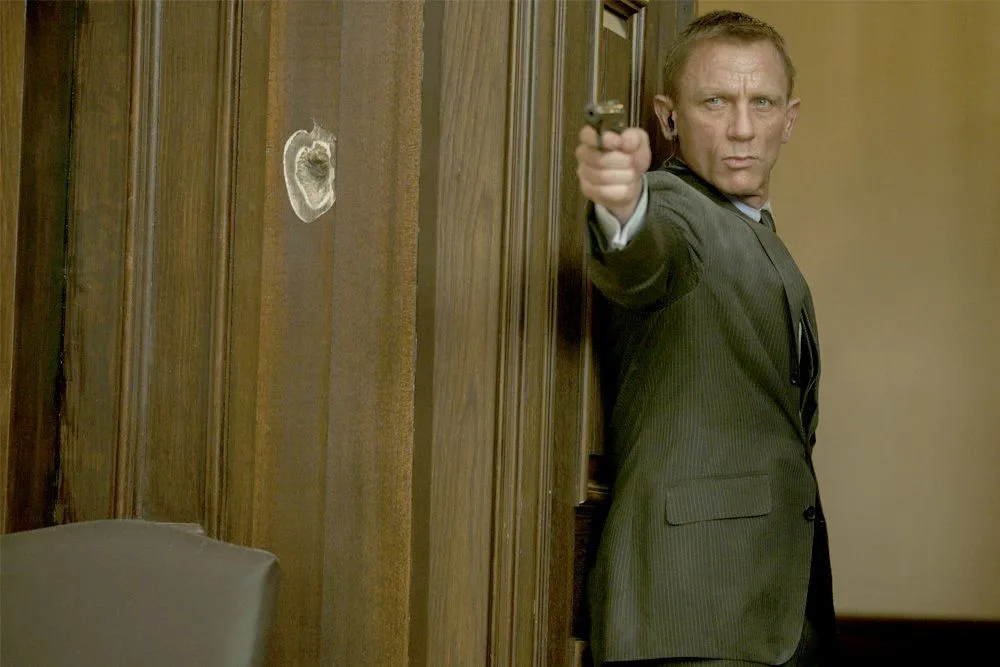
Do you know what ‘point blank’ actually means? More importantly, why does it have such an odd name? What’s the story there?
Point Blank Range
When the distance between the shooter and the target is too small, it’s usually called shooting at point blank range. In other words, you could say that point blank range is that distance from which a shooter cannot miss if they have aimed directly at the target. That’s why the phrase ‘point blank’ has come to mean a ‘can’t miss’ range with a firearm in everyday language.
However, if you are to define ‘point blank’ range in more specific terms, you’d say that it’s the distance over which the trajectory of a given projectile fired from a particular weapon remains ‘flat enough’ so that the shooter can hit the target by firing at it directly.
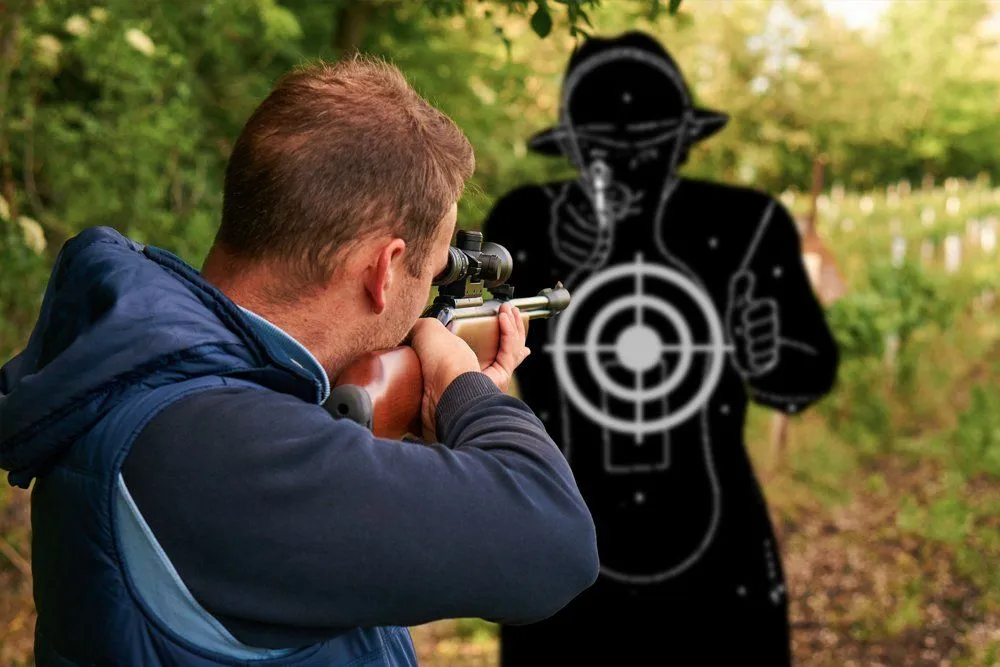
In order to understand where the phrase ‘point blank’ comes from, it helps to know a thing or two about the ballistics of a fired bullet.
A Bullet’s Trajectory
Unless you’re one of the characters from the 2008 movie Wanted, the bullets you fire always go in a straight line. Or do they?
Actually, they don’t, if the target is far enough away.
The moment a bullet leaves the muzzle of the gun, it starts falling towards the ground due to Earth’s gravity (and a few other factors as well as, such as air friction, wind resistance etc.). Since the horizontal velocity of the bullet is very high, it seems to travel in a straight line, but contrary to what it might seem, a bullet actually follows a parabolic path (not a straight one). That is why shooters have to aim slightly above their target to hit it accurately.
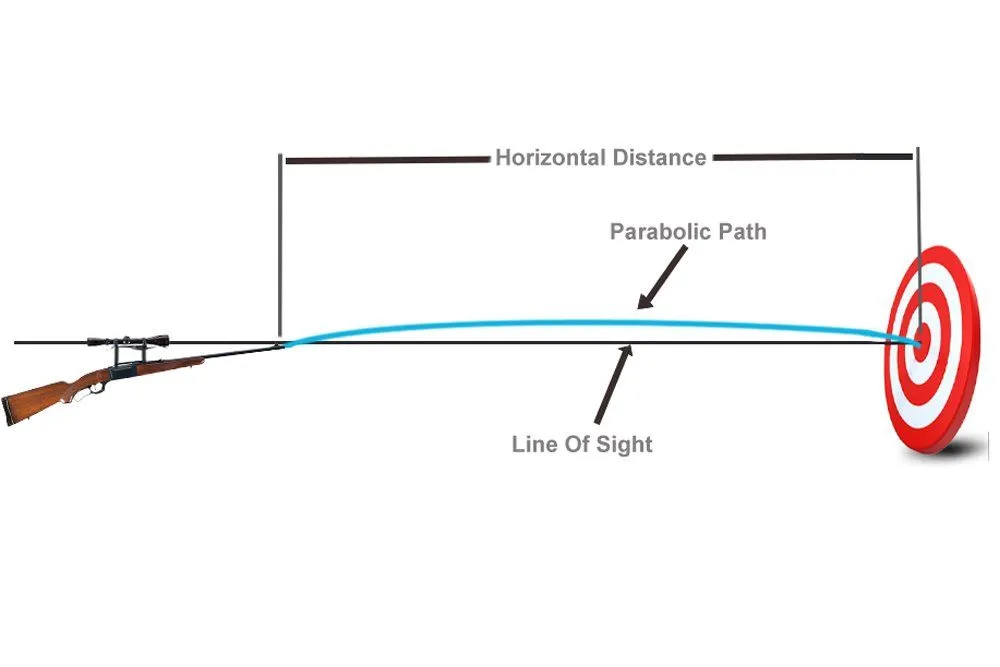
So, technically, point blank range is that distance where you don’t have to adjust your aim to factor in the effect of Earth’s gravity or other factors to hit the target precisely; at point blank range, you can simply aim your firearm at the target and strike it with 100% accuracy.
The point blank range of a firearm can be anywhere from a couple inches to a few meters, depending on the type of weapon and its projectile.
Origin Of The Phrase ‘Point Blank’
It’s not exactly clear how the phrase ‘point blank’ came to mean a very small distance (in the field of shooting and archery), but according to the most widely cited theory, the phrase derives from the French term ‘pointé à blanc’, which literally translates to ‘pointed at white’. ‘Blanc’ is the French word for ‘white’.
The earliest printed example we have appears in Thomas Digges’ 1579 military treatise, where ‘poynt blancke’ is used to describe the level firing range of a cannon. In the 16th century, both archers and gunners practiced against targets whose centres were painted white. Point blank range, then, denoted the distance from which a shooter could easily hit that white central spot by simply ‘pointing’ at it, with no high arc and no adjustment for gravity.
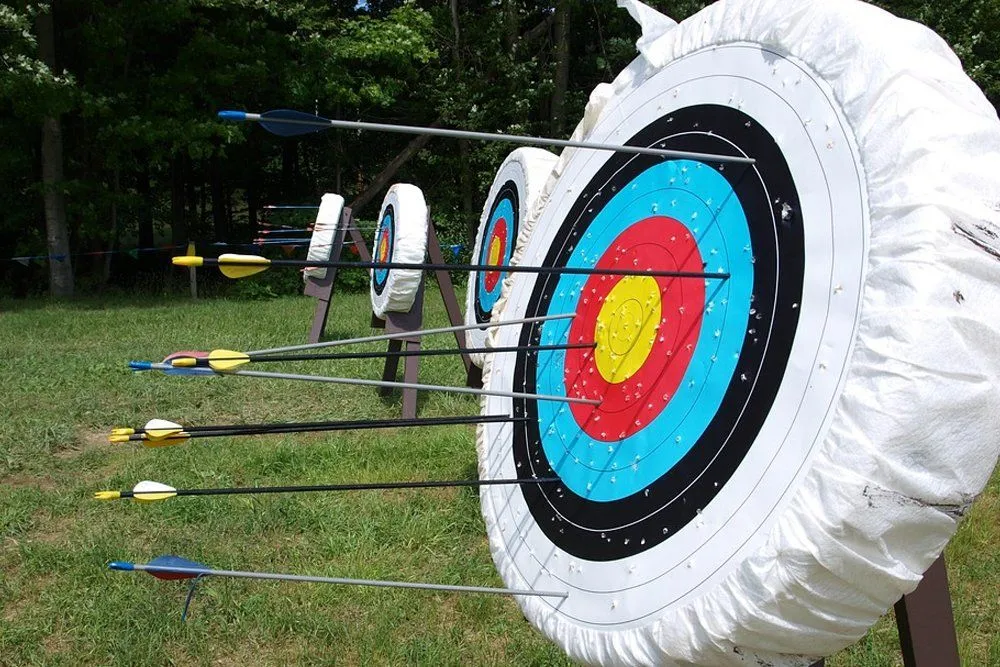
According to another hypothesis, the ‘point’ in the term ‘point blank’ may have referred to the point (i.e., the tip) of the arrow that was about to be fired. If the archer could see the ‘point’ coinciding with the target, he could be sure that the target would be hit, so long as the shot was taken from ‘point blank’ range.
A third possibility, favoured by some etymologists, is that the phrase is a corruption of the French gunnery term ‘de pointe en blanc’, used to describe firing a piece on the level, into open space, to test how far the shot will carry. In this reading, ‘blanc’ doesn’t mean a white target at all; it means the empty space ahead of the muzzle when the barrel is held at zero elevation. Notably, several of the earliest English uses of ‘point blank’ make no mention of a white target, which is why the debate among word historians is still unresolved.
How Far Is Point Blank Range?
Here’s the honest answer: there isn’t a single number. Point blank range isn’t a fixed distance like ‘50 meters’; it’s whatever distance lets you aim dead-on and still hit the target with that particular gun and that particular target. Change the weapon or the size of what you’re shooting at, and the figure changes with it.
For a handgun, ‘point blank’ in everyday speech usually means just a few meters or less, close enough that bullet drop simply doesn’t enter into it. With a rifle, the useful distance stretches a long way. Shooters even have a precise term for it: maximum point blank range (MPBR), the farthest distance at which a bullet never strays more than a set amount above or below your line of sight. Picture an imaginary horizontal pipe the width of your target’s vital area; MPBR is the range over which the bullet stays inside that pipe without you touching the sights.

How big is that pipe? For deer-sized game, hunters typically allow a vital zone roughly 15-23 cm (6-9 inches) across, letting the bullet wander about 7.5 cm (3 inches) above or below the aim point. With that allowance and a common big-game cartridge such as the .270 Winchester, .30-06, 7mm Remington Magnum, or .300 Winchester Magnum, the maximum point blank range lands somewhere close to 270 meters (around 300 yards). Sight the rifle in so the bullet peaks at the top of that imaginary pipe, and you can hold dead-on from the muzzle all the way out to that range without thinking about gravity at all. Shrink the target, and the point blank range shrinks too, which is exactly why a pistol’s ‘point blank’ is measured in meters while a rifle’s can be measured in hundreds of them.
What Does It Mean To Say Something ‘Point Blank’?
You’ve almost certainly heard ‘point blank’ used where no gun is anywhere in sight. “She refused point blank.” “He asked me point blank if I’d taken the money.” People even end a sentence with a flat “…period. Point blank.” to signal there’s nothing more to discuss. So what does the phrase mean once it leaves the firing range?
Used this way, ‘point blank’ means directly and bluntly, with no softening, no excuses, and no explanation. If you refuse something point blank, you turn it down flat, without offering a reason. If someone asks you a question point blank, they put it to you straight, no hedging or polite build-up. The Longman Dictionary sums it up neatly: to say or refuse something point blank is to do it “directly and without trying to explain your reasons.”
The link back to the gunnery sense is easy to see. A point blank shot is the most direct shot there is, fired straight at the target with no arc and no adjustment, so it was a small leap for English speakers to start using ‘point blank’ for words delivered just as directly. Etymologists trace this figurative ‘blunt and straight to the point’ meaning to around the middle of the 17th century, roughly eighty years after the phrase first appeared as a shooting term. So the next time a friend tells you something point blank, you can appreciate that they’re borrowing the language of a marksman who couldn’t miss.
References (click to expand)
- (2000) "At Point Blank Range: The Genesis And Implementation Of .... The University of Maine School of Law
- The meaning and origin of the expression: Point-blank. phrases.org.uk
- point-blank. Longman Dictionary of Contemporary English
- point-blank (etymology). Online Etymology Dictionary
- Point-blank range. Wikipedia
- Making the Case for Maximum Point Blank Range. MeatEater