Table of Contents (click to expand)
Political leaders are captivating communicators because they pair learnable rhetorical tactics (vivid stories, three-part lists, repetition, and rhetorical questions) with emotional control, non-verbal cues, and an air of credibility. Aristotle named these appeals ethos, pathos, and logos. Research suggests charisma is largely a trained skill, not just an inborn gift.
The most difficult job for a politician is to keep people interested and hooked on a speech they are delivering. Politicians want to make sure they make a good impression, so that when you go out to vote, you have been influenced by them in some way.
We’ve all heard that a good leader is also a good speaker, but is this a universal phenomenon? Are all politicians good speakers? And if they are, why is that the case?
Why Is Communication Important In Leadership?
Good communication is an aspect that has long been intertwined with good leadership, so much so that it has now become a key characteristic of assessing someone’s leadership quality.
Communication is important because we see it as a leader’s responsibility to inspire others. It is crucial for them to be able to think clearly, express ideas with clarity and precision, and share valuable information with a large audience. It is required for politicians to be able to understand where people are coming from and help them solve their grievances or complaints. Good communication will help political leaders increase their popularity.
It is not surprising that politicians who aim to be leaders for their respective cities or countries work on their communication skills throughout their careers.
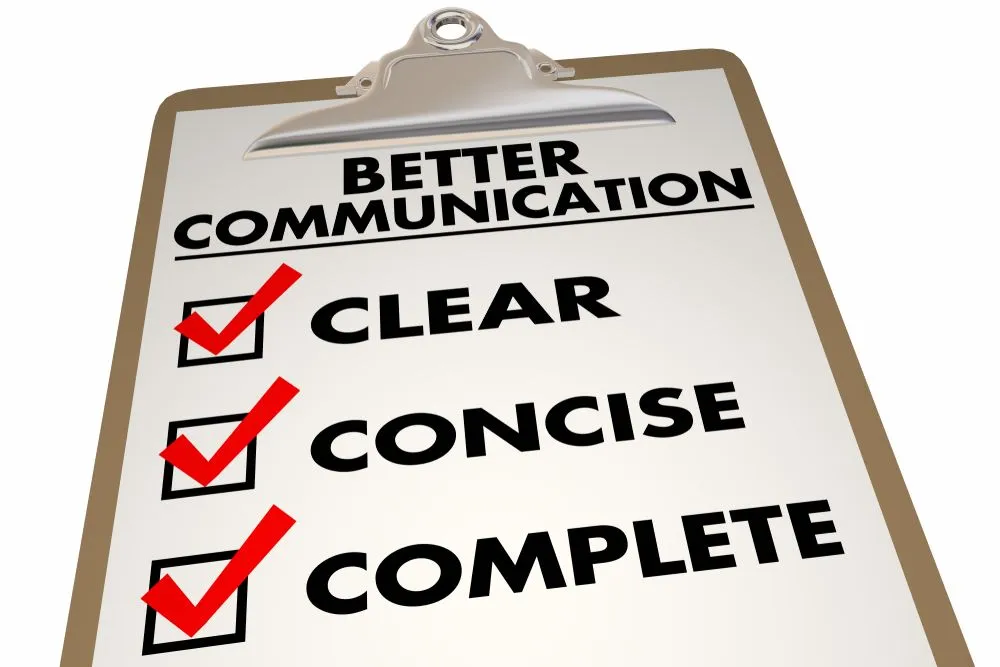
What Makes A Political Leader A Better Communicator?
In the political world, there are leaders who may not have the best vision or policies, but can still emerge as powerful rulers. This is largely due to effective communication.
There are three reasons why political leaders may tend to be better communicators than others. These include their display of emotional maturity, sensitivity, and continuous observation.
Emotional maturity is a soft skill that helps people stay calm and composed, especially in the face of crisis, losses, and even scandals, or when the camera lights are on. They display emotional maturity and put on a mask so that even in situations that make them angry or sad, those feelings do not reflect on their faces.
Sensitivity is an aspect of emotional intelligence. People from all walks of life will depend on their leadership, so in such situations, politicians aim to portray a sense of recognizing the community’s culture and their concerns, while also showing gratitude for the community’s support. This indicates a level of transparency they share with people. This sensitivity while communicating with people makes people feel that they are sincere.
The third skill that political leaders show is their observation skill. Political leaders are constantly evaluating their relationship with the public through polls, social media, and how well their speeches are received. They watch what people want from them in any given moment, and then (ideally) raise those same issues during elections or other crucial times. This way, they maintain their image as a “good” and “connected” leader among their voters.
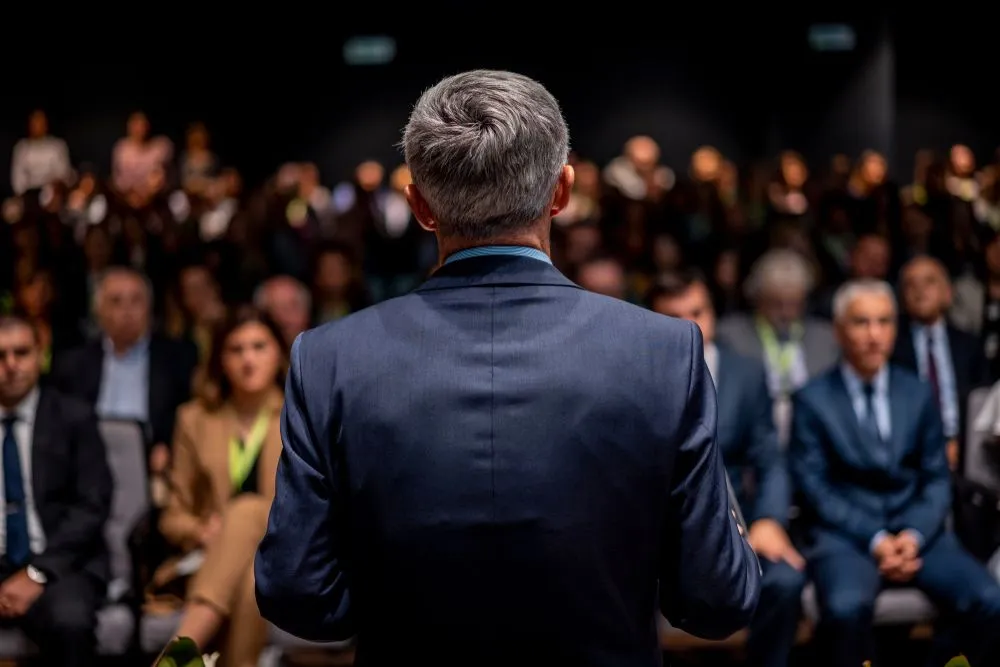
Importance Of Non-verbal Cues In Communication
Words aren’t the only communication tools we have. We say a lot through ‘non-verbal cues’.
Dr. Valerie Manusov, a professor and researcher in the Department of Communication at the University of Washington, Seattle, has studied the non-verbal aspect of communication in great depth. According to her, facial expressions, body movements, paralinguistic (vocal changes) cues, and other aspects, such as their environmental space, the objects near them, and even their scent, all influence our opinion of a person.
Effective non-verbal communication can place emphasis on a leader being caring, reassuring, and supportive, whereas ineffective communication can lead to disinterest and disbelief. A person can communicate their voice, feelings, and attitude without saying a single word. This is why paralanguage is an important aspect of communication, especially for public speakers.
Paralanguage is a type of non-verbal communication that involves vocal effects that are independent of the content of a speech. These include your tone (the attitude or feeling being conveyed through the sound of your speech) and pitch (high or low).
While interacting with other people, we often perceive their verbally unexpressed emotions through specific sounds in their voices. For instance, someone who does not overtly say that they are angry with you may sometimes make it evident in the way they speak. You can “hear it” in their voice, the irritation or annoyance that the tone and volume of their speech indicates.
Political leaders understand this extremely well. This is why they always speak with a smile, they maintain a confident and straight body posture, and their tone and pitch will match what they are speaking about. They make it a point to maintain eye contact with their audience or interviewers when speaking to them.
For instance, when a political leader is on the campaign trail, they make sure to get out of their car, walk with the people around them, and continually smile and wave. They greet people with a firm handshake, wear colors that are associated with calmness or professionalism (example, wearing white or formals). This helps demonstrate the idea that they are “one of us,” confident and connected to the ground (their target voters). Think of how Ronald Reagan, often called “the Great Communicator,” paired a warm, unhurried voice with an easy smile, or how Barack Obama used long, deliberate pauses to let a line land. The delivery did as much work as the words.
Politicians understand that it is not only “what” you say, but “how” you say it.
The Rhetorical Toolkit: Stories, The Rule Of Three, And Repetition
Captivating speech is not only about emotional control and a steady voice. It is also about a set of well-worn verbal techniques. More than 2,300 years ago, Aristotle argued that persuasion rests on three appeals: ethos (the speaker’s credibility), pathos (the audience’s emotions), and logos (the logic of the argument). Almost every memorable political speech leans on all three at once.
Modern research backs this up. Management professor John Antonakis and his colleagues identified a dozen “charismatic leadership tactics” that make speakers seem more influential and trustworthy. Nine of them are verbal: metaphors and analogies, stories and anecdotes, contrasts, rhetorical questions, expressions of moral conviction, reflecting the group’s sentiments, three-part lists, setting high goals, and conveying confidence that those goals can be met. The other three are non-verbal: an animated voice, expressive facial expressions, and purposeful gestures. In their training studies, leaders who learned these tactics saw their leadership ratings rise sharply, which suggests charisma is far more teachable than we tend to assume.
Notice how often the same devices show up. The “rule of three,” or grouping ideas into sets of three, is one of the oldest tricks in the book because triads are easy to remember and feel complete. Abraham Lincoln promised a government “of the people, by the people, for the people.” Repetition does similar work: when Martin Luther King Jr. repeated “I have a dream,” or Winston Churchill insisted “we shall fight on the beaches, we shall fight on the landing grounds, we shall fight in the fields,” the repeated phrase (a device called anaphora) built rhythm and drove the message home.
Contrast and the rhetorical question round out the kit. John F. Kennedy’s “ask not what your country can do for you, ask what you can do for your country” works because it flips the same idea on its head, a balanced contrast known as antithesis. A well-aimed rhetorical question, meanwhile, pulls listeners into the argument and makes them feel they reached the conclusion themselves. None of this requires a rare gift. These are skills any speaker can study and rehearse.
Communication And Persuasion Is Also Affected By Credibility And Physical Attractiveness
Effective communication is also influenced by how credible someone appears. Credibility refers to whether a communicator seems to know what they are talking about. Whether or not they are an expert on the issues they are raising can be assumed from their credibility.
Individuals who appear to be more credible are better able to persuade people into believing or, at least, listening to them. This was highlighted by social psychologists Carl Hovland and Walter Weiss. They also point out that individuals who belong to our own group (our religion, gender, nationality) are more likely to be perceived as being credible, and are thus more likely to influence us.
Political leaders will often highlight anything that makes them credible: their educational backgrounds, their identity, their history with a community, or the past work they’ve done. They also raise the credibility of their political parties by giving representation to people from diverse backgrounds in order to gain the trust and support of their target voters.
Politicians also understand that they lose credibility if they are seen as someone who has a personal stake in an issue (gaining votes, popularity, or financial benefit). So they may portray themselves as arguing against their own self-interest. This increases people’s faith in them, because it makes them seem unselfish and even more credible, a pattern highlighted in the persuasion research of Alice Eagly, Wendy Wood, and Shelly Chaiken.
Physical attractiveness also plays a role in effective communication. Communicators who are physically attractive are more persuasive than communicators who are not traditionally attractive. This is why advertisers use attractive models to sell their products, as they are trying to indicate to us that if we buy these products, we will be attractive as well.
Another aspect that affects persuasion is one’s perceived likability. We are more likely to be persuaded by a communicator we like than one we dislike. This is why politicians work on their image management continually, whether they are in power or in opposition, because they want to make sure their likability amongst the general public is maintained at an optimal level.
References (click to expand)
- Saul, L. J. (1947). Emotional Maturity: The Development and Dynamics of Personality. The American Psychological Association (PsycNet).
- Rapp, C. Aristotle's Rhetoric. The Stanford Encyclopedia of Philosophy. Stanford University.
- Antonakis, J., Fenley, M., & Liechti, S. (2012, June). Learning Charisma. Harvard Business Review.
- Antonakis, J., Fenley, M., & Liechti, S. (2012). Learning Charisma: Transform Yourself Into the Person Others Want to Follow. PubMed, NCBI.
- Hovland, C. I., & Weiss, W. (1951). The Influence of Source Credibility on Communication Effectiveness. Public Opinion Quarterly. Oxford University Press (OUP).
- Eagly, A. H., Wood, W., & Chaiken, S. (1978). Causal Inferences About Communicators and Their Effect on Opinion Change. Journal of Personality and Social Psychology, 36(4), 424-435.
- Manusov, V. (2016, October 23). Nonverbal Communication. The International Encyclopedia of Communication Theory and Philosophy. Wiley.
- Issah, M. (2018, April). Change Leadership: The Role of Emotional Intelligence. SAGE Open. SAGE Publications.