Airplanes are usually white because white reflects sunlight, keeping the fuselage and cabin cooler and easing the air-conditioning load. White paint also makes cracks, dents and oil leaks easy to spot, weighs less than darker liveries (so it saves fuel), fades slowly, and gives the plane a higher resale value.
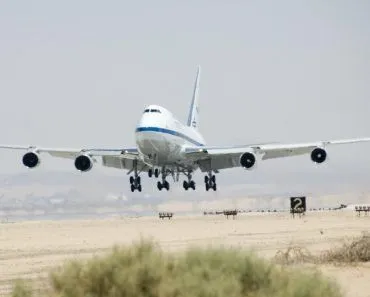
While gazing at an airplane passing thousands of feet overhead, or when you are just about to board a flight at the airport, have you ever noticed that the vast majority of airplanes are white? Sure, some have stripes, decorations, and names in different colors, but the base color behind those add-ons is almost always white. It seems a bit strange, but is there a real reason for it?
Thermal Advantage
The color white is a terrific reflector of sunlight, and reflects almost all the light that falls on it, unlike other colors, which absorb some of the light.

If you paint your airplane in a color other than white, it will absorb sunlight and heat up the body of the airplane, which is something you want to avoid. White, on the other hand, reflects that sunlight and avoids the gradual build-up of heat on the plane. This is a good thing, not only when the airplane is in flight, but also when it’s parked on the runway, because it takes less time to cool down after sitting on the ground in a hot, sunny environment. A cooler fuselage also means the air-conditioning system has less heat to fight, so the plane burns a little less fuel keeping the cabin comfortable. In fact, some planes actually ‘need’ to have a coating of white paint in order to guarantee a structurally sound flying machine.
Which Part Of A Plane Actually Gets The Hottest?
Here is a question that trips up a lot of people: if planes are painted white to fight off heat, then where does all that heat actually come from once the plane is flying? Surprisingly, a cruising airliner is not really a hot object at all. At a typical cruising altitude of around 11,000 m (about 36,000 ft), the outside air is a brutal −57 °C (−70 °F), so the plane spends most of its journey trying to stay warm, not cool. The white paint earns its keep mainly on the ground, baking on a sunny runway, rather than up in the cold, thin air.

That said, some parts of the airframe do warm up, and the culprit is speed rather than sunshine. When a plane rushes forward, the air piling up against its leading surfaces (the nose, the wing leading edges, the windshield) gets squashed and slowed almost to a standstill. Cramming all that motion to a halt converts the air's kinetic energy into heat, an effect engineers call ram rise, or stagnation heating. NASA's relation for it is reassuringly simple: the total temperature equals the static (outside) air temperature multiplied by [1 + M2(γ − 1)/2], where M is the Mach number and γ is 1.4 for air. Plug in a normal cruise speed of Mach 0.85 and that −57 °C air warms to only about −25 °C (−13 °F) at the nose. Still well below freezing, which is exactly why airliner leading edges need anti-icing systems, not air conditioning.
The story flips completely once you go supersonic. That heating climbs with the square of the Mach number, so doubling your speed roughly quadruples the temperature rise. The Concorde cruised at Mach 2, and its nose, the single hottest spot on the jet, reached a blistering 127 °C (261 °F), warm enough to be uncomfortable to touch, while the airframe actually stretched almost 18 cm (7 in) longer in flight from the heat. That 127 °C figure was no coincidence either: it was about the maximum temperature the plane's aluminum skin could safely tolerate over its lifetime, which is precisely what capped Concorde's in-service top speed at roughly Mach 2.04. To cope, Concorde wore a special, highly reflective white paint roughly twice as reflective as ordinary airliner white, chosen specifically to radiate that heat away. When Pepsi famously repainted a Concorde blue for a 1996 promotion, the darker livery absorbed so much extra heat that the jet was held to about Mach 1.7 for most of the flight and allowed no more than around 20 minutes at full Mach 2, a vivid real-world reminder that, for a plane, color and temperature really are linked.
Easier Inspection Of Cracks And Dents On The Fuselage
Airplanes are regularly inspected for cracks, dents, and any other form of surface damage (for obvious safety reasons). Nothing works better than white when it comes to spotting a crack on the surface, as the crack is almost always darker than white.
Additionally, white also accentuates corrosion marks and oil leak spots (since they leave dark-colored trails). Plus, a white plane is easier to spot (visually) in the event of a crash or any other mishap, especially at night, or in a massive body of water.
Less ‘Scientific’ Factors
Not every reason behind this obsession with white planes is ‘scientific’, so to speak. There are a few other reasons too, which can’t be ignored.
Painting Is Expensive!
In money terms, painting an airplane is not like painting a fence. It requires a considerable investment of money, manpower, and time. Painting a single-aisle airliner like an Airbus A320 or Boeing 737 takes roughly a week, and a full repaint can run into the hundreds of thousands of dollars. Plus, more paint on the fuselage means more overall weight (you didn’t think that massive amount of paint was weightless, did you?), which effectively translates to higher operating costs. A heavily colored livery can add over 540 kg (about 1,200 lb) of paint compared with a plain white coat, roughly the weight of eight adult passengers and their luggage, and that extra weight burns extra fuel on every single flight. As an airline company, you would want to avoid that as much as possible.
Colored airplanes have lower resale value
Now, if you have a colored airplane (parked in your own private hangar) and you want to sell it, you should expect to make a little less than if it was a white airplane.
You see, the end goal of an airline company is to minimize the cost as much as possible. Buying a colored airplane would mean that they would likely have to paint it white, for the various reasons mentioned above. Hence, it makes perfect sense that the company would pay you a lower price for your fancy, colored airplane.
White Doesn’t Fade
When flying at high altitudes, completely exposed to various atmospheric conditions, colored airplanes tend to fade, and thus require a lot of paint jobs to maintain their aesthetic appeal. A white-colored airplane, on the other hand, doesn’t appear significantly different, even after spending a considerable amount of time in the air.
If It Ain’t Broke, Don’t Fix It!
Finally, if there’s no problem with the existing white color, then why bother fixing it at all? As we’ve clearly shown, the white color does have its benefits – both scientific and economical.
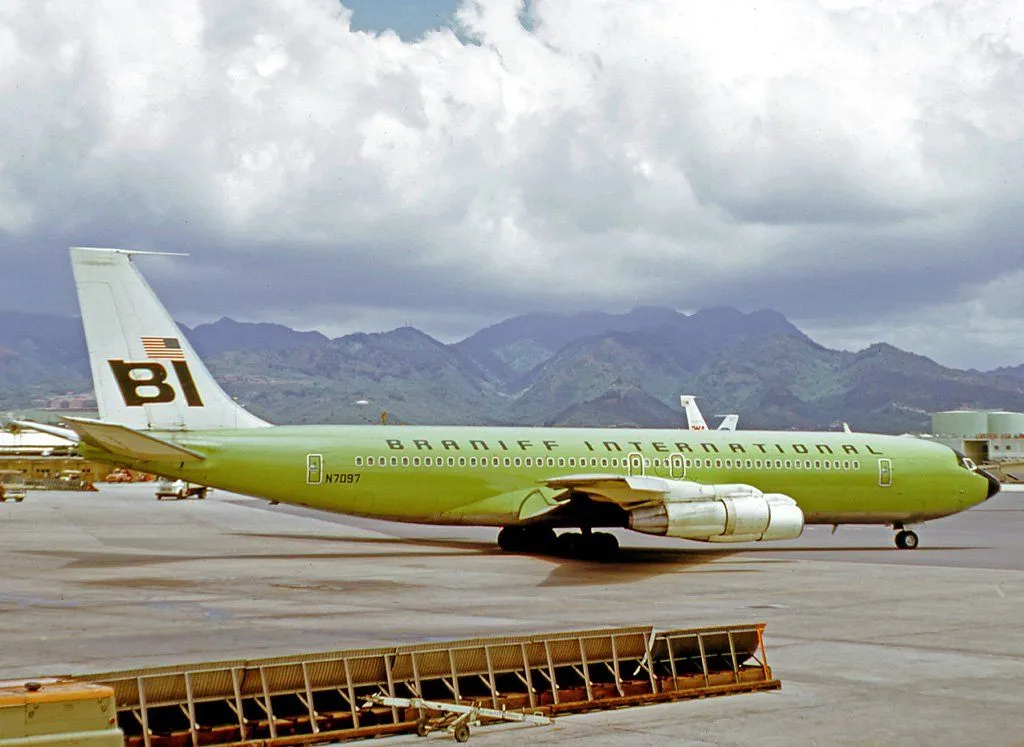
However, some airline companies do have multi-colored airplanes, like this one here:
So, next time someone asks you why all airplanes are white, tell them that it doesn’t just have scientific advantages, but it also costs quite a bit less. As they say, white goes with everything, right?
References (click to expand)
- - ia800708.us.archive.org
- How Much Does It Cost To Paint An Aircraft? Simple Flying.
- Fitch T., Lankford D. (2013). Why do black materials absorb light and white materials reflect it?. Columbia Daily Tribune
- Z Xie. Visual Conspicuity Measurements of Approaching and .... ijssst.info
- Stagnation Temperature. Glenn Research Center, NASA.
- Airframe. NOVA Online: Supersonic Spies. PBS / WGBH.
- Concorde Airframe Materials. Heritage Concorde.