Table of Contents (click to expand)
- The Iceberg Was Far Away From Titanic After The Collision
- Could The Titanic Take A U-turn And Reach The Iceberg?
- Getting Too Close To The Iceberg Would Have Been Too Risky
- Ice Is Slippery
- People Simply Won’t Go Onto The Iceberg
- Why Didn’t The Titanic’s Lookouts See The Iceberg In Time?
- How Big Was The Iceberg That Sank The Titanic?
- How Many People Died On The Titanic, And Where Did It Sink?
The iceberg was left behind after the collision, it would have been too risky to get too close to the iceberg, ice is slippery, and people simply wouldn’t go onto the iceberg.
This one time, I watched the movie Titanic with a friend who made a fascinating observation after the movie ended: ‘Why couldn’t the ship passengers get off and climb the humongous iceberg (with which the ship collided) and wait there until help arrived?
Many people consider that a viable solution to the problem.
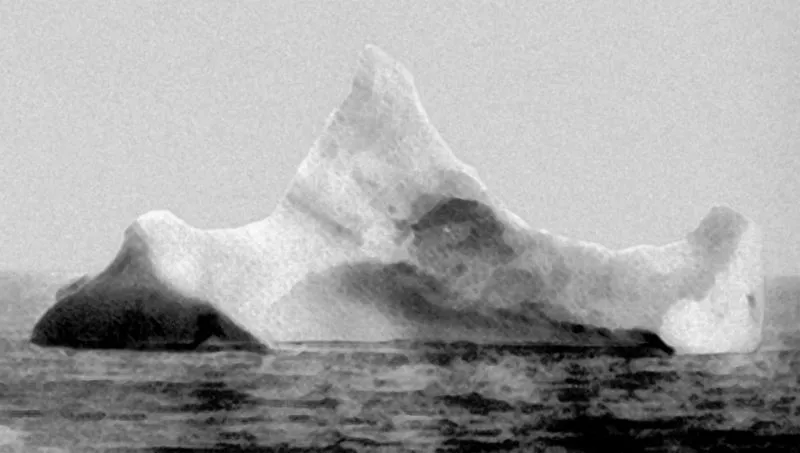
Despite the ship suffering a glancing blow, it took around two and a half hours to sink completely after colliding with the iceberg. This means that some of the passengers who remained on the ship after a few hundred were transported away in lifeboats may have had enough time to climb up the iceberg and wait for help, if not all of them.
But that obviously didn’t happen in reality. Why?
The Iceberg Was Far Away From Titanic After The Collision
Sources indicate that just before hitting the iceberg, the Titanic was traveling at roughly 22.5 knots (about 41 kmph or 26 mph) — close to her top service speed.
This may not sound fast for land vehicles, but for ships it is considered very fast. The Titanic’s top trial speed was about 23 knots, so she was practically flat out when she struck the iceberg — despite repeated ice warnings earlier that evening.
Giant ships also differ from land vehicles in how long they take to stop after their engines are cut. While a car can go from 100 mph to 0 in seconds, a 46,000-ton liner like the Titanic carries enormous momentum. Reports estimate that she continued for around 1.5 to 2 nautical miles after the impact before coming to a stop — by which time the iceberg was lost in the dark behind her.
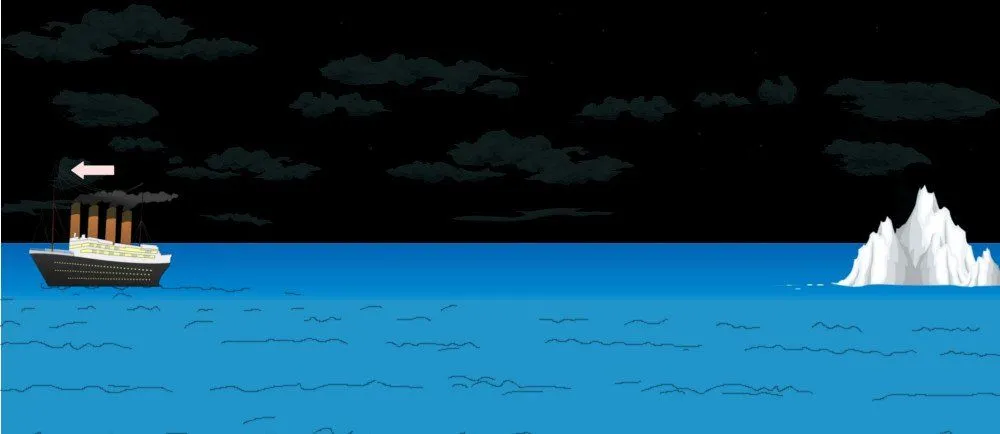
In other words, when the Titanic sank, the iceberg that caused the collision was left far behind in the darkness, out of reach for the crew and passengers to even consider climbing it.
Could The Titanic Take A U-turn And Reach The Iceberg?
After the Titanic hit the iceberg, some people might think that the captain could have just reversed the ship, reached it, and started transferring passengers onto it.
However, this was not a viable option.
After hitting the iceberg, the ship had already covered a substantial distance, and returning to it was impossible.
The night was dark, and the only sources of illumination were starlight and the artificial lighting of the ship, which were far too inadequate to locate an iceberg out in the open sea. Even the spotters couldn’t locate the iceberg before the ship got too close and hit it. Additionally, the ship had no radar, making finding the iceberg impossible.
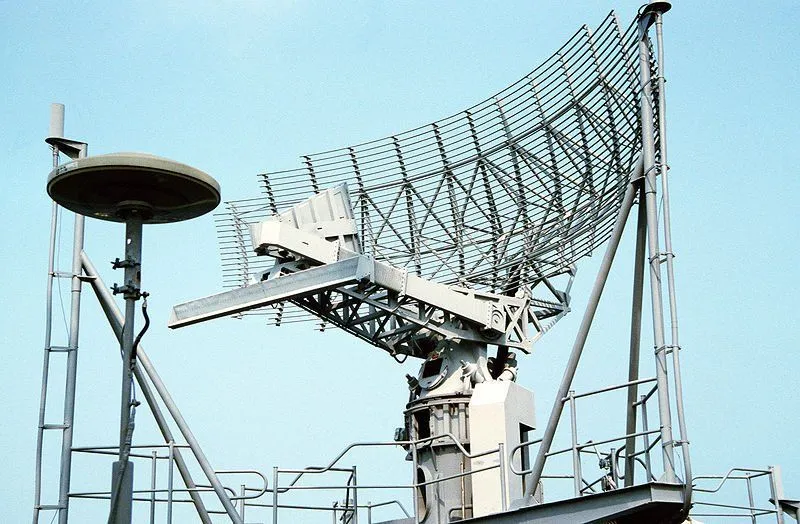
Furthermore, maneuvering a U-turn with an ocean liner as huge as the Titanic was quite an elaborate process, and would have used up precious minutes that could have been used on a different solution – one that did not rely on going back and locating the iceberg with which they had collided in the first place.
Getting Too Close To The Iceberg Would Have Been Too Risky
An iceberg is a humongous rock of ice floating on water, but only a small part of it is visible above the surface of the water.

If the iceberg was nearby, one plausible way of getting passengers onto the iceberg was by using gangplanks – movable planks used by passengers to board/disembark from a ship.
This technique would require bringing the ship very close to the iceberg, which would again be very, very risky as there was no way of knowing how far the iceberg extended beneath the surface of the water.
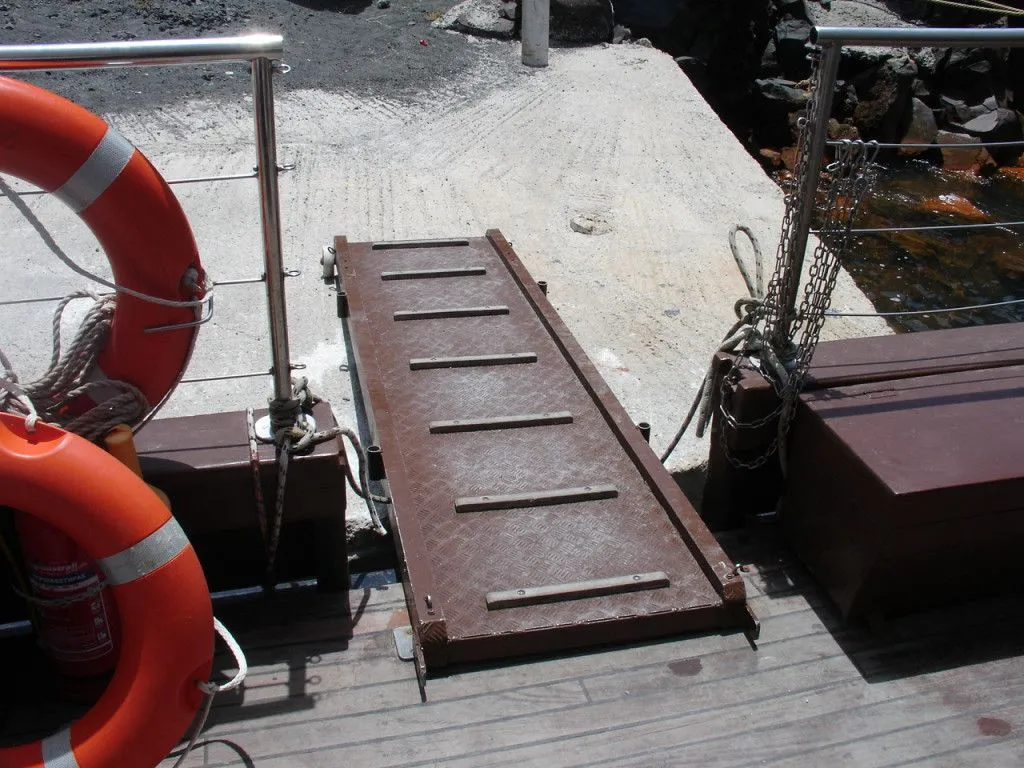
Also, this technique would require incredibly long gangplanks – something that they did not carry onboard the Titanic, as they did not plan on transferring passengers to rocks of ice in the middle of the voyage.
Needless to say, this plan is riddled with impossible variables.
Ice Is Slippery
One shouldn’t forget that ice is quite slippery.

Getting onto an iceberg is more challenging than it may seem at first. Icebergs are massive, so it would be daunting to get hundreds of frightened passengers onto the iceberg without any assistance equipment.
Moreover, the challenges don’t end there. Once on the iceberg, staying there without slipping into the icy waters surrounding it would be equally difficult.
And then there is the cold. The North Atlantic that night was about −2°C (28°F) — below the freezing point of fresh water and well below the freezing point of human blood. Anyone soaked while clambering aboard the iceberg, or sitting on bare ice in 1912’s evening clothes, would have lost consciousness from cold shock and hypothermia within 15 to 45 minutes. Almost everyone who ended up in the water that night died of hypothermia, not drowning. Standing or lying on a giant block of ice for hours, with no shelter and no dry clothes, would have been a slower version of the same fate.
People Simply Won’t Go Onto The Iceberg
The reasons we discussed above pertained exclusively to the technicalities of transferring passengers onto the iceberg.
Now, here’s a psychological factor: even if you successfully parked the ship next to the iceberg and had all the necessary equipment to board, convincing passengers to leave the ship’s safety and climb onto the iceberg would prove to be a monumental challenge.

Believe it or not, but the crew of the RMS Titanic initially had a hard time cajoling the passengers on the deck to actually get into the lifeboats!
It is said that millionaire John Jacob Astor, who was the richest passenger on the ship, declared: “We are safer here than in that little boat.” Sources also claim that some passengers refused flatly to embark.
These are only some of the countless reasons that prove that getting passengers onboard the iceberg wasn’t only practically impossible, but also a terrible idea.
Furthermore, one should not forget that with the benefits of hindsight, it becomes much easier to figure out elaborate plans and possible solutions that could have worked at that time.
However, the conditions at the time when an ocean liner carrying more than two thousand souls was floundering and an environment of utter chaos rocked the ship must have been quite different, to say the least.
Why Didn’t The Titanic’s Lookouts See The Iceberg In Time?
Before we even get to climbing onto the iceberg, there’s a question that bothers almost everyone who hears this story: how did a ship full of trained sailors fail to spot a mountain of ice until it was right in front of them?

The single biggest culprit was the weather, which had set up an almost perfect trap. The night of April 14, 1912 was moonless, the sky was clear, and the sea was dead flat. Second Officer Charles Lightoller, who survived, later told the British inquiry that there was no moon, no wind, and crucially, no swell at all. He added that “had there been the slightest degree of swell I have no doubt that berg would have been seen in plenty of time to clear it.”
Why does a calm sea make icebergs harder to see? Normally, even a gentle swell sends water slapping against the base of an iceberg, throwing up a ring of pale, breaking foam that a lookout can spot from far off. On a glassy sea there is no foam, no white line at the waterline, nothing to give the dark mass away against an equally dark horizon. The lookout was effectively staring into a black wall.
The famous detail about the missing binoculars made things worse. Lookouts Frederick Fleet and Reginald Lee had no glasses in the crow’s nest that night and had to rely on their bare eyes. Fleet insisted at both the American and British inquiries that he could have spotted the iceberg sooner with binoculars, though some experts doubt that glasses would have helped much in those particular conditions. Either way, by the time Fleet rang the warning bell, the iceberg was only around 450 to 500 m (roughly 500 yards) ahead, leaving First Officer Murdoch perhaps 37 seconds to react. He ordered the helm hard over and the engines reversed, but the Titanic swung just two points (about 22.5 degrees) before her starboard side scraped the ice. The official British report later concluded that the loss of the ship was “brought about by the excessive speed at which the ship was being navigated.”
How Big Was The Iceberg That Sank The Titanic?
Survivors who glimpsed the iceberg gave wildly different descriptions, which is exactly what you’d expect from frightened people looking at a dark shape on a dark night. Piecing their accounts together, researchers Grant Bigg and David Wilton estimated that the berg stood roughly 15 to 30 m (50 to 100 ft) above the water and was about 120 m (400 ft) long.

That visible part, though, was only the tip of the problem. Ice floats because it is slightly less dense than seawater, but only just, so the great majority of any iceberg, often quoted as around nine-tenths, hides beneath the surface. Allowing for that, the same researchers reckoned the Titanic’s iceberg may have reached 90 m or more below the waterline and weighed on the order of two million tons. That hidden bulk is precisely why bringing a ship close enough to unload passengers would have been suicidal: no one on deck had any way of knowing where the underwater shelf of the berg ended.
One more thing worth remembering is that the iceberg itself was a doomed traveler. It had calved from a Greenland glacier and drifted south for months, melting all the while. The berg that sank the Titanic almost certainly melted away into the North Atlantic within a matter of weeks of the disaster, which is why no one has ever “found” it.
How Many People Died On The Titanic, And Where Did It Sink?
Of the roughly 2,200 passengers and crew aboard, only about 705 survived. Around 1,500 people died, making it one of the deadliest peacetime disasters at sea. The two official investigations landed on slightly different totals: the United States Senate inquiry counted 1,517 lives lost, while the British Wreck Commissioner’s inquiry put the figure at 1,490. The gap simply reflects how uncertain the passenger and crew lists were.

The single biggest reason the death toll was so high is heartbreakingly simple: there were not enough lifeboats. The Titanic carried boats for around half the people on board, and several of those launched only partly full. As we saw earlier, the freezing water did the rest, with most of those who ended up in the −2 °C (28 °F) sea dying of cold within minutes rather than drowning.
As for where it all happened, the Titanic went down in the North Atlantic roughly 400 nautical miles (about 740 km) southeast of Newfoundland, Canada. The wreck lay undiscovered until 1985, when it was found resting on the seabed some 3,800 m (about 12,500 ft) down, far too deep and far too remote for anyone in 1912 to have reached in time.
References (click to expand)
- Titanic material failure | Mechanical Science & Engineering.
- The Iceberg that Sank Titanic.
- Stettler, J. W., & Thomas, B. S. (2013, June). Flooding and structural forensic analysis of the sinking of the RMS Titanic. Ships and Offshore Structures. Informa UK Limited.
- Leighly, H. P., Bramfitt, B. L., & Lawrence, S. J. (2001, April). RMS Titanic: A metallurgical problem. Practical Failure Analysis. Springer Science and Business Media LLC.
- British Wreck Commissioner’s Inquiry, Day 15: Testimony of Frederick Fleet (Lookout). Titanic Inquiry Project.
- Timeline of the Titanic’s Final Hours. Encyclopaedia Britannica.
- How Many People Died When the Titanic Sank? Encyclopaedia Britannica.
- Bigg, G. R., & Wilton, D. J. (2014). Iceberg risk in the Titanic year of 1912: was it exceptional? Weather, 69(4).