Most people can survive about 3 days without water. In cool, sheltered conditions some have lasted 8–10 days, and the Guinness world record is 18 days (Andreas Mihavecz, an Austrian teenager forgotten in a holding cell in 1979). In hot or dry conditions, severe dehydration can kill in hours.
After successfully distracting yourself by running your fingers on the hamster wheel that is your Instagram feed, you finally leave your devices alone to fall asleep. Instead, you find yourself in the uncomfortable unknown, where your inquisitive self bursts into life and vanquishes your sleep as you look closely and notice the unnoticed, ask the unasked, meandering just below your nose when you were consumed in the dailiness of your life. Wait a minute, Why do I have toe-nails?! Or I wonder how long could I survive without water?

Short Answer: On average, a person can survive about 3 days without water. In cool, sheltered conditions, the limit can stretch to 8–10 days; the Guinness record is 18 days.
Why Is Water So Important?
Thirst is a survival instinct and I’m guessing by now you’ve realized that water is one of the most essential nutrients required by living things. Water regulates our body temperature, digestion, aids the disposal of waste and is needed by the brain to produce hormones and neurotransmitters. So… it’s pretty important. Clearly.
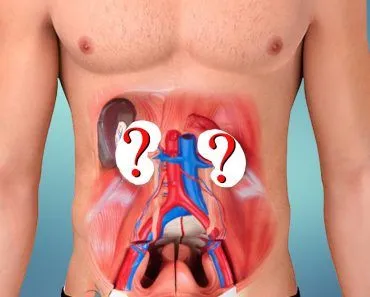
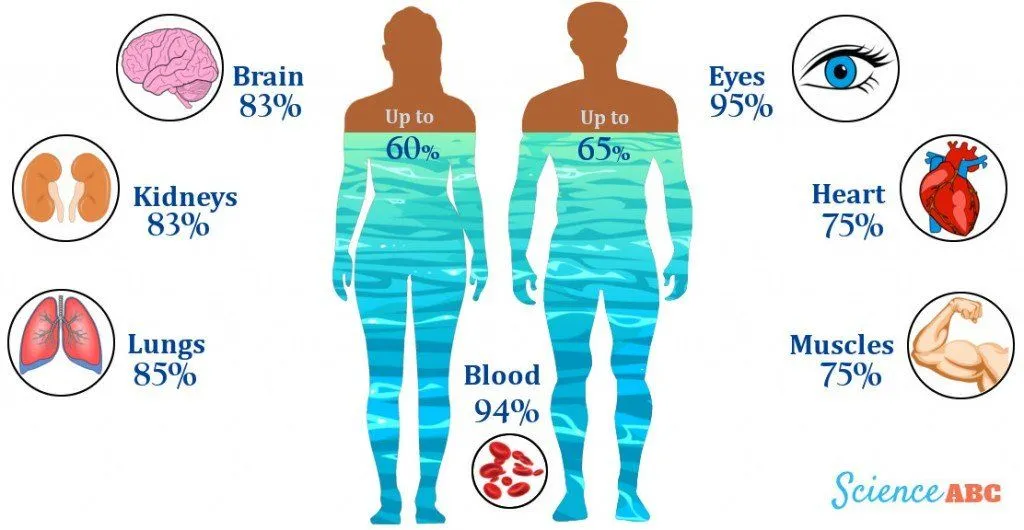
Water is the most abundant molecule in our body, making up roughly 50–60% of an adult’s total body weight (closer to 65% in lean men, somewhat less in women and the elderly because fat tissue holds less water). When the water coming in from drinks and food drops below what the body is losing, our cells, blood, and tissues all start to draw on what little internal water we have in reserve.
This is how camels survive without water for days in the scorching heat of deserts – by extracting water from fats all around their body. The human body, unfortunately, does not have as much storage capacity. After an excruciating week without water, sweating ceases, leading to an unavoidable increase in our body temperature and digestion becomes impossible due to a lack of saliva or intestinal juices, while blood pressure decreases due to low blood volume.
Under such feeble conditions, death is just around the corner. Surviving without water comes down to disrupting the balance between losing water and gaining it. This means that survival can be stretched if the rate of losing water through sweating, urinating or exhaling rapidly is less than the amount gained by consuming food and liquid.
How Long Can You Live Without Water?
On average, a person can survive without water for about 3 days, but some have reported to survive around 8 to 10.
This amount of time can also be stretched and contracted by external factors, such as temperature, humidity and the health of an individual. For instance, athletes exercising intensely in the dry heat can dehydrate and die within hours. Whereas the Guinness record holder for surviving the longest without water is Andreas Mihavecz, an 18-year-old Austrian who was held in a holding cell in 1979 and forgotten by police for 18 days.
However, it is reasonable to point out that he was indoors in the absence of the sun or any heat.
Yep, forgotten.
Also, one can live without water indefinitely, provided you have eaten enough water-containing foods to replace the lost water. Our body doesn’t necessarily need “pure water”; it only requires electrolytes and nutrients in aqueous solution, so that they are available to be absorbed. It enacts a terminal step in a line of reactions involving the oxidation of hydrogen or hydrocarbons to provide energy.
Poon Lim, a Chinese sailor whose ship (the SS Ben Lomond) was torpedoed in 1942, survived 133 days alone on a small wooden raft in the South Atlantic. His tin of biscuits and small water supply ran out within weeks. So how did he keep going? He rigged a canvas to catch rainwater whenever a squall passed, and supplemented his diet by catching fish, seabirds, and (according to his own account) drinking shark blood. However repulsive, it kept him alive.

So your query does not have a fixed answer. The average is about 3 days, but you could try out for yourself. Now, give your mind a break and get some sleep!
What Is the Longest Anyone Has Survived Without Water?
The official record is stranger than any survival expedition, and the man who set it never volunteered. According to Guinness World Records, the longest documented survival without food and water is 18 days, set by an 18-year-old Austrian named Andreas Mihavecz in 1979.
Mihavecz had been a passenger in a car crash and was placed in a holding cell in a government building in Höchst, Austria, on 1 April 1979. Then the police simply forgot about him: each of the three officers involved assumed one of the others had let him out. His cell was in the basement, so nobody heard him. He was found close to death on 18 April, by sheer chance, when an officer on unrelated business noticed the smell coming from the cell.
Yep, forgotten. Again.
So how does anyone last more than two weeks with no water? Two reasons, both straight out of the earlier part of this page. The cell was cool and underground, which slowed his water loss to a crawl, the same reason sheltered, indoor survival stretches so much further than survival in the heat. And he had a trickle of moisture: Guinness notes he is "said to have survived by licking condensation off the walls of his cell," scavenging the thin film that gathered on the cold masonry. He reportedly lost around 24 kg (53 lb) before he was discovered. It is a grim reminder that the limit is set by temperature and water loss, not by some fixed number of days.
What Happens to Your Body as You Dehydrate?
"Three days" is an average, not a switch that flips. Long before you reach any limit, dehydration sets in as a series of stages, each tied to how much of your body weight you have lost as water. The early warnings come fast: losing as little as 2 to 3% of your body weight as water is enough to count as dehydration, bringing on dry mouth, fatigue, headache, dizziness and trouble concentrating, according to clinical references on adult dehydration.
From there it snowballs. As blood volume falls, your heart races to prop up blood pressure, your urine turns dark and dwindles to almost nothing, and your body fights to shed heat with no water to spare. Fluid losses beyond roughly 8% of body weight become life-threatening, bringing confusion, a pounding pulse and the risk of organ failure. The desert is so lethal because of speed: under extreme heat and exertion an adult can sweat out 1 to 1.5 liters (roughly 1 to 1.5 quarts) per hour, so a child left in a hot car or an athlete pushing hard in dry heat can hit a fatal level of dehydration in hours, not days.
That is also why these numbers are so slippery. Anything that bleeds water faster, illness with vomiting or diarrhea, or simply the dry, pressurized air of a long flight, shortens the clock dramatically. The real takeaway is not how many days have passed, but how fast you are losing water versus how little you are taking in.
References (click to expand)
- Anderson, R. C. O., Bovo, R. P., Eismann, C. E., Menegario, A. A., & Andrade, D. V. (2017, May). Not Good, but Not All Bad: Dehydration Effects on Body Fluids, Organ Masses, and Water Flux through the Skin ofRhinella schneideri(Amphibia, Bufonidae). Physiological and Biochemical Zoology. University of Chicago Press.
- (2012) The Effects of Dehydration on Cognitive Functioning, Mood .... Georgia College & State University
- How long can we go without water? - PAESTA Podcast Series: Episode 26 | PAESTA - www.paesta.psu.edu
- Longest survival without food and water. Guinness World Records.
- Adult Dehydration. StatPearls. NCBI Bookshelf.
- A Review on In Vivo Research Dehydration Models and Application of Rehydration Strategies. PMC, National Library of Medicine.
- How Long Can the Average Person Survive Without Water? Scientific American.