Table of Contents (click to expand)
Alcohol makes you pee more because it is a diuretic. It suppresses vasopressin (antidiuretic hormone, or ADH), the hormone that tells your kidneys to hold on to water. With less of it, the kidneys reabsorb less water back into the blood and send it to the bladder, so you lose fluid faster than you take it in and become dehydrated.
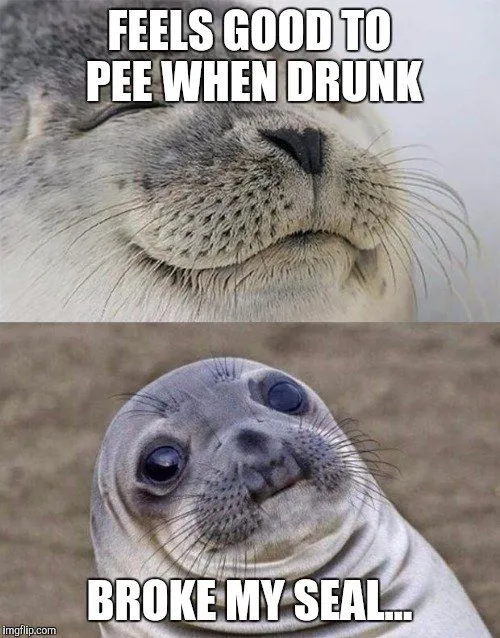
You haven’t even finished your second pint and you’re already dancing: no, it’s not the buzz… you have to pee! Your friend warns you about “breaking the seal”, but you need to pee like your life depends on it. You yield and break the seal, but now your fear has come true, the inexplicable jinx has worked… it seems like you’re urinating more than you’re even drinking!
If you have ever imbibed and are even mildly curious, you’ve surely wondered why alcohol does this. The cause is not inexplicable, however, but quite simple and logical.
It’s A Diuretic
Alcohol makes you pee for the simple reason that it is a diuretic, a substance that promotes the increased production of urine. Our kidneys try to balance the amount of water stored in our bodies by absorbing some and recirculating it into our bloodstream, while also extricating some and venting it through the urethra as urine. While dehydration is dangerous for obvious reasons, overhydration is dangerous, as a surplus of water will dilute the salts necessary for our survival.
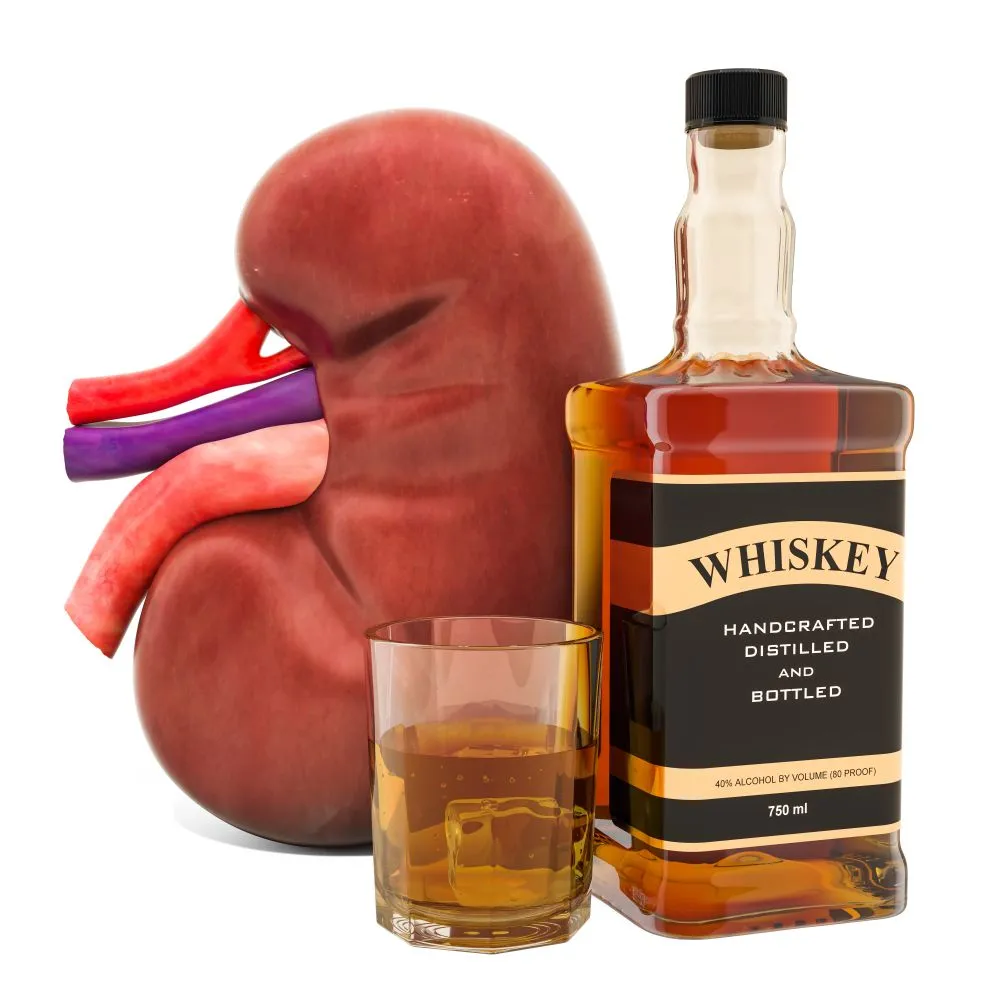
The hormone responsible for the absorption of water is known as vasopressin, or the antidiuretic hormone (ADH). It is synthesized in the hypothalamus and released into the bloodstream by the posterior pituitary, the small gland tucked beneath your brain. When ADH is flowing, it signals the kidneys to reabsorb the passing water so that we aren’t dehydrated; when its levels fall, the kidneys let more water pass through, ensuring that we aren’t overhydrated.
Here is the crucial part: alcohol does not jam the receptors on your kidneys. Instead, it acts further upstream, suppressing the release of ADH from the posterior pituitary in the first place. With less of the hormone circulating in your blood, your kidneys simply receive a weaker “hold on to water” signal. The repercussions are the same either way: the kidneys reabsorb far less water for recirculation in the blood and let it head straight for the bladder.
The balance of fluids previously so carefully maintained is now disrupted: your body expels fluid faster than it takes it in, and it begins to produce more urine than it should. A classic 1942 study by physiologist M. G. Eggleton put the figure at roughly 10 ml of extra urine for every gram of alcohol consumed, and the effect is dose-dependent, so stronger drinks (wine and spirits) tend to drive more output than weaker ones. The diuresis is sharpest in the first hour or two while your blood alcohol level is climbing, then eases as it falls. All of this adds to the fluid you also lose through perspiration, deepening the dehydration that alcohol causes.
The Myth Of “Breaking The Seal” And The Hangover
There exists no seal the breaking of which releases an inexhaustible torrent of urine. This is merely a silly myth. The first instance of urinating has absolutely no bearing on the frequency of subsequent instances. The damage is done the very second the first drop of alcohol is processed by the body. Restraining yourself is futile; it will only cause you pain and discomfort.

Now, that lost water is one reason people are advised to drink plenty of water while imbibing. It is worth being clear, though, that dehydration is only part of the story of a hangover, not the whole of it. Drinking water helps replace the fluid you lose, but it does not dilute the alcohol or stop it from working on your kidneys. According to the National Institute on Alcohol Abuse and Alcoholism, a hangover is the combined result of mild dehydration, the toxic byproduct acetaldehyde, disrupted sleep, electrolyte shifts and an inflammatory immune response, which is why no single fix reliably cures one.
However, what they don’t realize is that even small amounts of alcohol will keep suppressing vasopressin and triggering the increased production of urine. The extra water you drink is expelled as extra urine until the alcohol clears, and your liver handles roughly one standard drink per hour, so a night out can take many hours to fully process. The water doesn’t negate the effects, it merely abates them. Some discomfort the next morning is, unfortunately, hard to avoid.
One last myth worth busting: peeing does not flush the alcohol out of you or sober you up. Only about 2 to 5 percent of the alcohol you drink leaves through urine, sweat and breath. The remaining 90 percent or so is broken down by your liver at its own steady pace, which nothing you do, including frequent trips to the bathroom or drinking more water, can speed up. All those bathroom breaks are simply your kidneys shedding water, not the alcohol itself.
Does Peeing Make You More Drunk (Or Less)?
This is the question people whisper about in the bathroom queue, and the honest answer is: neither, really. Peeing does not flush alcohol out of your system, and it does not pump it back in either. As we have seen, only a tiny fraction of the alcohol you drink (roughly 2 to 5 percent) ever leaves through urine, breath and sweat. The other 90-odd percent is broken down by your liver, and your liver works at its own stubborn, steady pace, clearing it at a near-constant rate that nothing you do in the bathroom can hurry along. So you cannot pee yourself sober, no matter how many trips you make.

What about the opposite worry, that all that lost water leaves you so dehydrated it tips you further into drunkenness? Urinating does not raise the concentration of alcohol in your blood the way wringing out a sponge concentrates what is left behind. Your blood alcohol concentration is set by how much you drank and how much your liver has already processed, not by how full your bladder is. What dehydration can do is make you feel rougher, with the headache, dry mouth and grogginess we lump in with being drunk and hungover, but that is a separate misery from the actual alcohol in your bloodstream.
There is also a neat twist here that surprises people: the diuretic effect is strongest when you start out well hydrated and fades once you are already running dry. In a 2010 study in the journal Alcohol and Alcoholism, Ruth Hobson and Ronald Maughan gave volunteers a liter of beer and found that the alcohol roughly matched alcohol-free beer for extra urine output when the drinkers were dehydrated to begin with, but produced a clear surplus when they were properly hydrated. In short, alcohol pours the water out fastest when you have water to spare, which is one more reason the runaway "I am peeing more than I am drinking" feeling does not actually spiral forever.
References (click to expand)
- Physiology, Vasopressin. StatPearls. NCBI Bookshelf.
- Hangovers. National Institute on Alcohol Abuse and Alcoholism (NIAAA).
- The Diuretic Action of Weak and Strong Alcoholic Beverages in Elderly Men. PMC.
- Vasopressin - Wikipedia. Wikipedia
- Why does alcohol make you pee more? - Drinkaware. drinkaware.co.uk
- Hobson RM, Maughan RJ. Hydration Status and the Diuretic Action of a Small Dose of Alcohol. Alcohol and Alcoholism, 2010.
- Ethanol. StatPearls. NCBI Bookshelf.