Table of Contents (click to expand)
Bears hibernate to survive winter, when freezing temperatures make food scarce. During hibernation, they suppress their metabolism by roughly 75%, drop their body temperature by about 5–7°C, slow their heart rate from ~45 down to as low as 8 beats per minute, and live entirely off their summer fat reserves for up to seven months without eating, drinking, or defecating.
Who wouldn’t like to go MIA and take a break from life? We are all guilty of pressing the snooze button every morning but imagine what it would be like to have a slumber party for months. Bears get to do just that. During winter months, bears like the grizzly bear hibernate, snoozing all the way to spring. Phrases like ‘were you hibernating?’ and ‘slept like a bear’ originate from the bears disappearing for months on end.
What Is Hibernation?
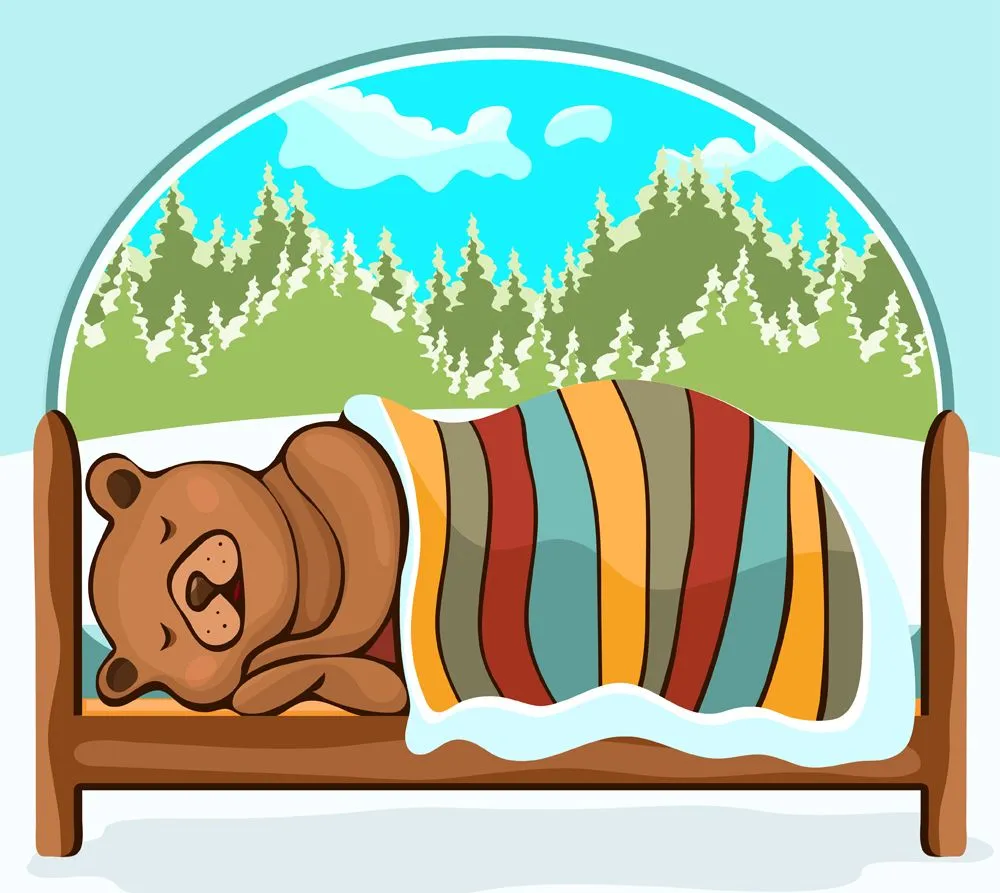
Hibernation is an adaptive move by animals in winter. It is a survival strategy when the environment is harsh and food is scarce. It is a state of profound metabolic suppression in which animals conserve energy so that they do not have to hunt in winter. Hibernation is typically (but not always) accompanied by a drop in body temperature.
The kind of hibernation that an animal undergoes depends on the level of drop in temperatures. Deep hibernators drop their body temperatures to5°C whereas bears undergo torpor which is a mild form of hibernation.
Winter brings in extremely low temperatures making it difficult for plants to bear fruits and animals are difficult to hunt. This makes it challenging to meet the daily calorie requirement for animals. Undergoing hibernation allows animals to utilise their calories at a slower rate when there is a scarcity of food.
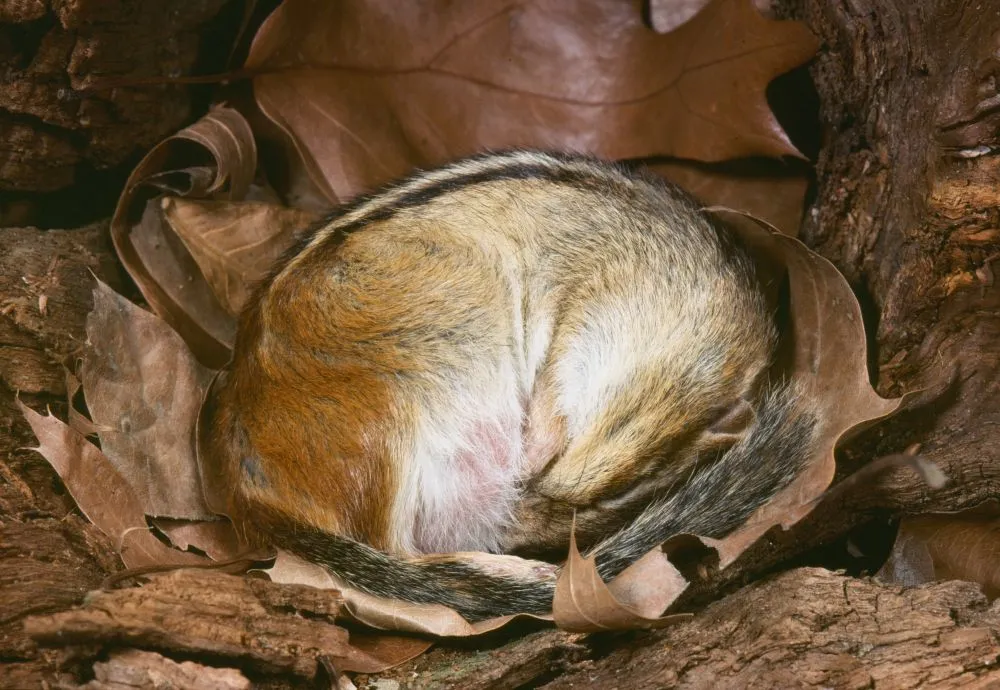
Hibernation isn’t exclusive to bears only. Raccoons, chipmunks, snakes, box turtles, toads, woodchucks, squirrels and deer mice also hibernate.
Predictive Dormancy Vs Consequential Dormancy
Hibernation is not only reserved for mammals. There are also reptiles and insects that hibernate as well. Mammals enter consequential dormancy whereas reptiles undergo predictive dormancy.
Reptiles being poikilothermic (cold-blooded), cannot regulate their own body temperature. As day length starts decreasing (that means there is less warmth from the sun) these reptiles enter into obligatory hibernation. This is known as predictive dormancy as the reptiles anticipate winter by decreasing day lengths so that they do not freeze to death when winter sets in. Insects too display this kind of hibernation.
Then there is consequential dormancy, where, as a consequence of winter’s arrival animals like bears enter hibernation. The con to this kind of hibernation is that the animals wait till winter sets in and this can expose them to freezing temperatures. Thus, there are varying degrees of hibernation depending upon approaching winter, decrease in day lengths and sensing extremely cold temperatures.
Hibernation In Bears
Bears hibernate throughout winter months. They do not eat, drink, or defecate the entire time — in fact, their lower intestine forms a hardened mass of feces, intestinal cells, and bedding called a fecal plug that is expelled only when they emerge in spring. For decades, bears were thought of as not being “true” hibernators because their body temperature drops only modestly. Modern research, however, classifies them as true hibernators — just of an unusually efficient kind. They slash their metabolic rate to roughly a quarter of normal while keeping body temperature high enough to react quickly to danger and to give birth to and nurse cubs.
In true hibernation, like in squirrels, the animal’s body temperatures drop as low as5 degrees Celsius.
However, a bear’s body temperature drops by only about 5 to 7 degrees Celsius from their normal body temperature of 37–38 °C, settling around 31–33 °C.
The reason for this muted temperature drop is so bears can react to danger quickly when threatened or when their dens are flooded, unlike deep hibernators that completely shut down. Bears also wake up periodically to change postures to prevent pressure sores.
This warmer style of hibernation also helps female bears tend to their young. Females typically give birth in the den in late January or early February (after delayed implantation), and rouse periodically to nurse their cubs without ever leaving the den.
How Long Do Bears Hibernate?
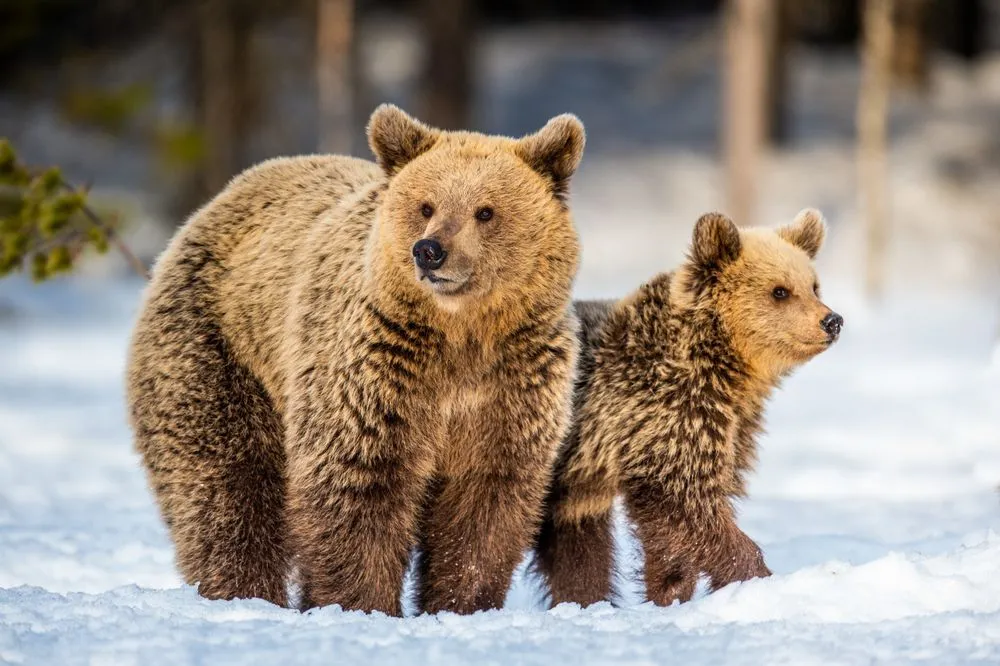
How long a bear hibernates depends on the climatic conditions of the residing area. In the colder regions of Alaska, bears can hibernate for up to seven months, while in the coastal regions of North America bears hibernate for only 2-5 months. Most bears actually enter their dens in October or November and emerge from March through May, depending on latitude.
By the end of summer and commencement of fall, bears start eating more to increase their weight for hibernation. This process is known as hyperphagia. They eat grass, roots, berries, insects, fish and small animals. A typical adult black bear gains 2–4 pounds a day (roughly 14–28 pounds a week), with the largest brown bears at Alaska’s salmon-rich Brooks Falls famously packing on even more. Their daily calorie intake balloons to ~20,000 calories — several times their summer baseline. Sometimes they even store food in their dens which they eat when they hibernate, as food becomes scarce in winter.
Denning Activity
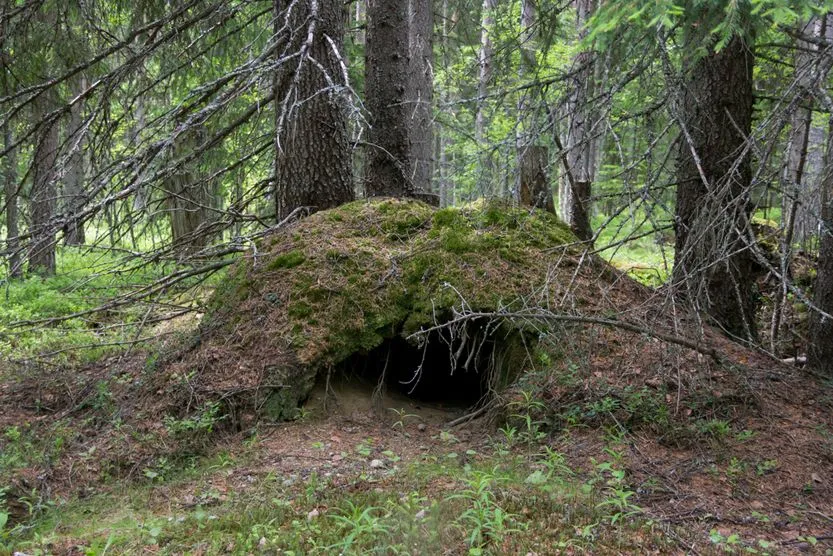
Bears make dens under the base of large trees, under waterfalls, in hollow caves or trees, in naturally occurring rock caves, or simply curl up in a nest of leaves. Den preparation can take anywhere from a few days to several weeks, and many bears actually begin the work months before they need it. After digging the den, bears cover the base with spruce boughs or duff. The tiny air pockets formed at the base help trap heat inside the den and prevent it from escaping.
What Goes On Inside The Bear During Hibernation?
During hibernation, a bear’s metabolic rate plunges to roughly a quarter of its normal value — about a 75% reduction (a finding from Tøien and Barnes, 2011). Respiration drops from 6–10 breaths per minute to as little as one breath every 45 seconds. The heart rate slows from 40–50 beats per minute down to 8–19 — with bears showing dramatic sinus arrhythmia and sometimes pausing for nearly 20 seconds between beats. Over the course of a season, bears typically shed 25–33% of their body weight, and lactating females can lose even more.
Since they don’t eat, bears break down stored fats and protein. Some muscle tissue is broken down to use the protein for metabolic processes. During hibernation, their cholesterol levels run roughly twice as high as a human’s thanks to all that fat being burned, yet they don’t develop clogged arteries or gallstones. The protection comes from a combination of high HDL activity and unusually large, low-stick LDL particles that don’t cling to artery walls. Bear bile is also dominated by ursodeoxycholic acid (UDCA) — up to 60% of their bile acid pool, compared to roughly 5% in humans — which keeps cholesterol in solution and prevents gallstones (it’s the same compound now used as a human gallstone-dissolving drug). Another reason to be a bear!
Using existing resources puts the bear in danger of losing too much essential tissue like muscle or bones. But even though tissues are broken down into proteins, the bears do not lose much muscle mass. This is because the bear can rebuild its muscle using nitrogen from urea present in the urine! They can recycle calcium back into their bones which prevents bone degeneration or osteoporosis. Talk about reusing and recycling!
After temperatures start to become warmer, the bears emerge from their dens to eat early spring vegetation and also to feed on the carcasses of ungulates (animals that have hooves) who died over the cold winter.
Do All Bears Hibernate?
No, not all bears hibernate.
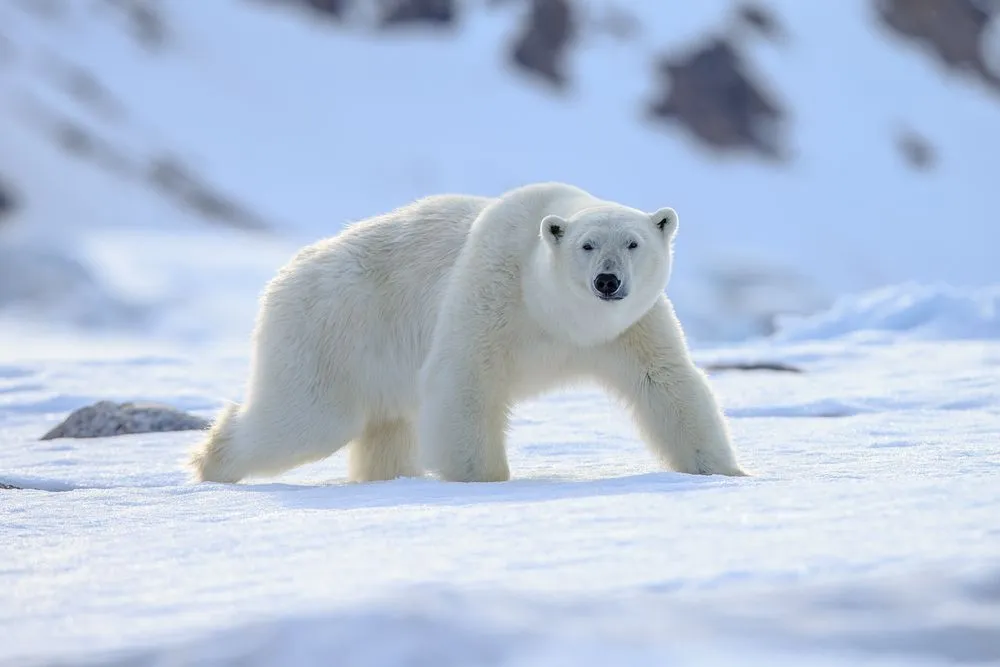
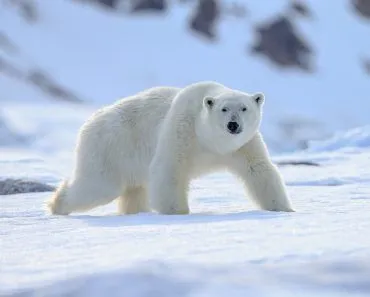
Grizzly/brown bears and black bears hibernate, but polar bears mostly do not — they’re already adapted to survive harsh Arctic temperatures. Pregnant female polar bears are the exception: they dig maternity dens in late autumn and enter a hibernation-like state for four to eight months, giving birth and nursing cubs without eating, drinking, or leaving the den. As for zoos, the older practice was to keep bears awake by feeding them all winter, which often made them overweight and unhealthy. Today, many accredited zoos (including the Maryland Zoo, Minnesota Zoo, and Brevard Zoo) deliberately taper food in autumn so their bears can hibernate naturally — healthier, even if it means they’re unavailable for sight-seeing for a few months.
One worrying new wrinkle: climate change is shortening the hibernation season. Recent research suggests bears now hibernate roughly six fewer days for every 1°C of winter warming, and could be awake for weeks longer than they used to be by mid-century — a shift that’s already linked to rising human–bear conflicts in places like Yellowstone and Hokkaido.
Would you like to hibernate if given a chance? The offer is tempting, isn’t it? Lying around in winter, no stress of eating, drinking, nature calls and in turn also getting protected from heart ailments and osteoporosis! Now that’s some life!