Table of Contents (click to expand)
Neither is inherently darker. Pure water is intrinsically blue because it absorbs long (red) wavelengths and leaves blue, not because it mirrors the sky. Freshwater often looks darker than seawater because it carries more tannins and dissolved organic matter, which absorb blue light. Depth, the bottom, and suspended sediment shift the final color too.
If you have ever been to the Caribbean, you probably still dream about the crystal-clear blue waters around certain islands, but if you’re a native of Maine, you may associate the stormy ocean with a dark grey color. Perhaps you live near a river in India, or a massive lake in Wyoming, and your idea of the “color” of water is slightly different. While many people think of water as being blue, there is actually a great deal of variety in the color that water can appear to our eyes.
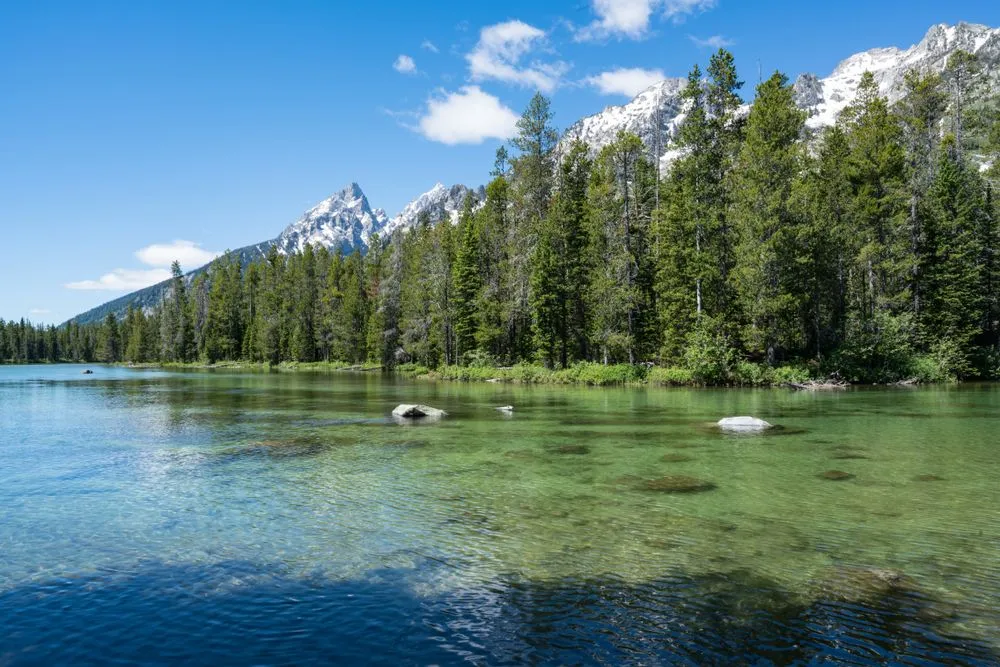
So why is the view over a tropical beach different than a riverbank in the Congo? What makes the water around a coral reef different than the water in the middle of the ocean? What creates such a surprisingly large range of colors?
Water And Light
Seawater and freshwater differ in terms of salinity, density, freezing point and tonicity, but these factors don’t alter how the water interacts with light. Yes, before we can dig into the variation of colors in bodies of water around the world, let’s take a quick refresher on the nature of light and how it interacts with the natural world.
When we see a “color”, we are actually seeing the wavelengths of light that are not absorbed by the object being observed. Natural light is composed of all the colors of the visible spectrum, but most of the wavelengths get absorbed, while the leftover “color” reaches our eyes. The sky is a useful point of comparison here, though it works differently from water: the sky looks blue because gas molecules in the atmosphere scatter the short blue wavelengths of sunlight far more than the longer red ones, splashing that blue light across the whole dome overhead.
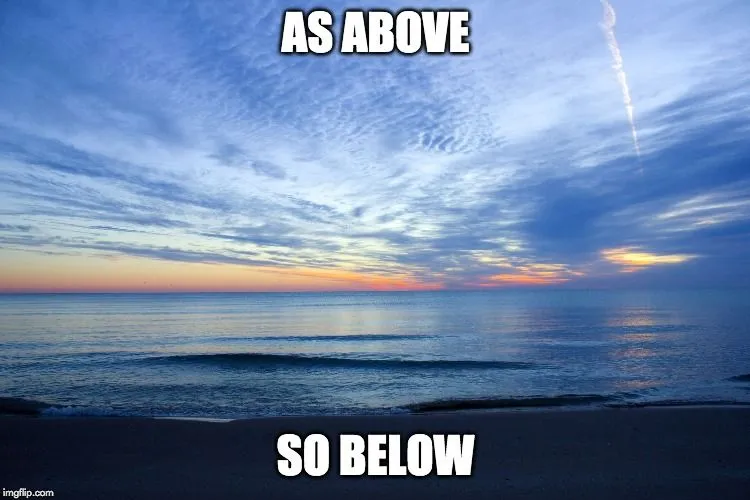
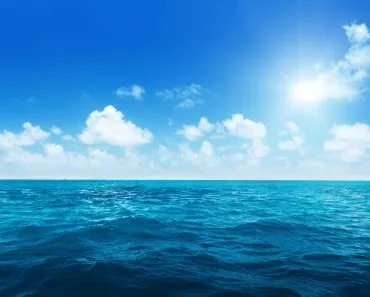
This might come as a shock (especially if you’ve never poured yourself a glass of water before), but a single glass of water really is colorless. The same is not true once water is collected in a large quantity. Here’s the part that even a lot of textbooks get wrong: a deep body of water is not blue simply because it mirrors the sky. Water is intrinsically blue. The water molecule itself absorbs long-wavelength light (reds, oranges, and to a lesser extent yellows and greens) far more strongly than it absorbs blue, so the light that survives a few meters of travel and comes back to your eye is dominated by blue. Unusually, this absorption comes from the molecule’s vibrations rather than its electrons, which is why pure water is the one common substance whose color is born from vibrational energy. (Replace the hydrogen in water with its heavier cousin, deuterium, and that absorption shifts out of view, leaving “heavy water” colorless.) A faint blue scattering, much like the sky’s, adds to the effect, but the heavy lifting is done by absorption. Thus, in answer to the original question of this article, seawater is not inherently darker or lighter than freshwater; the factors explained below determine what shade we perceive.
Factors Affecting Water Color
When considering the wide range of water colors identified around the world, from black and red volcanic lakes to bright-green rivers and royal-blue stretches of ocean, there are a few basic elements that can explain their variation, including water depth, weather, the composition of the water body floor, and the purity of the water.
Weather
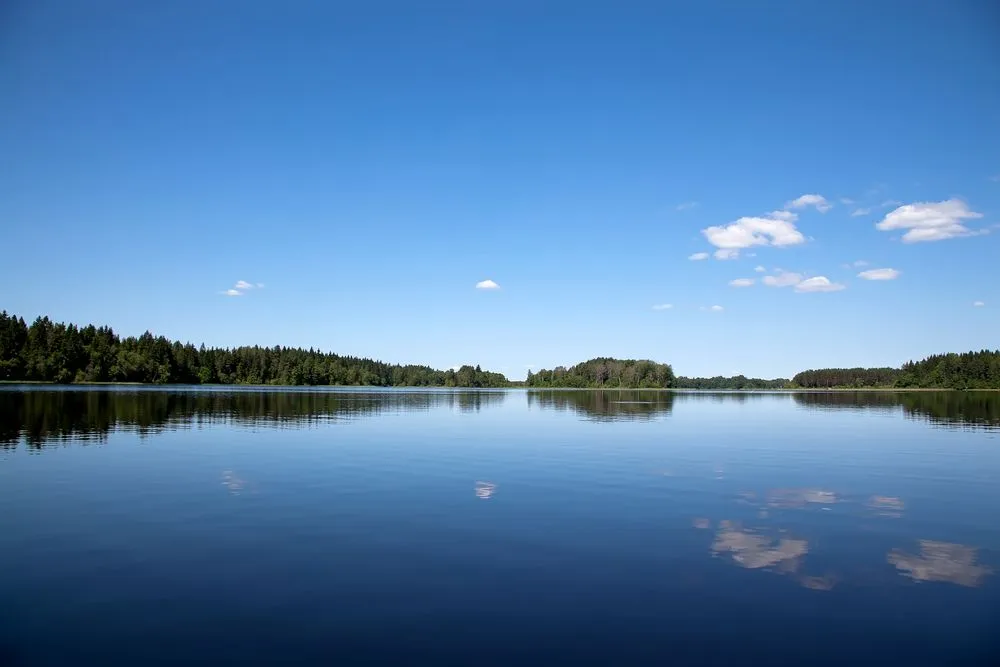
One of the most basic explanations that parents give their children about the color of water is that it reflects the sky, which is also blue. This convenient half-truth does partially contribute to the color that we see when we look out over the ocean. The surface of the water does mirror some of the sky’s color, which adds to the perception of blueness, but as we saw above, reflection is a minor contributor rather than the main cause. You can prove this to yourself: a lake still reads blue-green under a heavy grey sky, and the open ocean stays a deep blue even when overcast, because the water’s own absorption is doing the work. The sky’s color simply tints the surface on top of that.
Water Depth
When looking at shallow water, you are not only seeing the reflection of the sky and the natural blue color of water, as explained above, but also light being reflected back off the ground. The light being reflected off the sand comes back up to lighten the perceived color that we see. When you visit the Greek isles or wade along a shallow Caribbean shore, the light-colored material beneath the water will cause the water to be a lighter blue. However, when you travel out to the middle of the ocean and look down, there is no floor close enough to bounce light back up. Sunlight simply penetrates the water, which swallows the red and orange wavelengths within the first 10 meters (33 feet) or so and the yellows and greens not long after, leaving only blue to scatter back toward your eye. For that reason, deep waters often have a much deeper and richer blue than shallow ones.
Sea Floor Composition
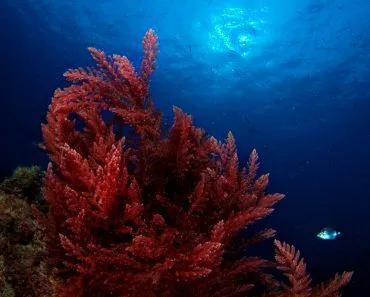
Not only is the depth of the sea floor or river bottom important, but also what that surface is made of. If light is striking a massive seaweed forest below the surface, versus the colorful offerings of a coral reef, the color of light being reflected will be affected. Sand in various parts of the world is often composed of local geological formations that have worn down over millions of years; different colors and qualities of sand will affect how light is absorbed and reflected back in shallow waters, providing a wide spectrum of potential colors.
Water Purity
Perhaps the most important consideration in the coloration of water is the purity of the water body itself. If you have ever seen an estuary (a geological point where freshwater continually mixes seawater), then you know that these two water bodies are rarely the same color, owing to the difference in their solute and particulate concentration. Water color is heavily influenced by the minerals dissolved in it, which can lead to red rivers that are high in iron content, or oddly tinted volcanic lakes whose hues come from dissolved sulfur and other minerals delivered by underwater vents and gas. Depending on what mineral deposits rivers carry, they may vary from deep blue and grey to bright green or pink.
This is also where the answer to our title question really lives. Freshwater very often looks darker than seawater, and the usual culprit is colored dissolved organic matter (CDOM), the tea-colored stew of tannins and humic acids that leaches out of decaying leaves, peat and soil. Just as a tea bag stains a cup of hot water brown, tannins from rotting vegetation stain a swamp, a peat-fed stream or a forest lake a yellow-brown to near-black color. CDOM strongly absorbs blue and ultraviolet light, so the more of it a freshwater body holds, the less blue survives and the darker the water appears. The open ocean, far from any leaf litter, holds very little CDOM, which is part of why it usually reads bluer and brighter than an inland lake. So freshwater is not destined to be darker, but the organic matter it tends to collect frequently makes it so.
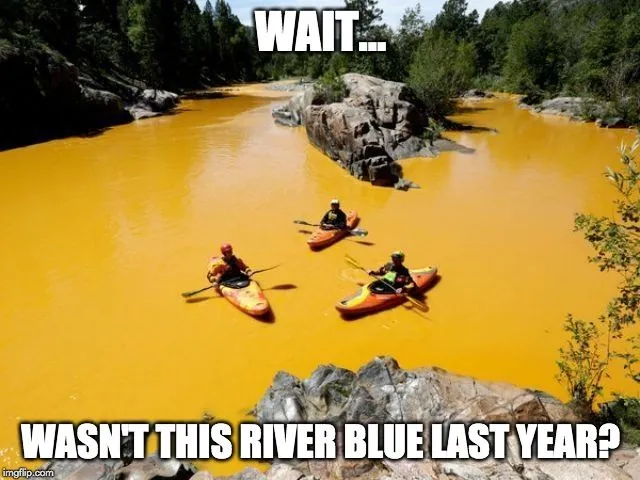
Aside from the minerals found in rivers, lakes and oceans, there are also forms of life that greatly affect water color, namely algae. Algae-rich water, depending on the species of algae present, can range from a dark green to red or yellow! Pollutants are also a factor in water color, whether manmade or soil runoff or damage from storms. Various chemicals and waste materials will dye the color of rivers and lakes, such as the Cuyahoga River in Ohio, which has actually lit on fire numerous times due to its dangerously high level of pollution. Rivers may run brown or black following major storms or floods that kick debris and soil into the natural flow of the water.
What Is The Difference Between A Lake, River, Sea, And Ocean?
We have been tossing around words like lake, river, sea and ocean as though everyone agrees on where one ends and the next begins, but the labels really do describe different bodies of water. The tidiest way to sort them is to ask two questions: is the water moving or standing still, and is it fresh or salty?

Rivers (along with their smaller cousins, streams and creeks) are simply water flowing downhill across the land. That water almost always ends up in the ocean; unless a river drains into a closed inland lake, it keeps running until it reaches the sea. Lakes and ponds, by contrast, are standing bodies of water that sit in a basin ringed by higher land, with no current carrying them anywhere. Most rivers and lakes are freshwater, which hydrologists define as water holding fewer than 1,000 milligrams of dissolved solids (mostly salt) per liter. “Most” is the operative word, though: some lakes that have no outlet river turn salty as water evaporates and leaves its dissolved minerals behind, as happens at Utah’s Great Salt Lake.
Seas and oceans sit at the salty end of the family. An ocean is one of the five enormous basins (the Pacific, Atlantic, Indian, Arctic and Southern) that together cover roughly 71% of Earth’s surface and hold about 96.5% of all the planet’s water. A sea is smaller and lies where the land and the ocean meet, usually partly enclosed by coastline, as with the Mediterranean or the Caribbean. So when you wonder whether a lake looks darker than the sea, you are really comparing a still pocket of freshwater against a salty arm of the global ocean, and as we have seen, it is what is dissolved and suspended in each, far more than the label on the map, that decides the color.
A Final Word
Although the question posed by this article compared the color of seawater and freshwater, there is no intrinsic relationship or superiority between the two. There can be dark oceans and bright rivers, but there can also be turquoise seas and black lakes.
The factors that must instead be considered are the depth of the water, the composition of the water body, the impurities present in the water, and even the color of the sky overhead at the time of observation!
Next time you’re standing on the edge of China’s Yellow River, considering a swim in one of Australia’s pink lakes, or snorkeling in the crystal-blue waters of Grand Cayman, you’ll have a better idea of why the world’s waters are so wondrously diverse!
References (click to expand)
- Freshwater and saltwater. Adelphi University
- O Life. Where the Rivers Meet the Sea. The Woods Hole Oceanographic Institution
- The marine biome - UCMP Berkeley. The University of California Museum of Paleontology
- Why is the ocean blue? National Ocean Service, NOAA
- Why is the ocean blue? Library of Congress
- Colored Dissolved Organic Matter (CDOM). Pacific Islands Ocean Observing System (PacIOOS)
- What’s the difference between an ocean and a sea? National Ocean Service, NOAA
- How many oceans are there? National Ocean Service, NOAA
- How Much Water is There on Earth? U.S. Geological Survey (USGS)
- Freshwater (Lakes and Rivers) and the Water Cycle. U.S. Geological Survey (USGS)