Airlines commonly give their planes unusual names placed on the front of the aircraft. Airplane naming is often used to commemorate a significant event, engage with social media followers, or create a particular impression.
Dream Start, Scootalicious, Miss Moneypenny, and Turmeric. Confused? These are just some of the eccentric names that airlines give their aircraft.
Yes, that’s right, airplanes do have names and are often quite quirky!
As a frequent traveler, you may identify the aircraft you have flown on using a number, such as Airbus A380 or Boeing 737, but you might not know if you flew on Spruce Moose or Dream Start.
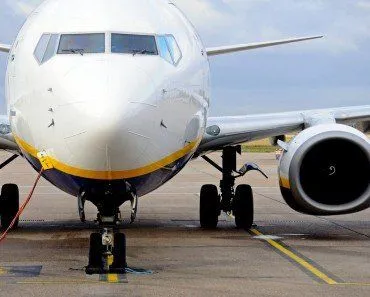
Do you want to know the name of the plane you are boarding? Look no further than the nose of the aircraft!
Contrary to the saying, “What’s in a name?” Various global airline companies now spend considerable time and money selecting an appropriate name for their planes. Traditionally, planes were named after a saint, star, or city of origin. However, with the rise of social media and the ever-present digital world, it is not uncommon to see planes bearing names merely hashtags!
Let us delve deeper into the details of how airplanes are named.
So how are planes named? Apart from the model number you already know (the Airbus A380 or Boeing 737), many airlines give each individual aircraft its own pet name, usually painted near the nose. These names come from cities, stars, flowers, birds, spices, or even fans who win a social media contest, and are chosen to commemorate an event or reflect the airline's brand.
How Do Boeing And Airbus Choose Their Model Numbers?
Before an airline ever paints a quirky name on the nose, the manufacturer has already given the aircraft a model number, and that is the name most travelers actually recognize. Those numbers are not random. When Boeing began developing jetliners in the 1950s, it had already set aside number blocks for its other products, so the 300s, 400s, 500s, and 600s were taken up by earlier aircraft, missiles, and similar lines. The new jets were assigned the 700-series. The very first one could have been called the 700, but Boeing's marketing team decided that 707 simply sounded catchier, and the convention stuck. The 707 made its maiden flight on 20 December 1957, and Pan Am began regular service on 26 October 1958. Every Boeing jetliner since (727, 737, 747, 757, 767, 777, and 787) has followed the same 7x7 pattern.

Airbus, Boeing's European rival, has its own signature. Its model numbers begin with A3, as in the A320 or A380. That habit traces back to the company's very first aircraft, the A300, which was conceived in the late 1960s as a wide-body designed to carry roughly 300 passengers. The A300 first flew on 28 October 1972 and entered service with Air France on 23 May 1974. Even when later studies trimmed the seat count, Airbus kept the "300" badge for brand consistency, and every model afterward (A310, A320, A330, A340, A350, A380) inherited the A3 prefix.
The numbers that come after a dash carry meaning too. A "737-800", for example, identifies a specific sub-variant of the 737 family. Until 2016, Boeing also tacked on a two-character customer code so that a 737-800 built for Southwest Airlines was a 737-8H4, while the same model for another carrier carried a different code. Boeing retired customer codes in 2016, so newer designs such as the 737 MAX and 777X no longer use them.
What Do The Letters And Numbers On An Aircraft's Tail Mean?
Look toward the rear fuselage or tail of any airliner and you will spot a string of letters and numbers, something like N12345 or G-EUPT. This is the aircraft's registration, often called its tail number, and it works much like a license plate for the airframe. No two aircraft in service anywhere in the world share the same active registration, so it is the one truly unique identifier a plane carries throughout its life.

The system is international. Article 20 of the 1944 Convention on International Civil Aviation (the Chicago Convention) requires every aircraft flying internationally to display nationality and registration marks, and the standards are set out in Annex 7, administered by the International Civil Aviation Organization (ICAO). The opening prefix tells you the country: each state picks its mark from the radio call-sign block the International Telecommunication Union (ITU) has allocated to it. That is why American aircraft begin with N, British ones with G, Canadian ones with C, German ones with D, and Australian ones with VH.
The rest of the registration follows national rules. In the United States, the Federal Aviation Administration (FAA) allows up to five characters after the N. The string cannot begin with a zero, and the letters I and O are never used, because they are too easily mistaken for the digits 1 and 0. So a registration may read N172SP, but never N0AB or N1IO.
How Are Military Aircraft Named?
Military aircraft skip the airline pet names entirely and follow a precise code instead. Since 1962, the United States has used a unified scheme known as the Mission-Design-Series (MDS) system, introduced on 18 September 1962 to give the Air Force, Navy, and Army a single shared language. At its core, a designation is a letter, a number, and another letter: the basic mission letter, the design number, and a series letter.

The mission letter tells you what the aircraft is built to do. F stands for fighter, C for cargo or transport, B for bomber, A for attack, T for trainer, and H for helicopter, among others. The design number identifies that particular design within its category, and the series letter (A, B, C, and so on) marks each later modification. Take the F-16 Fighting Falcon, a fighter jet: the F marks it as a fighter and 16 is its design number, while a variant like the F-16C is a later series of the same jet. Likewise, the C-130 Hercules is a cargo aircraft, with later versions running through to the C-130J. A status prefix can also be added, so an experimental airframe gains an X and a prototype a Y, as in the X-35 that led to the F-35. The whole framework is laid down in Department of Defense Instruction 4120.15, "Designating and Naming Military Aerospace Vehicles".
Naming That Resonates With Culture, Tradition And Nature
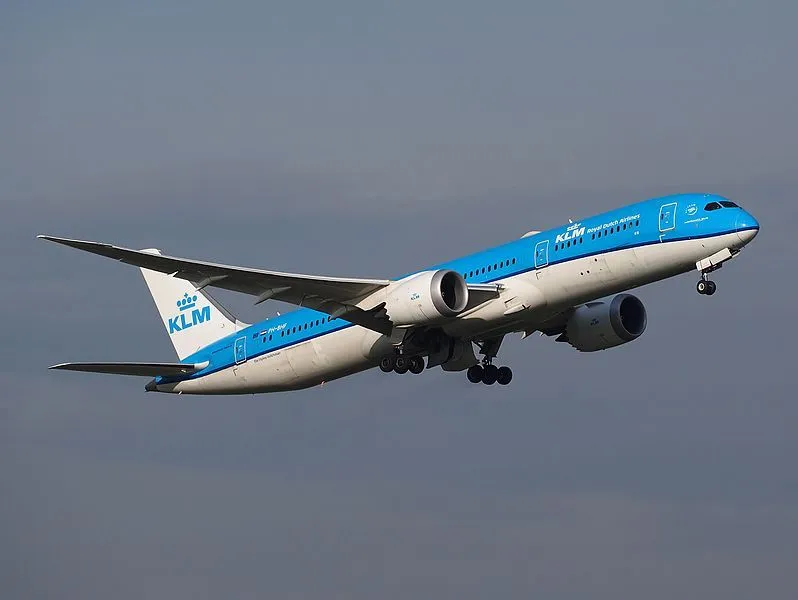
Naming airplanes is a practice that dates back almost a century. In the 1920s, the Dutch airline KLM nicknamed one of its early aircraft “Dikke Dirk” (Fat Dirk), partly for its unusually broad shape and partly as a play on its registration, which ended in the letters DD. However, since then, KLM has given its aircraft more traditional names, such as city squares, capitals, and even local birds. Its Boeing 777 fleet, for instance, is named after UNESCO World Heritage Sites.
According to Debbie Nakanelua-Richards, Director of Community Relations at Hawaiian Airlines, naming a person or thing is essential to Hawaiian culture. It plays a crucial role in defining its existence and spirit. Over the years, Hawaiian Airlines planes have received names based on constellations, flowers, and birds. On one occasion, a plane was named after a renowned Hawaiian-born sumo wrestler, Takamiyama (born Jesse Kuhaulua), the first foreign-born wrestler to win a top-division championship in Japan.
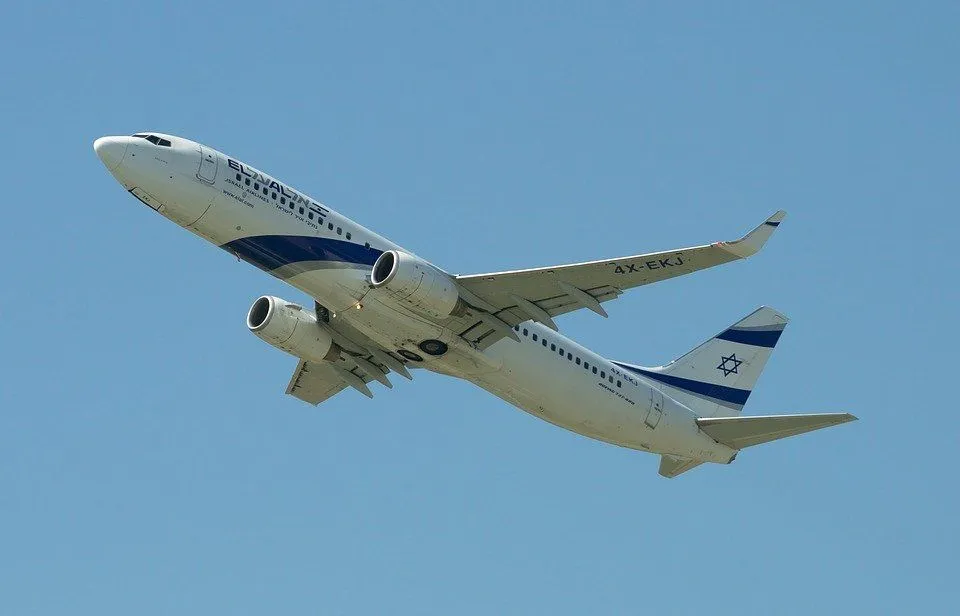
EL AL, the national carrier of Israel, has a tradition of naming its aircraft after cities and towns in Israel, for example, Jerusalem, Rehovot, Sderot, and so on. Interestingly, whenever EL AL names its plane after a city or town, an unveiling ceremony is held in the corresponding city to accompany and bless the naming.
Lady Luck
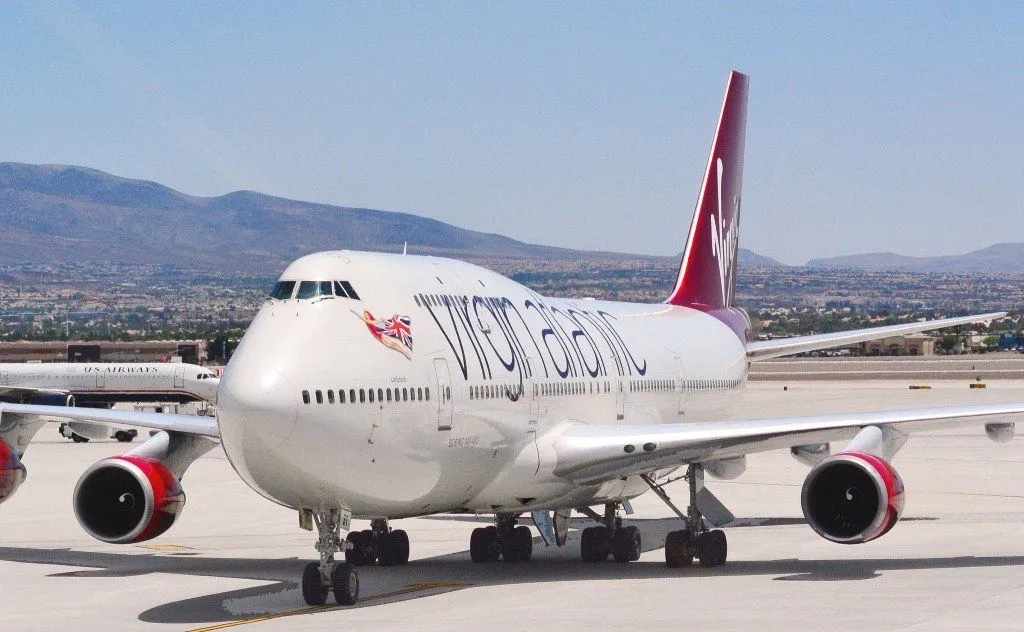
Virgin Atlantic’s aircraft fleet is known for having primarily female names, which reflect the company’s brand values. These names include Ladybird, Hotlips, Pretty Woman, and Queen of the Skies. According to Virgin Atlantic, these names are considered “classic” and have stood the test of time. The airline often borrows from British music, film, and literature, with aircraft such as Penny Lane, Ruby Tuesday, and Lady Stardust. One Airbus, christened “Queen of the Skies,” even honors Queen Elizabeth II. The tradition itself is borrowed from shipping, where vessels have long been given female names.
Spices
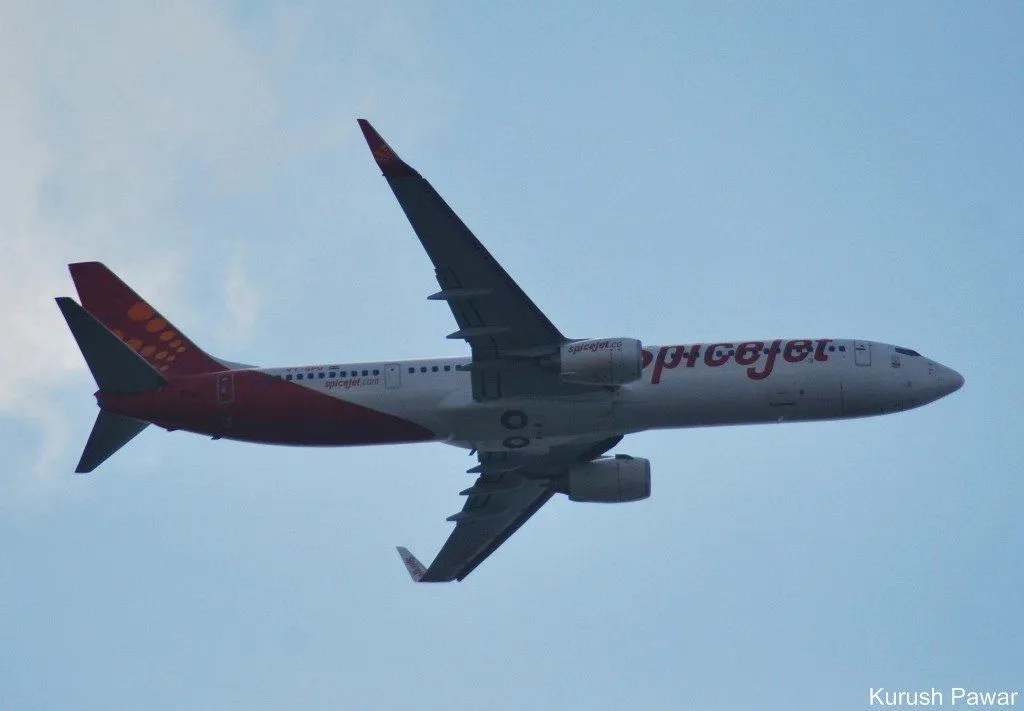
Several airlines choose names that project their brand. The budget carrier SpiceJet, for example, leans into its own name by christening its aircraft after spices, with planes named Coriander, Cinnamon, Saffron, Pepper, and the like.
In Gratitude
Sometimes, a life-changing event turns into an airplane name. That’s what happened in the aftermath of the 9/11 attacks. As a symbol of gratitude to the people of Gander and Halifax in Canada, who looked after passengers and crews stranded there after US airspace shut down following 9/11, German airline Lufthansa christened one of its Airbus A340 aircraft Gander/Halifax in 2002. This was the first time in the airline's history that it had named a plane after cities outside Germany.
Connect With The ‘Digital’ Audience
Many airlines have recently started utilizing social media platforms to interact with their audience. They are also using social media to give their planes unique names. For example, Ryanair, the Irish airline, ran a Facebook competition (“30 Names, 30 Planes”) in which 30 lucky fans got to have their name and face painted on an aircraft. Similarly, Qantas, an Australian airline, launched an online campaign to find names for several new Dreamliners. The airline received tens of thousands of suggestions!
Scoot, a Singaporean low-cost airline, uses social media crowdsourcing to connect with a younger audience. The airline has given its planes quirky and fun names that resonate with its cheeky brand image. Some of these names include KamaScootra, Scootalicious, Dream Start, and Big Yella Fella.
Scoot actually merged with another Singaporean airline, TigerAir, and commemorated the merger by naming one airplane, Conscious Coupling!
Last Updated By: Ashish Tiwari
References (click to expand)
- How Planes Get Their Names. CNN Travel.
- G-VHOW do we name our aircraft? | Stories.
- Who Thinks Up Aircraft Names? KLM Blog.
- Nationality Marks. International Civil Aviation Organization (ICAO).
- Aircraft Registration - Forming an N-Number. Federal Aviation Administration.
- DoD Instruction 4120.15, Designating and Naming Military Aerospace Vehicles. U.S. Department of Defense.
- Boeing 707. Wikipedia.
- Airbus A300. Wikipedia.