Not always. Identical twins often share allergies because they start with the same DNA, but they can be allergic to different things. Allergies are shaped by both genes and environment, and twins diverge as they grow, so one identical twin can react to an allergen while the other does not.
The world is full of strange, beautiful and inexplicable things, and here at Science ABC, it’s our job to explain the real story behind certain phenomena. One of the strange (and often beautiful) things about human beings is the existence of identical twins, while allergies remain one of the more inexplicable for many people. When you smash those two concepts together, however, you get ever more interesting questions…
We all know that identical twins are identical, but are they the same in every way? What many parents of twins have asked over the years, in particular, is whether identical twins also share the same allergies. So… do they?

Short Answer: Not always. Identical twins often share similar allergies, but this is not a hard and fast rule, because allergic sensitivities are shaped by both genetic and environmental factors, and identical twins are not completely identical.
Are Identical Twins The Same In Every Way?
Before we can discuss the (possible) identical nature of allergies in identical twins, it is important to understand exactly what “identical” means. There are two major types of twins – fraternal and identical.
Fraternal twins are dizygotic, meaning that they come from two different sperm entering two different eggs and are grown in two separate placenta in utero. Fraternal twins, therefore, are usually different genders, can have different blood types, have different fingerprints, and don’t necessarily look the same, although they may have similar characteristics.
Identical twins, on the other hand, come from one sperm cell fertilizing one egg, and then developing in the same placenta. At some point in the development process, however, the zygote splits, and begins forming two individual people. The genetic base of identical twins is the same, which is why they are almost always the same sex, share the same blood type, and look nearly identical.
However, it is important to remember that our genes are not completely stable as we grow up. Genetic mutations happen all the time, which is why certain tiny characteristics of identical twins can often be different. Once the zygote splits, not only genetic mutation, but also environmental factors begin to affect the development and final characteristics of identical twins. This continues as both twins grow up, meaning that they are likely to be more genetically dissimilar as they get older.
There is also something called “copy number variants”, which is when a stretch of DNA (sometimes containing a whole gene) is present in a different number of copies than the usual two, one inherited from each parent. Even though identical twins start from the same genome, copy number variants can be gained or lost in one twin and not the other as their cells divide, which can shift how certain genes are expressed. They offer a secondary explanation, alongside environmental and epigenetic factors, for why some identical twins do not share every single trait.
How Does This Affect Allergies?
Twins provide a fascinating opportunity for researchers to study genetic development and mutation, as well as the effects of certain stressors of situations. For example, NASA studied astronaut Scott Kelly and his identical twin Mark (who stayed on Earth) after Scott returned from a roughly one-year stint on the ISS in 2016. The goal was to pin down what a year in space does to the body. Most of the changes in Scott’s gene expression returned to normal within months of landing, but a small fraction lingered, a neat illustration of how environment can nudge two identical genomes apart.
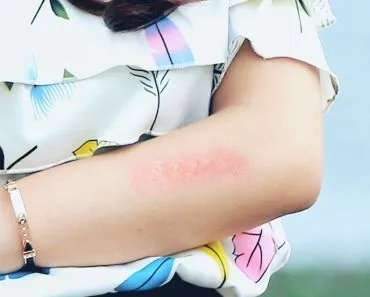
When it comes to the study of allergies, twins are also prime subjects. Numerous studies have looked at both fraternal and identical twins with a focus on shared sensitivities. One classic twin study of peanut allergy found that when one identical twin was allergic, the other was allergic about 65% of the time, compared with just 7% for fraternal twins, pointing to a strong (but far from total) genetic influence. Note that even when identical twins are sensitive to the same allergen, their symptoms can manifest differently. One may get a mild skin rash, while the other suffers respiratory distress.
You must also consider that identical twins are not the exact same person with the same activities or experiences. Depending on their exposure to certain pollutants, irritants, toxins or pathogens, their immune system will develop and react in different ways, particularly in their earliest years. Infections, medications, and even mitochondrial DNA can be different in these twins, meaning that their development or rebuttal of allergies could be completely different.
While the likelihood of having the same allergies is much higher in identical twins (due to the nearly identical genetic code) than in fraternal twins or normal siblings, there is no guarantee that they will share all of the same sensitivities. Research is ongoing into the exact genetic and environmental determinants of allergies, but for now, there remains a significant amount of uncertainty. If you happen to be an identical twin that is lucky enough to avoid allergies, while your twin is always sneezing and breaking out, just consider yourself lucky!
What Are The Different Types Of Twins?
We have been treating twins as a tidy either/or so far, fraternal or identical, but the real picture is a bit messier and a lot more interesting. Fraternal (dizygotic) and identical (monozygotic) twins are simply the two most common categories, and beyond them sit a handful of rarer arrangements that biologists still find genuinely puzzling.

One detail that surprises people is that identical twins are not all packaged the same way in the womb. Depending on exactly when the zygote splits, monozygotic twins can develop with two separate placentas (dichorionic), share one placenta but have separate amniotic sacs (monochorionic-diamniotic), or, rarely, share a single sac as well (monochorionic-monoamniotic). The later the split happens, the more the two share.
Then come the genuine oddities. Mirror-image twins are identical twins whose features appear reversed, so one is right-handed and the other left-handed, or their hair parts on opposite sides, a pattern thought to follow a relatively late split. Conjoined twins form when the embryo begins to split after roughly day 13 and never finishes, leaving the two bodies physically joined; estimates put this at very roughly 1 in 50,000 births, though because many cases are stillborn the true rate is often cited closer to 1 in 200,000. Rarest of all are sesquizygotic, or "semi-identical", twins, an in-between case in which a single egg appears to be fertilized by two sperm. They share all of their mother's DNA but only part of their father's, and only two confirmed cases have ever been documented in the medical literature. None of these change the core allergy story, but they show why "identical" is a slipperier word than it first appears.
Do Identical Twins Have Exactly The Same DNA?
For decades, the textbook answer was a flat "yes", and it is the assumption that makes identical twins so valuable to allergy researchers in the first place. If two people start with the same genome, the thinking goes, any differences between them must come from their environment. That is mostly true, but it is no longer quite the whole story.

In 2021, geneticists at deCODE in Iceland sequenced hundreds of pairs of identical twins along with their parents and children and found that the two genomes are not perfect copies after all. On average, a pair of identical twins differed by about 5.2 mutations that arose very early in development, soon before or after the single embryo split in two. The differences were small but real, and roughly 15% of pairs carried a notably larger batch of these early mutations in one twin but not the other.
So identical twins are not literally clones. They begin from one fertilized egg and remain genetically as close as two human beings can be, which is exactly why they tend to share blood type, sex, and a strong (if imperfect) overlap in allergies. But a sprinkling of early mutations, layered on top of the environmental and epigenetic differences that build up over a lifetime, gives biology yet another reason why one twin can sneeze through allergy season while the other sails right past it.
References (click to expand)
- Are Genetics Responsible for Allergies? A Study In Identical Twins - serendip.brynmawr.edu
- Sicherer, S. H., et al. (2000). Genetics of peanut allergy: a twin study. Journal of Allergy and Clinical Immunology - PubMed (NIH)
- Bowen, R. (1953, May). Allergy in identical twins. Journal of Allergy. Elsevier BV.
- FAQs - NASA Twins Study - NASA
- Jonsson, H., et al. (2021). Differences between germline genomes of monozygotic twins. Nature Genetics - PubMed (NIH)
- Conjoined Twins - StatPearls, NCBI Bookshelf
- Gabbett, M. T., et al. (2019). Molecular Support for Heterogonesis Resulting in Sesquizygotic Twinning - New England Journal of Medicine