Table of Contents (click to expand)
Green building technology, also called green construction or sustainable building, is the practice of designing and constructing buildings to be environmentally responsible and resource-efficient across their entire life cycle, from siting and design through construction, operation, maintenance, renovation and demolition. The aim is to cut energy, water and material use while improving occupant health.
When you read the phrase “Green Building Technology”, someone with even a tiny amount of knowledge about engineering or construction materials would guess that it is associated with environmental conservation or something concerning the environment. Those with an IT background might think that GBT (Green Building Technology) is a new piece of software for designing eco-friendly structures.
Basically, if we learn how green building technology helps in the conservation of the environment and then try to adopt certain techniques to save the ecosystem through such measures, it will help our current situation a great deal.
One of the most cherished things in life is a person’s house, which is why everyone tries to use the best available materials for home construction, as well as the best location and orientation for their house. However, in this process, the environmental impacts that the building/house will have is traditionally one of the least important or least considered factors. This needs to change. In today’s world, where the world is rising in support of environmental causes, it is critical that we “start the work at home”. There is no better way to do that than designing your new house in an environmentally friendly manner!
Urban Heat Island
The ‘Urban Heat Island’ effect is a phenomenon in which urban areas become much hotter than their rural surroundings. Dense concrete and asphalt absorb and re-radiate heat, while a large population usually means far less green surface to cool things down. The exploitation of the environment is at its peak today, so even small steps towards conservation hold immense importance.
Necessity Of Green Building Technology
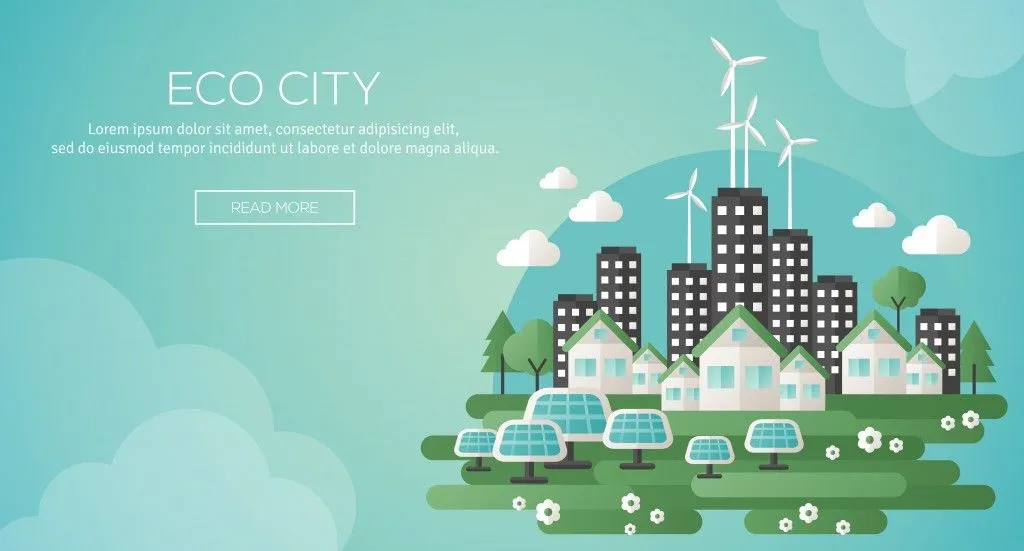
The concept of Green Building Technology is often referred to as ‘Sustainable Building Technology’, which means that the building is designed in such a way that it consumes less energy, has great design flexibility, a low maintenance cost, improved air quality, etc. The numbers explain why this matters. The buildings and construction sector accounts for roughly a third of global energy use and around a third of energy-related carbon dioxide emissions, and construction swallows a huge share of the raw materials we pull out of the Earth every year. By using green building technology, we can shrink that footprint without compromising the durability and strength of our structures.
There is a good amount of evidence proving that green buildings provide financial rewards to owners, residents and those operating the structures, as they have low annual costs for energy, water, repair, etc. Most importantly, these improved costs don’t come at the expense of higher initial costs! Through the use of modern techniques and integrated designs, the total cost of the building can be reduced to the price of a traditional building, and sometimes even lower! Some designs may have a slightly higher initial cost, but the life cycle and payback cost savings of the building compensate for that over time, but that fact is often ignored by those who don’t want to change “business as usual”.
Construction Of A Green Building
Material selection is very important for the construction of a Sustainable Building. Appropriate steps must be followed for the proper environmental assessment of the building material, i.e., Survey (gathering technical information), Evaluation (calculating the cost, checking for durability, strength, etc.), Selection (using the evaluation to compare materials, and then selecting the most preferable material).
Various alternative materials can be used in place of commonly used materials and they should be selected based on resource efficiency, indoor air quality, efficient usage of energy, water conservation and economic cost.
The use of recycled material, including post-industrial content, the use of resources that are available in abundance in nature and are locally available (reducing transportation costs and promoting the use of local materials), and the use of materials that are long-lasting and strong when compared with conventional materials are all factors to consider. Indoor Air Quality (IAQ) also plays an important role in material selection for construction, i.e., use materials with few or no toxic elements present in them, that are resistant towards moisture, and have minimal emission of Volatile Organic Compounds, as these are harmful to health.
Using GBT in structures that already exist is also possible if you follow the steps given below:
- Flow-restricting devices can be installed in your taps.
- Use automatic taps and flushes in lavatories to save water.
- Switch off lights and other electronic devices when not in use to save energy.
- Use rainwater harvesting systems to conserve rainwater.
- Avoid setting your air conditioner cooler than about 25.5°C (78°F), the setting the US Department of Energy recommends for summer comfort and savings.
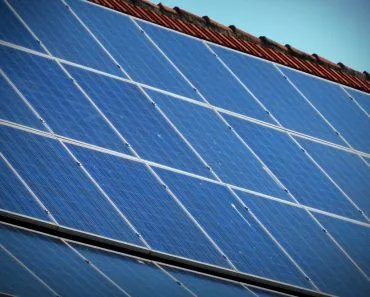
- Use solar panels in regions that receive ample sunlight throughout the year.
If you’re reading and learning about all these different ideas, you can see that it isn’t particularly hard to implement these practices as soon as possible to help the environment!
How Are Green Buildings Certified?
So how do you actually know whether a building is “green”, rather than just dressed up in eco-friendly marketing? That’s where third-party certification systems come in. They score a building against a checklist covering energy, water, materials, indoor air quality and more, and then award a rating you can trust.
The most widely used system in the world is LEED (Leadership in Energy and Environmental Design), run by the U.S. Green Building Council (USGBC). Buildings earn points and are certified at one of four levels: Certified, Silver, Gold or Platinum. The newest version, LEED v5, launched in 2025 and steers a large share of its credits toward decarbonization (cutting the carbon emissions tied to constructing and running a building), alongside occupant health and ecological restoration.
Across the UK and much of Europe, the benchmark is BREEAM (Building Research Establishment Environmental Assessment Method), created by the BRE back in 1990. It rates buildings as Pass, Good, Very Good, Excellent or Outstanding, with fewer than one in a hundred certified projects ever reaching that top Outstanding tier.
In the United States there is also the EPA’s ENERGY STAR certification, which focuses squarely on energy performance. A building earns the label only if it scores 75 or higher on a 1-to-100 scale, meaning it runs more efficiently than at least 75% of similar buildings nationwide. On average, ENERGY STAR certified buildings use about 35% less energy than their peers, which is a tidy reminder that going green and saving money often go hand in hand.
Conclusion
Green Building Technology is not only environmentally friendly, but also very economical and is being adopted by various construction companies around the world. GBT is a prime example of a modern development that meets the need of the present without compromising the needs of future generations. GBT helps in saving a huge amount of energy, which can then be used for other tasks, thus helping to minimize the use of fossil fuels. Green Building Technology will prove to be a blessing for developing nations, as it helps in limiting energy consumption and promoting sustainable development.