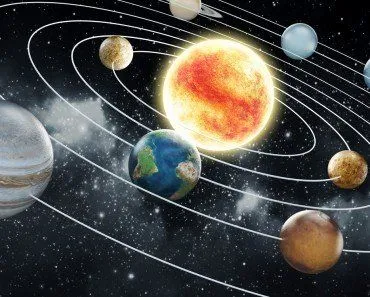
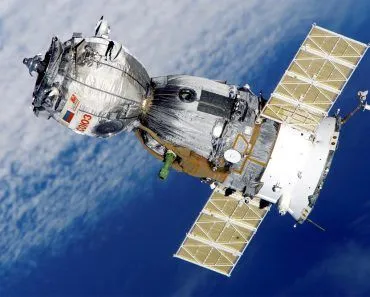
There are three primary reasons for why satellites are not sent straight up and out of the solar system: (1) doing so would require the satellite to cancel out its motion in the direction of Earth’s orbit, which would use a great deal of fuel; (2) most of the interesting stuff in the solar system lies in the plane of the solar system, so it makes more sense to send probes horizontally along that plane; and (3) a probe sent straight up and out of the solar system is unlikely to find anything significantly interesting.
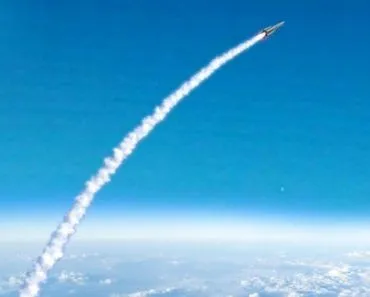
I have a friend (one who is not much into space and science) who asked me once: the moon is on ‘top’ of us, right? Because we see it when we look above our heads. This belief is also supported by the fact that all satellites and spacecraft are launched vertically upwards because they must reach the moon or other celestial objects that are located ‘above’ us.
As much as I was impressed by his assumption (i.e. the moon and other celestial bodies being located ‘above’ us), which seems perfectly reasonable on the surface, I told him that this was not the case. All celestial bodies in our solar system lie on the same plane. In simple words, it means that our solar system is almost flat (ecliptic, more specifically).
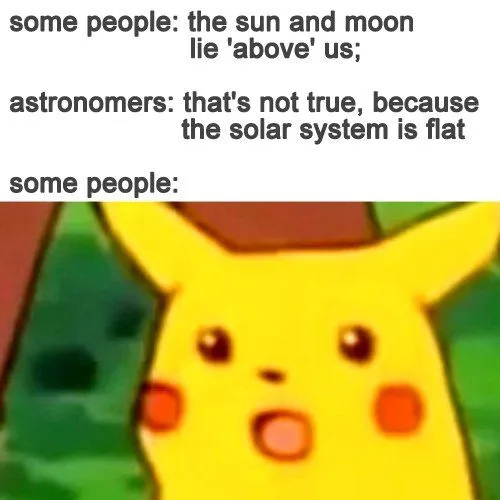
That observation got me thinking: why don’t we send space probe upwards out of the solar system? Wouldn’t it make more sense to have these probes reach a certain height above the Earth where they could take better images from a “higher” vantage point?
Earth’s Orbital Velocity Is Huge!
First off, it’s important to note that Earth is moving in the ecliptic (i.e., plane of the solar system) at around 30 kilometers per second! This means that any object leaving the planet moves at a speed of “its own speed + Earth’s orbital speed”. For instance, when you throw a ball out of a moving train, the ball moves at the speed of the train plus the speed at which you threw it.
In order to send a space probe vertically upwards outside the plane of the solar system, you would first need to burn a great deal of fuel just to cancel out the satellite’s motion in the direction of Earth’s orbit. Only after that could you boost the probe in the vertical direction so that it flies vertically upwards, out of the ecliptic.
Too Much Fuel
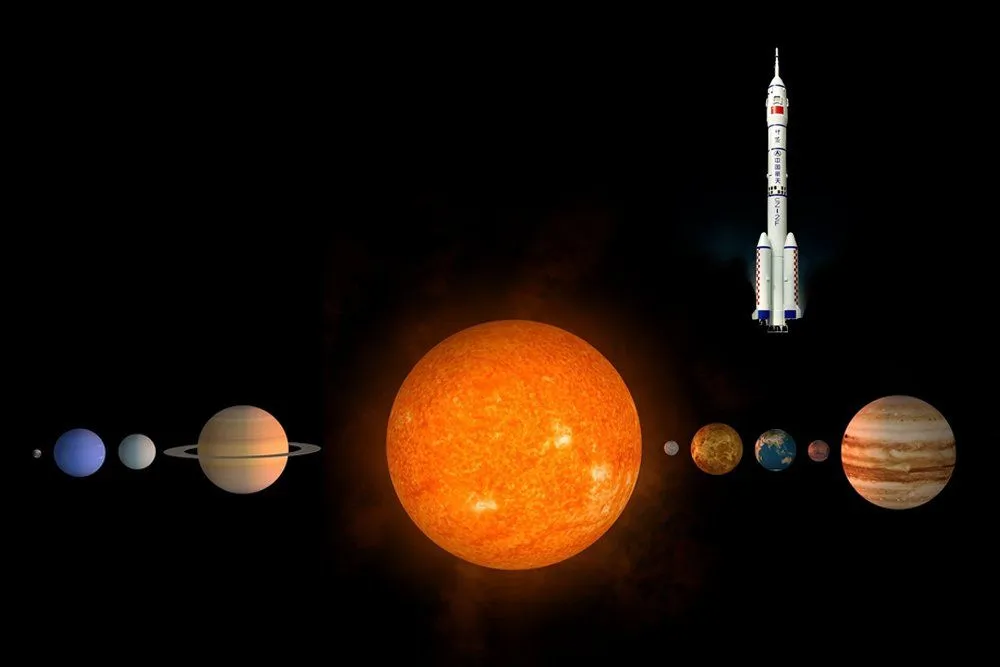
Going straight upwards out of the solar system would require the probe in question to burn a whole lot of fuel. The probe would have to therefore carry that load, which increases the mass of the satellite. Thus, from a logistical standpoint, it would be quite a task for the concerned space agency to accomplish. Needless to say, it would be an exceedingly expensive mission.
Nothing Much To Explore
You may already know that the solar system lies mostly in a plane. Most of the interesting stuff, or at least the stuff that we want to explore, lies in the plane of the solar system. So, it naturally makes more sense to send probes horizontally along the plane of the solar system.
If we do build and launch a probe that goes vertically upwards outside the solar system’s plane, it’s highly unlikely that it would find anything significantly interesting. However, if it kept going upward, it might eventually run into the Oort cloud.
That being said, we don’t know exactly where the Oort cloud begins and ends. Consider this: at its current speed (i.e., 1 million miles a day), Voyager 1 spacecraft probably won’t reach the Oort Cloud for about 300 years (Source).
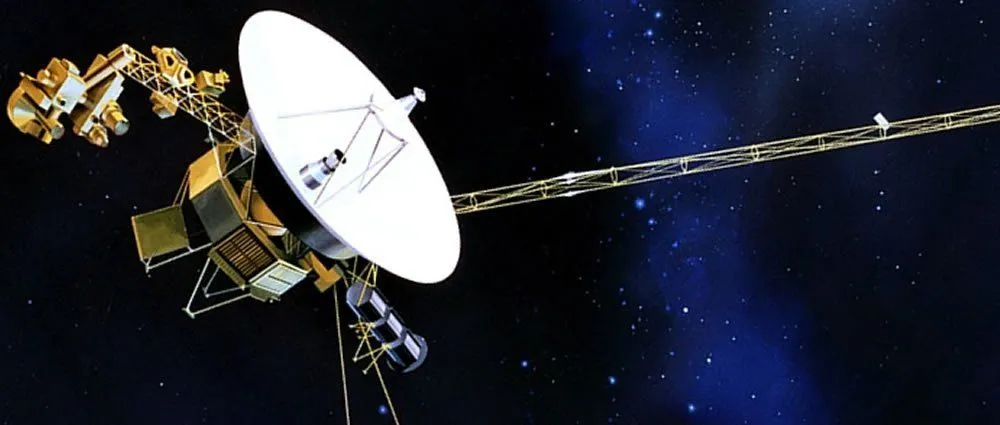
However, it’s not like we’ve never sent any probe vertically upwards and out of the solar system.
Enter Ulysses!
Ulysses – An Interesting Exception
Back in 1990, NASA and the European Space Agency (ESA) launched a robotic space probe called Ulysses whose primary mission was to orbit the sun and study it at all latitudes.
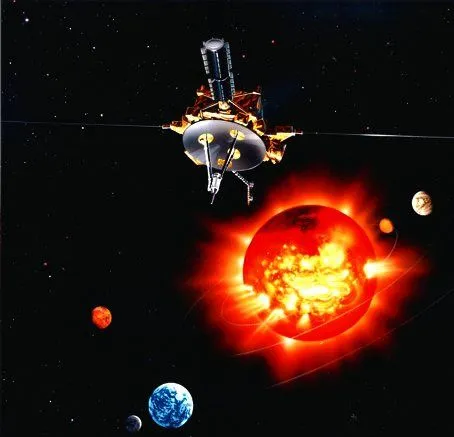
In order to do that, Ulysses had to leave the plane of the solar system by changing its own orbital inclination. To do this, it first flew out to Jupiter in the usual in-plane way and subsequently used a gravity assist (in February 1992) to rotate its orbital plane nearly perpendicular to the solar system. It kept circling over the Sun's poles until contact was finally lost on 30 June 2009, and to this day, it remains the only spacecraft to have flown a true polar orbit around the Sun. (ESA's Solar Orbiter, launched in 2020, now climbs to high heliographic latitudes using Venus flybys, but it doesn't reach a true polar orbit.)
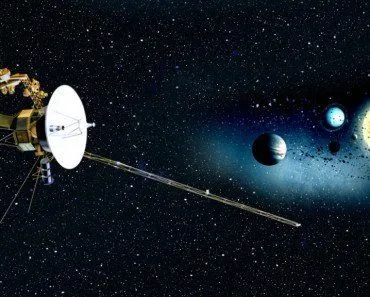
Not just Ulysses, but also Voyager 1 and 2 have their escape trajectories tilted out of the ecliptic plane: Voyager 1 is heading about 35 degrees above it (northward), while Voyager 2 is angled roughly 48 degrees below it (southward toward the constellations Sagittarius and Pavo). Both probes are still transmitting more than four decades after launch, and Voyager 1 (which crossed the heliopause into interstellar space in August 2012, followed by Voyager 2 in November 2018) is on track to become the first human-made object a full light-day from Earth in November 2026.
Has Any Spacecraft Actually Left The Solar System?
Only five human-made objects are currently coasting outward fast enough to leave the Sun behind for good. In order of launch, they are Pioneer 10 (1972), Pioneer 11 (1973), Voyager 2 and Voyager 1 (both 1977), and New Horizons (2006), the probe that photographed Pluto in 2015. Voyager 1, Voyager 2 and New Horizons are all still healthy and in radio contact with Earth. The two Pioneers, by contrast, have long gone quiet: NASA last heard from Pioneer 11 in November 1995 and from Pioneer 10 in January 2003, so both are now silent, derelict hulks drifting outward.

So far, only the two Voyagers have actually pushed past the heliopause, the boundary where the Sun's outward wind of charged particles finally gives way to the thin gas of interstellar space. Voyager 1 crossed it on 25 August 2012, and Voyager 2 followed on a different path on 5 November 2018. That is why you will often read that these two probes have "entered interstellar space".
But have they left the solar system? Not by NASA's own definition. The Sun's gravity still governs a vast outer shell of icy debris, from the Kuiper Belt just beyond Neptune to the distant Oort cloud, which may reach out to roughly 50,000 times the Earth-Sun distance. NASA estimates it will take Voyager 1 about 300 years just to reach the inner edge of the Oort cloud, and perhaps 30,000 years to travel all the way through it. Crossing the heliopause is a genuine milestone, but the true gravitational edge of the solar system lies almost unimaginably farther out.
Why Is It So Hard To Leave The Solar System At All?
Escaping Earth is one thing; escaping the Sun is a far taller order. To break free of Earth's gravity, a rocket has to reach the planet's escape velocity of about 11.2 kilometers per second. To break free of the Sun from Earth's distance, however, a spacecraft must be travelling at roughly 42 kilometers per second relative to the Sun. Earth is already sweeping us around its orbit at about 30 kilometers per second, so even when you launch a probe in the same direction as Earth's motion (borrowing that free head start), you still have to add around 12 kilometers per second on top. That is a punishing amount of extra speed to buy with fuel alone.
This is exactly why deep-space missions rely on gravity assists rather than brute thrust. Both Voyagers, and later New Horizons, swung close past Jupiter and used the giant planet as a slingshot, stealing a sliver of its orbital momentum to gain speed they could never have carried as fuel. (If you want the underlying physics, we unpack it in our explainer on escape velocity.)

Distance brings a second, sneakier problem: power. Sunlight thins out rapidly the farther you travel, and by the time you reach Jupiter (over five times farther from the Sun than we are) it has faded to only a few percent of its strength at Earth. Beyond that, ordinary solar panels become almost useless. That is why the probes bound for the outer solar system, from the Pioneers and Voyagers to New Horizons, have carried a radioisotope thermoelectric generator (RTG) instead: a nuclear battery that converts the heat from slowly decaying plutonium-238 into electricity. Each Voyager launched with three of them, supplying about 470 watts between them. Needing a plutonium power supply, rather than a cheap solar array, is one of the biggest constraints on any mission headed into the outer solar system.
References (click to expand)
- Orbits and the Ecliptic Plane. Georgia State University
- The Path of the Sun, the Ecliptic - webarchive.library.unt.edu
- Ulysses - ESA Science & Technology - European Space Agency. The European Space Agency
- Terms: ecliptic, equinox - www.physics.csbsju.edu
- Voyager - Frequently Asked Questions. NASA Science
- List of artificial objects leaving the Solar System - Wikipedia
- Escape velocity - Wikipedia
- Radioisotope Power Systems FAQ. NASA Science
- Radioisotope generators – inside the 'nuclear batteries' that power faraway spacecraft. The Conversation